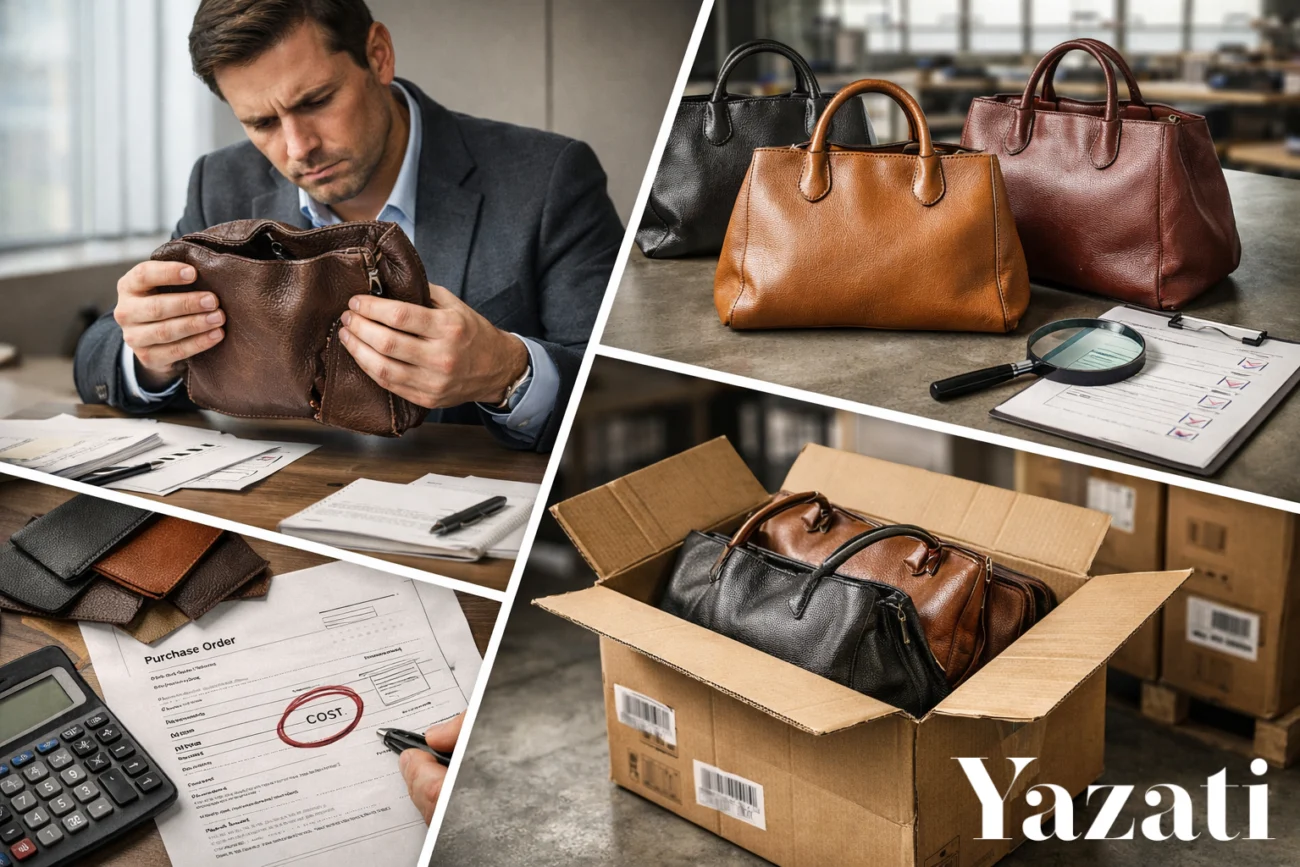
Why Importing Leather Goods Requires Extra Attention
Leather is not a standard textile. It is a natural material with unique properties. Variations in grain, thickness, tanning method, and finishing can affect:
- Durability
- Appearance
- Price
- Compliance
- Customer satisfaction
Without proper oversight, small mistakes can lead to major financial losses.
1. Not Verifying the Type and Grade of Leather
One of the biggest mistakes importers make is assuming all leather is the same.
Understanding Leather Grades
There are several common types:
- Full-grain leather
- Top-grain leather
- Genuine leather
- Split leather
- Bonded leather
Each type has different quality levels, durability, and pricing.
Why This Matters
If you expect premium full-grain leather but receive bonded leather, your product quality—and brand image—will suffer.
How to Avoid This Mistake
- Clearly specify leather grade in your purchase order
- Request detailed material specifications
- Ask for thickness measurements (in millimeters)
- Approve physical samples before production
Clear documentation prevents misunderstandings.
2. Ignoring Compliance and Certification Requirements
Leather goods must often meet strict international regulations.
Common Compliance Areas
- Chemical content limits
- Heavy metal restrictions
- Environmental standards
- Animal sourcing documentation
Failure to comply can result in:
- Shipment rejection
- Customs delays
- Financial penalties
- Brand damage
How to Avoid This Mistake
- Confirm regulatory requirements in your target market
- Request compliance certificates from suppliers
- Conduct third-party testing when necessary
- Work with experienced exporters
Compliance isn’t optional—it’s essential.
3. Skipping Quality Inspections Before Shipment
Another costly mistake is relying solely on supplier assurances.
Why Inspection Is Crucial
Leather goods may have:
- Surface scratches
- Uneven dyeing
- Weak stitching
- Poorly attached hardware
- Inconsistent finishing
These issues may not be visible in product photos.
How to Avoid This Mistake
- Conduct pre-shipment inspections
- Randomly check samples from different cartons
- Test zippers, handles, and closures
- Compare goods with approved sample
Spending on inspection is far cheaper than handling returns.
4. Underestimating Production and Shipping Timelines
Many importers assume leather goods production is quick. In reality, leather manufacturing requires time.
Production Stages Include
- Tanning
- Drying
- Cutting
- Stitching
- Finishing
- Quality checks
Delays may occur due to:
- Raw material shortages
- Seasonal demand
- Shipping congestion
How to Avoid This Mistake
- Confirm production lead time in writing
- Build buffer time into your schedule
- Avoid peak season rush orders
- Choose reliable freight options
Planning ahead prevents last-minute stress.
5. Focusing Only on Price Instead of Value
Trying to secure the lowest price often leads to quality compromise.
Hidden Risks of Low Pricing
- Lower-grade leather
- Thin material thickness
- Poor stitching
- Weak hardware
- Lack of quality control
Cheap production can increase return rates and harm your brand.
How to Avoid This Mistake
- Evaluate supplier reputation
- Request factory audits
- Compare quality samples
- Consider long-term supplier relationships
Smart buyers focus on value, not just cost.
Bonus Mistake: Poor Communication and Documentation
Miscommunication can cause major problems.
Common Communication Errors
- Vague color descriptions
- Unclear packaging requirements
- Missing size specifications
- No written agreements
Best Practice
- Confirm all specifications in writing
- Share detailed tech packs
- Keep records of approvals
- Clarify payment terms clearly
Clear communication builds strong partnerships.
Key Factors to Consider Before Importing Leather Goods
| Factor | Why It Matters |
|---|---|
| Leather Grade | Determines durability and pricing |
| Thickness | Impacts strength and structure |
| Tanning Method | Affects finish and compliance |
| Hardware Quality | Influences longevity |
| Packaging | Prevents shipping damage |
| Inspection | Ensures consistency |
Attention to these factors improves overall success.
How to Build a Reliable Leather Import Strategy
To avoid the 5 Common Mistakes to Avoid When Importing Leather Goods, follow a structured approach:
- Research suppliers thoroughly
- Verify certifications and compliance
- Approve physical samples
- Conduct quality inspections
- Plan timelines carefully
- Maintain clear communication
Consistency and preparation are key.
Why Experience Matters in Leather Sourcing
Leather is a natural material, meaning slight variations are normal. Experienced suppliers understand:
- How to manage color consistency
- How to reduce surface defects
- How to improve durability
- How to meet export standards
Choosing experienced partners reduces risk significantly.
The Financial Impact of Avoiding These Mistakes
Avoiding these common errors can lead to:
- Lower return rates
- Higher customer satisfaction
- Better brand reputation
- Stronger supplier relationships
- Increased profitability
Mistakes are expensive—but prevention is affordable.
Frequently Asked Questions (FAQs)
1. What is the most common mistake when importing leather goods?
Not verifying the type and grade of leather before placing bulk orders.
2. Do leather goods require compliance certificates?
Yes, many markets require chemical and environmental compliance documentation.
3. Is pre-shipment inspection necessary?
Absolutely. It helps detect defects before goods are shipped.
4. How long does leather goods production usually take?
Production can take several weeks depending on order size and complexity.
5. Why shouldn’t buyers focus only on price?
Low prices often result in lower-quality materials and higher long-term costs.
6. Can leather color vary between batches?
Yes, natural leather can show slight variations, so sample approval is critical.
Conclusion
Importing leather goods offers strong business potential—but only when managed carefully. By understanding the 5 Common Mistakes to Avoid When Importing Leather Goods, buyers can protect their investment, maintain quality standards, and build lasting customer trust.
From verifying leather grades and ensuring compliance to conducting inspections and managing timelines, each step plays a critical role in success. Smart importers focus on preparation, communication, and quality control rather than shortcuts.
When done correctly, leather sourcing becomes not just profitable—but reliable and sustainable in the long run.
✨ Discover Global Sourcing Excellence with Netyex ✨
Netyex is your trusted B2B sourcing partner, connecting international buyers with India’s finest manufacturers and curated product lines—from handicrafts and home décor to kitchenware, textiles, hospitality essentials, and more. With verified suppliers and end-to-end support, we make global procurement seamless, reliable, and efficient.
👉 Elevate your sourcing experience—explore Netyex today.
📦 Bulk orders & customisation | 🌍 Worldwide delivery | 🤝 Trusted by global buyers
Visit Netyex to source premium Indian products with confidence.