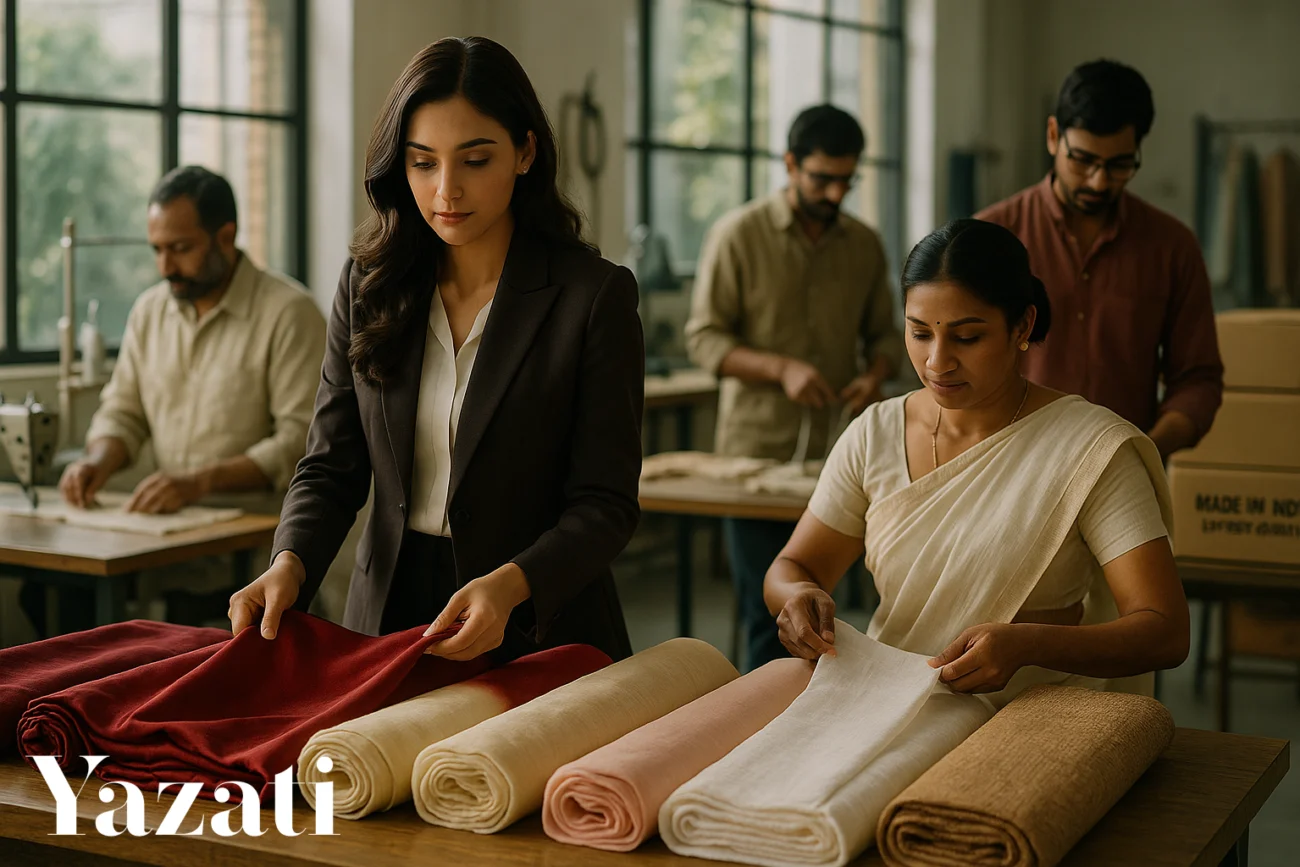
Introduction – The Global Allure of Indian Textiles
India’s textile industry is more than just a business—it’s a legacy woven into the fabric of its culture. From ancient trade routes connecting India to Egypt and Rome to modern-day fashion weeks in Paris and New York, Indian fabrics have captivated the world with their color, texture, and craftsmanship.
In 2025, India remains one of the top exporters of textiles, supplying premium-quality cotton, silk, wool, and handloom fabrics to over 150 countries. What makes these fabrics irresistible to global buyers is a perfect blend of tradition, innovation, and sustainability.
The Legacy of Indian Textile Craftsmanship
India’s textile heritage is one of the oldest in the world. From handwoven Banarasi silk to breathable South Indian cotton, every region tells a story through its weaves. The country’s artisans have mastered techniques like block printing, ikat dyeing, and embroidery, making Indian fabrics stand out in the global market.
Over centuries, this craftsmanship has evolved without losing its essence. Today, modern textile exporters combine ancestral weaving traditions with advanced technology to deliver fabrics that are both culturally rich and globally relevant.
1. Cotton – The King of Indian Fabric Exports
India is synonymous with cotton. Often called the “white gold” of Indian agriculture, cotton accounts for nearly 25% of the world’s cotton exports. Indian cotton, particularly varieties like Suvin, Shankar-6, and MCU-5, is prized for its softness, durability, and long staple length.
Why Indian Cotton is Globally Sought After
Indian cotton offers a perfect balance of comfort and versatility, making it ideal for everything from casual wear to luxury bedding. The country’s diverse climate enables the cultivation of multiple cotton types suited for various global markets.
Sustainability and Eco-Friendliness
India’s shift toward organic cotton production and zero-waste ginning has boosted its appeal in eco-conscious markets like Europe and North America. The use of natural dyes and water-efficient farming adds to its sustainability credentials.
2. Silk – The Symbol of Luxury and Tradition
When it comes to luxury, Indian silk stands unmatched. With varieties like Mulberry, Tussar, Eri, and Muga, India produces over 95% of the world’s handwoven silk. Each type tells a distinct story—from the golden hue of Assam’s Muga silk to the rich texture of South Indian Kanchipuram silk.
How Indian Silk Captivates Global Buyers
International designers frequently showcase Indian silk at fashion weeks and haute couture events, drawn by its sheen, texture, and intricate patterns. Its natural luster and drape make it a favorite for bridal couture and high-end accessories.
Sustainability Meets Luxury
Indian sericulture (silk farming) increasingly adopts eco-friendly rearing methods that minimize chemical usage, ensuring the silk remains both sustainable and luxurious.
3. Linen – The Sophisticated Export Choice
Although linen isn’t native to India, the country has mastered its production. Indian linen, known for its crisp texture and breathability, has found immense favor in European markets—especially for summer collections.
Why European Markets Love Indian Linen
India’s cost efficiency, quality control, and ability to produce custom weaves give it an edge. Linen garments and home décor fabrics from India are exported to France, Italy, and Germany, where they are seen as premium yet affordable.
Blending Tradition with Modern Manufacturing
Many Indian mills use Belgian flax fibers but spin, dye, and weave them locally. This fusion of imported raw material with Indian craftsmanship results in fabrics that are both global in quality and local in soul.
4. Wool – From the Himalayas to the World
Indian wool, especially Kashmiri Pashmina and Merino, symbolizes elegance and comfort. These fine wools are spun and woven in small Himalayan villages, making every piece unique.
Pashmina – The Crown Jewel of Indian Wool
Authentic Pashmina shawls, known for their unmatched softness and warmth, are among India’s most luxurious exports. They fetch high prices in Western markets due to their handspun nature and exquisite craftsmanship.
Modern Wool Production
Indian textile companies are also focusing on machine-spun Merino blends, expanding into winter fashion markets in Japan, Canada, and Australia.
5. Handloom & Khadi – The Soul of Indian Fabric Exports
Khadi and handloom fabrics represent the heart of India’s textile identity. Rooted in sustainability and handmade authenticity, they are increasingly popular in the slow fashion movement.
The Ethical Appeal of Handwoven Fabrics
Global consumers are shifting toward ethical consumption, valuing transparency, fair wages, and artisanal heritage. Handloom fabrics tick all these boxes, offering a human touch missing in mass-produced textiles.
Government Support and Global Reach
Initiatives by the Khadi and Village Industries Commission (KVIC) and platforms like India Handloom Brand have amplified the international presence of handwoven textiles.
Comparative Overview of the 5 Fabrics
To understand why these five fabrics — Cotton, Silk, Linen, Wool, and Khadi — dominate the global export scene, let’s compare them based on their texture, sustainability, global demand, and market pricing.
| Fabric Type | Texture & Feel | Sustainability Level | Global Demand (2025) | Average Export Price (USD/kg) |
| Cotton | Soft, breathable, and durable | High (with organic farming) | Very High (USA, EU, Japan) | $3.50 – $5.00 |
| Silk | Smooth, lustrous, and elegant | Moderate (eco-sericulture rising) | High (France, Italy, UAE) | $30 – $45 |
| Linen | Crisp, cool, and lightweight | High (low water usage) | Growing (Europe, Australia) | $8 – $12 |
| Wool | Warm, soft, and rich | Moderate (natural fiber, but animal-based) | Medium to High (Canada, UK, Japan) | $20 – $35 |
| Khadi/Handloom | Coarse yet comfortable | Very High (handmade & zero-emission) | Rapidly Rising (Global Ethical Fashion Markets) | $7 – $15 |
This comparative insight highlights that Indian fabrics stand out not just for their diversity but also for their sustainability quotient, making them irresistible to modern global consumers.
The Role of Innovation and Technology in Indian Fabric Exports
Modern India is combining its textile legacy with cutting-edge technology. The integration of AI-driven quality checks, automated looms, and sustainable dyeing technologies has improved both efficiency and consistency in fabric exports.
Digital Transformation in Textile Trade
E-commerce platforms like IndiaMART and TradeIndia, along with international marketplaces such as Alibaba, have opened direct access for small Indian exporters to reach global buyers.
Moreover, blockchain technology is being tested to trace fabric origins, ensuring transparency — a growing demand in eco-conscious global markets.
Smart Fabrics and R&D
Indian textile research centers are developing smart fabrics with antibacterial and temperature-regulating properties. These innovations are setting the stage for India’s next big leap in exports.
Export Trends and Market Insights (2025 Edition)
The Indian textile export sector crossed a valuation of USD 44 billion in 2024, and experts predict a 12% year-on-year growth in 2025.
Top Importing Countries:
- United States – for cotton and home textiles
- United Kingdom – for handloom and wool products
- France & Italy – for luxury silks and linens
- Japan – for premium cotton and sustainable fabrics
- UAE & Singapore – for blended textiles and ethnic wear fabrics
Key Export Growth Drivers:
- Increased demand for eco-friendly and artisanal textiles
- Government incentives like the Production Linked Incentive (PLI) scheme
- Rising participation in international trade fairs such as Heimtextil and Texworld Paris
Challenges Faced by Indian Fabric Exporters
Despite its global success, India’s textile export industry faces challenges that require consistent attention.
1. Quality Standardization
Exporters often face rejections due to inconsistent quality and finishing standards. However, growing investments in ISO-certified production units are addressing this issue.
2. Logistics & Supply Chain Bottlenecks
Fluctuating freight costs and port delays can impact timely deliveries. Streamlined logistics under India’s National Logistics Policy are helping mitigate these problems.
3. Global Competition
Countries like China, Bangladesh, and Vietnam pose tough competition. Yet, India’s rich fabric diversity and sustainable practices give it a unique edge.
Sustainability and Eco-Friendly Fabric Practices
The global textile industry is undergoing a “green revolution,” and India is leading the charge.
Organic Cotton & Natural Dyes
India is among the largest producers of organic cotton, certified under the Global Organic Textile Standard (GOTS). Natural dyes made from indigo, turmeric, and madder roots are replacing synthetic chemicals, making fabrics both safe and beautiful.
Zero-Waste and Circular Fashion
Innovative start-ups are promoting recycled yarns and fabric waste upcycling, aligning with the circular economy model. This shift not only reduces waste but also enhances brand credibility in Western markets.
Khadi as a Symbol of Eco-Conscious Living
Khadi represents slow fashion at its finest — handmade, biodegradable, and ethical. Global designers now incorporate Khadi into eco-luxury collections, demonstrating that sustainability and style can coexist harmoniously.
Case Study – How Indian Fabrics Rule the Global Runway
From Sabyasachi Mukherjee’s silk lehengas showcased in Paris to Rahul Mishra’s sustainable couture gracing Milan Fashion Week, Indian fabrics have made an undeniable mark on the international stage.
Luxury Brands Collaborating with Indian Weavers
Global brands like Hermès and Louis Vuitton have collaborated with Indian artisans for limited-edition scarves and textiles, appreciating the craftsmanship that no machine can replicate.
Indian Fabrics in Western Fashion
Handloom and silk fabrics are now seen in high-end fashion houses, where their texture and story add value to couture collections, bridging the gap between tradition and innovation.
Future Outlook – The Next Chapter of Indian Fabric Exports
The future of Indian textile exports looks exceptionally bright. With global awareness shifting toward sustainability, India is perfectly positioned to lead the next phase of eco-friendly fashion.
Emerging fabrics such as bamboo silk, banana fiber, and hemp blends are gaining traction. Moreover, digital marketing and storytelling are helping small artisans reach international buyers directly, ensuring a more equitable and inclusive textile economy.
By 2030, India aims to achieve $100 billion in textile exports, a goal well within reach considering the nation’s resilience, creativity, and craftsmanship.
FAQs – About Indian Fabric Exports
1. What makes Indian fabrics unique in the global market?
Indian fabrics combine centuries-old craftsmanship with modern technology, offering both authenticity and quality that appeal to international buyers.
2. Which fabric is the most exported from India?
Cotton remains the top export fabric, followed by silk and handloom textiles, due to their wide usability and eco-friendly appeal.
3. Why is Indian silk so famous worldwide?
Indian silk varieties like Muga and Kanchipuram are known for their natural sheen, durability, and luxurious texture, making them staples in global haute couture.
4. Are Indian fabrics sustainable?
Yes. Many Indian manufacturers now use organic cotton, natural dyes, and renewable energy, positioning India as a sustainability leader in textiles.
5. How does Khadi contribute to global fashion trends?
Khadi represents ethical fashion—it’s handspun, biodegradable, and supports local artisans. It aligns perfectly with the global slow fashion movement.
6. What is the future of Indian fabric exports?
With advancements in eco-textiles, technology, and trade partnerships, Indian fabric exports are expected to double within the next five years.
Conclusion – Weaving Global Dreams Through Indian Threads
Indian fabrics are more than just materials—they are stories woven through time. From the softness of cotton to the grandeur of silk and the authenticity of Khadi, these textiles symbolize India’s artistry, sustainability, and innovation.
As global fashion turns toward eco-conscious, ethical, and handcrafted choices, India’s fabrics continue to reign supreme — irresistible, timeless, and inspiring.
✨ Discover Global Sourcing Excellence with Netyex ✨
Netyex is your trusted B2B sourcing partner, connecting international buyers with India’s finest manufacturers and curated product lines—from handicrafts and home décor to kitchenware, textiles, hospitality essentials, and more. With verified suppliers and end-to-end support, we make global procurement seamless, reliable, and efficient.
👉 Elevate your sourcing experience—explore Netyex today.
📦 Bulk orders & customisation | 🌍 Worldwide delivery | 🤝 Trusted by global buyers
Visit Netyex to source premium Indian products with confidence.