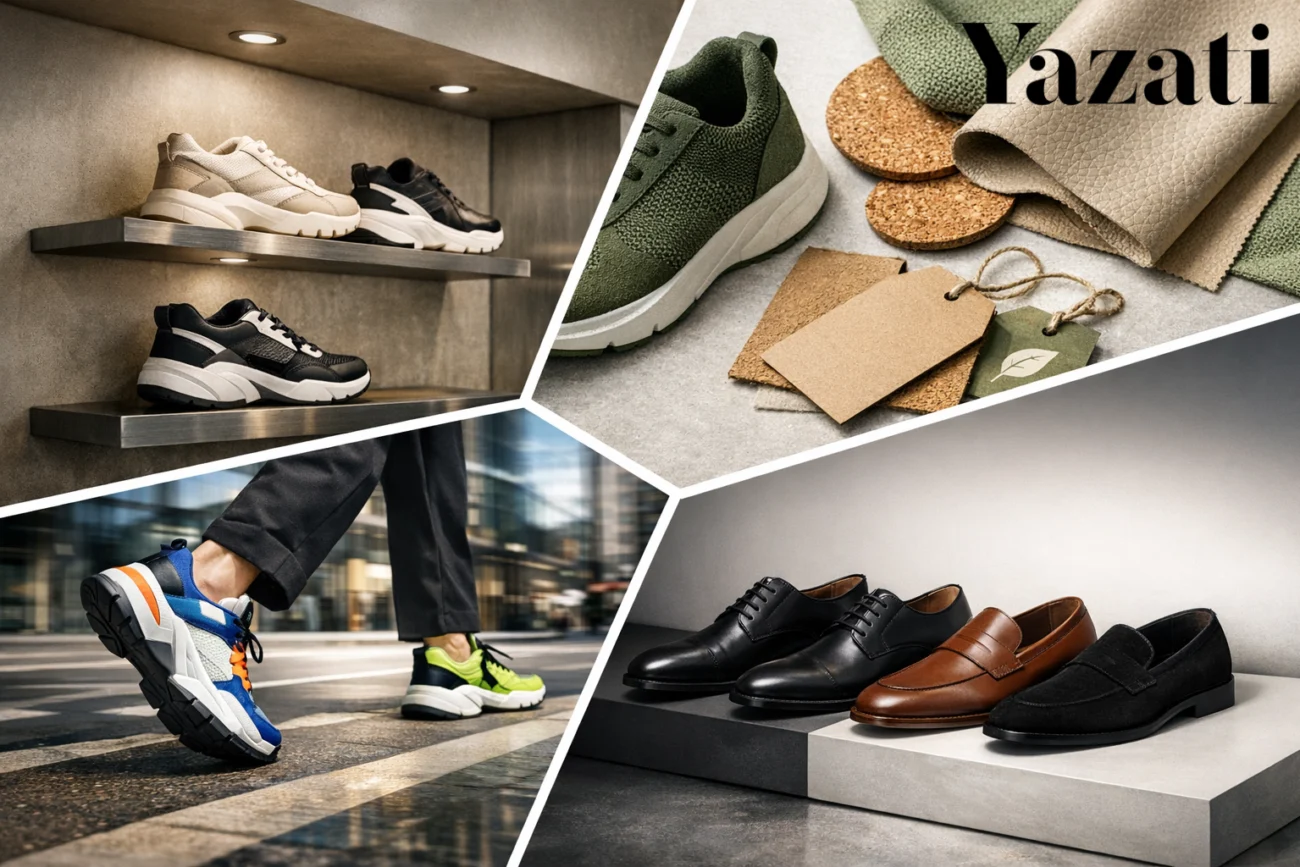
Why Footwear Trends Matter in Global Retail
Footwear is both a fashion statement and a functional necessity. Retailers must respond to:
- Changing consumer tastes
- Social media influences
- Sustainability awareness
- Lifestyle shifts
- Seasonal variations
Brands that adapt quickly to emerging trends often experience higher sales and stronger customer loyalty.
1. Sustainable and Eco-Friendly Footwear
Sustainability is no longer a niche concept—it is mainstream. Consumers worldwide prefer brands that demonstrate environmental responsibility.
Recycled Materials
Many footwear brands now use recycled plastics, rubber, and textiles. Recycled materials reduce environmental impact while maintaining durability.
Popular sustainable features include:
- Recycled soles
- Eco-friendly packaging
- Reclaimed fabric uppers
Sustainability messaging strongly influences purchasing decisions.
Vegan and Plant-Based Alternatives
Vegan leather and plant-based materials are gaining global popularity. Consumers concerned about animal welfare seek cruelty-free footwear options.
Plant-derived materials provide both style and ethical appeal.
2. Minimalist and Neutral Designs
Minimalism continues to dominate international retail.
Clean Silhouettes
Simple shapes with subtle detailing appeal to consumers seeking versatile footwear. Clean designs pair easily with both casual and formal outfits.
Minimalist footwear often features:
- Smooth uppers
- Limited branding
- Streamlined soles
Earth-Tone Color Palettes
Neutral shades such as beige, brown, grey, and off-white are widely preferred. These colors align with modern, understated fashion trends.
Retailers appreciate neutral designs because they sell across multiple seasons.
3. Bold Statement Sneakers
While minimalism remains popular, bold sneakers are equally in demand—especially among younger consumers.
Chunky Soles
Thick, exaggerated soles inspired by athletic and streetwear trends continue to attract attention. These designs combine comfort and visual impact.
Chunky sneakers often create a fashionable, edgy look.
Vibrant Color Blocking
Bright colors, mixed textures, and creative patterns dominate sneaker collections. Statement sneakers appeal strongly to trend-conscious buyers.
Social media platforms significantly influence this demand.
4. Comfort-Driven Footwear Innovation
Comfort has become a priority, particularly after global lifestyle shifts toward remote work and active living.
Cushioned Insoles
Advanced cushioning technology improves foot support. Consumers look for:
- Memory foam insoles
- Shock-absorbing midsoles
- Ergonomic arch support
Comfort-focused features encourage repeat purchases.
Lightweight Construction
Lightweight materials enhance mobility and reduce fatigue. Modern consumers prefer shoes that feel effortless during daily wear.
Lightweight construction also improves performance in athletic-inspired footwear.
5. Hybrid and Multi-Functional Styles
Modern consumers seek versatility.
Day-to-Night Footwear
Hybrid styles transition seamlessly from work to social settings. Examples include:
- Dress sneakers
- Casual loafers
- Smart sandals
Versatility increases product value.
Smart Casual Integration
As workplace dress codes evolve, footwear that blends formal and casual elements gains popularity.
Smart-casual shoes allow comfort without sacrificing professionalism.
How Retailers Can Adapt to These Trends
To stay competitive, retailers should:
- Monitor global fashion reports
- Collaborate with flexible manufacturers
- Test small batches before scaling
- Invest in sustainable materials
- Offer versatile designs
- Prioritize comfort innovation
Strategic sourcing and market research are essential.
5 Footwear Design Trends Dominating International Retail: Frequently Asked Questions
1. Why is sustainable footwear so popular?
Consumers increasingly prioritize environmental responsibility and ethical production.
2. Are minimalist designs still trending?
Yes. Clean, neutral designs remain strong sellers globally.
3. What makes statement sneakers popular?
Bold colors and chunky soles attract younger, fashion-forward consumers.
4. How important is comfort in modern footwear?
Extremely important. Consumers prioritize cushioning and lightweight construction.
5. What are hybrid footwear styles?
They combine formal and casual elements for versatile wear.
6. How can brands stay ahead of footwear trends?
By monitoring consumer behavior, collaborating with innovative manufacturers, and embracing sustainability.
7. Are neutral colors better for global markets?
Neutral colors often perform well due to their universal appeal.
Conclusion
The footwear industry continues to evolve as consumer expectations shift toward sustainability, comfort, and versatility. Understanding the 5 Footwear Design Trends Dominating International Retail helps brands and retailers align with global demand.
The five dominant trends include:
- Sustainable and eco-friendly footwear
- Minimalist and neutral designs
- Bold statement sneakers
- Comfort-driven innovation
- Hybrid and multi-functional styles
Retailers who embrace these trends position themselves for stronger sales and lasting brand loyalty.
In international retail, success belongs to brands that combine style, sustainability, and comfort in every step.
✨ Discover Global Sourcing Excellence with Netyex ✨
Netyex is your trusted B2B sourcing partner, connecting international buyers with India’s finest manufacturers and curated product lines—from handicrafts and home décor to kitchenware, textiles, hospitality essentials, and more. With verified suppliers and end-to-end support, we make global procurement seamless, reliable, and efficient.
👉 Elevate your sourcing experience—explore Netyex today.
📦 Bulk orders & customisation | 🌍 Worldwide delivery | 🤝 Trusted by global buyers
Visit Netyex to source premium Indian products with confidence.