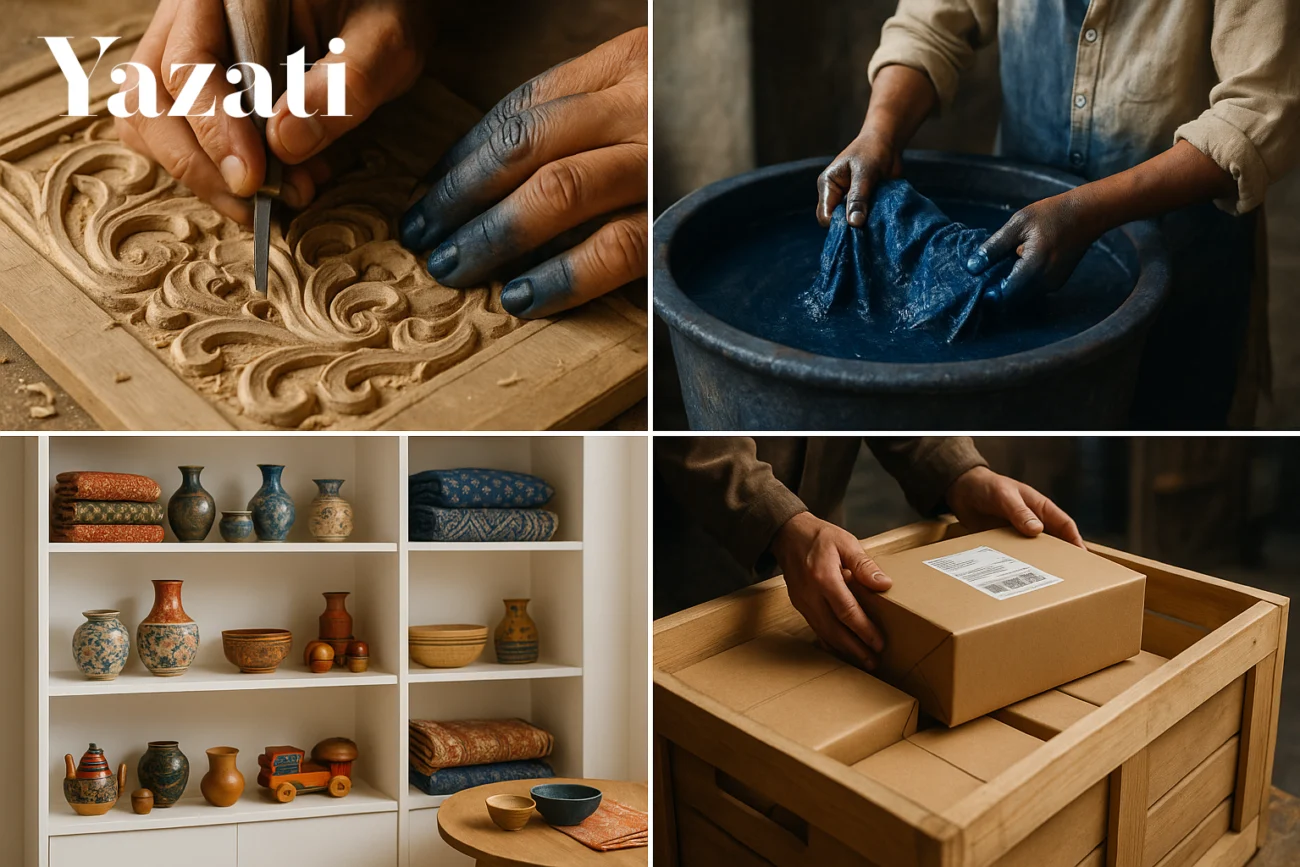
Introduction: The Timeless Artistry of Indian Handicrafts
Indian handicrafts are not merely products — they are stories woven into threads, carved into wood, and painted on clay. From the sands of Rajasthan to the valleys of Kashmir, every artifact represents centuries of tradition, spirituality, and human ingenuity.
In the 21st century, these crafts have crossed borders, finding admirers in homes, galleries, and boutiques worldwide. Yet, the journey of Indian handicrafts from local bazaars to global marketplaces is a fascinating tale of resilience, adaptation, and creativity — one that reflects India’s vibrant cultural identity.
Historical Roots: The Origin and Legacy of Indian Handicrafts
Ancient Civilizations and the Birth of Craftsmanship
Indian handicrafts trace their origins back to the Indus Valley Civilization (c. 2500 BCE), where pottery, jewelry, and weaving flourished. Archaeological finds reveal that Indians were skilled in bead-making, metal casting, and textile production — crafts that still define India’s heritage today.
Mughal and Colonial Influences on Indian Art Forms
The Mughal era introduced Persian aesthetics and luxurious detailing in textiles, miniature paintings, and metalwork. Later, British colonial rule reshaped these crafts through industrialization, creating export-oriented cottage industries. Though artisans faced hardship, the seeds of India’s global craft presence were sown.
Regional Diversity: A Tapestry of Traditions
India’s vast geography nurtures an extraordinary range of art forms, each rooted in local customs and natural resources.
Northern India: Intricate Embroidery and Woodwork
Regions like Kashmir and Punjab are famed for Pashmina shawls, Phulkari embroidery, and walnut wood carvings. These crafts blend utility with elegance, often reflecting motifs inspired by flora and fauna.
Southern India: Temple Art, Weaving, and Metal Crafts
South India boasts Kanchipuram silk, bronze idols from Tamil Nadu, and intricate temple sculptures that echo divine grace. Each piece is a tribute to the region’s deep spiritual ethos.
Eastern India: Terracotta and Textile Masterpieces
West Bengal’s Bishnupur terracotta and Odisha’s Pattachitra paintings exemplify storytelling through art. These crafts often narrate mythological tales using natural dyes and organic materials.
Western India: Mirror Work, Pottery, and Tribal Art
From the mirror-embroidered fabrics of Gujarat to the Warli art of Maharashtra, Western India’s crafts are both aesthetic and symbolic — celebrating everyday life through vivid colors and textures.
Cultural Symbolism: Handicrafts as a Reflection of Indian Heritage
Every handicraft piece serves as a cultural ambassador, carrying symbols of beliefs, festivals, and local identity. Traditional motifs like the lotus, peacock, and elephant embody purity, beauty, and strength — themes deeply ingrained in Indian philosophy.
In this sense, handicrafts are not just commercial goods but spiritual expressions of Indian identity, blending artistry with storytelling.
The Economic Role of Handicrafts in Rural Development
Women Artisans and Self-Help Groups: Driving Change
Over 70% of India’s handicraft workforce comprises women. Through self-help groups (SHGs), many have gained financial independence, transforming their craft into sustainable livelihoods.
Employment and Sustainability Through Craft Clusters
India’s craft clusters—from Moradabad’s brassware to Kutch’s embroidery—provide employment to millions. These communities sustain rural economies and preserve indigenous knowledge, making handicrafts a vital part of India’s informal economy.
The Transformation: From Local Bazaars to Global Markets
The Role of Trade Fairs and Exports
Global platforms like the India Handicrafts & Gifts Fair (IHGF) have elevated artisan visibility, drawing international buyers. Today, Indian handicrafts are exported to over 100 countries, including the U.S., UK, and Germany.
The Influence of E-commerce and Digital Marketplaces
The rise of online platforms like Etsy, Amazon, and IndiaMart has revolutionized accessibility. Artisans now sell directly to global customers, bypassing middlemen and enhancing profit margins.
Challenges Faced by Indian Artisans in the Global Market
Imitation and Intellectual Property Issues
One of the biggest threats is mass-produced replicas of traditional designs, often manufactured abroad. This not only affects authenticity but also the artisans’ income and cultural ownership.
Pricing, Branding, and Quality Constraints
Without strong branding or consistent quality standards, many artisans struggle to compete internationally. Limited digital literacy and lack of modern marketing knowledge further compound the issue.
Government Initiatives and Policies Supporting Handicrafts
Schemes like “Make in India” and “ODOP”
The “One District One Product (ODOP)” initiative promotes unique local crafts, while “Make in India” encourages innovation and export growth within the sector.
Handicrafts Export Promotion Council (EPCH) Initiatives
The EPCH supports artisans with skill development programs, design innovation workshops, and international exhibitions that connect local talent with global buyers.
The Role of NGOs and Social Enterprises in Empowering Artisans
Organizations like Dastkar, FabIndia, and RangSutra bridge the gap between rural artisans and modern consumers. They offer design training, fair wages, and exposure to ethical markets — ensuring that traditional skills remain economically viable.
Sustainability and Eco-Friendly Innovations in Handicrafts
With growing global awareness, many Indian artisans now embrace eco-friendly materials, natural dyes, and zero-waste production. Sustainable handicrafts not only appeal to conscious consumers but also help preserve the environment for future generations.
Case Studies: Indian Crafts Making a Global Mark
Jaipur Blue Pottery and Banarasi Weaving
Jaipur’s blue pottery, known for its Persian roots and non-clay composition, is now exported to Europe and the U.S. Likewise, Banarasi silk sarees have earned global admiration for their luxurious craftsmanship.
Madhubani Art and Channapatna Toys
Madhubani paintings from Bihar, once confined to village walls, now decorate international galleries. Similarly, Channapatna wooden toys from Karnataka have earned GI tags, preserving their cultural identity.
The Future of Indian Handicrafts: Trends and Opportunities
Fusion Designs and Global Collaborations
Designers are collaborating with artisans to create fusion products that blend tradition with contemporary aesthetics, appealing to global audiences.
Handicrafts in Luxury and Ethical Fashion
The global rise of ethical fashion has turned Indian handicrafts into luxury statements. Handwoven fabrics and handmade jewelry are now showcased by top international brands.
FAQs: Common Questions About Indian Handicrafts
1. What makes Indian handicrafts unique?
Each craft is rooted in centuries-old tradition, using local materials and techniques passed down through generations.
2. Which Indian handicrafts are most popular internationally?
Banarasi silk, Pashmina shawls, Madhubani art, and Jaipur blue pottery lead global exports.
3. How are Indian artisans adapting to the digital age?
Through online platforms, digital marketing, and global exhibitions, many artisans now reach customers directly.
4. What are some government schemes supporting artisans?
Programs like ODOP, EPCH, and Make in India aim to boost production, training, and exports.
5. Are Indian handicrafts eco-friendly?
Many crafts use sustainable practices, such as organic dyes and biodegradable materials.
6. How can consumers support Indian artisans?
By purchasing directly from artisan cooperatives or verified e-commerce platforms that ensure fair trade.
Conclusion: Preserving Tradition in a Modern World
The evolution of Indian handicrafts in the global marketplace is a powerful story of adaptation — where ancient traditions meet modern technology. While challenges persist, the resilience and creativity of India’s artisans ensure that these timeless treasures continue to shine across borders.
To sustain this legacy, we must value, promote, and protect these crafts — not just as artifacts, but as living expressions of India’s cultural soul.
✨ Discover Timeless Elegance with Yazati ✨
At Yazati, we bring you a world of handcrafted luxury—from exquisite brass, copper, and wooden decor to artisanal kitchenware, elegant rugs, and premium hospitality essentials. Whether you’re an interior designer, wellness enthusiast, or retail buyer, our curated collections are crafted to inspire and impress.
👉 Elevate your space or gift with grace—explore Yazati today.
📦 Bulk customization available | 🌍 Worldwide shipping | 🛍️ B2B & B2C Friendly