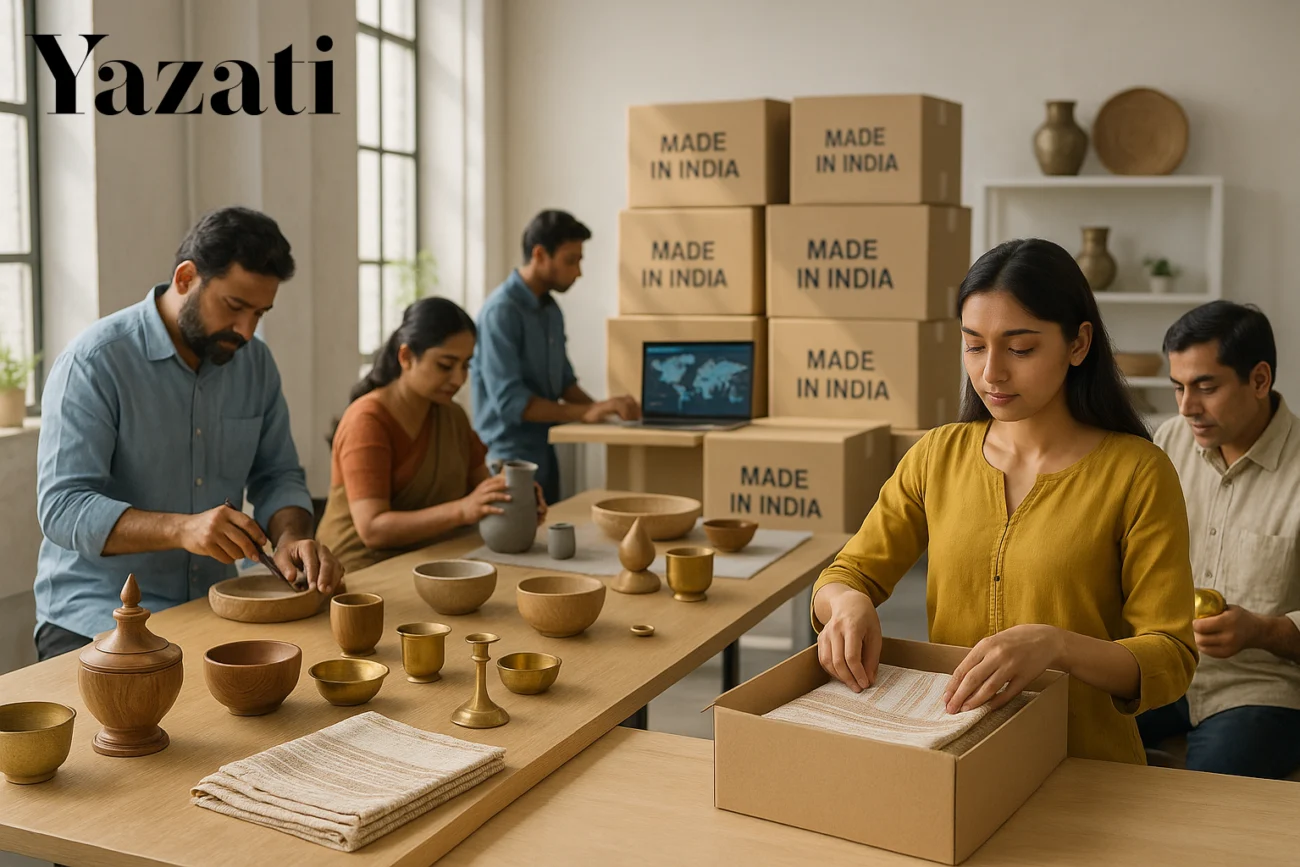
Introduction: India’s Legacy of Craftsmanship and Design Excellence
India’s export story is deeply rooted in its millennia-old tradition of craftsmanship — a vibrant tapestry woven with heritage, innovation, and artistry. For centuries, Indian artisans have been celebrated for their ability to transform raw materials into timeless treasures, from Banarasi silk to intricate brasswork. Today, as the world embraces handmade, ethical, and sustainable products, India’s craft and design sector stands tall as a global powerhouse driving growth, employment, and cultural diplomacy.
The Historical Roots of Indian Artistry
India’s craft legacy dates back over 5,000 years to the Indus Valley Civilization, where evidence of pottery, weaving, and metalwork showcased exceptional skill. Each dynasty — from the Mauryas to the Mughals — added new layers of refinement. Exquisite textiles, jewelry, and carvings became prized commodities along the ancient Silk Route and maritime trade networks.
The Evolution from Local Craft to Global Export
In modern times, India’s handicraft sector has evolved from being community-based to a globally recognized export industry. This transformation has been driven by innovation, government support, and growing global appreciation for sustainable, handmade products. Today, India ranks among the top exporters of handicrafts, contributing billions to its economy and empowering over seven million artisans across rural regions.
India’s Craft & Design Sector: A Snapshot of Diversity and Innovation
Overview of India’s Handicraft and Design Ecosystem
India’s craft and design ecosystem is an incredible mosaic of creativity. Over 3,000 craft forms thrive across the country — from Pashmina weaving in Kashmir to Channapatna toys in Karnataka. Together, these crafts contribute not only to export revenue but also to India’s soft power on the global stage.
Key Export Segments: Handicrafts, Textiles, Jewelry, and Home Décor
India’s major export segments include:
- Handmade textiles and garments
- Jewelry and gemstones
- Wooden and metal home décor
- Leather goods and accessories
- Traditional art and paintings
In FY 2023–24, Indian handicraft exports crossed USD 4 billion, with the US, UK, Germany, and the UAE among the top importing nations.
Regional Craft Clusters Powering India’s Global Reach
India’s regional clusters are the backbone of its export ecosystem:
- Kutch (Gujarat): Embroidery and textiles
- Moradabad (Uttar Pradesh): Brassware
- Jaipur (Rajasthan): Jewelry and block printing
- Kanchipuram (Tamil Nadu): Silk weaving
These clusters preserve centuries-old traditions while adapting to global design sensibilities.
The Growth Trajectory: From Traditional Craft to Contemporary Design
India’s export success lies in its ability to merge traditional craft with modern aesthetics. Designers collaborate with artisans to reinvent heritage crafts for contemporary markets.
Modernization and Fusion of Traditional Techniques
From minimalist terracotta décor to eco-friendly fashion lines, Indian artisans are embracing global trends without losing authenticity. This creative fusion appeals to eco-conscious consumers worldwide.
Role of Design Institutes and Innovation Hubs
Institutions like NID (National Institute of Design) and IICD (Indian Institute of Crafts & Design) play pivotal roles in modernizing traditional craft sectors. They promote innovation, sustainable design practices, and export-oriented strategies.
Government Initiatives Fueling Export Growth
Export Promotion Councils and Schemes
The Export Promotion Council for Handicrafts (EPCH) supports thousands of exporters through trade fairs, design training, and market linkages. Schemes like MEIS, RoDTEP, and MDA provide financial assistance and incentives to exporters.
Policies Boosting the Handicraft and Design Sector
The Indian government’s “Handicraft Mega Cluster Mission” and “Ambedkar Hastshilp Vikas Yojana” aim to modernize craft infrastructure and upskill artisans.
“Make in India” and “ODOP” Success Stories
The One District, One Product (ODOP) initiative highlights unique regional crafts, such as Moradabad brass or Varanasi silk, bringing them international visibility and demand.
Global Market Trends and India’s Competitive Edge
As global consumers increasingly seek authenticity, sustainability, and craftsmanship, India’s export sector finds itself in a unique position of strength. The global market for handmade and ethically sourced goods has grown exponentially, and Indian exporters have skillfully adapted to these shifts by aligning traditional techniques with contemporary design trends.
Rising Demand for Sustainable and Ethical Products
Today’s consumers value more than just aesthetics—they seek stories, heritage, and environmental consciousness. Indian crafts inherently embody these values. Artisans use natural dyes, organic fibers, and centuries-old techniques that are eco-friendly and low-waste. The global rise of ethical luxury and slow fashion has brought Indian handlooms, ceramics, and woodcrafts into premium retail spaces across Europe, North America, and East Asia.
Indian Crafts in High-End International Markets
India’s crafts have transcended borders and now grace high-end boutiques, hotels, and homes worldwide. From Jaipur’s hand-block prints featured in Paris Fashion Week to Kashmiri carpets adorning luxury interiors in Dubai, Indian craftsmanship is being redefined as a symbol of global luxury. The infusion of modern design language by contemporary Indian brands has made these products more appealing to international audiences.
Top Importing Countries and Export Statistics
According to the Export Promotion Council for Handicrafts (EPCH), the top destinations for Indian craft exports include:
- United States (over 35% of total exports)
- United Kingdom
- Germany
- United Arab Emirates
- France and Italy
India’s export growth in this sector averages around 10–12% annually, despite global economic fluctuations. Such resilience demonstrates India’s adaptability and strong market presence.
Digital Transformation and E-Commerce in Craft Exports
Online Platforms Driving Global Sales
The digital revolution has brought unprecedented visibility to India’s artisan community. E-commerce platforms like Etsy, Amazon Handmade, and IndiaMART have bridged the gap between rural artisans and global buyers. Even small-scale weavers or potters can now sell directly to customers in Europe or America without intermediaries.
Role of Social Media in Showcasing Indian Artistry
Social media platforms such as Instagram, Pinterest, and YouTube play a crucial role in storytelling and visual branding. Artisans and designers leverage these tools to narrate the journey behind each creation — showcasing the craftsmanship, cultural roots, and people behind the product. These stories resonate strongly with global consumers seeking authenticity.
Case Studies: Small Artisans Going Global through Digital Tools
For instance, Varnam Craft Collective from Karnataka uses Instagram marketing to reach international customers, while Jaipur Rugs employs an online storytelling approach to connect buyers emotionally with artisans. Such initiatives demonstrate the power of digital tools in democratizing global trade for Indian crafts.
Challenges Facing India’s Craft and Design Exporters
While the growth trajectory is impressive, challenges persist across the value chain.
Quality Standardization and Global Competition
Consistency in quality and adherence to international standards remain pressing concerns. Exporters often face challenges in scaling production while maintaining authenticity. Competing with mass-produced goods from countries like China adds to the complexity.
Supply Chain and Logistics Constraints
Artisan-based production involves decentralized clusters, which can lead to supply chain inefficiencies. Issues like inadequate infrastructure, high logistics costs, and lengthy export documentation processes sometimes hinder growth.
Balancing Tradition with Modern Demand
Preserving heritage while appealing to modern markets is a delicate balance. Some crafts risk losing authenticity when over-commercialized, while others need design innovation to remain relevant globally.
Sustainability and Ethical Production: A New Frontier
Eco-Friendly Materials and Processes
India’s artisans have long used natural, renewable materials such as jute, bamboo, clay, and organic cotton. With growing global demand for sustainable goods, these traditional materials offer a strong competitive advantage.
Designers are integrating eco-printing, zero-waste techniques, and biodegradable packaging, aligning India’s exports with global sustainability benchmarks.
Fair Trade and Empowerment of Artisans
The Fair Trade India Project and NGOs like Dastkar and AIACA ensure artisans receive fair wages, safe working conditions, and international certifications. These initiatives enhance both ethical credibility and market access for exporters.
How Sustainability Enhances Global Branding
Sustainability has become a hallmark of premium branding. When an Indian exporter promotes eco-conscious craft, it signals cultural pride, responsibility, and modernity — traits that deeply resonate with conscious consumers in Europe and the US.
Success Stories: Indian Brands Making Global Impact
Jaipur Rugs: Weaving Stories of Heritage
Founded in 1978, Jaipur Rugs connects over 40,000 rural weavers (90% women) to global markets. Its hand-knotted carpets are now sold in more than 60 countries. The brand’s focus on sustainability and storytelling has earned it international acclaim, including recognition by Harvard Business Review.
FabIndia: From Local Crafts to Global Lifestyle Brand
FabIndia transformed from a small export house into a globally recognized lifestyle brand. By blending traditional techniques with contemporary design, it symbolizes India’s potential to modernize craft while retaining authenticity.
Case Study: Artisans Empowered through Export Networks
The EPCH Handicraft Mega Fair annually showcases thousands of small artisans to global buyers. Many of these artisans — from paper-mâché craftsmen in Kashmir to terracotta artists in West Bengal — secure long-term export deals that sustain entire communities.
Future Outlook: India’s Path to Becoming a Global Design Leader
Emerging Export Markets and Growth Opportunities
Beyond traditional markets, India is now targeting emerging economies in Africa, Southeast Asia, and Latin America. These regions represent untapped potential for design-led exports.
Innovation, Technology, and Skill Development
The integration of AI-driven design tools, 3D printing, and smart textiles is reshaping how India produces and exports craft products. Skill development programs under Skill India and NIFT are preparing a new generation of artisan-entrepreneurs.
Vision 2030: India’s Design-Driven Export Future
By 2030, India aims to position itself as the global design and craft hub — where tradition meets innovation. The government’s emphasis on creative economy development aligns perfectly with global market shifts toward personalization, sustainability, and ethical trade.
FAQs about India’s Export Story in Craft & Design
1. What are India’s top export products in the craft and design sector?
India exports handicrafts, textiles, jewelry, home décor, carpets, leather goods, and traditional artwork.
2. Which countries import the most Indian crafts?
The United States, United Kingdom, Germany, UAE, and France are the leading importers of Indian crafts.
3. How is the Indian government supporting craft exports?
Through initiatives like EPCH, ODOP, Handicraft Mega Clusters, and financial incentives under MEIS and RoDTEP.
4. Why are Indian crafts popular internationally?
Because they offer authenticity, sustainability, intricate craftsmanship, and a rich cultural story behind every product.
5. What challenges do exporters face in this sector?
Key challenges include maintaining quality standards, improving logistics, and adapting traditional designs for modern consumers.
6. How does sustainability influence India’s craft exports?
Eco-friendly materials and fair-trade practices boost brand value, align with consumer demand, and enhance India’s global reputation.
Conclusion: The World Looks to India for Craft, Creativity, and Culture
India’s export story in craft and design is a celebration of heritage meeting innovation. From remote villages to international design fairs, Indian artisans are rewriting the narrative of global craftsmanship. As sustainability and authenticity gain momentum worldwide, India’s timeless artistry stands as a beacon — blending creativity, culture, and commerce to shape the future of ethical global trade.
✨ Discover Global Sourcing Excellence with Netyex ✨
Netyex is your trusted B2B sourcing partner, connecting international buyers with India’s finest manufacturers and curated product lines—from handicrafts and home décor to kitchenware, textiles, hospitality essentials, and more. With verified suppliers and end-to-end support, we make global procurement seamless, reliable, and efficient.
👉 Elevate your sourcing experience—explore Netyex today.
📦 Bulk orders & customisation | 🌍 Worldwide delivery | 🤝 Trusted by global buyers
Visit Netyex to source premium Indian products with confidence.