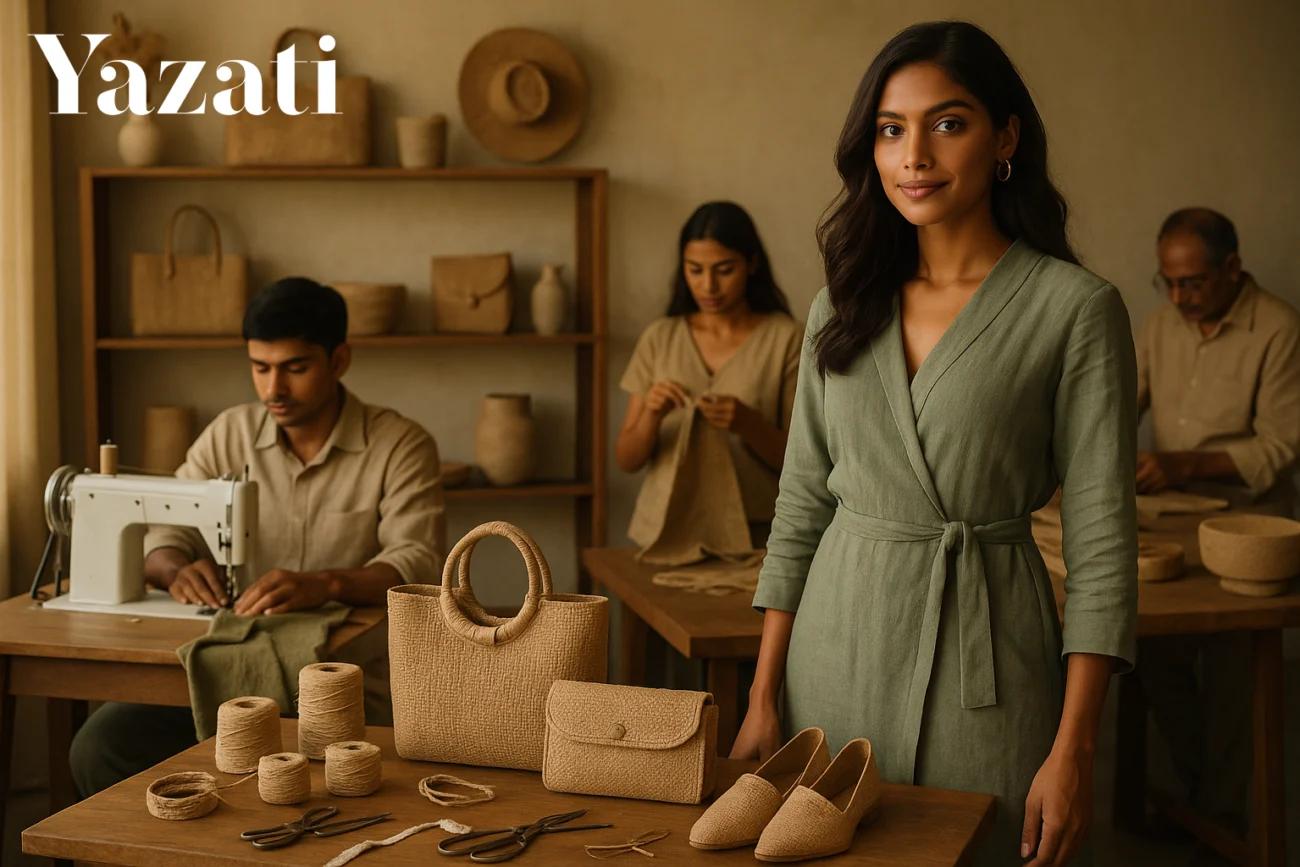
Understanding the Rise of Eco-Fashion in India
The global fashion industry is undergoing a remarkable transformation, driven by a growing awareness of environmental degradation and the urgent need for sustainability. India, with its deep-rooted textile heritage and agricultural diversity, has become a focal point in this green revolution. The rise of eco-fashion—clothing made from sustainable materials and ethical production methods—is reshaping how consumers perceive luxury, style, and responsibility.
In recent years, fashion-conscious millennials and Gen Z shoppers have shifted toward sustainable choices. They demand transparency, traceability, and purpose-driven brands. India’s vast natural fiber resources, including jute and hemp, are now redefining eco-fashion both domestically and internationally.
The Growing Need for Sustainable Materials in Fashion
Fast fashion’s environmental cost—massive water use, pollution, and waste—has sparked an urgent search for sustainable alternatives. Synthetic fibers like polyester and nylon, derived from petroleum, contribute to microplastic pollution and climate change. In contrast, jute and hemp offer biodegradable, renewable, and carbon-efficient solutions.
Indian innovators and designers are capitalizing on these natural fibers to craft stylish yet sustainable collections that appeal to eco-conscious consumers. As a result, the demand for sustainable materials has risen by nearly 40% in the last five years, according to industry reports.
The Historical Roots of Jute and Hemp in Indian Culture
Long before the term “eco-fashion” existed, India had already mastered the art of sustainable living. Both jute and hemp have ancient origins in Indian society. Historical records suggest that hemp was used in the Indus Valley Civilization for textiles and ropes, while Bengal became globally renowned for jute cultivation during the British era.
Regions like West Bengal, Bihar, Assam, and Uttarakhand remain central to the cultivation of these eco-friendly crops. The revival of these natural fibers not only honors India’s heritage but also promotes environmental resilience and rural prosperity.
Traditional Craftsmanship Meets Modern Innovation
Today’s eco-fashion movement seamlessly blends traditional Indian weaving, dyeing, and embroidery techniques with modern aesthetics. Artisans who once created utility-based items like jute sacks or hemp ropes now design high-end fashion accessories, handbags, and couture garments.
Designers like Anita Dongre and startups such as Boheco (Bombay Hemp Company) are redefining luxury through sustainability. The fusion of cultural craftsmanship with innovative design has made Indian jute and hemp products internationally appealing.
Jute: The ‘Golden Fiber’ of India’s Green Revolution
Jute, often called the “Golden Fiber”, is one of the most sustainable natural materials in the world. India is the world’s largest producer, contributing nearly 60% of global jute output. It’s strong, breathable, and naturally biodegradable—qualities that make it ideal for sustainable fashion.
Environmental Benefits of Jute in Fashion
- Biodegradable & Compostable: Jute decomposes naturally, leaving no toxic residue.
- Water-Efficient: Requires 80% less water than cotton.
- Soil Health: Enhances soil fertility through nitrogen fixation.
- Carbon Neutral: Absorbs more CO₂ and releases more oxygen than trees.
These ecological advantages make jute indispensable in the sustainable fashion movement.
Modern Jute Products Transforming the Fashion Scene
From eco-chic handbags and shoes to contemporary home décor and designer apparel, jute has found its place in every corner of fashion. Indian brands like The Burlap People and Earthbags are exporting handcrafted jute accessories globally, setting new trends in eco-luxury.
Hemp: India’s Ancient Crop Reborn in Modern Sustainability
Hemp, once misunderstood, has made a dramatic comeback as a sustainable superstar in the textile world. India’s Himalayan regions, particularly Uttarakhand and Himachal Pradesh, are leading hemp cultivation for industrial use.
Why Hemp is the Future of Sustainable Textiles
Hemp’s advantages are numerous:
- Durability: 3x stronger than cotton.
- Low Water Requirement: Needs less than one-third the water of cotton.
- Pest-Resistant: Grows without pesticides or herbicides.
- Carbon Negative: Absorbs CO₂ during growth, helping combat climate change.
These properties make hemp fabrics ideal for eco-conscious consumers seeking longevity and comfort.
Indian Startups and Designers Championing Hemp Fashion
Brands such as Hemploom, B Label, and Hemis are pioneering hemp-based clothing lines that emphasize minimalism and durability. They focus on creating breathable, natural fabrics that blend comfort with conscience.
The Bombay Hemp Company (Boheco) has been at the forefront of India’s hemp revolution, integrating scientific research with fashion innovation. By promoting hemp-based textiles, they are not only reducing carbon footprints but also creating new livelihood opportunities in rural India. Similarly, brands like Hemp Republic and Hempster have carved a niche in eco-luxury fashion, offering everything from hemp denim to athleisure wear.
These startups represent a new generation of entrepreneurs who view sustainability not as a trend, but as a core business value. Their approach combines environmental responsibility with a strong sense of social justice, making Indian hemp fashion a symbol of conscious consumerism.
The Socio-Economic Impact of Jute & Hemp Production
Beyond environmental benefits, the jute and hemp industries hold immense socio-economic potential. Millions of Indian farmers and artisans depend on natural fiber production for their livelihoods. Jute cultivation provides employment to over 4 million people, while the re-emerging hemp industry is creating new opportunities in regions with limited industrial development.
Empowering Rural Communities and Women
In rural India, particularly in states like West Bengal, Assam, and Bihar, jute processing is a key source of income for women artisans. With the rise of eco-fashion brands sourcing ethically from local weavers, women are gaining financial independence and recognition for their craftsmanship. Similarly, hemp-based projects in Uttarakhand have become models for sustainable rural entrepreneurship, integrating traditional farming with modern design thinking.
Government Policies and Support for Natural Fibers
Recognizing the potential of eco-textiles, the Indian government has introduced several initiatives to promote natural fiber industries. Under the National Jute Policy (2018) and the National Mission on Natural Fibre, farmers receive subsidies for jute and hemp cultivation, along with training in modern farming techniques.
Additionally, states like Uttarakhand have legalized the cultivation of industrial hemp for non-narcotic use, encouraging investment and innovation in hemp textiles. Certification programs such as GOTS (Global Organic Textile Standard) and Fair Trade India are helping brands establish credibility in international markets.
Comparing Jute and Hemp with Synthetic Alternatives
To truly appreciate the eco-friendly nature of jute and hemp, it’s useful to compare them with commonly used synthetic materials.
| Feature | Jute | Hemp | Polyester (Synthetic) |
| Origin | Natural Plant Fiber | Natural Plant Fiber | Petrochemical |
| Biodegradability | 100% | 100% | Non-biodegradable |
| Water Usage | Very Low | Very Low | Moderate |
| Carbon Footprint | Minimal | Negative (absorbs CO₂) | High |
| Durability | High | Very High | Moderate |
| Comfort & Breathability | Excellent | Excellent | Poor |
| Environmental Impact | Positive | Positive | Harmful |
This comparison clearly shows why jute and hemp are emerging as the fabrics of the future — balancing performance with sustainability.
Challenges Facing the Indian Eco-Fashion Movement
Despite the growing global demand for sustainable fashion, the Indian eco-fashion sector faces several challenges:
- High Production Costs – Organic and eco-friendly materials often cost more due to ethical sourcing and limited mechanization.
- Limited Consumer Awareness – Many consumers still perceive sustainable fashion as expensive or niche.
- Lack of Infrastructure – Processing and manufacturing facilities for jute and hemp textiles are still developing.
- Policy Barriers – Regulatory hurdles and inconsistent laws around hemp cultivation slow down expansion.
- Global Competition – Countries like Bangladesh and China dominate natural fiber exports, putting pressure on Indian producers.
Overcoming these challenges will require stronger government support, innovation in textile technology, and greater consumer education.
The Global Influence of Indian Eco-Fashion Exports
Indian jute and hemp products are increasingly capturing international attention. From Paris Fashion Week to London’s Sustainable Fashion Summit, Indian designers are showcasing collections that blend traditional craftsmanship with modern sensibilities.
The export value of jute products from India has surpassed $500 million annually, while hemp exports are projected to grow tenfold by 2030. Partnerships with global brands, such as Patagonia and Stella McCartney, are amplifying India’s reputation as a sustainable fashion powerhouse.
Future Trends: The Road Ahead for Indian Jute & Hemp Fashion
The next decade will witness a technological transformation in India’s natural fiber sector. Here are a few emerging trends shaping the future:
- Plant-Based Dyes & Natural Finishes: Eliminating chemical dyes in favor of natural colorants.
- Circular Fashion Systems: Recycling, upcycling, and zero-waste design processes.
- Smart Textiles: Integrating sustainability with wearable technology.
- Blockchain Traceability: Ensuring transparency from farm to fabric.
- Eco-Fashion Education: Design schools incorporating sustainability in their curricula.
These innovations signal a new era where sustainability and sophistication coexist seamlessly.
FAQs About Indian Jute & Hemp in Eco-Fashion
Q1: Why are jute and hemp considered sustainable materials?
Because they are biodegradable, renewable, and require minimal water and pesticides compared to synthetic alternatives.
Q2: Is hemp fabric legal to produce in India?
Yes, industrial hemp cultivation is legal in several states like Uttarakhand for non-narcotic, textile-based purposes.
Q3: Are jute and hemp fabrics comfortable to wear?
Absolutely. Both fibers are breathable, lightweight, and suitable for warm climates, making them ideal for Indian consumers.
Q4: Which brands in India specialize in hemp or jute fashion?
Popular brands include B Label, Boheco, The Burlap People, and Earthbags, among others.
Q5: How do jute and hemp help rural communities?
They create sustainable livelihoods for farmers and artisans, particularly women, through fair trade and local sourcing.
Q6: Can eco-fashion compete with fast fashion?
While fast fashion dominates the market, eco-fashion appeals to an expanding segment of conscious consumers seeking quality and ethics over quantity.
Conclusion: A Greener, Stylish Tomorrow
India’s jute and hemp industries are not merely reviving traditional materials—they’re redefining the future of global fashion. By merging eco-friendly fibers with ethical design, India stands at the forefront of a movement that’s both sustainable and stylish.
As the world embraces eco-conscious living, Indian jute and hemp products embody a hopeful vision of what fashion can be: beautiful, ethical, and in harmony with nature. The journey toward a greener wardrobe begins not in a factory, but in the fertile fields of India, where nature and creativity walk hand in hand.
✨ Discover Global Sourcing Excellence with Netyex ✨
Netyex is your trusted B2B sourcing partner, connecting international buyers with India’s finest manufacturers and curated product lines—from handicrafts and home décor to kitchenware, textiles, hospitality essentials, and more. With verified suppliers and end-to-end support, we make global procurement seamless, reliable, and efficient.
👉 Elevate your sourcing experience—explore Netyex today.
📦 Bulk orders & customisation | 🌍 Worldwide delivery | 🤝 Trusted by global buyers
Visit Netyex to source premium Indian products with confidence.