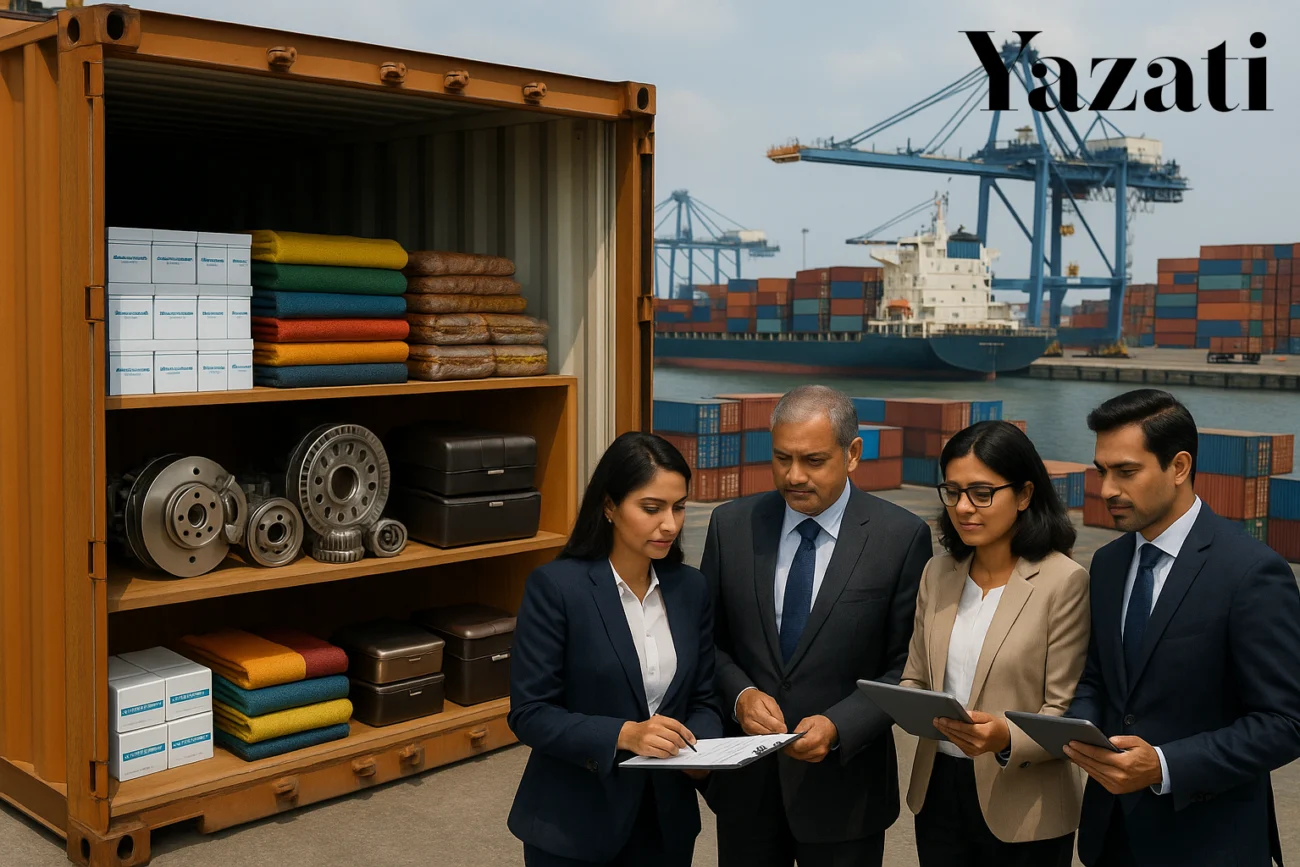
Introduction: India’s Rising Role in Global Trade
India’s export industry is entering a defining phase in 2026, fueled by strong manufacturing growth, digital transformation, and strategic trade partnerships. Over the past decade, the country has evolved from being a service-driven economy to a manufacturing powerhouse, supplying goods and technologies to every corner of the globe.
The Indian government’s focus on “Make in India,” combined with major logistics and customs reforms, has streamlined export processes and made Indian products more competitive. With GDP growth projected above 7% and export revenues expected to surpass USD 800 billion by 2026, global buyers are increasingly turning to India for quality, scale, and innovation.
1. Overview of India’s Export Performance (2020–2025)
Key export trends and growth patterns
From 2020 to 2025, India witnessed a steady rise in merchandise and service exports, averaging 12–15% annual growth. Engineering goods, pharmaceuticals, and chemicals dominated the export charts, while new sectors like electronics and EV components gained momentum.
Policy reforms and trade facilitation measures
The introduction of the Production Linked Incentive (PLI) scheme, reduction in export documentation time through ICEGATE 2.0, and improved port connectivity under the PM Gati Shakti initiative have significantly boosted India’s trade efficiency. These measures have enhanced India’s reputation as a reliable global supplier.
2. India’s Top Export Categories 2026: The Leading Sectors
India’s export landscape in 2026 reflects a diversified, innovation-driven economy. Below are the dominant sectors reshaping the country’s trade portfolio:
Engineering goods and machinery
Engineering exports remain India’s largest export segment, accounting for nearly 25% of total merchandise exports. This includes industrial machinery, auto components, and transport equipment. Countries like the US, Germany, and UAE are major buyers.
Pharmaceuticals and healthcare products
India is known as the “Pharmacy of the World.” By 2026, exports of generic drugs, vaccines, and medical devices are projected to hit USD 60 billion. High-quality, cost-effective production keeps India competitive in regulated markets.
Gems, jewelry, and precious metals
The gems and jewelry sector, driven by gold and diamond polishing, contributes roughly 15% of India’s exports. Surat and Mumbai remain key hubs for global buyers sourcing luxury items.
Textiles, apparel, and leather goods
Indian textiles and leather exports are set to reach new heights with eco-friendly and organic manufacturing gaining traction. The demand for sustainable fashion is opening new opportunities in Europe and the US.
Chemicals, plastics, and petrochemicals
The chemical industry continues to expand, supplying dyes, fertilizers, and polymers to global markets. With increasing investments in green chemistry, India is also aligning with global sustainability standards.
Agricultural and processed food exports
India’s agricultural exports—including rice, spices, tea, coffee, and processed foods—remain a major contributor to foreign exchange earnings. Organic farming initiatives are attracting Western markets focused on traceable, non-GMO produce.
Information technology and digital services
Beyond goods, India’s IT and business process outsourcing (BPO) exports continue to surge, surpassing USD 200 billion. As digitalization deepens, AI and cloud-based service exports are emerging as major growth drivers.
3. Emerging Export Frontiers: Future-Ready Industries
Renewable energy components and EV supply chains
As the world moves toward clean energy, India’s exports of solar modules, lithium-ion batteries, and EV components are expanding rapidly. The government’s green initiatives have drawn substantial FDI into this segment.
Space tech, drones, and defense manufacturing
India’s private space and defense sectors are gaining global attention. Startups supported by ISRO’s IN-SPACe program are now exporting satellite components and drone technologies.
Biotechnology and sustainable innovations
From biofertilizers to sustainable packaging, biotechnology-led exports are becoming the next frontier. India’s focus on circular economy principles enhances its long-term export appeal.
4. Key Export Destinations for Indian Products in 2026
As India strengthens its position as a global export hub, the nation’s trade relationships with key markets are evolving. By 2026, India’s exports are well-diversified across continents, reducing overdependence on any single region.
The United States and North America
The U.S. remains India’s largest export partner, accounting for over 17% of total exports. Major categories include pharmaceuticals, textiles, gems, and engineering goods. With growing geopolitical cooperation under the Indo-Pacific Economic Framework (IPEF), India’s access to North American supply chains is expanding rapidly.
The European Union
India’s trade with the EU has seen steady growth, particularly in chemicals, machinery, and apparel. The upcoming India–EU Free Trade Agreement (FTA), expected to finalize in 2026, promises to further reduce tariffs and streamline regulations, making it easier for Indian exporters to penetrate European markets.
Middle East and African markets
The Gulf Cooperation Council (GCC) countries and African economies are emerging as high-potential destinations for Indian exports. The Middle East’s demand for construction materials, processed foods, and engineering products is rising, while Africa presents opportunities for pharmaceuticals and affordable technology.
ASEAN and Asia-Pacific trade corridors
India’s proximity to ASEAN nations and deepening trade ties with Japan, Singapore, and Australia through the Comprehensive Economic Partnership Agreements (CEPAs) have opened new routes for growth. Electronics, software, and renewable energy exports dominate these regions.
5. Trade Agreements and Policy Support Shaping 2026 Exports
Government initiatives and international trade pacts are playing a transformative role in boosting India’s export competitiveness.
Free trade agreements (FTAs) and regional blocs
India has been proactive in negotiating FTAs with the EU, the UK, Canada, and Australia. These agreements lower tariffs, enhance market access, and promote smoother logistics for exporters.
The role of Make in India and Production Linked Incentive (PLI) schemes
The PLI scheme, launched to promote large-scale manufacturing, continues to strengthen export-oriented sectors like electronics, solar modules, and automotive components. It incentivizes companies to produce locally and export globally.
Customs digitalization and logistics reforms
Digital platforms such as ICEGATE, e-Sanchit, and the National Logistics Policy have streamlined trade operations. These improvements reduce customs clearance time and enhance transparency for global buyers.
6. Challenges and Risks for Exporters and Buyers
While India’s export landscape offers tremendous potential, both exporters and international buyers must be mindful of key challenges.
Currency fluctuations and supply chain constraints
Volatility in currency exchange rates and rising shipping costs can affect trade margins. Exporters are increasingly using hedging tools and diversifying logistics networks to mitigate risks.
Regulatory hurdles and compliance issues
Compliance with international quality standards such as ISO, CE, and REACH remains crucial. Buyers should ensure supplier certifications and sustainability documentation are verified to avoid legal or quality disputes.
Global economic uncertainty and trade disruptions
Geopolitical tensions, inflationary pressures, and climate-related disruptions may impact export flows. However, India’s diversified product base and strong domestic ecosystem make it more resilient than many peers.
7. What International Buyers Need to Know
For global buyers looking to source from India in 2026, understanding local trade dynamics and best practices is essential.
Sourcing strategies and supplier verification
Partnering with verified exporters through government platforms such as India Trade Portal or Export Promotion Councils (EPCs) ensures reliability. Buyers are encouraged to visit supplier facilities or use third-party inspection agencies for quality assurance.
Understanding Indian trade documentation and tariffs
Buyers should familiarize themselves with essential documents such as the Commercial Invoice, Packing List, Certificate of Origin, and Bill of Lading. India’s tariff structures vary across product categories but are steadily being simplified under new trade pacts.
Building long-term supplier relationships
Consistency, transparency, and shared growth goals define successful buyer–supplier relationships. Long-term partnerships often yield better pricing, reliability, and product customization.
8. Case Studies: Successful Export Stories from India
The pharmaceutical export boom post-2023
India’s pharmaceutical sector has seen exponential growth since 2023, particularly in vaccine and API (Active Pharmaceutical Ingredient) exports. Companies like Sun Pharma and Dr. Reddy’s Laboratories have expanded operations to over 100 countries, supported by global demand for affordable healthcare solutions.
India’s rise as an electronics manufacturing hub
Driven by the PLI scheme, India’s electronics exports are projected to surpass USD 120 billion by 2026. Brands such as Foxconn, Dixon Technologies, and Samsung India are establishing large-scale facilities, positioning India as a key player in global supply chains.
9. The Road Ahead: Export Forecasts for 2026 and Beyond
Predicted growth sectors and emerging markets
Between 2026 and 2030, India’s export growth will be driven by green technologies, advanced manufacturing, and digital services. Renewable energy components, biotechnology, and AI-powered IT solutions are expected to dominate future trade portfolios.
Role of digitalization and AI in trade facilitation
AI-enabled export management systems and blockchain-based supply chains are revolutionizing transparency and efficiency. Platforms like Trade Connect India are integrating exporters, logistics firms, and buyers under a unified digital framework.
10. Conclusion: Why India is the Export Partner of the Future
India’s combination of skilled labor, cost advantage, policy support, and technological innovation positions it as a premier export destination in 2026 and beyond. The nation’s diverse production capabilities—from software to solar panels—make it an indispensable partner for buyers seeking both quality and sustainability.
For global buyers, now is the time to strengthen trade ties with India, explore emerging sectors, and leverage the government’s export-friendly policies to build enduring commercial success.
FAQs: India’s Top Export Categories 2026
1. What are India’s major export sectors in 2026?
India’s top export categories include engineering goods, pharmaceuticals, gems and jewelry, textiles, chemicals, agricultural products, and IT services.
2. Which countries are India’s biggest export destinations?
The United States, the European Union, the UAE, Singapore, and the UK are among India’s largest export partners in 2026.
3. How can buyers source products from Indian exporters?
Buyers can use platforms like India Trade Portal, Export Promotion Councils, or verified B2B marketplaces such as IndiaMART to connect with legitimate suppliers.
4. What government schemes are boosting exports in 2026?
Schemes such as Make in India, PLI (Production Linked Incentive), and the National Logistics Policy are driving export-led growth.
5. How are sustainability and ESG affecting export industries?
Exporters are increasingly adopting green practices, renewable energy, and recyclable packaging to meet ESG compliance demanded by global buyers.
6. What trends will define India’s export market by 2030?
Automation, circular economy products, green manufacturing, and cross-border digital trade will shape India’s export trajectory through 2030.
✨ Discover Global Sourcing Excellence with Netyex ✨
Netyex is your trusted B2B sourcing partner, connecting international buyers with India’s finest manufacturers and curated product lines—from handicrafts and home décor to kitchenware, textiles, hospitality essentials, and more. With verified suppliers and end-to-end support, we make global procurement seamless, reliable, and efficient.
👉 Elevate your sourcing experience—explore Netyex today.
📦 Bulk orders & customisation | 🌍 Worldwide delivery | 🤝 Trusted by global buyers
Visit Netyex to source premium Indian products with confidence.