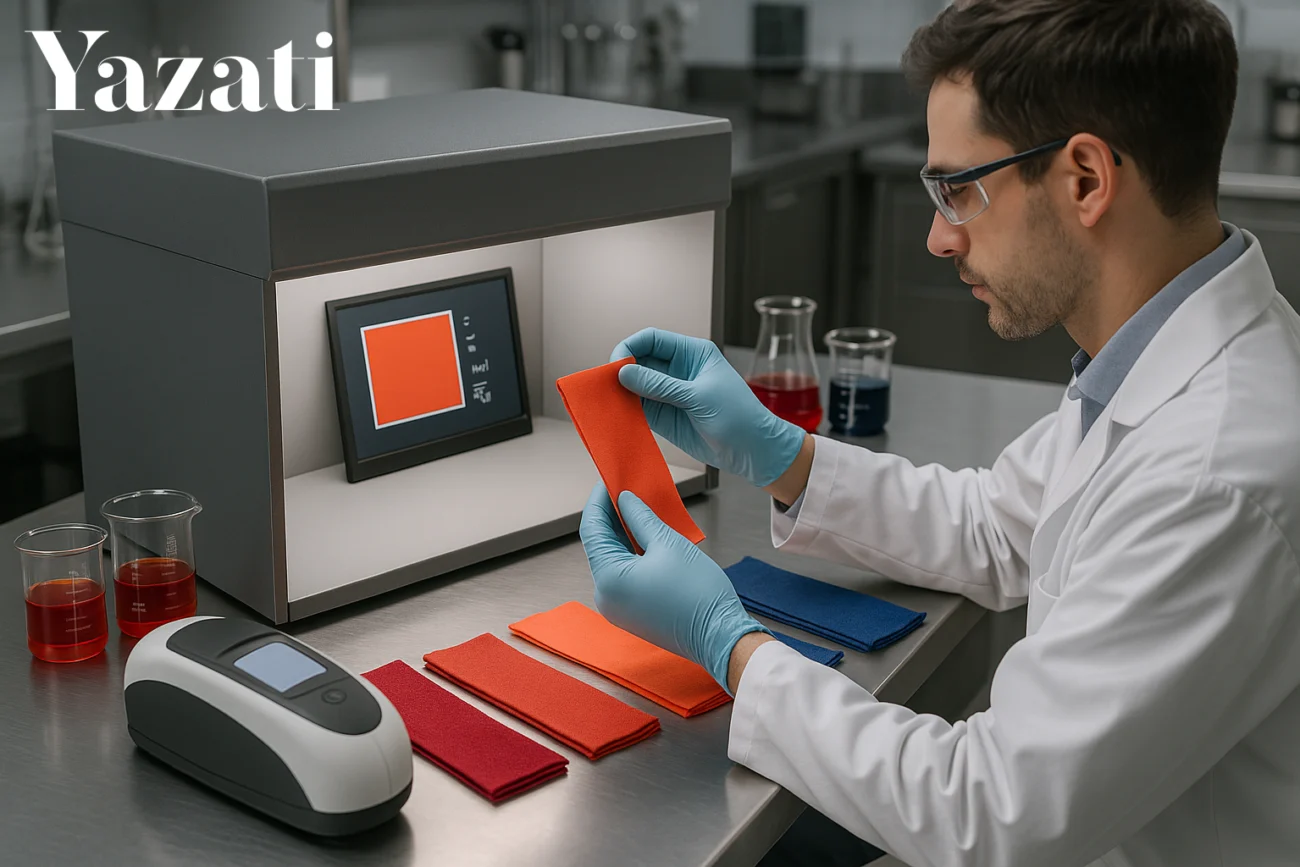
Introduction to the Art and Science of Fabric Dyeing
Fabric dyeing is not just a craft—it’s a sophisticated science that blends chemistry, material engineering, and environmental consciousness. At Yazati, the process of transforming raw fabric into vivid, lasting textiles is perfected through years of innovation and research. The company has redefined textile coloration through precision-based methods and an unwavering commitment to quality.
Yazati’s approach is rooted in the understanding that every fiber type—from cotton to polyester—reacts uniquely to dyes. This deep scientific insight has allowed Yazati to create a dyeing system that ensures color uniformity, durability, and eco-safety.
Understanding the Chemistry Behind Fabric Dyeing
How Dye Molecules Bond with Textile Fibers
At the molecular level, fabric dyeing relies on interactions between dye molecules and fiber polymers. These bonds—ionic, covalent, or hydrogen—determine how firmly a dye attaches to the fabric. Yazati’s chemists use advanced formulations that enhance this bonding process, ensuring that colors resist fading, even after repeated washing.
The Role of Temperature, pH, and Time in Dyeing Results
Each dyeing cycle is controlled through three crucial parameters: temperature, pH, and time. Yazati employs AI-monitored systems that adjust these parameters in real-time to optimize dye absorption and fiber saturation, leading to consistent, vibrant hues.
A Brief History of Fabric Dyeing Innovations
From Natural Pigments to Synthetic Dyes
Ancient civilizations relied on plant and mineral-based pigments like indigo and madder root. But with the industrial revolution came synthetic dyes—more stable, affordable, and diverse. Yazati combines the wisdom of traditional techniques with the precision of modern chemistry.
The Evolution of Modern Dyeing Technologies
Today, digital control systems and eco-reactive dyes define the textile industry. Yazati stands at the forefront of this evolution, using water-efficient technologies that minimize waste without compromising color quality.
The Yazati Approach: Where Science Meets Sustainability
Introduction to Yazati’s Research-Based Dyeing System
Yazati’s laboratories are hubs of innovation. Each dyeing method is tested against fiber chemistry, environmental standards, and end-user performance metrics to ensure excellence.
Eco-Friendly Dyeing: Yazati’s Commitment to Green Chemistry
Through the adoption of low-impact dyes and biodegradable auxiliaries, Yazati demonstrates leadership in sustainable textile production. Their dyeing operations are certified under global eco-standards, reducing carbon footprint and water consumption.
Inside Yazati’s Quality Control Secrets
Step 1: Raw Material Testing and Fiber Compatibility
Every batch begins with rigorous testing of incoming fibers. Yazati’s labs analyze moisture content, fiber fineness, and chemical composition to predict dye uptake performance.
Step 2: Dye Formulation and Molecular Precision
Yazati’s proprietary software simulates molecular interactions to formulate dyes that bond optimally with each fabric type.
Step 3: Controlled Dye Bath Parameters
AI-assisted systems monitor the dye bath, automatically adjusting temperature, flow, and pH levels to achieve uniform penetration.
Step 4: Post-Dye Quality Assurance and Colorfastness Testing
After dyeing, samples undergo multiple quality tests—rubbing, washing, light exposure, and perspiration resistance—to confirm that colors remain true and vibrant.
Advanced Analytical Techniques Used at Yazati
Spectrophotometric Color Measurement
Spectrophotometers help Yazati achieve exact shade matching by measuring reflected light wavelengths from dyed fabrics.
Microscopic Fiber Analysis and Surface Uniformity
Under microscopes, Yazati’s analysts inspect the fabric’s surface to identify uneven dye distribution or fiber damage.
Chromatographic Testing for Dye Stability
Gas and liquid chromatography are used to confirm the chemical stability of dyes under various environmental conditions.
Common Challenges in Fabric Dyeing and Yazati’s Solutions
- Uneven dyeing → Solved through real-time flow monitoring
- Water pollution → Managed by using closed-loop effluent systems
- Color fading → Prevented by controlled pH stabilization and UV-resistant dyes
The Role of Automation and AI in Yazati’s Dyeing Process
Yazati’s integration of AI has transformed dyeing from an art into a data-driven science. Predictive analytics help forecast batch consistency, while IoT sensors ensure real-time adjustments, eliminating human error.
Comparing Yazati’s Dyeing Standards with Industry Benchmarks
Yazati adheres to ISO 105 and OEKO-TEX® standards, but often exceeds them by introducing in-house durability benchmarks for colorfastness, even in extreme climatic conditions.
The Future of Fabric Dyeing Technology
Innovations like nanotechnology and supercritical CO₂ dyeing are the future. Yazati’s R&D division is already testing waterless dyeing techniques that could revolutionize textile manufacturing worldwide.
Why Quality Control is the Heart of Yazati’s Brand Identity
At Yazati, quality control is more than a procedure—it’s a philosophy. Each garment reflects the company’s dedication to consistency, trust, and scientific mastery.
FAQs About The Science of Fabric Dyeing: Yazati’s Quality Control Secrets
- What makes Yazati’s dyeing process unique?
Yazati’s blend of AI, eco-friendly chemistry, and precision control systems ensures unmatched consistency and sustainability. - Does Yazati use natural or synthetic dyes?
Both—depending on fabric type and end-use requirements, balancing performance and environmental impact. - How does Yazati maintain colorfastness?
Through multi-stage testing involving wash, rub, and light exposure simulations. - Is Yazati’s dyeing process environmentally safe?
Yes, Yazati’s closed-loop systems and biodegradable chemicals minimize waste and pollution. - What quality standards does Yazati follow?
Yazati meets ISO, GOTS, and OEKO-TEX certifications for global textile excellence. - How does Yazati ensure batch-to-batch consistency?
AI-driven color calibration and spectrophotometric analysis guarantee precise replication.
Conclusion: Redefining Fabric Dyeing with Science and Precision
The Science of Fabric Dyeing: Yazati’s Quality Control Secrets reveals how innovation, chemistry, and automation have made Yazati a pioneer in textile coloration. Through sustainable methods and meticulous testing, Yazati continues to set the gold standard for color perfection and environmental responsibility.
✨ Discover Global Sourcing Excellence with Netyex ✨
Netyex is your trusted B2B sourcing partner, connecting international buyers with India’s finest manufacturers and curated product lines—from handicrafts and home décor to kitchenware, textiles, hospitality essentials, and more. With verified suppliers and end-to-end support, we make global procurement seamless, reliable, and efficient.
👉 Elevate your sourcing experience—explore Netyex today.
📦 Bulk orders & customisation | 🌍 Worldwide delivery | 🤝 Trusted by global buyers
Visit Netyex to source premium Indian products with confidence.