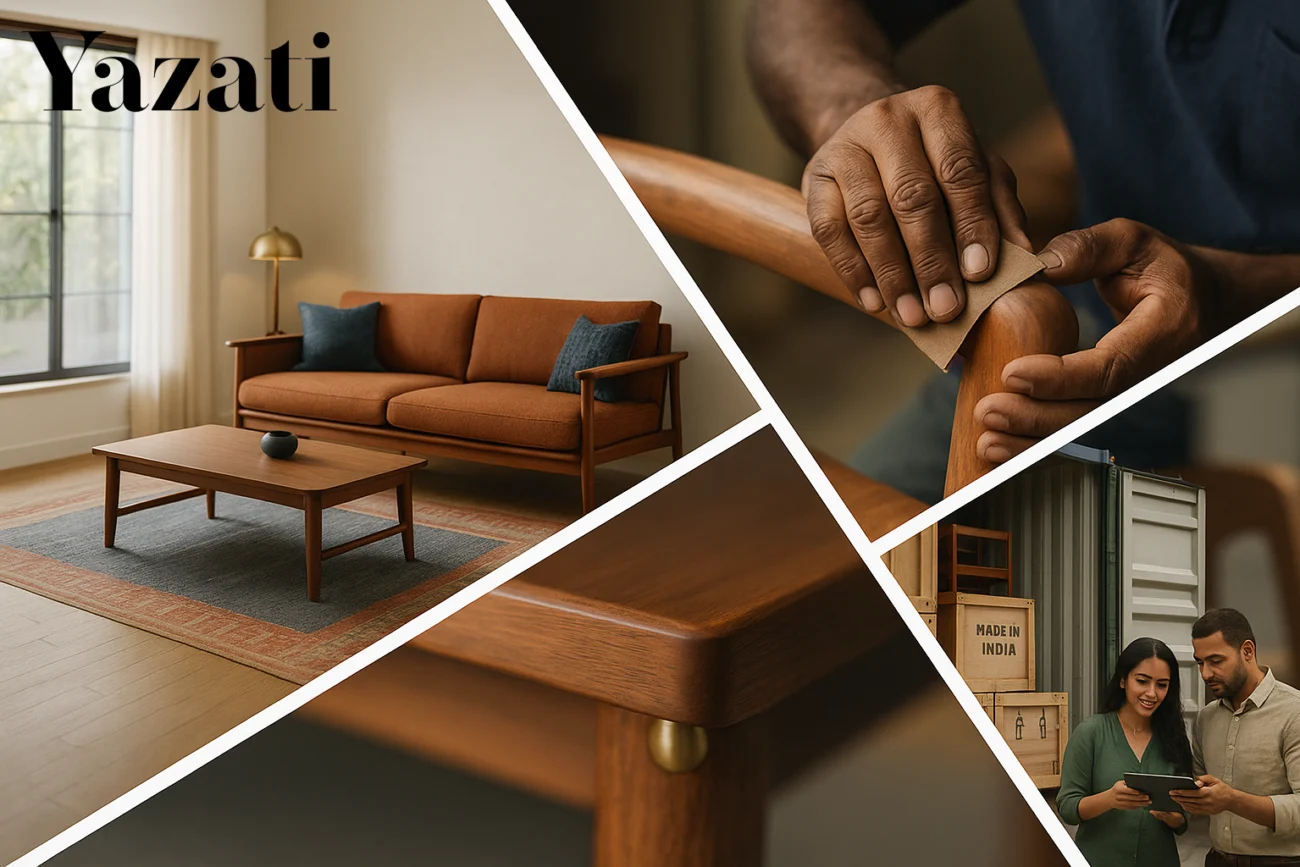
Introduction: The Renaissance of Indian Furniture in Global Markets
The global furniture industry has entered a new era—one where India’s craftsmanship, creativity, and cultural richness are taking center stage. For decades, Indian furniture exports were defined by traditional designs and artisanal roots. But the winds of change are blowing strong, and at the forefront of this transformation stands Yazati, a pioneering furniture brand that’s reshaping global perceptions of modern Indian furniture exports.
India’s furniture export market is currently valued at over $2 billion, and experts project a growth rate of nearly 12% annually. This surge is driven by brands like Yazati that combine heritage craftsmanship with modern innovation. Through their sustainable practices, cutting-edge technology, and refined aesthetics, Yazati has emerged as a key player in rebranding “Made in India” furniture for the world stage.
A Brief Overview of Yazati’s Vision and Mission
At its core, Yazati is more than just a furniture manufacturer—it’s a design movement. Founded with the mission to blend India’s artistic heritage with global design sensibilities, Yazati has built a strong export presence across Europe, the Middle East, and North America. The brand’s guiding philosophy revolves around three pillars: sustainability, innovation, and authenticity.
The Origin Story: Craftsmanship Meets Contemporary Design
Yazati was born from the idea that handcrafted Indian furniture deserves a modern identity. Each piece reflects the elegance of Indian woodwork while embracing minimalist, ergonomic designs that suit global interiors. This duality—ancient craft meets modern utility—is what gives Yazati its distinctive appeal among international buyers.
Sustainable Foundations: Eco-Conscious Manufacturing Practices
In an age where sustainability is no longer optional, Yazati has established itself as an eco-conscious pioneer. From sourcing ethically harvested wood to using water-based finishes and solar-powered manufacturing units, Yazati ensures that every piece contributes positively to the environment. This focus on green manufacturing not only enhances brand credibility but also resonates deeply with eco-aware international clients.
Modern Indian Furniture: A Global Trend Reimagined
Fusion of Traditional Artistry and Modern Minimalism
Modern Indian furniture is evolving into a fusion of cultural storytelling and contemporary aesthetics. Yazati’s designs often feature subtle Indian motifs, inlays, or carvings—yet their form remains sleek and minimalist. This delicate balance appeals to Western markets that crave exotic authenticity without sacrificing modern functionality.
Innovation Through Technology and Customization
Yazati embraces innovation at every stage of production. The company leverages 3D modeling, augmented reality (AR) visualization, and modular design systems to cater to clients across continents. Through AI-powered customization tools, buyers can preview and tailor furniture pieces virtually—bridging the gap between digital innovation and artisanal excellence.
Yazati’s Global Footprint: Expanding Beyond Borders
Strategic Export Destinations and Market Analysis
Over the past five years, Yazati has rapidly expanded into key markets such as the United States, Germany, Australia, and the UAE. Each region presents unique demands—American buyers value modular practicality, while European clients prefer eco-certified craftsmanship. Yazati’s adaptability has made it a preferred export partner for high-end furniture retailers worldwide.
Collaborations and B2B Partnerships
Yazati’s success isn’t limited to retail exports. The brand has forged strategic alliances with architectural firms, hospitality chains, and design houses. From luxury hotels in Dubai to boutique offices in Berlin, Yazati’s bespoke furniture solutions are helping Indian design make its mark on global interiors.
The Competitive Edge: What Sets Yazati Apart
Quality Assurance and Ethical Production
Every Yazati product passes through a rigorous multi-layered quality control process. Using precision engineering and craftsmanship audits, Yazati ensures consistent excellence across exports. Moreover, fair wages, safe working conditions, and local employment initiatives solidify Yazati’s reputation as an ethical global exporter.
Affordability Meets Luxury
While most premium brands position themselves exclusively in the luxury segment, Yazati bridges the gap between affordability and sophistication. Their optimized production techniques and direct-export model reduce overhead costs—offering global buyers high-end furniture at competitive prices.
Challenges in Indian Furniture Exports and Yazati’s Strategic Responses
Logistics, Tariffs, and Supply Chain Complexity
International trade often comes with complex logistics and variable tariffs. Yazati tackles these challenges through digitized supply chain management and strategic warehousing in global hubs. Their logistics system tracks shipments in real time, minimizing delivery delays and ensuring seamless export operations.
Adapting to Changing Consumer Preferences
Today’s consumers demand furniture that’s modular, sustainable, and tech-integrated. Yazati invests heavily in R&D to stay ahead of trends, frequently updating its catalog with designs inspired by Scandinavian minimalism, Japanese wabi-sabi, and Indian craftsmanship—making it a truly global fusion brand.
The Future of Indian Furniture Exports with Yazati Leading the Way
As global demand for ethically made, handcrafted furniture continues to rise, Yazati is strategically positioned to lead the charge. The company plans to expand into smart furniture technology, eco-certified materials, and AI-assisted customization in the coming years. Its vision extends beyond exports—toward redefining India’s position as a furniture design powerhouse.
FAQs about Yazati and Modern Indian Furniture Exports
Q1. What makes Yazati unique in the Indian furniture export market?
Yazati’s unique blend of traditional craftsmanship, sustainable design, and modern technology sets it apart from competitors.
Q2. Where does Yazati export its furniture?
Yazati exports to over 15 countries, including the USA, UK, UAE, Germany, and Australia.
Q3. Does Yazati use eco-friendly materials?
Yes. Yazati prioritizes responsibly sourced wood, low-VOC finishes, and energy-efficient production processes.
Q4. How does Yazati ensure product quality for international clients?
Every product undergoes multi-stage quality checks, durability testing, and compliance with international standards.
Q5. Is Yazati involved in B2B collaborations?
Absolutely. Yazati collaborates with designers, architects, and hospitality brands to deliver tailored furniture solutions.
Q6. What’s Yazati’s vision for the future?
To make Indian craftsmanship a global design benchmark while championing sustainable luxury.
Conclusion: Yazati—Crafting the Future of Global Furniture Trade
Yazati’s journey symbolizes the new face of Indian furniture exports—one that’s deeply rooted in tradition yet boldly modern in execution. By integrating innovation, sustainability, and global design sensibility, Yazati has proven that Indian brands can not only compete but also lead on the world stage.
As the furniture industry continues to evolve, Yazati’s role in redefining modern Indian furniture exports will remain pivotal—crafting a legacy of excellence that bridges continents, cultures, and craftsmanship.
✨ Discover Global Sourcing Excellence with Netyex ✨
Netyex is your trusted B2B sourcing partner, connecting international buyers with India’s finest manufacturers and curated product lines—from handicrafts and home décor to kitchenware, textiles, hospitality essentials, and more. With verified suppliers and end-to-end support, we make global procurement seamless, reliable, and efficient.
👉 Elevate your sourcing experience—explore Netyex today.
📦 Bulk orders & customisation | 🌍 Worldwide delivery | 🤝 Trusted by global buyers
Visit Netyex to source premium Indian products with confidence.