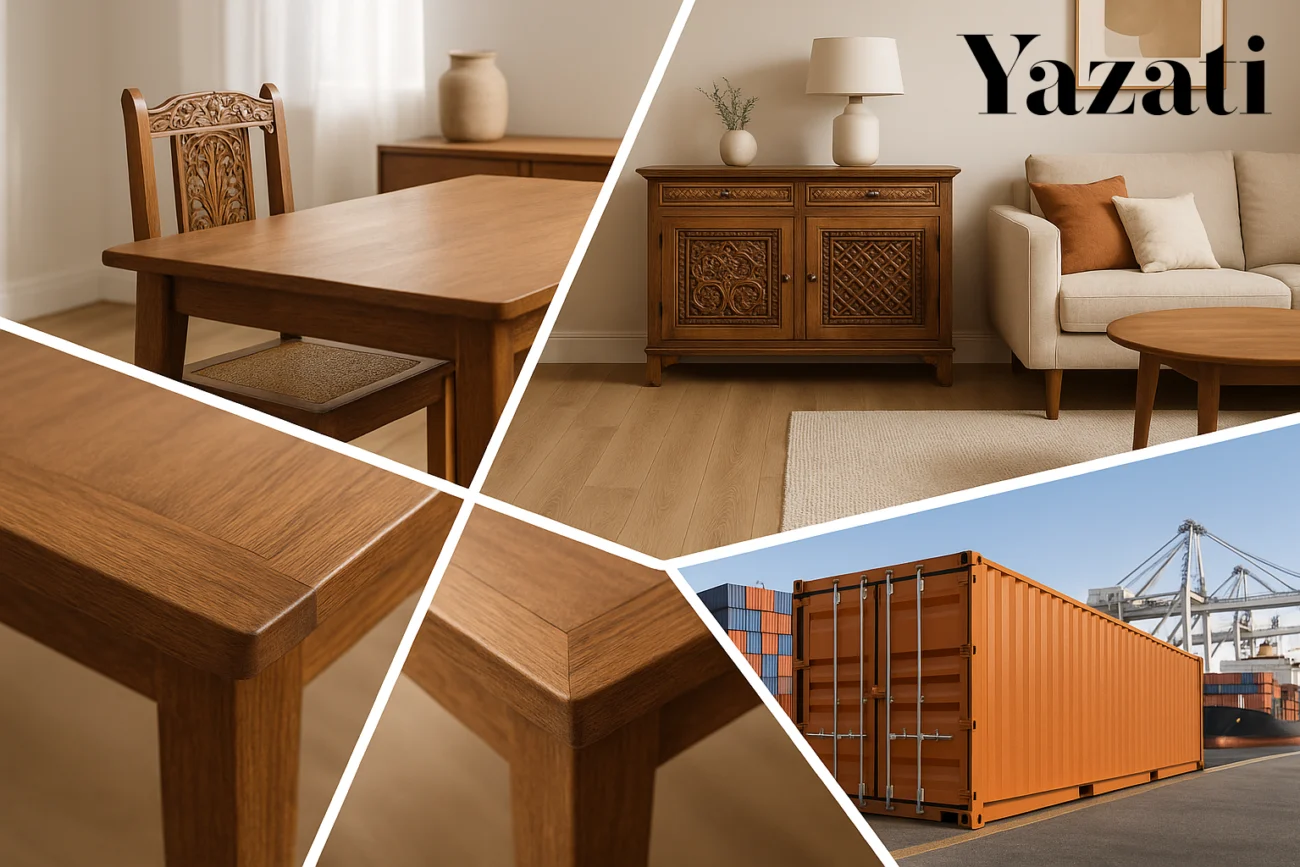
Introduction: The Rise of Indian Furniture in Global Trade
India’s furniture industry has witnessed exponential growth over the last decade, fueled by rich craftsmanship, sustainable materials, and competitive manufacturing costs. As European consumers increasingly favor authentic, handcrafted, and eco-friendly furniture, the export potential of Indian furniture in European markets has reached unprecedented levels.
The global shift toward sustainable living and personalized interiors has placed Indian wooden and artisanal furniture in the spotlight. From Jodhpur’s rustic Sheesham wood to Kerala’s elegant cane designs, Indian craftsmanship has carved a niche in both traditional and contemporary European homes.
Overview of the Indian Furniture Industry
Historical Background and Growth Trajectory
Indian furniture-making dates back centuries, rooted in cultural artistry and royal heritage. The post-independence era saw regional artisans modernize production techniques while preserving handcrafting traditions. Between 2015 and 2024, India’s furniture exports grew at a CAGR of over 15%, positioning the country among the top 20 global furniture exporters.
Major Furniture Clusters in India
India’s furniture industry thrives in several specialized clusters:
- Jodhpur, Rajasthan – Known for wooden and antique-style furniture.
- Saharanpur, Uttar Pradesh – Renowned for wood carving and intricate craftsmanship.
- Kerala and Assam – Leaders in bamboo and cane furniture.
- Mumbai and Delhi NCR – Emerging hubs for contemporary and luxury furniture.
Key Materials and Craftsmanship Styles
Indian furniture is primarily made from Sheesham (Indian rosewood), teak, mango wood, and reclaimed timber. Artisans integrate regional motifs, hand carvings, and inlay work — attributes that strongly appeal to European consumers seeking authenticity.
Global Demand for Indian Furniture
Popularity of Indian Furniture in International Markets
Indian furniture exports now reach over 120 countries. Demand is particularly strong in the US, UK, Germany, France, and the UAE. The European Union (EU) accounts for nearly 25% of India’s total furniture exports, highlighting a strong and growing market presence.
Why Europe is a Strategic Destination for Indian Furniture Exporters
Europe’s high purchasing power, increasing interest in sustainable interiors, and appreciation for handcrafted products make it a lucrative export destination. Additionally, India’s competitive labor costs and skilled artisan base provide a distinct advantage over mass-produced European goods.
Understanding the European Furniture Market
Market Size, Consumer Preferences, and Design Trends
The European furniture market is valued at over €120 billion (2025 projection), with countries like Germany, Italy, France, and the UK leading in imports. European consumers are shifting towards:
- Minimalist yet ethnic designs
- Sustainable and eco-certified materials
- Custom and handcrafted furniture
- Durable products made from solid wood
Import Regulations, Certifications, and Sustainability Standards
To penetrate the European market, Indian exporters must comply with EU Timber Regulation (EUTR), FSC certification, and REACH standards. Meeting these sustainability benchmarks is essential for long-term competitiveness.
Key European Countries with High Import Demand
| Country | Import Share (%) | Key Demand Segment |
| Germany | 22% | Wooden & Sustainable Furniture |
| UK | 18% | Handcrafted & Rustic Styles |
| France | 15% | Luxury & Design-Centric Furniture |
| Italy | 10% | Modern & Minimalist Furniture |
The Export Potential of Indian Furniture in European Markets
Competitive Advantages of Indian Furniture Exporters
Indian furniture exporters possess multiple strengths:
- Abundant availability of skilled artisans
- Cost-efficient production models
- Unique, handcrafted designs
- Use of eco-friendly and reclaimed materials
Key Product Categories with High Demand
- Solid wooden furniture (Sheesham, teak, mango)
- Hand-carved and antique reproductions
- Cane, bamboo, and rattan furniture
- Modular furniture for modern homes
Opportunities in Luxury and Sustainable Segments
Europe’s shift toward sustainable living opens doors for Indian exporters to target eco-certified and luxury handmade segments. Integrating design innovation with sustainability practices can substantially boost export potential.
Trade Policies and Government Initiatives Supporting Furniture Exports
Role of Export Promotion Councils
The Export Promotion Council for Handicrafts (EPCH) plays a pivotal role in promoting Indian furniture globally. Initiatives like the “Make in India” campaign and Market Access Initiative (MAI) have improved visibility and participation in European trade fairs.
Incentives for Exporters
Government programs such as MEIS, RoDTEP, and Special Economic Zones (SEZs) offer tax rebates, infrastructure support, and credit facilities, empowering furniture manufacturers to expand their export capacity.
Key Challenges in Exporting to European Markets
Compliance, Logistics, and Cost Challenges
Shipping large, bulky furniture involves high freight costs and customs complexities. Non-compliance with EU safety and quality standards can lead to product rejections, impacting reputation and profitability.
Quality Standards and Certification Barriers
Obtaining FSC and CE certifications requires investment and documentation. However, these certifications are essential for credibility and access to major European retailers.
Case Studies: Successful Indian Furniture Exporters in Europe
Jodhpur Artisans and Handicraft Enterprises
Jodhpur — often dubbed the “Furniture Capital of India” — has become synonymous with high-quality wooden furniture exports. Local enterprises like Artisan Furniture, Induscraft, and Ancient Mariner have successfully penetrated European markets through a combination of traditional artistry and contemporary design.
Their business models emphasize:
- Ethical sourcing of Sheesham and mango wood
- Partnerships with European distributors and online retailers
- Maintaining eco-friendly manufacturing and packaging practices
These exporters showcase how traditional craftsmanship can coexist with global sustainability standards, earning both profitability and cultural recognition.
Sustainable Bamboo and Cane Furniture Success Stories
In Southern India, several enterprises have leveraged bamboo and cane furniture as sustainable export alternatives. Companies from Kerala and Assam now cater to the growing European demand for lightweight, biodegradable, and modern-looking furniture.
For example, Bamboooz India collaborates with Scandinavian retailers to supply custom eco-furniture, merging India’s natural materials with Nordic minimalism — a perfect blend of tradition and trend.
Digital Transformation in Furniture Exports
Role of E-commerce and Online Marketplaces
Digitalization has revolutionized the way Indian furniture reaches global buyers. Marketplaces like Wayfair, Etsy, Amazon Europe, and Alibaba allow Indian sellers to showcase unique, handcrafted pieces to millions of customers.
Small and medium enterprises (SMEs) can now bypass traditional intermediaries, enabling direct trade and higher profit margins. Platforms such as IndiaMART and TradeIndia also help exporters connect with B2B buyers across Europe.
Leveraging Digital Marketing and B2B Portals
Exporters are increasingly using digital marketing, SEO, and social media advertising to strengthen brand visibility.
Strategies include:
- Showcasing product videos and artisan stories
- Using Instagram and Pinterest for design inspiration marketing
- Joining B2B portals and virtual trade fairs to reach European importers
This online presence not only builds credibility but also allows small artisans to compete globally without a physical showroom.
Future Outlook and Market Forecast (2025–2030)
Emerging Trends in Furniture Design and Consumer Behavior
Between 2025 and 2030, the European furniture market is expected to grow by 4–5% annually, with significant demand for eco-friendly, multifunctional, and handcrafted designs.
Emerging trends include:
- Upcycled furniture using reclaimed wood
- Smart furniture integrating technology
- Customizable designs catering to urban consumers
- Circular economy practices, reducing waste and carbon footprints
Indian exporters who adopt sustainable materials, modern designs, and digital tools will likely dominate this evolving market segment.
Growth Projections and Export Targets for Indian Furniture
According to India’s Ministry of Commerce, the furniture export sector aims to cross USD 10 billion by 2030, with Europe expected to account for 35–40% of total exports.
Investments in infrastructure, logistics, and compliance standards will further enhance India’s export readiness, making it a global furniture manufacturing hub.
FAQs on The Export Potential of Indian Furniture in European Markets
1. Which European countries import the most Indian furniture?
Germany, the United Kingdom, France, Italy, and the Netherlands are the top European destinations for Indian furniture exports due to strong demand for handcrafted and sustainable pieces.
2. What are the main materials used in Indian furniture exports?
Indian furniture exporters primarily use Sheesham (Indian rosewood), teak, mango wood, bamboo, and rattan — all prized for durability and natural appeal.
3. What certifications are required to export furniture to Europe?
Key certifications include FSC (Forest Stewardship Council) for sustainable sourcing, EUTR compliance for legal timber trade, and CE marking for product safety standards.
4. How can small Indian manufacturers enter the European market?
They can start by:
- Registering on B2B marketplaces
- Partnering with European importers
- Participating in trade fairs like IMM Cologne or Maison & Objet
- Obtaining necessary export and sustainability certifications
5. What are the challenges Indian exporters face in Europe?
The major challenges include stringent quality and sustainability requirements, high shipping costs, long logistics timelines, and complex documentation processes.
6. What is the future of Indian furniture exports in Europe?
The future looks bright! With growing appreciation for eco-friendly and handmade furniture, Indian exporters have a golden opportunity to expand market share through innovation, quality, and compliance.
Conclusion: Building a Sustainable Future for Indian Furniture Exports
The export potential of Indian furniture in European markets is both promising and transformative. India’s blend of artistry, sustainability, and affordability positions it uniquely to cater to Europe’s discerning consumers.
As sustainability becomes the cornerstone of European design, Indian manufacturers who adopt ethical sourcing, eco-certification, and design innovation will lead the next wave of global furniture trade. By embracing digital platforms, building strong export alliances, and maintaining high-quality standards, India can confidently establish itself as the “Design and Craftsmanship Capital of the World.”
For businesses and policymakers alike, this is the perfect moment to invest in infrastructure, design innovation, and sustainability — shaping a future where Indian furniture not only decorates European homes but defines global style.
✨ Discover Global Sourcing Excellence with Netyex ✨
Netyex is your trusted B2B sourcing partner, connecting international buyers with India’s finest manufacturers and curated product lines—from handicrafts and home décor to kitchenware, textiles, hospitality essentials, and more. With verified suppliers and end-to-end support, we make global procurement seamless, reliable, and efficient.
👉 Elevate your sourcing experience—explore Netyex today.
📦 Bulk orders & customisation | 🌍 Worldwide delivery | 🤝 Trusted by global buyers
Visit Netyex to source premium Indian products with confidence.