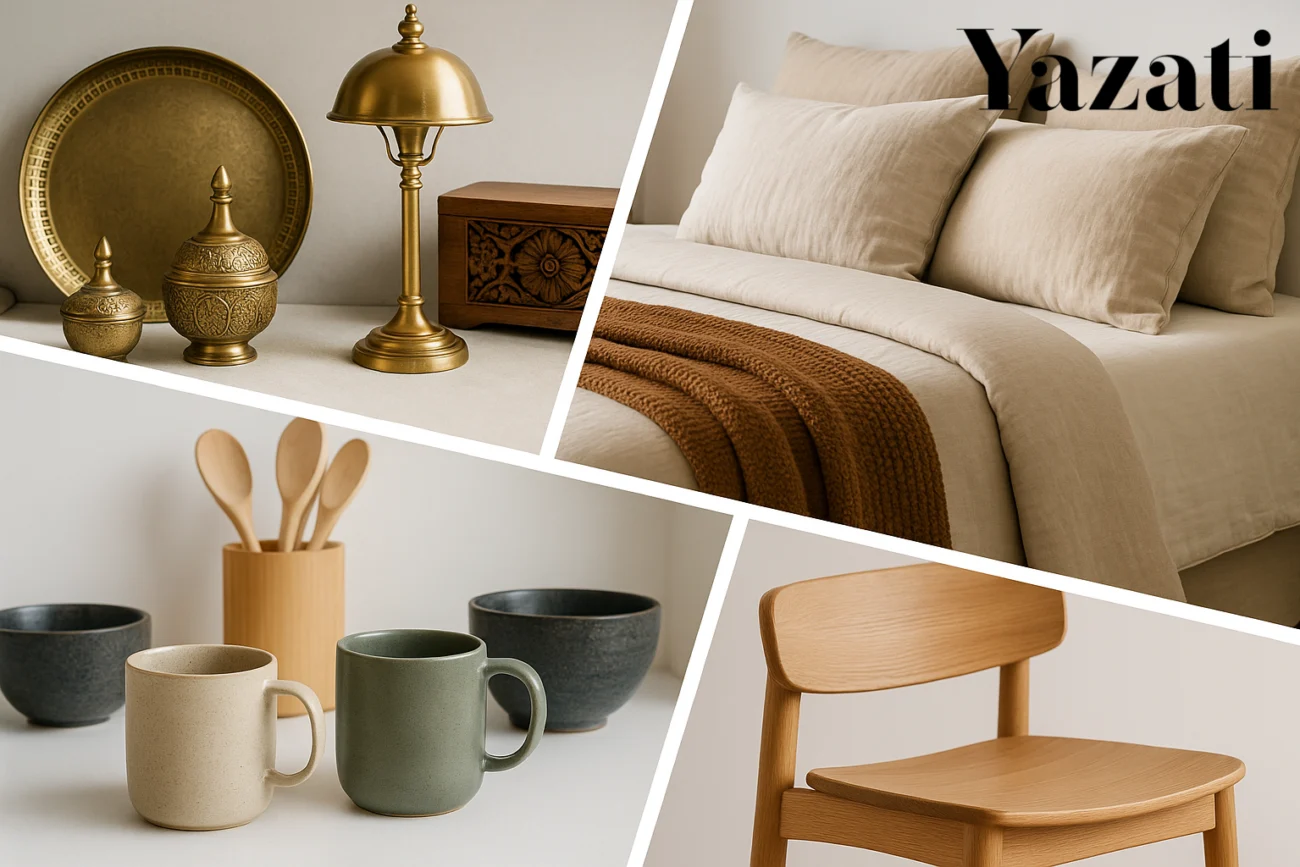
Introduction: The Rise of India’s Home & Lifestyle Exports
India has always been known as a land of artistry, culture, and craftsmanship. Over the last decade, this cultural richness has translated into impressive export growth, especially in the home and lifestyle sector. As global consumers increasingly seek authentic, handmade, and sustainable products, India’s exporters are finding themselves in a powerful position to dominate the market.
The year 2026 marks a transformative period for India’s export industry, with categories like home décor, textiles, furniture, and kitchenware becoming international favorites. Let’s dive deeper into the thriving ecosystem driving India’s rise in the global home and lifestyle market.
Overview of India’s Export Landscape in 2026
India’s exports have evolved significantly, moving from raw material supply to high-value finished goods. According to the Export Promotion Council for Handicrafts (EPCH) and the Federation of Indian Export Organisations (FIEO), India’s exports in the home and lifestyle category are projected to cross USD 50 billion by 2026.
Key Drivers of India’s Export Growth
- Growing Global Demand: Consumers in the U.S., Europe, and the Middle East prefer authentic handmade products.
- Government Policies: Initiatives like Make in India, Districts as Export Hubs, and ODOP (One District, One Product) have strengthened supply chains.
- Digital Transformation: Online trade platforms like IndiaMART, TradeIndia, and global B2B portals have boosted global visibility for Indian brands.
Government Initiatives Supporting Export Expansion
The Indian government’s proactive export strategy includes schemes like:
- Export Credit Guarantee Scheme (ECGS)
- Market Access Initiative (MAI)
- Production Linked Incentive (PLI) for textiles and handicrafts
These have collectively enhanced India’s competitiveness in the home and lifestyle sector.
Understanding the Home & Lifestyle Sector
Defining the Home & Lifestyle Category
This sector encompasses furniture, home textiles, handicrafts, kitchenware, décor, and accessories. Essentially, anything that enhances living spaces falls under this umbrella.
Importance of the Sector in India’s Export Economy
The home and lifestyle segment contributes nearly 12% of India’s total merchandise exports, employing millions of artisans, craftsmen, and small businesses across states like Rajasthan, Uttar Pradesh, Gujarat, and Tamil Nadu.
Top In-Demand Export Categories in India’s Home & Lifestyle Sector
1. Handicrafts and Artisanal Products
India’s handicrafts represent cultural storytelling and artisanal skill. From wooden carvings of Saharanpur to brass art from Moradabad, Indian handicrafts are highly sought after globally.
Global Demand for Indian Handicrafts
With an increasing preference for unique and sustainable décor, the global market for Indian handicrafts is projected to grow by 8% CAGR through 2030.
Key Export Destinations
- United States
- United Kingdom
- Germany
- UAE
- France
2. Home Textiles and Furnishings
India ranks among the top five global exporters of home textiles. Cotton bed linens, rugs, curtains, and cushion covers from India are cherished for their quality, durability, and design variety.
Cotton, Silk, and Sustainable Fabric Exports
Regions like Panipat, Karur, and Tirupur are the heart of textile exports, emphasizing organic and recycled fibers for eco-conscious buyers.
India’s Role in the Global Textile Supply Chain
India’s vertically integrated supply chain—from cotton cultivation to finished fabric—provides a unique advantage in fulfilling large-scale global orders efficiently.
3. Furniture and Woodcraft
India’s furniture exports are booming, blending traditional artistry with modern design. The furniture export market is expected to surpass USD 3.5 billion by 2027.
Traditional vs. Contemporary Furniture Design
Traditional Indian woodcraft—like Sheesham, teak, and mango wood furniture—is finding new life in contemporary, minimalist design collections.
Sustainability and Eco-Friendly Trends
Global buyers increasingly prefer eco-certified wood and low-carbon production methods, areas where Indian exporters are excelling.
4. Kitchenware and Tableware
India has long been a global hub for high-quality kitchenware and tableware exports, known for both its functionality and aesthetic appeal. From stainless steel cookware to handcrafted ceramic dinnerware, Indian exporters are redefining the way the world dines.
Stainless Steel and Brassware Exports
India’s stainless steel kitchenware, especially from regions like Ludhiana and Mumbai, has an unmatched global reputation for durability and hygiene. Brass and copper utensils from Moradabad are cherished in countries like the UAE, USA, and UK for their cultural significance and health benefits.
Ceramic and Stoneware Growth in International Markets
The ceramic industry in Morbi, Gujarat, has witnessed exponential growth, exporting to over 140 countries. Elegant dinner sets, tea sets, and decorative bowls made from ceramic and stoneware are seeing a rising trend due to their eco-friendly and reusable properties.
5. Home Décor Accessories
India’s home décor exports are witnessing a creative renaissance, merging traditional designs with modern lifestyles.
Lighting, Mirrors, and Decorative Pieces
Indian exporters produce a stunning range of handcrafted lamps, mirrors, lanterns, and wall décor, combining materials like metal, glass, wood, and jute. These products appeal to consumers who appreciate ethnic aesthetics with a modern twist.
Role of Handcrafted Décor in Global Markets
Handcrafted décor not only symbolizes Indian craftsmanship but also supports sustainable livelihoods in rural communities. Countries such as Germany, Canada, and Australia are emerging as strong buyers of Indian décor products that emphasize eco-conscious living.
Emerging Trends in Global Demand for Indian Lifestyle Products
Eco-Friendly and Sustainable Home Products
Sustainability isn’t just a buzzword — it’s a core purchasing factor. Indian exporters are embracing organic cotton, recycled materials, bamboo-based décor, and zero-waste packaging, meeting the growing global demand for ethical production.
Fusion of Modern Aesthetics with Traditional Craftsmanship
The trend of combining traditional Indian art forms like Madhubani, Warli, and block printing with contemporary minimalist design has created a unique niche in international markets, particularly in Europe and North America.
Rise of Online Marketplaces and Digital Exports
Platforms like Etsy, Amazon Global, and Alibaba have empowered small and medium-sized Indian brands to reach consumers directly across continents. This digital shift has leveled the playing field for MSMEs and artisans, helping them scale their exports rapidly.
Challenges Faced by Indian Exporters in the Home & Lifestyle Sector
Despite remarkable growth, exporters still face challenges that limit full-scale expansion.
Supply Chain and Quality Control Issues
Irregular raw material supply, inconsistent product quality, and delays in logistics often affect India’s ability to meet large-scale international demands on time.
Competition from Other Exporting Nations
Countries like China, Vietnam, and Bangladesh pose stiff competition due to their mass production capabilities and lower costs. However, India’s craftsmanship and sustainability advantage help it maintain a distinct global position.
Meeting International Compliance and Standards
Exporters must comply with international safety, labeling, and sustainability standards such as REACH, RoHS, and FSC certification. Meeting these benchmarks can be cost-intensive but essential for maintaining credibility in global markets.
Future Outlook: Opportunities for Growth and Expansion
Innovation and Product Diversification
The future of India’s home and lifestyle exports depends on design innovation, technology integration, and product diversification. Exporters are now investing in 3D design tools, smart home décor, and AI-driven market analysis to anticipate global demand.
The Role of MSMEs and Startups in Export Growth
India’s vibrant MSME ecosystem is fueling export growth by offering unique, customizable, and small-batch production capabilities that appeal to international buyers seeking exclusivity over mass production.
Case Studies: Successful Indian Export Brands in Home & Lifestyle
Case Study 1: FabIndia – Blending Tradition and Modernity
FabIndia exemplifies the success of merging traditional Indian craftsmanship with contemporary global appeal. By emphasizing ethical sourcing, handmade products, and community development, it has become a recognized name in the global lifestyle market.
Case Study 2: Chumbak – Modern Indian Lifestyle Aesthetics
Chumbak’s vibrant, India-inspired designs have captivated younger consumers abroad. Its success demonstrates how branding, storytelling, and design innovation can transform small businesses into global lifestyle icons.
How Exporters Can Tap into Global Demand
Leveraging E-commerce and B2B Marketplaces
Exporters can reach global audiences by utilizing platforms like:
- Alibaba.com
- Etsy
- Amazon Global Selling
- TradeIndia
These platforms provide visibility, lower entry barriers, and facilitate cross-border payments.
Certification, Branding, and Packaging Strategies
Global buyers value quality and presentation. Indian exporters can boost their brand perception by:
- Obtaining ISO, Fair Trade, and Eco-Cert certifications
- Adopting sustainable packaging
- Building strong brand narratives that highlight authenticity and craftsmanship
For more insights on export compliance and certification standards, you can visit Export Promotion Council for Handicrafts (EPCH) — a reliable external resource supporting Indian exporters.
Conclusion: India’s Bright Future in Home & Lifestyle Exports
India’s home and lifestyle export sector stands at a crossroads of tradition and transformation. The blend of heritage craftsmanship, eco-conscious innovation, and digital connectivity positions India as a leader in the global lifestyle market.
With sustained government support, technological advancement, and global recognition for Indian artistry, the future indeed looks promising. As consumers worldwide continue to embrace authentic, handmade, and sustainable living, Indian exporters are perfectly poised to shine brighter than ever before.
FAQs on India’s Most In-Demand Export Categories in Home & Lifestyle Sector
1. What are India’s top export products in the home and lifestyle sector?
India’s top exports include handicrafts, home textiles, furniture, kitchenware, and home décor accessories.
2. Which countries are the biggest importers of Indian lifestyle goods?
Major buyers include the United States, United Kingdom, Germany, UAE, and France.
3. What makes Indian home and lifestyle exports unique?
India’s products stand out due to their handcrafted quality, cultural authenticity, and eco-friendly production.
4. How can small exporters start exporting lifestyle products?
Small businesses can begin by registering on B2B platforms, ensuring export documentation, and obtaining international certifications.
5. What challenges do exporters face in this sector?
Key challenges include quality control, competition, supply chain inefficiencies, and regulatory compliance.
6. What is the future of India’s home and lifestyle exports?
The future is bright — powered by innovation, sustainable design, and digital market access, Indian exporters are set to expand globally.
✨ Discover Global Sourcing Excellence with Netyex ✨
Netyex is your trusted B2B sourcing partner, connecting international buyers with India’s finest manufacturers and curated product lines—from handicrafts and home décor to kitchenware, textiles, hospitality essentials, and more. With verified suppliers and end-to-end support, we make global procurement seamless, reliable, and efficient.
👉 Elevate your sourcing experience—explore Netyex today.
📦 Bulk orders & customisation | 🌍 Worldwide delivery | 🤝 Trusted by global buyers
Visit Netyex to source premium Indian products with confidence.