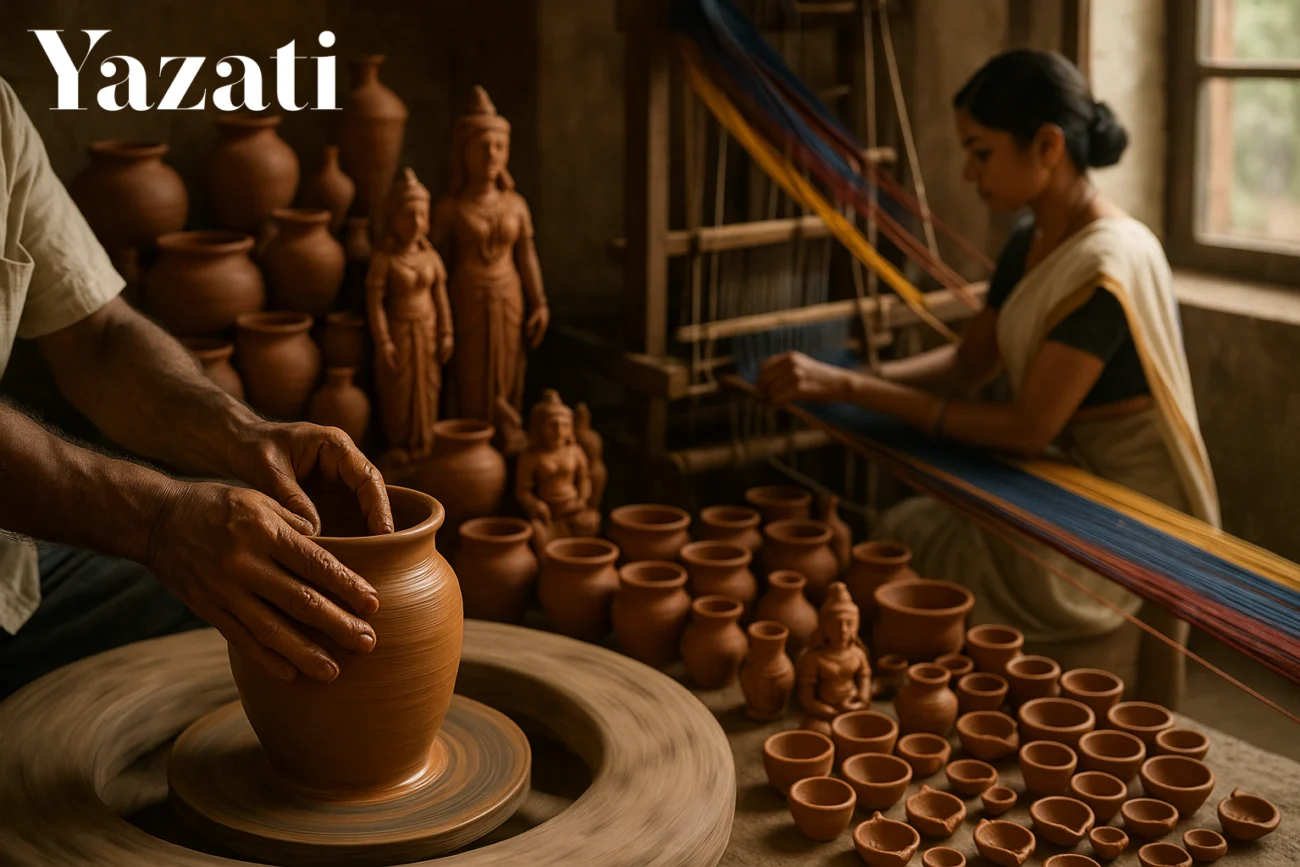
Introduction: The Timeless Legacy of Indian Handicrafts
India’s craft heritage is a living, breathing expression of its diverse culture. From the terracotta figurines of ancient Bengal to the silk saris of Banaras, every region tells a story woven through clay, fabric, and color. With more than 3,000 distinct crafts practiced across the subcontinent, India’s artisans have shaped not just objects of beauty, but also living traditions that bind generations together.
These crafts are not merely decorative; they embody the values of sustainability, community, and creativity that have defined Indian life for millennia. Let’s journey across this vast craft spectrum — from the humble potter’s wheel to the intricate handloom — and uncover the threads that tie India’s artistic soul together.
A Historical Glimpse: The Evolution of Indian Craftsmanship
Ancient Roots: Indus Valley to Mauryan Artistry
The origins of Indian crafts stretch back over 5,000 years, to the Indus Valley Civilization, where terracotta figurines and pottery were integral to daily life and rituals. As time passed, dynasties like the Mauryas and Guptas refined metalwork, sculpture, and textiles, transforming them into high art forms.
Influence of Empires: Mughal, Rajput, and Colonial Eras
Under the Mughal Empire, craftsmanship reached new heights. Artisans perfected miniature paintings, inlay work, and weaving, producing legendary fabrics like Mushroo and Jamdani. The colonial period later introduced industrial production, which challenged traditional artisans but also sparked revival movements that persist today.
The Clay Connection: Terracotta Traditions Across India
Bengal’s Terracotta Temples: Stories Carved in Clay
In West Bengal, the towns of Bishnupur and Bankura are known for terracotta temples whose walls narrate epics through finely carved panels. The same skill is reflected in Bankura horses, now symbols of Indian folk art.
The Pottery Heritage of Khurja and Molela
Khurja pottery of Uttar Pradesh is famed for its blue-glazed elegance, while Molela artisans in Rajasthan craft clay plaques depicting deities and folklore — a fusion of faith and artistry.
The Cultural Role of Clay Art in Indian Rituals
From diyas during Diwali to clay idols in Durga Puja, terracotta remains deeply rooted in India’s spiritual and festive life, symbolizing the connection between the earth and divinity.
Weaving Wonders: India’s Textile Heritage
From Cotton to Silk: The Fibers of Tradition
India is the birthplace of cotton cultivation, and its weavers have been crafting fabrics for centuries. Regions like Tamil Nadu are renowned for silk, while Gujarat excels in bandhani tie-dye techniques.
Iconic Weaves: Banarasi, Kanchipuram, Pochampally & More
Each region’s fabric tells a story — the golden zari of Banarasi sarees, the geometric precision of Pochampally ikat, and the vibrant hues of Kanchipuram silk stand as symbols of elegance and tradition.
Sustainable Threads: Revival of Handloom Crafts
As consumers turn toward eco-friendly fashion, the handloom sector is witnessing a renaissance. Designer collaborations and fair-trade initiatives are helping artisans preserve centuries-old weaving traditions while ensuring fair wages.
Regional Diversity: A Craft for Every Corner
Northern Marvels: Kashmiri Carpets & Phulkari Embroidery
In the north, Kashmir’s Pashmina shawls and Phulkari embroidery from Punjab showcase intricate patterns inspired by nature.
Southern Splendor: Channapatna Toys & Kalamkari Art
In Karnataka, Channapatna’s lacquered toys are a delight of color and craftsmanship, while Andhra Pradesh’s Kalamkari art uses natural dyes to create detailed mythological scenes.
Eastern Elegance: Dhokra, Pattachitra & Bamboo Crafts
Odisha’s Pattachitra paintings and Dhokra metal casting from Bengal’s tribal belts highlight ancient methods still thriving today.
Western Heritage: Kutch Embroidery & Blue Pottery
Rajasthan’s blue pottery and Gujarat’s mirror-embellished embroidery embody the desert’s spirit — vibrant, reflective, and resilient.
Materials & Techniques: The Science Behind the Craft
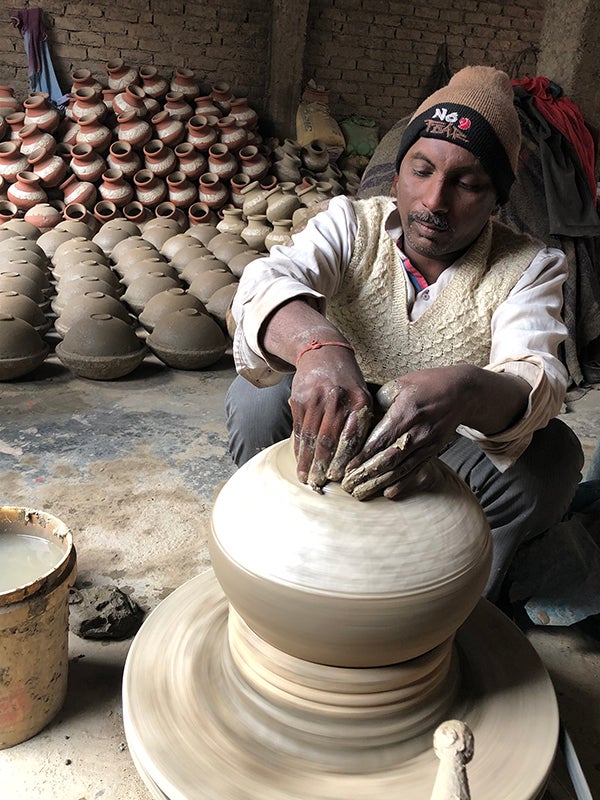
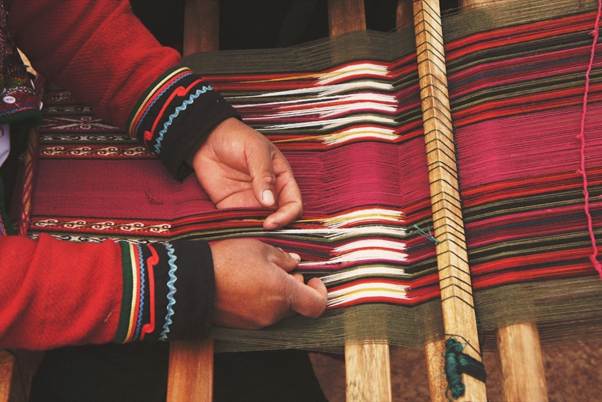
Indian crafts are deeply rooted in a scientific understanding of nature and materials. Artisans traditionally rely on locally available resources, ensuring that every craft form remains environmentally harmonious and region-specific.
Natural Dyes, Local Clays, and Indigenous Fibers
Terracotta artisans carefully select clay based on mineral content and firing behavior, while textile makers extract dyes from indigo leaves, madder roots, turmeric, and pomegranate peels. Cotton, silk, wool, and jute are processed using age-old methods that preserve fiber strength and texture. This natural cycle minimizes waste and supports sustainability — a principle modern industries are only now rediscovering.
Handcrafted vs. Machine-made: What Defines Authenticity
What truly distinguishes handcrafted items is human touch. Slight irregularities, unique patterns, and labor-intensive techniques make each piece one of a kind. Unlike machine-made goods, handmade crafts carry cultural memory, patience, and precision — qualities impossible to mass-produce.
The Modern Revival: Craft Meets Contemporary Design
India’s craft sector is experiencing a thoughtful revival as designers, consumers, and institutions recognize its cultural and economic value.
Artisan Collaborations with Global Brands
Many Indian artisans now collaborate with contemporary designers and global brands, blending traditional techniques with modern aesthetics. This fusion has helped crafts reach international markets while preserving their authenticity.
The Rise of Ethical and Sustainable Craft Markets
With growing awareness around ethical consumption, handcrafted products are increasingly favored over fast fashion and factory-made décor. Online platforms and curated exhibitions have made it easier for consumers to support artisans directly, strengthening rural economies across India.
The Role of Women in India’s Craft Economy
Women form the backbone of India’s craft traditions, especially in textiles, embroidery, and basketry.
Empowerment Through Embroidery and Weaving
For many rural women, craftwork is more than art — it’s a path to financial independence. Skills passed down through generations enable women to earn from home while preserving cultural identity.
Women-led Cooperatives and Social Enterprises
Self-help groups and cooperatives have empowered women to collectively negotiate fair prices, access training, and reach broader markets. These models have transformed crafts into tools of social change and gender equity.
Government and NGO Initiatives Supporting Indian Crafts
Recognizing the importance of crafts, various institutions actively work to sustain this sector.
Schemes, Exhibitions, and GI Tag Protections
Government-backed programs, craft fairs, and Geographical Indication (GI) tags help protect traditional knowledge and prevent imitation. These measures ensure artisans receive due recognition and economic benefit.
The Digital Push: Online Platforms and Craft E-Commerce
Digital marketplaces and social media have revolutionized access to buyers. Today, a weaver in a remote village can sell directly to a global audience, reducing dependency on middlemen.
For deeper insights into India’s official craft initiatives, you can explore the Ministry of Textiles’ resources here:
🔗 https://texmin.nic.in
Challenges Facing the Craft Sector Today
Despite renewed interest, the craft ecosystem faces persistent hurdles.
Mass Production vs. Handcrafted Value
Cheap, factory-made imitations flood the market, often undervaluing authentic handmade goods. Educating consumers about the true cost and value of craftsmanship remains a major challenge.
Loss of Traditional Skills and Youth Disinterest
Younger generations often migrate toward urban jobs, leading to a gradual decline in craft knowledge. Without structured training and financial incentives, many traditions risk fading away.
Preserving the Heritage: Steps Toward Sustainable Craft Futures
Safeguarding India’s craft legacy requires long-term, inclusive strategies.
Craft Education and Skill Development Initiatives
Integrating crafts into educational curricula and offering skill-based training can inspire youth to view craftsmanship as a viable and respected profession.
Encouraging Cultural Tourism and Craft Villages
Craft villages and experiential tourism allow visitors to interact with artisans directly, fostering appreciation while generating sustainable income for local communities.
Frequently Asked Questions (FAQs)
1. What does “From Terracotta to Textiles: India’s Craft Spectrum Explained” mean?
It refers to the wide range of Indian crafts, from clay-based terracotta art to diverse textile traditions, highlighting their cultural, regional, and historical significance.
2. Why are Indian handicrafts considered sustainable?
Most crafts use natural materials, local resources, and manual techniques that minimize environmental impact.
3. Which regions are famous for terracotta crafts in India?
West Bengal, Rajasthan, and Uttar Pradesh are particularly well known for their terracotta traditions.
4. How do Indian textiles differ from machine-made fabrics?
Handwoven textiles feature unique patterns, natural dyes, and superior craftsmanship that machines cannot replicate.
5. Are Indian crafts economically important today?
Yes, the craft sector supports millions of artisans and contributes significantly to rural livelihoods and exports.
6. How can consumers help preserve Indian crafts?
By choosing authentic handmade products, supporting fair-trade platforms, and learning about the stories behind the crafts.
Conclusion: Crafting the Soul of India
From humble clay vessels to luxurious handwoven silks, India’s crafts reflect the nation’s soul, resilience, and creativity. From Terracotta to Textiles: India’s Craft Spectrum Explained is more than a journey through objects — it is a story of people, traditions, and timeless wisdom. By valuing and supporting these crafts, we ensure that India’s artistic heritage continues to thrive for generations to come.
✨ Discover Global Sourcing Excellence with Netyex ✨
Netyex is your trusted B2B sourcing partner, connecting international buyers with India’s finest manufacturers and curated product lines—from handicrafts and home décor to kitchenware, textiles, hospitality essentials, and more. With verified suppliers and end-to-end support, we make global procurement seamless, reliable, and efficient.
👉 Elevate your sourcing experience—explore Netyex today.
📦 Bulk orders & customisation | 🌍 Worldwide delivery | 🤝 Trusted by global buyers
Visit Netyex to source premium Indian products with confidence.