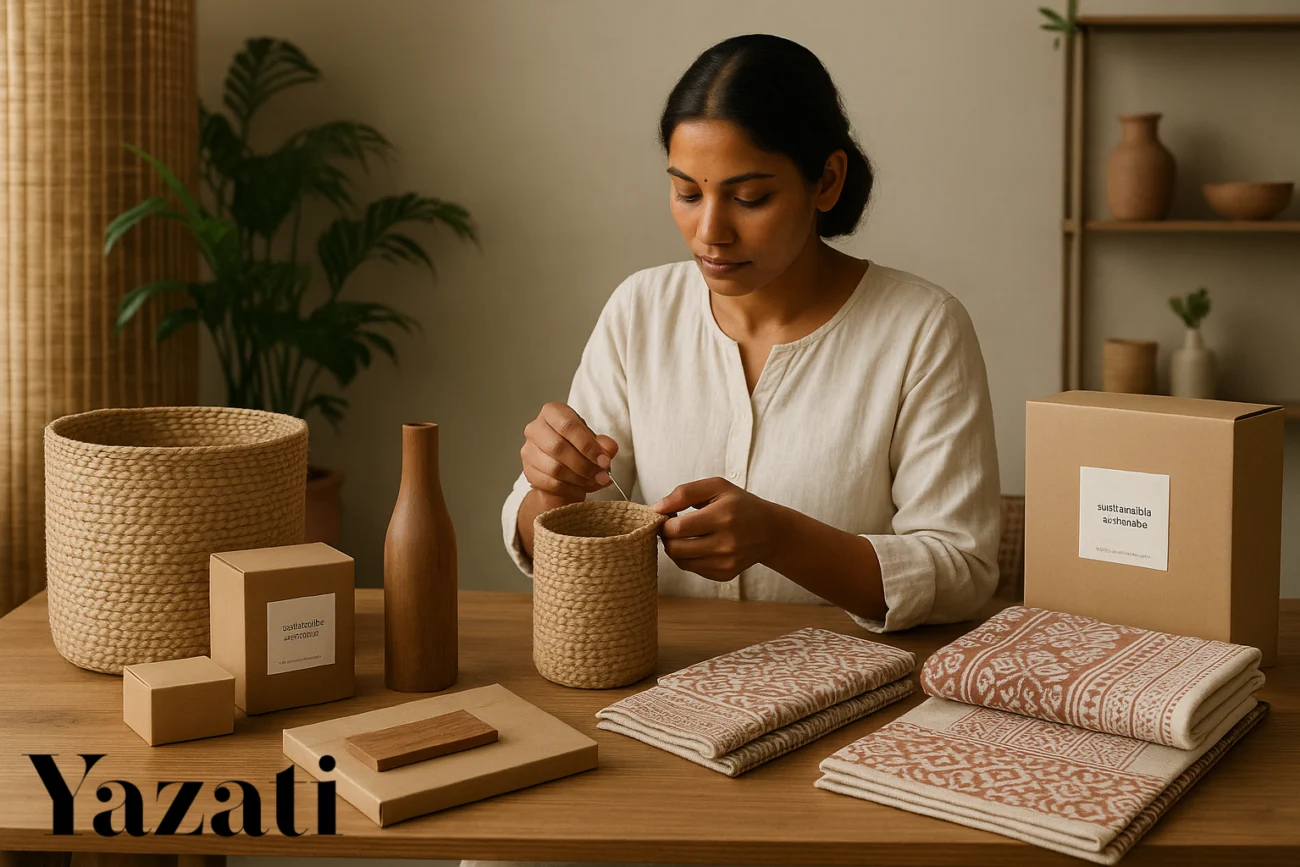
Introduction to Indian Handicrafts and Sustainable Retail
In today’s eco-conscious world, sustainability isn’t just a buzzword—it’s a movement reshaping how people buy, produce, and consume. At the intersection of tradition and innovation lies a remarkable synergy: Indian handicrafts and sustainable retail. Indian handicrafts, with their deep cultural roots, offer far more than aesthetic beauty. They represent centuries of sustainable practices, passed down through generations of artisans who mastered the art of creating with minimal waste and maximum meaning.
As global consumers increasingly prefer ethical and eco-friendly brands, sustainable retail has become the backbone of modern commerce. In this context, Indian handicrafts emerge as the perfect embodiment of authenticity, sustainability, and purpose—making them invaluable to retail brands aiming to build trust, impact, and long-term loyalty.
Understanding the Global Shift Toward Sustainability in Retail
Over the last decade, sustainability has moved from the margins to the mainstream of retail strategy. Brands like Patagonia, The Body Shop, and India’s own Fabindia have shown that consumers are willing to pay more for products that align with their ethical values. Indian handicrafts naturally align with this shift—offering handmade, eco-conscious, and culturally rich products that support local economies while minimizing environmental impact.
The Rich Heritage of Indian Handicrafts
A Historical Overview of Indian Craft Traditions
India’s craft heritage dates back over 5,000 years, from the intricate pottery of the Indus Valley Civilization to the regal textiles of Mughal courts. Each region of India nurtures its own distinctive art form—Kashmiri papier-mâché, Banarasi silk, Kutch embroidery, and Dhokra metalwork, among many others.
Key Regions and Their Signature Handicrafts
| Region | Famous Craft | Material Used |
| Rajasthan | Blue Pottery, Block Printing | Natural dyes, terracotta |
| Gujarat | Bandhani, Rogan Painting | Organic cotton, castor oil |
| Odisha | Pattachitra, Silver Filigree | Handmade paper, silver |
| Assam | Eri & Muga Silk Weaving | Natural silk fibers |
| Uttar Pradesh | Chikankari Embroidery | Muslin, cotton |
Indigenous Materials and Eco-Friendly Techniques
Indian artisans rely on locally sourced, biodegradable materials such as bamboo, clay, cotton, jute, and natural dyes. These techniques—eco-friendly by nature—help preserve biodiversity and reduce industrial pollution.
Why Sustainability Matters in Retail Today
The Rise of Conscious Consumers
Modern consumers, especially millennials and Gen Z, are purpose-driven. They seek products that reflect their values—transparency, sustainability, and fairness. Retailers that incorporate handicrafts can authentically align with these values.
Environmental and Social Benefits of Sustainable Branding
Sustainable retail isn’t just about reducing waste—it’s about creating value responsibly. When brands choose handmade over machine-made, they help preserve ancient skills, generate employment in rural India, and reduce carbon emissions caused by industrial manufacturing.
How Indian Handicrafts Empower Sustainable Retail Brands
Promoting Ethical Production and Fair Trade Practices
Every handcrafted item tells a story—of skill, patience, and fair wages. Supporting artisans ensures ethical production, where craftsmanship is valued over exploitation.
Using Locally Sourced, Biodegradable Materials
By using natural dyes, recycled fibers, and local resources, brands minimize transportation emissions and waste—key pillars of sustainability.
Strengthening Brand Storytelling Through Cultural Heritage
Consumers love stories. When a brand showcases its connection with Indian crafts—like handwoven scarves from Kutch or hand-painted pottery from Jaipur—it builds emotional resonance and authenticity.
Enhancing Customer Loyalty with Authentic Craft Narratives
A unique, handcrafted product isn’t just purchased—it’s cherished. This sense of ownership fosters brand loyalty, as customers connect with products that have meaning and purpose.
Economic and Social Impact of Integrating Handicrafts
Empowering Rural Artisans and Women Entrepreneurs
The handicraft sector employs over 7 million artisans in India, with women making up nearly half. Sustainable retail partnerships create income opportunities, independence, and recognition for these artisans.
Supporting Local Economies and Reducing Carbon Footprints
Local sourcing not only strengthens small economies but also curbs pollution from mass production and long-distance shipping.
Case Studies: Brands Successfully Blending Handicrafts and Sustainability
Fabindia: A Pioneer in Handcrafted Sustainability
Fabindia has long championed rural artisanship by connecting over 55,000 craftspeople with modern consumers through eco-friendly fabrics and organic products.
Okhai: Empowerment Through Craft
Okhai, backed by Tata Chemicals, promotes handmade apparel created by women artisans from rural Gujarat—proving sustainability and empowerment go hand-in-hand.
Forest Essentials: Craft Meets Eco-Luxury
By blending Ayurveda with hand-blown glass packaging and sustainable practices, Forest Essentials shows that luxury and ethics can coexist beautifully.
Marketing and Positioning Handcrafted Sustainable Brands
Crafting a Unique Brand Identity Through Storytelling
In an era where mass-produced goods dominate shelves, storytelling gives handcrafted brands their distinct edge. When a retail brand highlights the story of an artisan—how a weaver in Kutch crafted a shawl or how a potter in Jaipur shaped eco-friendly ceramics—it transforms a simple product into a piece of cultural heritage.
This storytelling not only engages emotionally but also builds a strong, authentic identity that consumers trust. Brands can leverage digital storytelling through short videos, behind-the-scenes glimpses, and social media campaigns that celebrate their artisans and materials.
Leveraging Digital Platforms and Global Marketplaces
E-commerce has redefined the reach of handicraft-based sustainable brands. Online platforms such as Etsy, Jaypore, and India Handmade allow artisans and small brands to connect with global buyers who appreciate handmade authenticity. Additionally, social media marketplaces like Instagram Shops and Pinterest enable visual storytelling—key for attracting environmentally conscious audiences.
Retail brands that blend handcrafted aesthetics with digital accessibility are more likely to succeed in today’s borderless retail world.
The Role of Certifications and Ethical Labels
To enhance credibility and transparency, many sustainable brands now acquire certifications like Fair Trade, Craftmark, and GOTS (Global Organic Textile Standard). These labels not only assure customers about ethical practices but also help differentiate brands in competitive markets. When paired with Indian handicrafts, such certifications reinforce the message of authenticity, craftsmanship, and responsibility.
Challenges in Integrating Handicrafts with Sustainable Retail
Balancing Tradition with Modern Market Demands
One of the primary challenges lies in striking a balance between preserving traditional methods and meeting modern design expectations. While artisans often prefer heritage techniques, retail markets demand innovation in patterns, usability, and packaging. Collaborative design workshops and skill training can help artisans align their traditional crafts with global design trends without compromising authenticity.
Supply Chain Complexities and Scalability Issues
Unlike mass manufacturing, handicraft production involves multiple small-scale artisans scattered across regions. This makes logistics, quality control, and timely supply challenging for large retailers. Adopting digital inventory management systems and establishing cooperative clusters can streamline this process.
Overcoming Consumer Misconceptions About Handmade Products
Many consumers associate handmade goods with fragility or higher costs. Retailers must educate customers that handcrafted items offer durability, individuality, and ethical value, making them worth every penny. Transparent pricing and product storytelling are effective ways to overcome this bias.
The Future of Indian Handicrafts in Global Sustainable Retail
Technological Innovations Supporting Artisans
Technology is no longer at odds with tradition. From AI-driven design software to blockchain-based supply chain transparency, technology helps artisans modernize their approach while maintaining authenticity. Virtual marketplaces allow artisans to reach global buyers directly, while digital payments empower rural creators.
Government Initiatives and Policy Support
The Indian government has introduced several schemes such as Ambedkar Hastshilp Vikas Yojana, National Handicraft Development Programme, and Hastkala Sahyog Shivirs to provide training, financial aid, and global marketing support. These initiatives ensure artisans receive fair recognition and stable income while keeping India’s heritage alive.
How Global Demand is Shaping the Next Phase of Handcrafted Sustainability
As sustainability becomes a global norm, luxury brands and eco-conscious retailers are seeking handcrafted collaborations to add cultural authenticity to their offerings. From handwoven scarves in Paris boutiques to terracotta lamps in New York eco-stores, Indian handicrafts are redefining “luxury with purpose.”
FAQs About Indian Handicrafts and Sustainable Retail Brands
1. Why are Indian handicrafts important for sustainable retail brands?
Indian handicrafts promote sustainability through eco-friendly materials, ethical labor, and low-carbon production methods, aligning perfectly with the goals of conscious retail brands.
2. How do handicrafts contribute to the circular economy?
By using renewable, biodegradable, and locally sourced materials, Indian crafts help minimize waste and promote recycling and reuse, key elements of a circular economy.
3. What makes handcrafted products more sustainable than machine-made ones?
Handcrafted products are made in small batches, consume less energy, and generate minimal industrial waste—unlike mass-produced items that rely on mechanized systems and synthetic materials.
4. Which Indian brands effectively combine handicrafts with sustainability?
Brands such as Fabindia, Okhai, Tjori, Forest Essentials, and Paper Boat Collective have successfully merged traditional craftsmanship with modern sustainable branding.
5. How can retail brands ensure fair trade practices with artisans?
By establishing transparent pricing systems, forming cooperatives, and ensuring artisans receive fair compensation and recognition for their work.
6. What role can consumers play in supporting handicraft sustainability?
Consumers can make a huge difference by choosing handcrafted goods, avoiding mass-produced alternatives, and supporting brands that prioritize ethical sourcing and artisan welfare.
Conclusion: The Enduring Bond Between Craft and Conscious Commerce
The relationship between Indian handicrafts and sustainable retail is one of harmony, heritage, and hope. As the world gravitates toward conscious consumption, Indian crafts offer a bridge between the past and the future—rooted in culture yet ready for global innovation.
Retail brands that embrace these crafts not only enhance their eco-credentials but also participate in preserving India’s living traditions. Each handcrafted item embodies a story, a community, and a sustainable vision—proving that commerce can indeed be a force for good when driven by craftsmanship and conscience.
In essence, the future of sustainability lies not in replacing the old but in reviving it wisely—and Indian handicrafts are leading the way.
✨ Discover Global Sourcing Excellence with Netyex ✨
Netyex is your trusted B2B sourcing partner, connecting international buyers with India’s finest manufacturers and curated product lines—from handicrafts and home décor to kitchenware, textiles, hospitality essentials, and more. With verified suppliers and end-to-end support, we make global procurement seamless, reliable, and efficient.
👉 Elevate your sourcing experience—explore Netyex today.
📦 Bulk orders & customisation | 🌍 Worldwide delivery | 🤝 Trusted by global buyers
Visit Netyex to source premium Indian products with confidence.