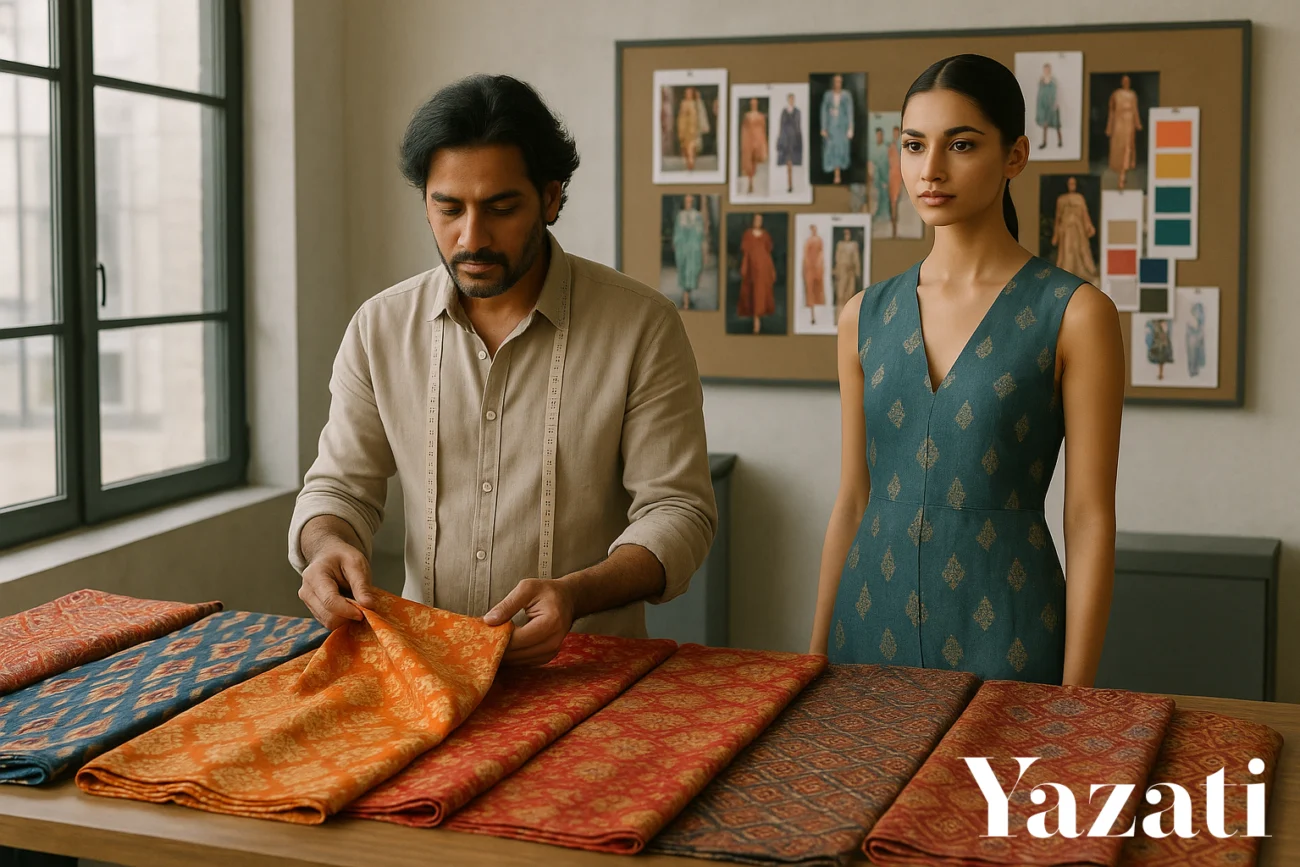
Introduction: The Global Fascination with Indian Textiles
Indian fabrics are weaving their way into the heart of global fashion houses, enchanting designers and fashion lovers alike. The intricate craftsmanship, organic materials, and vibrant patterns of Indian textiles have transcended borders to inspire haute couture collections across Paris, Milan, and New York. From handwoven silks to hand-painted cottons, Indian fabric artistry represents a harmony of culture, sustainability, and beauty that perfectly aligns with today’s luxury fashion ethos.
The global fashion industry’s pivot toward authenticity and sustainability has rekindled appreciation for traditional Indian techniques. Whether it’s Dior’s reinterpretation of Indian embroidery or Gucci’s fusion of Mughal motifs, Indian craftsmanship has become a muse for the world’s leading designers.
Historical Roots of Indian Fabric Artistry
Ancient Weaving Techniques and Regional Heritage
India’s textile heritage dates back over 5,000 years, with archaeological findings from the Indus Valley Civilization revealing traces of dyed cotton. Over time, distinct regional weaving traditions emerged — from the shimmering Banarasi silk of Varanasi to the geometric Ikat weaves of Odisha and the intricate Kanchipuram silks of Tamil Nadu. Each fabric tells a story, passed down through generations of artisans who preserve the legacy with unmatched precision.
Colonial Era Influence and Evolution
During the colonial period, Indian textiles became symbols of luxury in European markets. British traders exported fine Indian muslins, chintzes, and calicoes, which influenced Western fashion profoundly. Despite exploitation, this era established India as the world’s textile powerhouse — a reputation now being reclaimed through ethical and sustainable revival efforts.
Why Indian Fabrics Are Dominating Global Fashion Houses
Sustainability and Handcrafted Appeal
As the fashion world increasingly prioritizes eco-consciousness, Indian handloom textiles stand out for their low carbon footprint and artisanal integrity. Each weave is created with minimal machinery, promoting fair labor practices and supporting local communities. Global luxury brands are aligning with this ethos, recognizing that sustainability is not a trend but a necessity.
Diversity of Colors, Patterns, and Textures
India’s rich geography and culture create a kaleidoscope of designs. The vibrant reds of Rajasthan, the deep indigos of Gujarat, and the pastel chikankari threads of Lucknow offer endless inspiration for designers seeking authenticity and emotion in their creations.
Cultural Symbolism and Storytelling
Beyond beauty, Indian fabrics embody centuries of cultural narratives. Each motif — be it a paisley, lotus, or peacock — carries spiritual or historical significance. This symbolic richness gives Indian textiles a storytelling power that resonates deeply in global fashion storytelling.
Top Indian Fabric Patterns Captivating Global Designers
Bandhani (Tie-Dye) – The Bohemian Resurgence
Originating from Gujarat and Rajasthan, Bandhani has become synonymous with modern bohemian aesthetics. International designers adore its playful dots and spirals, which perfectly complement relaxed resort wear. The technique, involving meticulous hand-tying and dyeing, produces organic patterns that make every piece unique.
Kalamkari – The Hand-Painted Masterpiece
Kalamkari art, rooted in Andhra Pradesh and Telangana, has taken the luxury world by storm. Using natural dyes and bamboo pens, artisans create breathtaking hand-painted fabrics narrating epics like the Mahabharata. Designers like Anita Dongre and Rahul Mishra have reimagined Kalamkari for couture collections blending mythology with minimalism.
Ikat – The Precision of Patterns
Ikat’s allure lies in its pre-dyeing technique, where threads are dyed before weaving, creating intricate blurred patterns. Global brands admire its symmetry and subtle imperfection, symbolizing the harmony between chaos and order. Ikat is now a staple in both runway and ready-to-wear lines internationally.
Banarasi Brocade – Regal Elegance in Modern Runways
Once reserved for royalty, Banarasi silk is now adored by global luxury brands for its opulent metallic threads and intricate motifs. Designers like Dior and Sabya have showcased Banarasi-inspired patterns in collections blending grandeur with modern silhouettes.
Chikankari – The Delicate Threadwork
The timeless Chikankari embroidery from Lucknow embodies grace and minimalism. Known for its subtle floral motifs and white-on-white patterns, it’s a favorite among designers like Abu Jani-Sandeep Khosla and global icons seeking understated luxury.
Indian Fabrics in Major Global Fashion Houses
The world’s most influential fashion houses have increasingly turned their attention toward Indian craftsmanship — and with good reason. These fabrics offer an unrivaled combination of artistry, tradition, and sustainability. Each piece is a statement of luxury born from history and culture.
Sabyasachi x H&M: East Meets West
When Sabyasachi Mukherjee collaborated with H&M in 2021, it marked a watershed moment for Indian textiles in global retail fashion. The collection — featuring hand-block prints, Benarasi-inspired motifs, and khadi fabrics — sold out within hours. It proved that Indian craftsmanship could be scaled globally while retaining its authenticity. The partnership also bridged traditional Indian textile art with the affordability and accessibility of Western fast fashion.
Sabyasachi’s success inspired other international designers to explore Indian motifs and weaving traditions in their collections. The collaboration showed how a traditional design language could speak universally when presented through contemporary silhouettes.
Dior, Gucci, and Louis Vuitton Embrace Indian Artistry
From the embroidered elegance of Dior’s 2023 Mumbai showcase to Gucci’s Mughal-inspired motifs and Louis Vuitton’s use of Indian brocades, major luxury brands are celebrating India’s textile diversity.
- Dior, under Maria Grazia Chiuri, partnered with Indian artisans for hand embroidery and mirror work, highlighting the intricate detailing that defines Indian craftsmanship.
- Gucci incorporated vibrant Indian-inspired prints and handwoven silk into limited-edition lines, adding a boho-luxury touch.
- Louis Vuitton has sourced handloom fabrics from Varanasi for runway pieces, fusing Parisian elegance with Indian opulence.
This global embrace demonstrates a growing respect for the authenticity and ethical production behind Indian fabrics — values perfectly aligned with the modern luxury ethos.
Modern Indian Designers Taking Global Spotlight
Indian designers are no longer confined to domestic runways. With an international audience seeking sustainable fashion rooted in heritage, contemporary Indian designers are now shaping global couture narratives.
Anita Dongre, Rahul Mishra, and Manish Arora
- Anita Dongre has made sustainable luxury her signature. Her designs frequently use handwoven khadi, Banarasi silks, and block prints, all crafted by rural artisans. Through her brand’s ethical production model, she’s empowered hundreds of women weavers across India.
- Rahul Mishra, the first Indian designer to showcase at Paris Haute Couture Week, brings a poetic blend of slow fashion and art. His collections — often inspired by Indian embroidery and natural motifs — champion sustainability and social impact.
- Manish Arora stands out for his eclectic, vibrant designs. His work fuses psychedelic patterns with Indian techniques like zardozi, mirror work, and appliqué, making him a favorite among global celebrities and fashion editors alike.
These designers are not only reinterpreting India’s textile legacy but also transforming it into a global fashion movement.
The Sustainable Edge: Why Indian Fabrics Align with Future Fashion
As fashion’s environmental footprint comes under scrutiny, Indian textiles are emerging as a beacon of sustainability. Rooted in traditional craftsmanship and eco-friendly practices, these fabrics naturally align with the principles of slow fashion — durability, artistry, and environmental consciousness.
Organic Fibers and Natural Dyes
Many Indian weavers use organic cotton, silk, and linen, dyed with natural pigments derived from plants, minerals, and even spices. Techniques like vegetable dyeing and resist printing minimize water waste and chemical use, making them far more sustainable than synthetic alternatives. Global designers are now embracing these eco-friendly practices, showcasing that style and sustainability can coexist harmoniously.
Handloom Revival and Ethical Production
The resurgence of handloom weaving reflects a global demand for authenticity. Each handloom creation is unique — woven by artisans who spend days, sometimes weeks, crafting a single piece. This revival not only preserves traditional skills but also supports rural economies. With increasing consumer awareness, more fashion houses are partnering with Indian artisan cooperatives to ensure fair wages and transparency in production.
Challenges in Global Expansion
Despite growing popularity, Indian textiles face several obstacles on their path to global dominance.
Copyright, Replication, and Authenticity
One of the biggest challenges is the unauthorized replication of Indian designs by fast-fashion retailers. Traditional motifs like paisleys or ikat patterns are often mass-produced without proper credit or royalties to artisans. Strengthening intellectual property rights (IPR) and geographical indication (GI) protections is essential to safeguard indigenous craftsmanship and ensure artisans are fairly compensated.
Market Access and Brand Recognition
Another challenge is branding. While Indian fabrics are widely loved, they are often perceived as “ethnic” rather than “luxury.” This perception gap limits their integration into high-fashion markets. Increased international collaborations, designer showcases, and storytelling-driven marketing can help Indian textiles claim their rightful place in the luxury ecosystem.
Future of Indian Fabrics in Global Fashion
The future looks bright — and beautifully woven — for Indian textiles. With growing demand for sustainable luxury, the fusion of traditional techniques and modern aesthetics is set to dominate global runways.
We can expect to see:
- More eco-conscious collaborations between Indian weavers and global fashion brands.
- Technological innovation in weaving and dyeing that retains authenticity while improving efficiency.
- A stronger “Made in India” luxury identity celebrated across fashion capitals.
Indian fabrics are no longer just cultural artifacts — they are the future of ethical, artisanal luxury.
FAQs About Indian Fabric Patterns in Global Fashion
1. Why are Indian fabric patterns gaining popularity in global fashion?
Because they combine tradition, sustainability, and artistry. The intricate weaving techniques and natural dyes align with global fashion’s shift toward authenticity and eco-friendly production.
2. Which Indian fabrics are most popular among global designers?
Bandhani, Ikat, Kalamkari, Chikankari, and Banarasi brocade are among the top choices seen on international runways.
3. Are Indian textiles sustainable?
Yes! Most are handcrafted using organic materials, natural dyes, and minimal machinery, making them highly sustainable.
4. How are Indian designers influencing international fashion?
Designers like Rahul Mishra, Anita Dongre, and Manish Arora are integrating traditional crafts with global silhouettes, bringing Indian aesthetics to high-fashion platforms like Paris Fashion Week.
5. What challenges do Indian fabrics face globally?
Lack of intellectual property protection, limited market visibility, and competition from machine-made imitations are major hurdles.
6. How can consumers support authentic Indian textiles?
By purchasing directly from verified artisan cooperatives or designers who work ethically with Indian weavers, ensuring fair wages and cultural preservation.
Conclusion: A Loom of Tradition and Modernity
The resurgence of Indian fabric patterns in global fashion is not just a trend — it’s a celebration of heritage, sustainability, and creativity. From the meticulous weaves of Banaras to the soulful brushstrokes of Kalamkari, these fabrics embody a legacy that bridges the past and the future.
As the world embraces slow fashion and mindful luxury, Indian textiles stand as a testament to artistry that never fades. They remind us that true beauty lies not in mass production but in the human touch — in every thread, every dye, and every pattern that tells a story centuries old yet eternally new.
✨ Discover Global Sourcing Excellence with Netyex ✨
Netyex is your trusted B2B sourcing partner, connecting international buyers with India’s finest manufacturers and curated product lines—from handicrafts and home décor to kitchenware, textiles, hospitality essentials, and more. With verified suppliers and end-to-end support, we make global procurement seamless, reliable, and efficient.
👉 Elevate your sourcing experience—explore Netyex today.
📦 Bulk orders & customisation | 🌍 Worldwide delivery | 🤝 Trusted by global buyers
Visit Netyex to source premium Indian products with confidence.