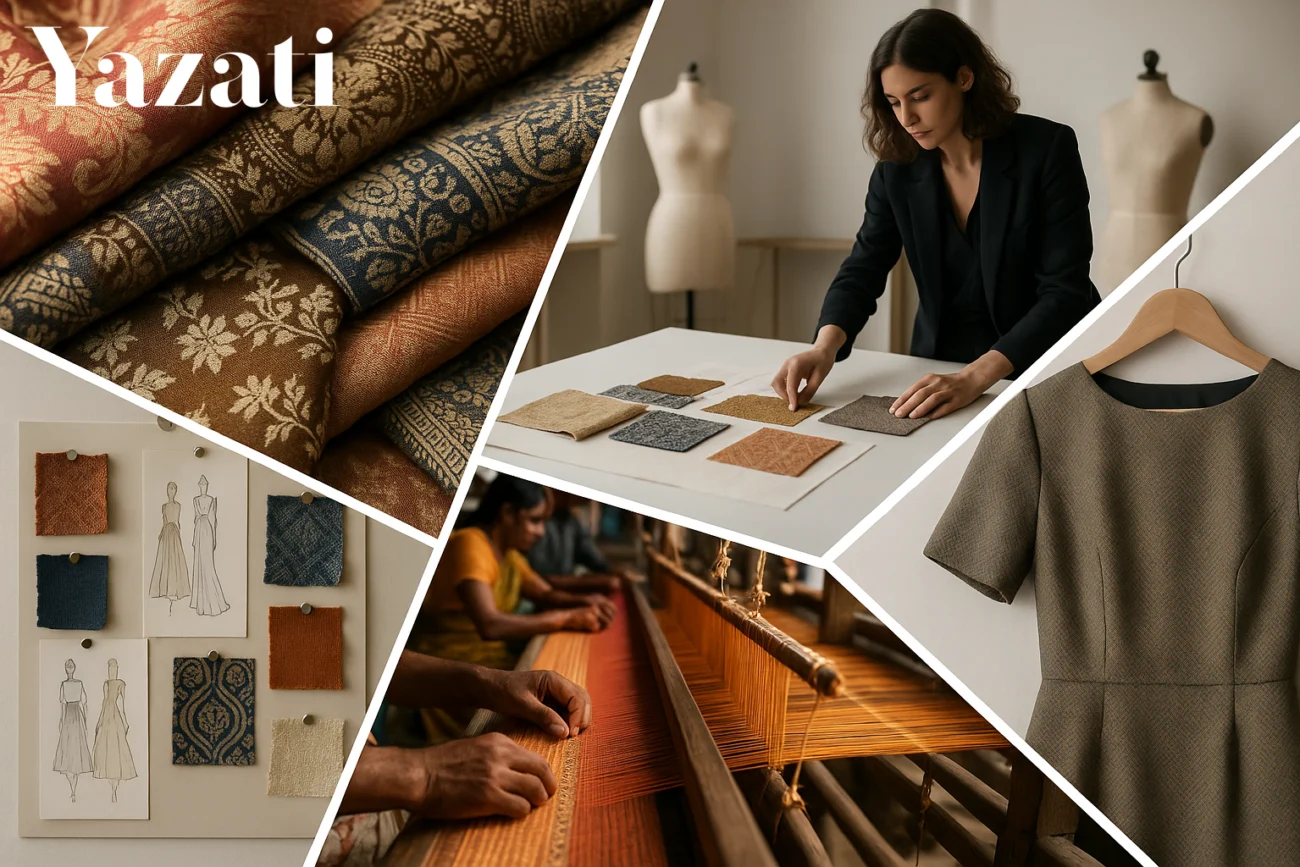
Introduction: The Global Allure of Indian Textiles
Across the cobblestone streets of Paris, Milan, and Berlin, a quiet revolution is unfolding. European designers, renowned for their avant-garde creativity, are increasingly turning their gaze eastward—toward the vibrant looms and dye houses of India. The fascination isn’t just aesthetic; it’s emotional, ethical, and deeply cultural.
Indian fabrics, with their intricate handwork, natural fibers, and centuries-old traditions, offer something the mass-produced textiles of the West often lack—soul. From the soft rustle of handwoven silk to the earthy texture of khadi, each piece tells a story, woven by artisans whose techniques have been passed down through generations.
Today, why designers across Europe choose Indian fabrics is not a mystery but a reflection of a larger movement—toward authenticity, sustainability, and global cultural appreciation.
The Timeless Heritage of Indian Fabrics
A Journey Through India’s Textile History
India’s relationship with textiles is as ancient as its civilization itself. From the Indus Valley’s cotton trade to Mughal-era silk brocades, Indian fabrics have long been symbols of elegance and sophistication. European merchants first fell in love with Indian muslin and chintz centuries ago, and that love affair continues in modern couture houses today.
Cultural Symbolism Woven into Every Thread
Each fabric carries a deep connection to its origin. For example, Banarasi silk reflects royal opulence, while block prints from Rajasthan celebrate local flora and fauna. European designers find in these textiles not just material but meaning—a chance to tell stories of craftsmanship and culture through fashion.
Key Factors Driving European Designers Toward Indian Fabrics
Unmatched Craftsmanship and Artisanal Techniques
From intricate zari embroidery to hand-tied Bandhani, Indian craftsmanship is second to none. Designers value these skills not just for their beauty but for their rarity. Every garment becomes a collectible work of art, carrying the signature of the artisan’s hand.
Sustainability and Eco-Friendly Production
In a fashion world grappling with environmental guilt, Indian fabrics stand out. Many are made from organic cotton, handwoven without electricity, and dyed using natural pigments. This aligns perfectly with Europe’s growing love for sustainable fashion.
Vibrant Colors, Unique Prints, and Natural Dyes
European aesthetics have always admired the boldness of Indian palettes—deep indigos, sunburnt reds, and lush golds. These natural dyes offer a depth and warmth that synthetic alternatives can’t match.
Fusion of Tradition and Modernity
Modern Indian weavers are innovating too—combining ancient patterns with contemporary textures. This flexibility makes Indian textiles ideal for both haute couture and ready-to-wear collections across Europe.
Iconic Indian Fabrics Popular in European Fashion
Banarasi Silk: The Royal Choice
Woven with gold and silver threads, Banarasi silk is often seen on European red carpets and bridal runways. It embodies elegance and grandeur.
Khadi: The Fabric of Freedom and Conscious Fashion
European eco-designers cherish khadi for its handmade quality and sustainable production. It represents slow fashion at its purest.
Chikankari and Hand Embroidery Masterpieces
Originating in Lucknow, chikankari’s delicate embroidery has found its way into luxury collections by European designers who value minimalism blended with tradition.
Ikat, Kalamkari, and Block Prints in Modern Design
These heritage prints have inspired capsule collections by brands like Stella McCartney and Isabel Marant, who celebrate cross-cultural artistry.
The Role of Indian Artisans in the Global Fashion Supply Chain
Empowering Rural Communities and Local Economies
Each purchase of an Indian fabric supports rural livelihoods. Many European brands partner with Indian cooperatives to ensure fair wages and better working conditions.
Fair Trade and Ethical Fashion Partnerships
Collaborations like People Tree and Fabindia have set a precedent for ethical sourcing, making Indian textiles central to sustainable European fashion.
European Brands and Designers Embracing Indian Textiles
Case Studies: Luxury Houses and Boutique Labels
Designers such as Christian Dior, Dries Van Noten, and Stella McCartney have openly incorporated Indian fabrics into their collections. Dior’s 2023 Mumbai runway showcased Indian embroidery as haute couture art.
The Rise of Cross-Cultural Collaborations
Joint projects between Indian artisans and European designers foster cultural exchange—melding East’s tradition with West’s innovation.
How Indian Fabrics Influence European Runways and Streetwear
Bohemian Chic and Contemporary Aesthetics
Indian prints have become synonymous with bohemian European styles. Maxi dresses, scarves, and tunics featuring Indian motifs dominate summer fashion.
From Haute Couture to Sustainable Street Style
Even streetwear brands are adopting handloom fabrics for their authenticity and appeal to conscious consumers.
Economic and Cultural Impact of India–Europe Textile Exchange
Export Growth and Market Trends
India’s textile exports to Europe have seen exponential growth in the past decade. According to the Indian Ministry of Textiles, the European Union remains one of India’s largest export destinations, accounting for over 30% of textile trade. From luxury silks to hand-block-printed cotton, the demand has steadily increased as consumers lean toward authenticity and sustainability.
European designers appreciate Indian fabrics not only for their beauty but for their storytelling capacity—each yard is a narrative of human skill and cultural heritage. This creates an emotional value that aligns perfectly with Europe’s preference for artisanal luxury over industrial uniformity.
Mutual Inspiration Between Indian and European Designers
The cultural exchange is not one-sided. While Indian artisans supply exquisite materials, European designers introduce new cuts, draping styles, and silhouettes that bring a contemporary twist to traditional weaves.
Workshops and fashion collaborations—such as those between Paris Fashion Week and Indian textile councils—have resulted in a fusion of Eastern texture and Western tailoring. This blending continues to redefine what global fashion truly means.
Challenges in the Indian Fabric Industry and Future Prospects
Balancing Tradition with Mass Production
Despite the admiration, the Indian fabric industry faces a dilemma. Handloom and handicraft sectors struggle to compete with fast-fashion demands. Many artisans still lack access to modern tools, proper wages, and marketing platforms.
However, this challenge is turning into an opportunity. Boutique brands and European collaborations are promoting limited-edition, handcrafted collections, allowing artisans to preserve tradition while earning sustainable incomes.
The Role of Digital Platforms in Promoting Indian Textiles
Digital platforms like Etsy, Okhai, and Jaypore have transformed how Indian textiles reach European consumers. Social media storytelling, influencer marketing, and online fashion shows now help Indian weavers connect directly with buyers in London or Copenhagen.
This new digital exposure means the future of Indian textiles is not confined to local bazaars but showcased on global runways.
Expert Opinions: What European Designers Say About Indian Fabrics
Interviews and Testimonials
Renowned designer Dries Van Noten once remarked that Indian fabrics are “alive with history.” Similarly, Dior’s Maria Grazia Chiuri described her collaboration with Indian artisans as “a spiritual connection with craftsmanship and color.”
Boutique designers from Paris to Lisbon praise Indian fabrics for their texture diversity, eco-conscious production, and storytelling quality. Many have even stated that working with Indian textiles has redefined their design philosophy—teaching them patience, respect for materials, and the importance of handmade precision.
Insights from Fashion Institutes and Textile Experts
European fashion schools like Central Saint Martins and Istituto Marangoni now include modules on Indian textiles, sustainability, and craft heritage. Experts see India as a living laboratory of textile innovation, where ancient techniques meet modern sustainability ideals.
FAQs About Indian Fabrics in European Fashion
1. Why are Indian fabrics popular among European designers?
European designers love Indian fabrics for their artistry, sustainability, and handcrafted authenticity. They provide a contrast to machine-made textiles and add emotional depth to fashion collections.
2. Are Indian fabrics sustainable?
Yes. Many Indian fabrics are made using handloom weaving, organic cotton, and natural dyes. These eco-friendly practices align perfectly with Europe’s sustainability goals.
3. Which Indian fabrics are most in demand in Europe?
Banarasi silk, khadi, ikat, kalamkari, and block-printed cottons are among the most sought-after fabrics in European markets and fashion houses.
4. How do European fashion brands collaborate with Indian artisans?
Through ethical partnerships, fair-trade programs, and co-designed collections. Brands like People Tree and Stella McCartney work directly with Indian artisans to ensure fair pay and cultural appreciation.
5. Are Indian fabrics suitable for modern European fashion styles?
Absolutely. Their versatility allows them to adapt to various fashion genres—haute couture, casual wear, or street fashion. Designers often blend traditional Indian prints with Western tailoring for a unique appeal.
6. How can consumers ensure they’re buying authentic Indian fabrics?
Look for certifications such as Handloom Mark, Silk Mark, or fair-trade labels. Purchasing from verified artisans or reputed platforms like Fabindia or Okhai ensures authenticity and ethical sourcing.
Conclusion: A Timeless Bond Between India and Europe
The story of why designers across Europe choose Indian fabrics is not just about fashion—it’s about connection. It’s the meeting of two worlds: India’s ancient artistry and Europe’s modern elegance. This collaboration symbolizes more than design—it represents sustainability, respect, and cross-cultural admiration.
Indian fabrics remind European designers that true luxury lies not in perfection but in human touch. Every thread, every motif, and every dye marks a legacy of artistry that continues to inspire the global fashion narrative.
As European runways fill with silks from Varanasi, cottons from Gujarat, and embroideries from Lucknow, one thing becomes clear: Indian fabrics are not a trend—they’re a testament to timeless beauty and craftsmanship that transcends borders.
✨ Discover Global Sourcing Excellence with Netyex ✨
Netyex is your trusted B2B sourcing partner, connecting international buyers with India’s finest manufacturers and curated product lines—from handicrafts and home décor to kitchenware, textiles, hospitality essentials, and more. With verified suppliers and end-to-end support, we make global procurement seamless, reliable, and efficient.
👉 Elevate your sourcing experience—explore Netyex today.
📦 Bulk orders & customisation | 🌍 Worldwide delivery | 🤝 Trusted by global buyers
Visit Netyex to source premium Indian products with confidence.