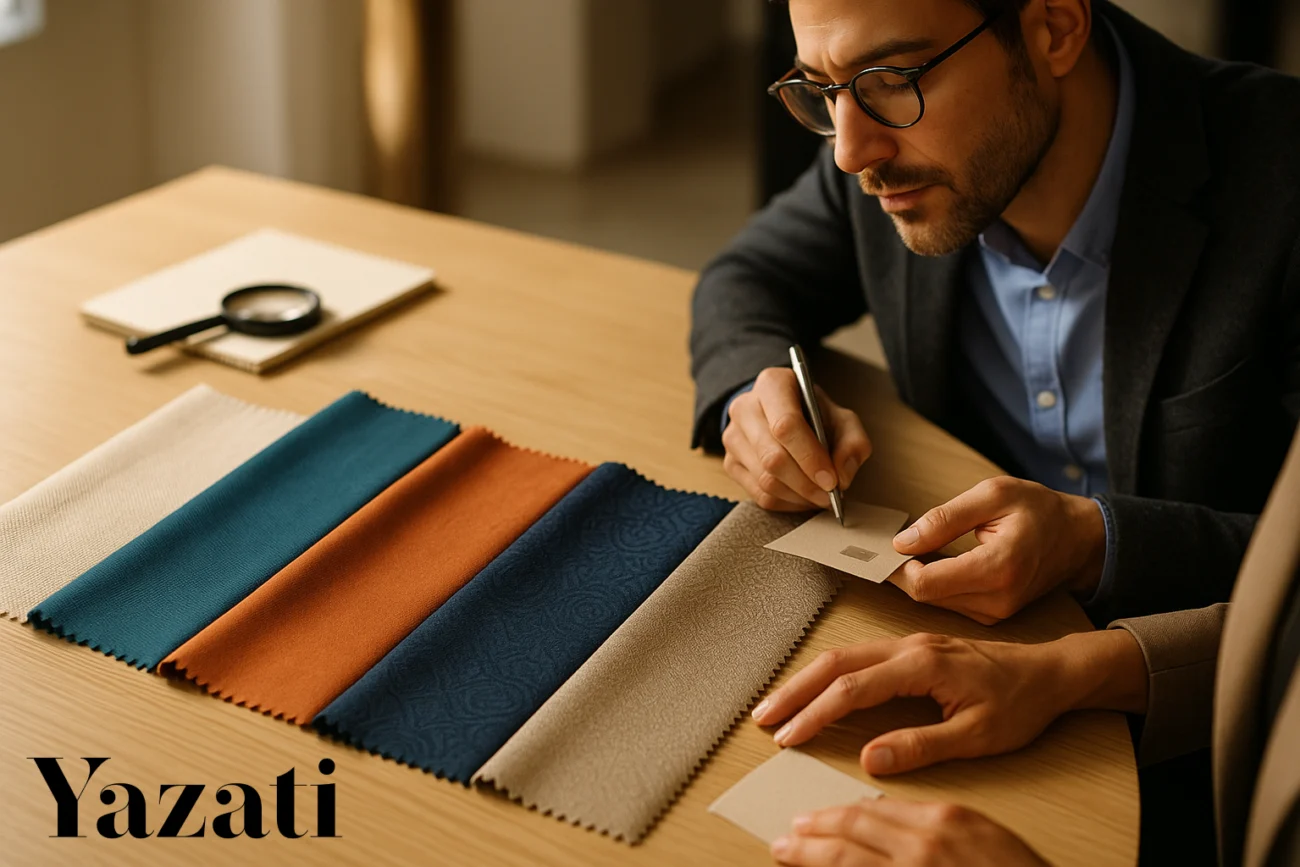
Introduction to Fabric Finishes in the Global Textile Market
In today’s fast-evolving textile industry, fabric finishes have become one of the most powerful differentiators in international trade. As consumers across the globe demand comfort, functionality, and sustainability, fabric finishes determine not only how a fabric feels but also how it performs.
From luxury fashion houses in Milan to sportswear manufacturers in Tokyo, the demand for innovative and value-added finishes has never been higher. For global buyers, finishes serve as the invisible promise of quality — turning ordinary fabrics into high-performance materials.
What Are Fabric Finishes and Why Do They Matter?
A fabric finish refers to the treatment applied to textiles after weaving or knitting, designed to enhance their appearance, texture, or functionality. These finishes can be mechanical, chemical, or biological, depending on their intended purpose.
For example, a water-repellent finish ensures protection from moisture, while a soft-touch finish adds luxury. The right finish can elevate a fabric’s aesthetic appeal, durability, and usability, making it far more attractive to buyers in competitive markets.
The Role of Fabric Finishes in Enhancing Market Appeal
Fabric finishes allow manufacturers to customize textiles for specific global markets. Buyers from colder regions might prioritize heat retention, whereas tropical markets look for breathability and UV resistance. Thus, finishes directly influence a fabric’s export potential, as they align with climatic, cultural, and consumer preferences.
The Global Fabric Finishing Industry: A Snapshot
The global market for fabric finishes is estimated to exceed USD 120 billion by 2030, fueled by rising consumer awareness and technological advancements. Textile exporters are increasingly focusing on eco-friendly coatings, antimicrobial finishes, and smart textiles that meet the dual demands of performance and sustainability.
Key Trends Driving Fabric Finish Demand
- Sustainability and eco-certification are now top priorities for global buyers.
- Health-conscious consumers prefer antimicrobial and odor-control fabrics.
- Comfort and care ease are strong selling points for travel and corporate textiles.
- Smart textiles are redefining fabric functionality with embedded sensors and responsive coatings.
How Buyer Preferences Vary Across Regions
| Region | Top Buyer Preference |
| North America | Anti-microbial & wrinkle-resistant finishes |
| Europe | Sustainable & soft-touch finishes |
| Asia-Pacific | Water-repellent & UV-protective finishes |
| Middle East | Heat-resistant & luxurious hand-feel finishes |
These preferences underscore the importance of regional customization in textile exports.
The Top 5 Fabric Finishes That Appeal to Global Buyers
1. Water-Repellent and Stain-Resistant Finishes
This finish is a game-changer for outdoor, activewear, and uniform industries. Water-repellent coatings prevent liquids from penetrating fabric surfaces, making garments more durable and practical.
Popularity Among Outdoor and Activewear Brands
Brands like Patagonia and Columbia Sportswear rely heavily on water-repellent finishes for functionality. Buyers value these textiles for their weather resistance, ensuring comfort during sports, travel, or everyday use.
Sustainability and Eco-Friendly Water Repellent Solutions
With environmental awareness rising, global buyers now favor PFC-free (Perfluorinated Compound-free) coatings. These new eco-finishes reduce ecological impact while maintaining performance — a balance that defines modern textile success.
2. Anti-Microbial and Odor-Control Finishes
Health and Hygiene: The Post-Pandemic Influence
Post-2020, hygiene has become non-negotiable. Anti-microbial finishes kill or suppress bacterial growth, ensuring freshness and extended wear life — a feature now expected in everything from medical fabrics to athleisure wear.
Top Global Markets for Anti-Microbial Textiles
- Healthcare sectors in the U.S. and Europe
- Fitness apparel markets in South Korea and Japan
- Corporate uniforms in the Middle East
These finishes are considered a hallmark of premium quality and health safety.
3. Wrinkle-Resistant and Easy-Care Finishes
Convenience as a Major Buying Factor
In a fast-paced world, buyers prefer fabrics that demand minimal maintenance. Wrinkle-resistant finishes save time and energy, making them highly popular in global fashion and hospitality sectors.
Preferred by Travel and Hospitality Industries
Hotels, airlines, and corporate uniform buyers seek durable, easy-care textiles. These finishes keep garments crisp and presentable — vital in industries where first impressions count.
4. Soft Touch and Luxury Hand Finishes
The Psychology of Fabric Texture in Buyer Behavior
A soft, luxurious hand feel evokes quality and comfort. Studies show that tactile satisfaction strongly influences purchase decisions — especially in fashion and home décor markets.
Premium Fashion and Home Décor Applications
From velvety drapes to cashmere-like apparel, this finish transforms ordinary textiles into sensory experiences. Brands in Italy and France use soft-touch finishes to convey exclusivity.
5. UV-Protective and Heat-Resistant Finishes
The Rise of Sun-Protective Clothing
With increasing UV exposure concerns, fabrics with built-in UV-protective coatings are gaining traction. These textiles are ideal for sportswear, desert uniforms, and summer collections.
Regional Trends: From Australia to the Middle East
In regions like Australia, UAE, and India, UV-blocking finishes are seen as essential rather than optional. Buyers favor textiles that combine sun protection with lightness and breathability.
Emerging Fabric Finishing Innovations for Global Trade
Smart Textiles and Responsive Finishes
Smart finishes that adapt to temperature, moisture, or body movement are the future of textile engineering. Such innovations are revolutionizing product design and expanding export potential.
Sustainable Alternatives: Bio-Based Coatings and Nano-Finishes
Manufacturers are shifting to bio-based resins, enzyme treatments, and nano-scale coatings that enhance performance while minimizing environmental damage.
How Manufacturers Can Leverage Fabric Finishes for Market Expansion
Global competition in the textile sector is fiercer than ever. To stand out, manufacturers must not only produce high-quality fabrics but also integrate innovative finishes that resonate with regional buyer preferences and sustainability standards.
Understanding Buyer Psychology and Product Differentiation
Buyers make purchasing decisions based on a blend of functionality, sustainability, and sensory appeal.
Here’s how manufacturers can align with these factors:
- Functionality: Offer multi-functional finishes — for instance, a fabric that is both UV-protective and moisture-wicking.
- Sustainability: Highlight the use of biodegradable, PFC-free, or water-saving finishing techniques.
- Sensory Appeal: Focus on tactile comfort, as the softness or smoothness of fabric strongly influences perceived luxury.
By blending these dimensions, exporters can achieve strong brand differentiation and justify premium pricing.
Certification, Compliance, and Global Trade Standards
Global buyers increasingly seek certified textiles to ensure safety, quality, and eco-compliance. The most recognized certifications include:
| Certification | Purpose | Recognized In |
| OEKO-TEX® Standard 100 | Tests for harmful substances | Europe, U.S. |
| GOTS (Global Organic Textile Standard) | Verifies organic and sustainable processing | Global |
| Bluesign® | Ensures responsible chemical use | Global |
| REACH | Regulates chemical safety in products | EU |
Meeting these certifications doesn’t just open export opportunities — it also builds trust and transparency with buyers who value environmental responsibility.
Challenges in Fabric Finishing for Global Exporters
While fabric finishes can elevate product value, manufacturers often face significant operational and market challenges.
Balancing Cost, Quality, and Environmental Compliance
Achieving the right balance between cost-efficiency and performance remains the biggest hurdle. Eco-friendly finishes, for example, can cost 15–30% more than traditional treatments. Manufacturers must therefore innovate to reduce production costs while maintaining compliance with environmental laws such as REACH or EPA regulations.
Adapting to Rapidly Changing Market Trends
Buyer trends evolve quickly. For instance:
- The anti-viral textile boom after COVID-19 was followed by a surge in sustainable, low-impact finishes.
- Smart textile innovations are creating demand for responsive coatings and digital integration.
To stay ahead, exporters need to invest in R&D, buyer feedback loops, and data-driven forecasting to predict the next fabric finishing trend before competitors do.
Future Outlook: What Global Buyers Want Next
The fabric finishing industry is entering a new era — one where technology, ecology, and design converge.
The Move Toward Multi-Functional Finishes
Buyers increasingly seek fabrics that deliver multiple benefits in one treatment. For example:
- UV + Anti-Microbial
- Wrinkle-Free + Moisture Management
- Water-Repellent + Breathable Finish
This fusion approach adds convenience, reduces production complexity, and enhances user experience — aligning with the “less is more” philosophy of modern textile design.
The Growing Importance of Traceability and Transparency
With digital technologies like blockchain, buyers can now track the entire textile lifecycle — from fiber origin to finish. Transparent labeling of finish types, chemical safety, and carbon footprint is quickly becoming an industry standard, especially in Europe and North America.
FAQs About Fabric Finishes and Buyer Preferences
1. What are the most in-demand fabric finishes globally?
The top finishes include water-repellent, anti-microbial, wrinkle-resistant, soft-touch, and UV-protective finishes. These address core buyer concerns like hygiene, comfort, and durability.
2. How do sustainable finishes differ from traditional ones?
Sustainable finishes avoid harmful chemicals (like PFCs), use bio-based or water-saving technologies, and minimize waste. They appeal strongly to eco-conscious buyers.
3. Which regions have the highest demand for functional fabric finishes?
Regions like North America, Western Europe, and Asia-Pacific dominate demand due to active outdoor lifestyles, fashion diversity, and strong awareness of textile innovation.
4. Are smart textile finishes gaining traction among global buyers?
Yes. Smart finishes that react to temperature, moisture, or UV light are revolutionizing industries like sportswear and healthcare, and are expected to grow 15–20% annually.
5. How can small textile manufacturers compete in the global finishing market?
Small manufacturers can focus on niche markets, adopt eco-friendly low-cost alternatives, and collaborate with local R&D institutions for innovative finish development.
6. What certifications do buyers usually ask for in finished fabrics?
Most international buyers look for OEKO-TEX®, GOTS, or Bluesign® certifications, ensuring that fabrics are safe, sustainable, and ethically produced.
Conclusion: The Evolving Art of Fabric Finishing in a Global Market
Fabric finishing is no longer a technical afterthought — it’s a strategic differentiator that defines product identity and market success. As global buyers seek performance, sustainability, and aesthetics, the future belongs to manufacturers who can innovate responsibly.
By embracing eco-conscious processes, obtaining certifications, and leveraging smart technologies, textile producers can position themselves as trusted partners in the international supply chain.
Ultimately, the art of fabric finishing is about enhancing both fabric and trust — crafting textiles that not only look and feel better but also align with the world’s collective vision for a more sustainable, high-performance future.
✨ Discover Global Sourcing Excellence with Netyex ✨
Netyex is your trusted B2B sourcing partner, connecting international buyers with India’s finest manufacturers and curated product lines—from handicrafts and home décor to kitchenware, textiles, hospitality essentials, and more. With verified suppliers and end-to-end support, we make global procurement seamless, reliable, and efficient.
👉 Elevate your sourcing experience—explore Netyex today.
📦 Bulk orders & customisation | 🌍 Worldwide delivery | 🤝 Trusted by global buyers
Visit Netyex to source premium Indian products with confidence.