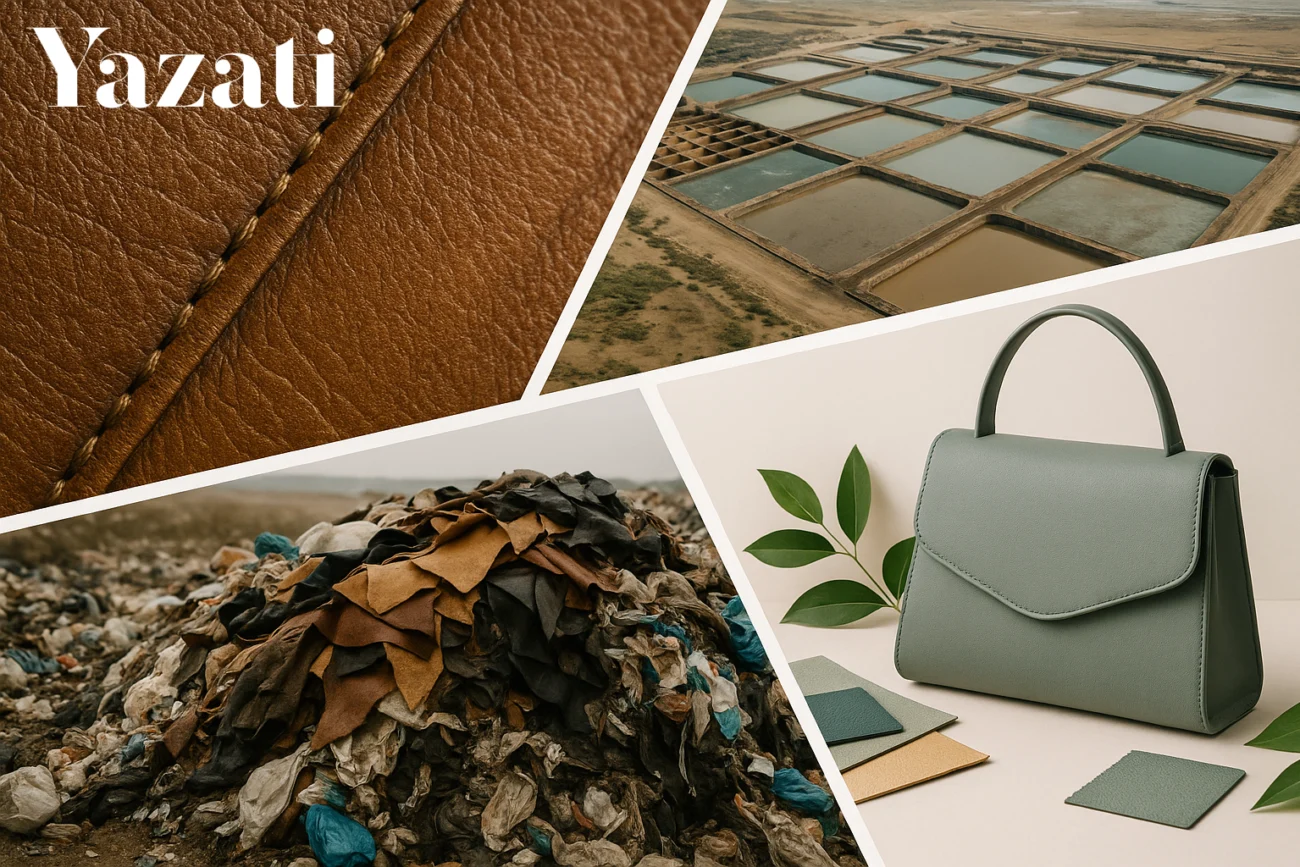
Introduction: Why Leather’s Environmental Impact Matters
Leather has long symbolized luxury, craftsmanship, and durability. From designer handbags to high-end car interiors, it’s embedded in our lifestyle. But beneath its polished surface lies an industry responsible for immense ecological damage. The environmental impact of leather is far-reaching — from deforestation and water pollution to carbon emissions and toxic waste.
As consumers become more conscious of sustainability, eco-innovators like Yazati are changing the narrative. By developing green leather alternatives, Yazati proves that beauty, functionality, and environmental responsibility can coexist. This article explores the hidden costs of leather and how Yazati’s eco-friendly innovations are shaping a greener future for fashion.
Understanding Leather Production: From Animal to Accessory
Leather production might seem simple — animal hide transformed into a soft, durable material. In reality, it’s a complex, resource-intensive process involving numerous environmental and ethical concerns.
The Raw Materials: Animal Hides and the Global Demand
The leather industry depends primarily on hides from cows, goats, and sheep — byproducts of the meat industry. With over 1.4 billion animal hides processed annually, this demand sustains massive livestock farming operations, which contribute to deforestation and methane emissions.
Moreover, the global appetite for leather accessories — shoes, bags, belts — continues to grow, particularly in luxury markets. This demand amplifies environmental strain, as the farming and processing required are both energy-intensive and polluting.
The Tanning Process and Its Chemical Footprint
The tanning process transforms raw hides into leather through the use of chemicals like chromium salts, formaldehyde, and arsenic compounds. While tanning prevents decomposition, it generates hazardous waste. Many developing countries, where most tanning occurs, lack adequate waste treatment facilities, leading to the discharge of toxic chemicals into rivers and soil.
In regions like Bangladesh and India, local communities face contaminated water sources and long-term health effects due to chromium exposure. The irony? The same “premium leather” admired globally often comes at the cost of local ecosystems and human lives.
The Hidden Costs of Leather on the Environment
Leather is often marketed as a “natural” product, but its production process tells a different story.
Water Consumption and Wastewater Pollution
Producing a single leather jacket can require up to 17,000 liters of water — mostly used in livestock rearing and processing. The tanning stage alone produces chemical-laden wastewater containing chromium, sulfides, and acids. When this wastewater enters rivers, it destroys aquatic ecosystems and contaminates groundwater supplies used by nearby communities.
Deforestation and Biodiversity Loss
The connection between leather and deforestation is undeniable. To raise cattle, vast areas of rainforest are cleared for grazing or soy cultivation (used as cattle feed). The Amazon rainforest, in particular, has been a casualty of this practice. Each acre lost diminishes biodiversity and accelerates climate change, making the true cost of leather immeasurable.
Carbon Footprint and Greenhouse Gas Emissions
Livestock farming is one of the largest contributors to greenhouse gases, producing 14.5% of global emissions. Each kilogram of leather generates around 17 kg of CO₂ equivalent, mainly from cattle methane emissions and energy-intensive processing.
As the world aims to meet climate goals, transitioning to sustainable materials like Yazati’s alternatives is no longer optional — it’s essential.
Human Health Risks in the Leather Industry
Leather tanning is not only harmful to the planet but also to people. Workers in tanneries are frequently exposed to carcinogenic chemicals and respiratory irritants. Chronic exposure to chromium VI, for instance, can lead to skin ulcers, respiratory issues, and even cancer.
In poorly regulated regions, safety standards are minimal. Entire communities suffer from contaminated soil and air, with children often exposed from a young age. Ethical concerns extend beyond animal welfare — they encompass human welfare, too.
Yazati: A Pioneer in Eco-Friendly Leather Alternatives
Enter Yazati, a trailblazer in sustainable fashion materials. With a mission to create eco-friendly leather alternatives, Yazati stands at the forefront of ethical design and innovation.
The Vision Behind Yazati’s Sustainability Mission
Yazati’s philosophy centers on reducing the environmental toll of fashion while preserving the beauty and performance of leather. Their approach blends science, sustainability, and style, emphasizing cruelty-free production and circular economy principles.
The brand’s vision is clear: eliminate the dependence on animal-based leather and replace it with plant-derived, biodegradable materials that leave minimal ecological footprints.
Yazati’s Innovative Materials: Plant-Based & Biodegradable Solutions
Yazati’s research and development have produced groundbreaking materials, including:
- Apple Leather: Made from apple waste from the food industry, offering durability and texture comparable to animal leather.
- Cactus Leather: Derived from prickly pear cactus, requiring minimal water and zero pesticides.
- Mushroom Leather (Mycelium): A bio-based alternative grown using fungi roots, completely biodegradable.
- Recycled PU and Organic Cotton Blends: Designed for flexibility, comfort, and reduced emissions.
Each of these innovations reflects Yazati’s commitment to sustainability through circularity — turning waste into worth.
How Yazati Reduces Waste and Carbon Emissions
Yazati’s production process emphasizes closed-loop systems — recycling water, minimizing chemical use, and sourcing renewable energy. Compared to traditional leather manufacturing, Yazati’s methods reduce carbon emissions by up to 80% and water usage by over 90%.
By adopting eco-certifications and maintaining transparency throughout its supply chain, Yazati ensures that its sustainability claims are verifiable and trustworthy.
Comparing Traditional Leather vs. Yazati’s Green Alternatives
| Feature | Traditional Leather | Yazati’s Green Alternatives |
| Source | Animal hides | Plant-based (apple, cactus, mushroom) |
| Water Usage | Extremely high | Minimal |
| Carbon Emissions | High (livestock & tanning) | Low (renewable inputs) |
| Durability | Long-lasting | Comparable or better |
| Biodegradability | Limited | High |
| Ethical Impact | Animal cruelty, labor issues | Cruelty-free, fair labor |
| Cost | Expensive to produce | Competitive and scalable |
Durability and Aesthetic Appeal
One of the myths about vegan or plant-based leather is its lack of durability. Yazati’s materials challenge that belief. Through advanced coating technologies and bio-engineered fibers, they ensure flexibility, water resistance, and longevity comparable to premium animal leather.
Price, Accessibility, and Consumer Awareness
As sustainable production scales, prices continue to decrease. Yazati focuses on making sustainability accessible, not exclusive. Moreover, with rising consumer awareness, the demand for cruelty-free and eco-conscious fashion is driving this transformation faster than ever.
The Role of Innovation in Sustainable Fashion
The future of fashion depends on innovation. Biotechnology, circular design, and digital manufacturing enable brands like Yazati to reduce waste, cut emissions, and design products with purpose.
Through AI-driven material optimization and zero-waste design techniques, Yazati embodies the next era of fashion — where creativity meets climate responsibility.
How Consumers Can Support the Shift Toward Green Fashion
Consumers wield tremendous power in driving sustainability forward. Here’s how individuals can make a difference:
- Choose Certified Sustainable Brands like Yazati.
- Prioritize Longevity — buy less, choose better.
- Support Circular Fashion Models — recycling, reselling, and upcycling.
- Educate Yourself — awareness is the first step toward change.
Every purchase is a vote for the kind of world we want to live in.
FAQs About Leather and Yazati’s Green Alternatives
1. Is vegan or plant-based leather as durable as traditional leather?
Yes! Yazati’s plant-based leathers undergo rigorous testing to ensure durability equal to or greater than animal leather.
2. How does Yazati’s production process help the environment?
Yazati’s methods reduce water usage by 90%, eliminate animal cruelty, and lower carbon emissions significantly.
3. Are Yazati’s products biodegradable?
Many of Yazati’s materials, such as mushroom and apple leather, are fully biodegradable, ensuring minimal environmental impact after disposal.
4. Does Yazati use any plastic-based components?
Some materials incorporate minimal, recycled PU for structure, but Yazati continually innovates to replace synthetics entirely.
5. Where can consumers buy Yazati products?
Yazati’s products are available online through their official site and select sustainable retailers worldwide. (External Link: Yazati Official Website)
6. Why is switching to green alternatives important for the future?
Because the fashion industry is one of the world’s top polluters. Transitioning to sustainable materials like Yazati’s is vital for preserving our planet for future generations.
Conclusion: The Future of Sustainable Style with Yazati
The environmental impact of leather is undeniable — from water pollution to carbon emissions, it’s a legacy of luxury built on unsustainable foundations. But the rise of innovators like Yazati offers hope. Their green alternatives prove that sustainability and style can thrive together.
By embracing plant-based materials, ethical production, and transparency, Yazati redefines what it means to be fashionable — proving that the future of fashion is not only stylish but sustainable.
✨ Discover Global Sourcing Excellence with Netyex ✨
Netyex is your trusted B2B sourcing partner, connecting international buyers with India’s finest manufacturers and curated product lines—from handicrafts and home décor to kitchenware, textiles, hospitality essentials, and more. With verified suppliers and end-to-end support, we make global procurement seamless, reliable, and efficient.
👉 Elevate your sourcing experience—explore Netyex today.
📦 Bulk orders & customisation | 🌍 Worldwide delivery | 🤝 Trusted by global buyers
Visit Netyex to source premium Indian products with confidence.