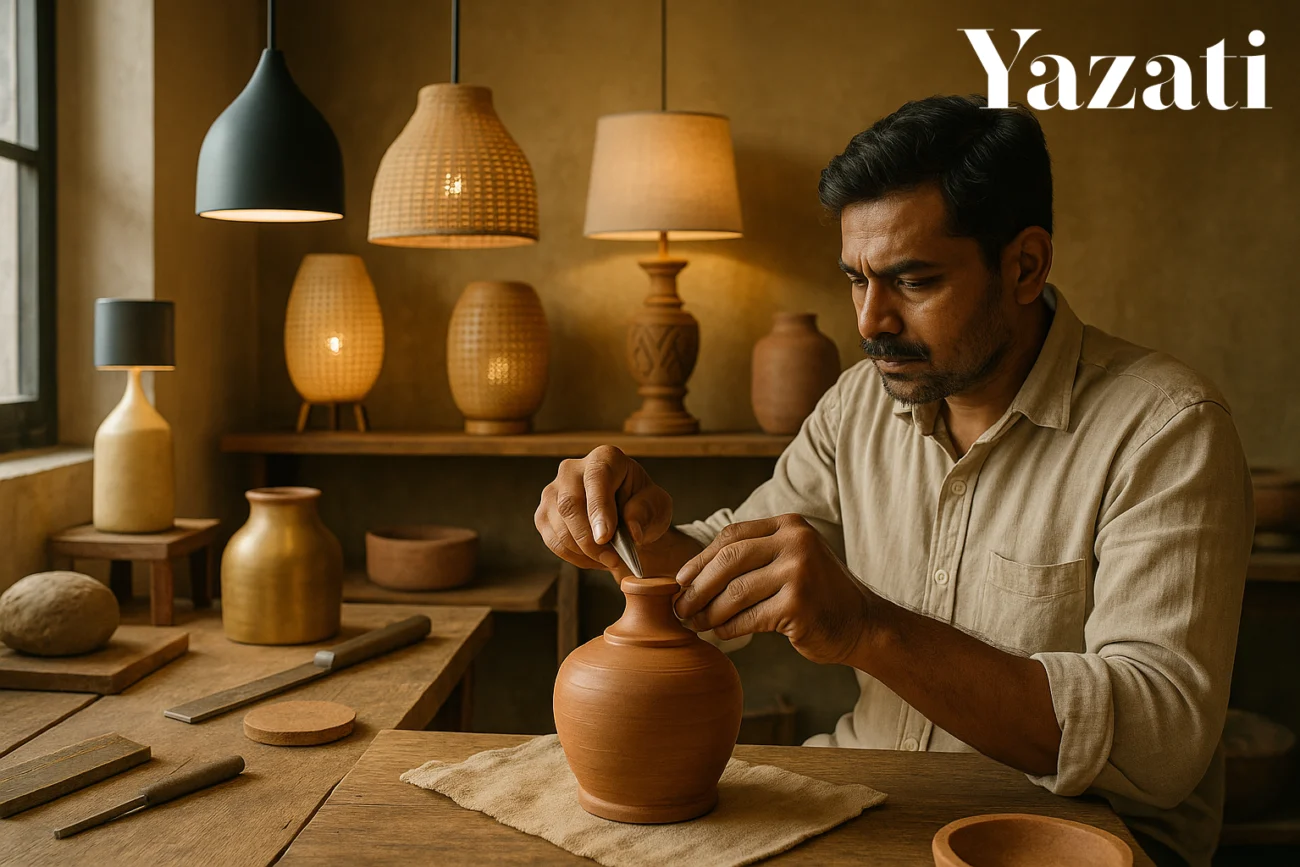
Introduction: The Resurgence of Indian Handcrafted Illumination
The world is once again turning its gaze toward the warm, golden glow of Indian handmade lighting. From intricately carved brass lamps to eco-friendly paper lanterns, the rise of handmade lighting and lamps from India reflects a broader movement—one that values authenticity, sustainability, and craftsmanship. As consumers move away from factory-made, impersonal décor, Indian artisans are reclaiming their place on the global design stage.
This resurgence isn’t just about aesthetics; it’s about reviving centuries-old traditions, empowering rural communities, and promoting a more sustainable approach to living. Today, handmade lamps from India illuminate not just homes, but also the legacy of an art form deeply rooted in culture and creativity.
The Heritage of Indian Handmade Lighting
Ancient Origins: From Oil Lamps to Ornate Lanterns
Handmade lighting has been an integral part of India’s history for millennia. The diya, a simple clay lamp fueled by oil, remains a timeless symbol of light conquering darkness. Ancient artisans crafted metal lamps adorned with religious motifs, often used in temples and royal courts. These designs later evolved into more ornate pieces made from brass, copper, and silver, reflecting India’s rich artistic lineage.
Cultural Significance in Indian Traditions and Festivals
Lighting holds deep spiritual significance in India. Festivals like Diwali, Navratri, and Karthigai Deepam revolve around the act of lighting lamps to invite prosperity and dispel negativity. Beyond religious contexts, handmade lamps symbolize warmth, welcome, and divinity—core values in Indian culture.
Regional Styles: Rajasthan, Kerala, and Gujarat
Each region in India contributes its own flair to handmade lighting.
- Rajasthan specializes in vibrant glass mosaic lamps and intricately painted lanterns.
- Kerala’s Nilavilakku (traditional brass standing lamps) reflect South India’s devotion and grace.
- Gujarat and West Bengal excel in terracotta and bamboo lighting, often blending modern design with rustic appeal.
The Artisans Behind the Glow
Skilled Craftsmanship and Generational Techniques
Handmade lighting is often passed down as a family trade. Skilled artisans, trained from childhood, shape, polish, and engrave each piece by hand. Every lamp tells a story—not of machinery, but of human touch, patience, and mastery.
Role of Rural Women and Local Communities
Women play a crucial role in the handmade lamp sector. In states like Odisha and Madhya Pradesh, women artisans create papier-mâché and textile lamps that combine artistry with income generation. These efforts help sustain local economies and empower women in rural areas.
Preserving Craft Heritage Through Modern Platforms
Initiatives like Dastkar, Crafts Council of India, and online portals such as Jaypore and Okhai are helping artisans connect with global audiences. By blending tradition with technology, these platforms preserve India’s lighting heritage for future generations.
Materials and Techniques Used in Handmade Lamps
Brass, Copper, and Terracotta: Traditional Mediums
Indian artisans are known for their expertise in metalwork. Brass and copper lamps, often engraved with motifs of flora, fauna, and deities, remain popular for their longevity and classic beauty. Meanwhile, terracotta lamps add a touch of earthy minimalism to modern homes.
Eco-Friendly and Sustainable Materials Gaining Popularity
As sustainability becomes a global priority, Indian artisans are turning to recycled paper, bamboo, jute, and coconut shells. These eco-friendly materials appeal to environmentally conscious buyers who seek both elegance and responsibility in their décor choices.
Hand-Painting, Embossing, and Carving Techniques
Hand-painted glass lanterns, embossed metal shades, and carved wooden bases showcase India’s diverse craftsmanship. The level of detail and uniqueness in each lamp differentiates handmade products from their mass-produced counterparts.
The Global Demand for Indian Handmade Lighting
Growing Popularity in Western Home Décor
In recent years, Indian handmade lighting has gained traction in international design circles. Western consumers, particularly in the U.S. and Europe, appreciate the rustic charm and cultural richness that Indian lamps bring to interiors.
The Role of E-commerce and Online Marketplaces
Platforms like Etsy, Amazon Handmade, and IndiaMART have opened doors for Indian artisans to sell directly to global audiences. This democratization of trade has enabled small workshops from Jaipur or Varanasi to reach living rooms in New York and London.
Export Trends and International Exhibitions
India’s handicraft exports are steadily rising. According to the Export Promotion Council for Handicrafts (EPCH), lighting and décor items from India are among the top export categories, showcased in exhibitions like Ambiente Frankfurt and Maison & Objet Paris.
Why Consumers Are Turning Toward Handmade Lighting
The Desire for Authenticity and Cultural Connection
Modern consumers crave stories—objects that carry meaning. Handmade lamps embody a connection to culture, history, and craftsmanship that mass-produced items simply can’t replicate.
Eco-Conscious Choices in Sustainable Living
The sustainability movement has encouraged people to choose handcrafted over synthetic. Handmade lighting aligns perfectly with this ethos—crafted locally, often using renewable materials, and with minimal waste.
Emotional and Aesthetic Appeal of Handcrafted Light
There’s something soulful about a hand-poured wax candleholder or a delicately painted lantern. The imperfections, the textures, the glow—all contribute to an ambiance that feels human and authentic.
Comparing Handmade vs. Mass-Produced Lighting
| Aspect | Handmade Lighting | Mass-Produced Lighting |
| Origin | Crafted by artisans | Factory manufactured |
| Material Quality | Natural and sustainable | Synthetic or mixed |
| Design | Unique and artistic | Uniform and repetitive |
| Cultural Value | High – carries tradition | Minimal |
| Price Range | Reflects labor and skill | Cheaper but impersonal |
Handmade lighting may cost more, but its artistic and ethical value far outweighs the price difference.
The Role of Social Media and Influencer Marketing
Instagram and Pinterest as Design Inspiration Hubs
Social platforms have become powerful marketing tools for artisans. Lifestyle influencers showcase Indian handmade lamps in bohemian and minimalist home setups, inspiring a new generation of conscious consumers.
Storytelling and Branding for Artisans
Brand storytelling—highlighting the maker’s journey—has become crucial. Artisans who share behind-the-scenes processes, from metal casting to hand-painting, attract greater appreciation and loyalty.
Emerging Trends in Indian Handmade Lamps
Fusion of Traditional Craft with Modern Design
Indian designers are collaborating with contemporary architects to blend old-world charm with modern aesthetics. Brass meets concrete; rattan meets glass—creating lamps that appeal globally.
Emerging Trends in Indian Handmade Lamps (Continued)
Smart Lighting Meets Handcrafted Artistry
The fusion of technology and craftsmanship has sparked an exciting new direction for Indian handmade lighting. Artisans are now integrating smart bulbs, touch sensors, and energy-efficient LEDs into their traditional lamp designs. Imagine a Rajasthani hand-etched brass lantern that can be voice-controlled through Alexa — this seamless mix of old and new appeals to tech-savvy consumers who also value artistry.
Customization and Limited-Edition Collections
Personalization has become a key trend in modern décor. Customers can now request custom sizes, finishes, and motifs for handmade lamps. Many boutique studios in India release limited-edition series that feature seasonal designs, often inspired by Indian festivals or nature. This exclusivity adds value while maintaining authenticity.
Case Studies: Indian Brands Lighting Up the World
Case Study 1: Studio Coppre – The Elegance of Brasswork
Based in Pune, Studio Coppre celebrates India’s age-old tradition of copper and brass craftsmanship. By reviving the Tambat Ali metalworking community’s heritage, they create lamps that merge ancient repoussé techniques with sleek, contemporary silhouettes. Each piece is ethically crafted, and the brand’s commitment to sustainability has earned it global recognition in interior design magazines.
Case Study 2: Oorjaa – Sustainable Paper Lamps
Bangalore-based Oorjaa has become synonymous with eco-conscious design. Their lamps are made from recycled paper, banana fiber, and cork, offering a soft, organic glow. Oorjaa’s ethos revolves around responsible design, using handcrafted textures to evoke serenity. Their minimalist yet expressive pieces are now showcased in eco-resorts and sustainable homes across the world.
Case Study 3: Anantaya Decor – Craft Meets Innovation
Anantaya Decor, founded by Ayush Kasliwal in Jaipur, combines traditional Rajasthani crafts with modern design thinking. Their lamps often feature handspun cotton cords, beaten brass, and carved wood, symbolizing the convergence of craft heritage and modern luxury. Anantaya’s success at global design fairs underscores how Indian craftsmanship can redefine global décor standards.
Challenges Faced by Artisans and Small Businesses
Competition from Machine-Made Imports
One of the biggest challenges is the influx of cheap, mass-produced lighting from other countries. These products often mimic handcrafted aesthetics but lack authenticity and quality. The price difference creates a tough market for artisans, who rely on fair compensation for their labor.
Lack of Access to Global Markets
Many artisans, particularly those in rural regions, face limited access to global marketplaces and logistics infrastructure. Without the right digital training or marketing tools, their products struggle to reach international buyers, despite their exceptional craftsmanship.
Need for Government and NGO Support
While India has several initiatives for handicrafts, artisans still need better funding, training, and digital literacy programs. NGOs and government schemes like ODOP (One District, One Product) are helping, but the reach remains limited. Greater institutional support could unlock the full potential of India’s handmade lighting industry.
The Future of Handmade Lighting in India
Digital Empowerment and Craft Revival
The future shines bright for Indian handmade lamps as artisans embrace digital empowerment. Online stores, social media marketing, and virtual exhibitions are bridging the gap between local makers and global buyers. Young entrepreneurs are also setting up digital-first craft ventures that combine storytelling with commerce.
Export Growth and Sustainable Development Goals
Sustainability is now at the forefront of global design, aligning perfectly with the ethos of handmade crafts. India’s commitment to UN Sustainable Development Goals (SDGs)—especially responsible consumption and production—is giving its artisans a powerful global narrative. The export of handmade lighting is projected to grow steadily through 2030 as eco-conscious consumers demand sustainable décor.
How to Choose Authentic Handmade Lamps from India
Checking Craftsmanship, Authenticity, and Origin
When purchasing handmade lamps, authenticity matters. Buyers should:
- Look for signs of handwork — slight variations, texture differences, or hand-tool marks.
- Check for artisan tags or GI (Geographical Indication) certifications where applicable.
- Support platforms that provide transparency about where and how items are made.
Supporting Verified Artisan Networks and Fair Trade
Opt for organizations and stores that follow Fair Trade practices. These ensure that artisans are paid fairly and work in ethical conditions. Verified platforms like Dastkar, Jaypore, and Okhai feature genuine handmade products that directly benefit rural artisans.
FAQs About Handmade Lighting and Lamps from India
1. Why are handmade lamps from India so popular internationally?
Indian handmade lamps blend cultural richness, sustainability, and intricate artistry. Their uniqueness and handcrafted touch appeal to consumers seeking authentic, meaningful décor.
2. What materials are most commonly used in Indian handmade lighting?
Traditional materials include brass, copper, terracotta, bamboo, paper, and jute. Modern artisans also incorporate recycled and eco-friendly materials to align with sustainability trends.
3. Are handmade lamps eco-friendly?
Yes. Most handmade lamps use natural or upcycled materials, consume less energy during production, and often employ local supply chains, making them far more sustainable than mass-produced alternatives.
4. How can I ensure I’m buying genuine handmade lighting?
Purchase from verified craft marketplaces or brands that provide artisan profiles, GI tags, and detailed product descriptions. Avoid listings with uniform patterns or machine-perfect finishes.
5. Do handmade lamps require special maintenance?
Not necessarily. Regular cleaning and gentle handling help preserve finishes. For metal lamps, use mild polish occasionally; for paper or terracotta lamps, avoid moisture exposure.
6. Can handmade lighting fit modern or minimalist home interiors?
Absolutely! Modern Indian artisans skillfully blend traditional motifs with minimalist and contemporary forms, ensuring these lamps fit both modern and classic spaces beautifully.
Conclusion: Lighting the World with Indian Craftsmanship
The rise of handmade lighting and lamps from India represents more than just a décor trend—it symbolizes a cultural renaissance. Every handcrafted lamp is a reflection of India’s timeless artistry, sustainable ethos, and deep connection between maker and material.
As global consumers seek to reconnect with authenticity and craftsmanship, Indian artisans are poised to lead this luminous revolution. Whether it’s a brass diya that echoes centuries of devotion or a sleek bamboo pendant that complements modern architecture, India’s handmade lamps continue to illuminate the world — ethically, beautifully, and sustainably.
“When you light an Indian handmade lamp, you don’t just brighten a room—you honor a legacy.”
✨ Discover Global Sourcing Excellence with Netyex ✨
Netyex is your trusted B2B sourcing partner, connecting international buyers with India’s finest manufacturers and curated product lines—from handicrafts and home décor to kitchenware, textiles, hospitality essentials, and more. With verified suppliers and end-to-end support, we make global procurement seamless, reliable, and efficient.
👉 Elevate your sourcing experience—explore Netyex today.
📦 Bulk orders & customisation | 🌍 Worldwide delivery | 🤝 Trusted by global buyers
Visit Netyex to source premium Indian products with confidence.