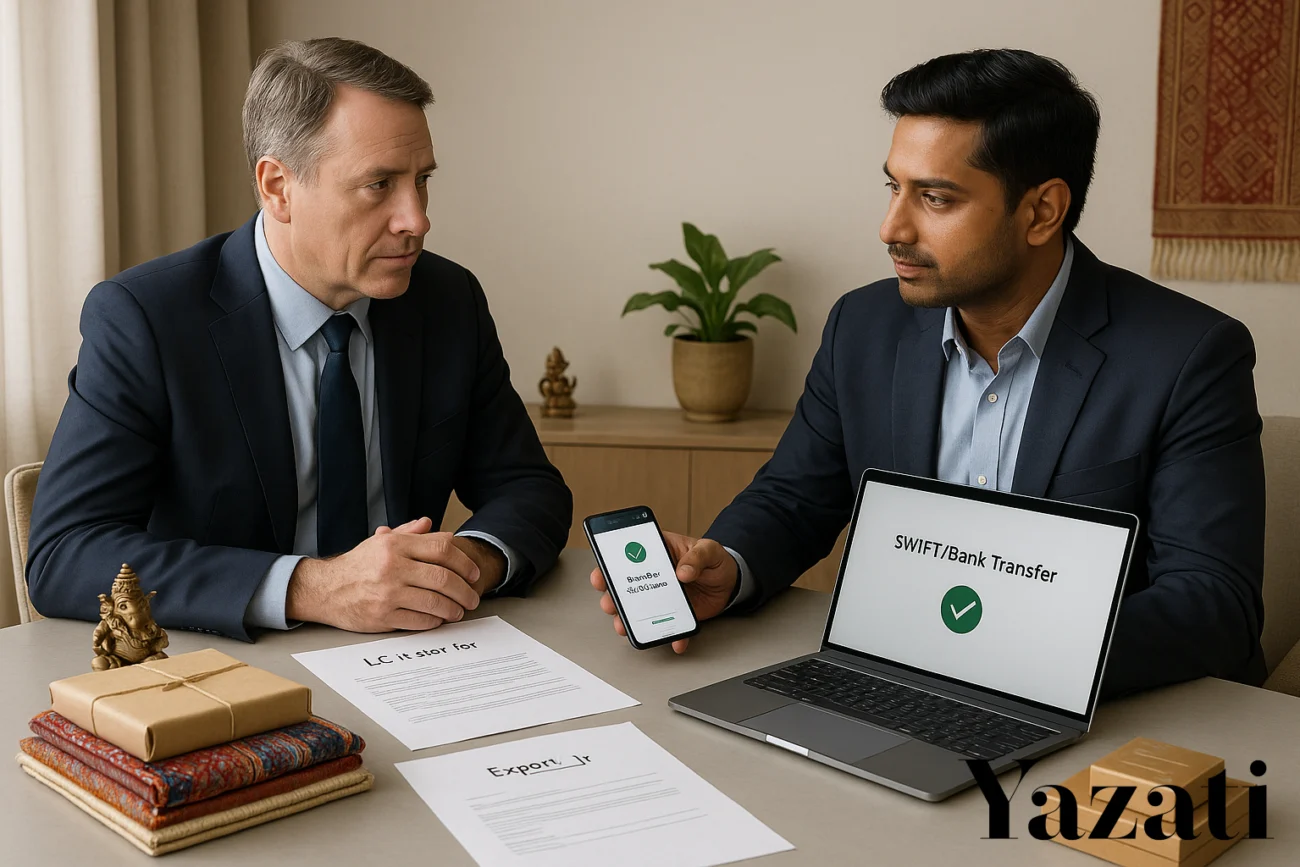
Introduction: The Growing Power of Indian Exports
India’s export industry has evolved into one of the strongest pillars of its economy, spanning sectors such as textiles, pharmaceuticals, IT services, and engineering goods. As global buyers increasingly source from India, understanding how Indian export payment systems function becomes essential.
With an annual export value exceeding $450 billion, India maintains trade relationships with over 190 countries. Yet, many international buyers find the payment landscape complex due to regulatory compliance, currency management, and documentation requirements. This guide provides a detailed roadmap to help buyers navigate these systems confidently and securely.
Why Understanding Export Payment Systems Matters
The Role of Payment Security in International Trade
In cross-border commerce, payment security is the foundation of trust. Buyers must ensure they receive the goods as promised, while exporters want assurance of timely payment. Misunderstandings around payment methods can lead to disputes, delays, or even financial losses.
Common Challenges Faced by Global Buyers
- Lack of clarity on RBI’s foreign exchange rules.
- Misinterpretation of export documentation requirements.
- Currency conversion delays and exchange rate volatility.
- Risk of payment fraud or unauthorized remittances.
By understanding how Indian exporters manage payments, buyers can prevent these issues before they arise.
Overview of Indian Export Payment Mechanisms
India’s payment systems are governed primarily by the Reserve Bank of India (RBI) under the Foreign Exchange Management Act (FEMA). Every export transaction must be routed through an Authorized Dealer (AD) bank, which acts as a bridge between the exporter, the importer, and the RBI.
Understanding RBI Regulations for Export Payments
All export proceeds must be received in freely convertible foreign currency (like USD, EUR, GBP, etc.) within nine months of shipment. RBI periodically issues circulars and master directions defining acceptable modes of payment and compliance procedures.
Authorized Dealer (AD) Banks and Their Role
AD banks handle:
- Verification of shipping and invoice documents.
- Ensuring foreign exchange compliance.
- Reporting export receipts through the EDPMS portal.
Export Documentation and Compliance Essentials
Buyers should familiarize themselves with key export documents such as:
- Commercial Invoice
- Packing List
- Bill of Lading or Airway Bill
- Letter of Credit (LC) or Payment Terms Contract
- Shipping Bill (submitted electronically through ICEGATE)
Major Payment Methods Used in Indian Exports
1. Advance Payment (Cash in Advance)
This is the most secure option for exporters but riskiest for buyers. Payment is made before shipment. Buyers should use escrow accounts or trade insurance for added protection.
2. Letter of Credit (LC)
A Letter of Credit offers balanced protection. The buyer’s bank guarantees payment once the exporter fulfills the document conditions. It’s ideal for high-value or first-time transactions.
3. Documentary Collection (DP/DA)
Under Documents Against Payment (DP) or Documents Against Acceptance (DA), banks act as intermediaries. Payment or acceptance of a draft triggers document release.
4. Open Account Payments
Common in long-term trade relationships, goods are shipped before payment is made. Though convenient, it carries higher risks for exporters.
5. Online Payment Gateways and Digital Transfers
Modern exporters increasingly use SWIFT, Payoneer, or fintech-based platforms like Wise and RazorpayX to simplify settlements, especially for service exports.
Comparing Payment Methods: Pros and Cons for Buyers
| Payment Method | Buyer’s Advantage | Buyer’s Risk Level | Best For |
| Advance Payment | Quick order processing | High | Small trial orders |
| Letter of Credit | Secure, bank-verified | Low | Large transactions |
| Documentary Collection | Controlled via banks | Medium | Repeat transactions |
| Open Account | Maximum convenience | High | Trusted partners |
| Digital Transfer | Fast and transparent | Medium | Service exports |
Key Regulatory Frameworks Governing Indian Export Payments
Foreign Exchange Management Act (FEMA)
FEMA governs all foreign exchange transactions. Buyers must ensure that their payments comply with RBI guidelines under this act.
RBI’s Master Directions on Export of Goods and Services
These directions specify acceptable payment timelines, reporting requirements, and approved methods.
Export Data Processing and Monitoring System (EDPMS)
EDPMS is a digital system used by banks and exporters to monitor pending export payments and ensure compliance.
Currency and Exchange Rate Management for Buyers
Dealing with INR vs. USD or Euro Transactions
While the Indian rupee (INR) is not freely convertible, payments are usually made in major currencies like USD or EUR. However, for neighboring countries, RBI allows rupee trade under special arrangements.
How to Hedge Against Currency Risk
Buyers can use:
- Forward Contracts to lock in exchange rates.
- Currency Swaps to mitigate volatility.
- Multi-currency accounts for simplified settlements.
Banking Channels and Digital Platforms Supporting Export Payments
SWIFT Transfers and International Banking Routes
The SWIFT network remains the most trusted system for high-value payments. Ensure the exporter’s bank SWIFT code and details match their invoice before transferring funds.
Role of Fintech Platforms in Simplifying Trade Payments
New-age fintechs like Wise, Payoneer, and Tazapay are revolutionizing trade by reducing fees and improving transparency. These platforms integrate with Indian banks and adhere to RBI norms.
Step-by-Step Process: How to Make Secure Export Payments to India
- Verify the Exporter’s Credentials – Check IEC (Import Export Code), GSTIN, and business history.
- Choose a Suitable Payment Method – Match risk level to transaction value.
- Complete Documentation – Ensure commercial invoices, shipping bills, and contracts align.
- Bank Reporting – Ensure both buyer’s and exporter’s banks file reports to RBI’s EDPMS.
- Confirm Delivery – Track shipment and maintain communication for proof of receipt.
Avoiding Fraud and Ensuring Payment Security
Common Scams and How to Spot Them
- Fake exporter websites with mismatched GSTINs.
- Email spoofing during fund transfers.
- Unrealistically low product prices.
Due Diligence Tips for International Buyers
- Always conduct background checks.
- Request video proof of goods before shipping.
- Use trade escrow or LC for new partnerships.
Role of Export Credit Guarantee Corporation (ECGC)
ECGC protects exporters (and indirectly buyers) against payment defaults, ensuring smoother transactions.
Taxation and Invoicing in Indian Export Payments
GST and Export Transactions
Exports are considered zero-rated supplies under Indian GST. Buyers benefit because exporters can claim input tax credit refunds.
Importance of E-Invoicing and Shipping Bills
Since October 2020, e-invoicing is mandatory for Indian exporters above certain turnover limits. Buyers should insist on valid invoice references.
Case Study: How an EU Buyer Successfully Paid an Indian Exporter
An electronics distributor in Germany sourced LED components from India worth $50,000. They used a Letter of Credit through Deutsche Bank and HDFC Bank (India).
- Documents were verified via SWIFT.
- Payment was released upon Bill of Lading confirmation.
- Both parties maintained compliance under FEMA.
The process demonstrated that with proper documentation and trusted banks, payments to Indian exporters can be fully secure.
Future of Indian Export Payment Systems
Blockchain and Smart Contracts in Trade Finance
Blockchain technology can automate document verification, making LCs and payment tracking instantaneous.
RBI’s Push for Trade Digitization
RBI’s initiatives like Trade Receivables Discounting System (TReDS) and FinTech sandbox programs aim to reduce delays and improve transparency.
FAQs: Indian Export Payment Systems Explained
1. What is the safest way to pay an Indian exporter?
A Letter of Credit (LC) through a reputed bank offers maximum security for both parties.
2. How long does it take for export payment to reach India?
Typically 3–7 working days via SWIFT transfer, depending on intermediary banks.
3. Can I pay an Indian exporter in INR?
Only under specific trade arrangements approved by RBI; otherwise, use major foreign currencies.
4. Are digital payments like Payoneer or Wise legal for exports?
Yes, as long as they’re routed through authorized banks and comply with FEMA.
5. What documents should I verify before payment?
Check the exporter’s IEC, GSTIN, invoice, and shipping documents.
6. What happens if payment is delayed?
The exporter’s AD bank reports it to RBI via EDPMS, which may affect their export compliance status.
Conclusion: Building Trust Through Transparency and Compliance
For global buyers, understanding Indian export payment systems isn’t just a formality — it’s a strategic advantage. India’s regulatory framework, led by the RBI, ensures secure and transparent transactions when buyers follow proper procedures.
By leveraging trusted banking channels, verifying documentation, and using risk-managed payment methods, international buyers can enjoy seamless trade experiences with India’s growing export market.
✨ Discover Global Sourcing Excellence with Netyex ✨
Netyex is your trusted B2B sourcing partner, connecting international buyers with India’s finest manufacturers and curated product lines—from handicrafts and home décor to kitchenware, textiles, hospitality essentials, and more. With verified suppliers and end-to-end support, we make global procurement seamless, reliable, and efficient.
👉 Elevate your sourcing experience—explore Netyex today.
📦 Bulk orders & customisation | 🌍 Worldwide delivery | 🤝 Trusted by global buyers
Visit Netyex to source premium Indian products with confidence.