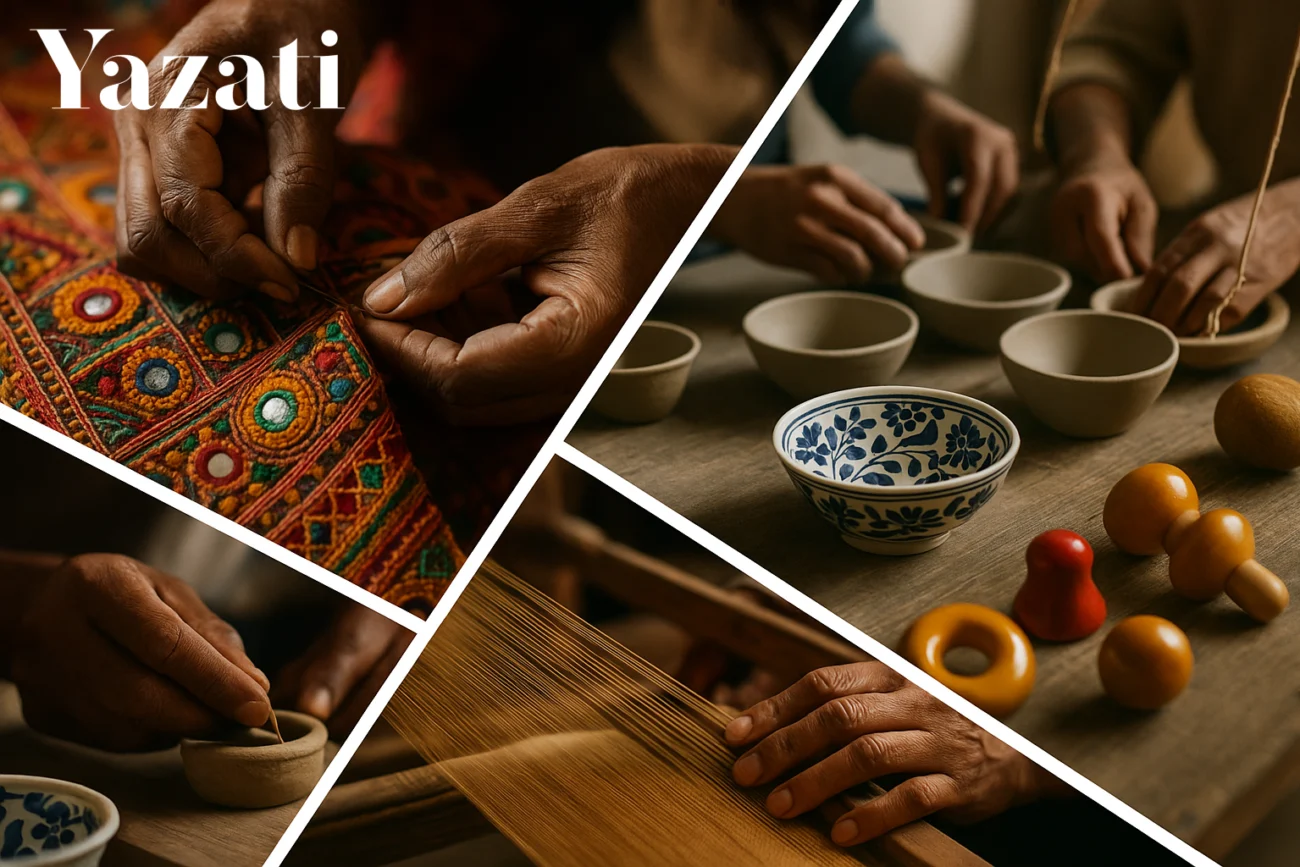
Understanding India’s Craft Heritage and Cluster Ecosystem
India’s craft sector is a living reflection of its cultural depth and creative heritage. With over 7 million artisans spread across thousands of villages, the country stands as one of the world’s largest producers of handmade goods. Each craft cluster represents a microcosm of tradition, technique, and community — where artisans have passed down their skills through generations.
A craft cluster is more than just a production hub; it’s an ecosystem where artisans, raw material suppliers, designers, and traders work symbiotically. These clusters are often region-specific — for instance, Banaras for silk weaving, Kutch for embroidery, and Jaipur for block printing — and each region has a distinct artistic identity rooted in its culture, geography, and materials.
India’s government and several NGOs have supported these clusters through initiatives like the Cluster Development Program (CDP), ODOP (One District One Product), and the Handloom Export Promotion Council (HEPC), ensuring sustainable growth for the artisan community.
What Makes a Craft Cluster Unique?
Craft clusters thrive on community, tradition, and sustainability. Unlike industrial manufacturing, every product in a cluster-based system tells a story — woven, carved, painted, or molded by human hands.
Here’s what makes them special:
- Authenticity: Each region preserves centuries-old motifs and methods.
- Sustainability: Clusters rely on locally sourced, eco-friendly materials.
- Inclusivity: Women and marginalized communities often form the backbone of artisan cooperatives.
- Cultural Identity: Art reflects festivals, folklore, and regional heritage.
This organic, decentralized model not only protects India’s intangible heritage but also creates inclusive economic growth at the grassroots level.
Why 2026 Is the Year for Ethical and Sustainable Sourcing
The year 2026 marks a pivotal shift in global consumer behavior. Post-pandemic, the demand for ethical, eco-friendly, and handmade products has surged. Brands across Europe, North America, and Asia are prioritizing sustainable sourcing and traceable supply chains.
In India, digital platforms are bridging the gap between artisans and buyers. From WhatsApp catalogs to AR craft exhibitions, artisans can now directly connect with global audiences. This digital empowerment ensures artisans receive fair wages while consumers gain authentic, ethically sourced products.
By sourcing from Indian craft clusters in 2026, businesses not only diversify their product lines but also contribute to preserving living traditions.
Top 10 Indian Craft Clusters to Source From in 2026
1. Kutch, Gujarat – Embroidery, Leather, and Rogan Art
Kutch is a vibrant desert district celebrated for its mirrorwork embroidery, leather crafts, and the rare Rogan art—a technique using castor oil paint. Women-led cooperatives in villages like Hodka and Bhujodi have revived centuries-old designs. Today, Kutch crafts are exported worldwide through platforms like Craftroots and Kala Raksha.
2. Jaipur, Rajasthan – Blue Pottery and Block Printing
Known as the Pink City, Jaipur is a hub for blue pottery, a Persian-influenced ceramic art form, and Sanganeri block printing, which uses natural dyes. These crafts have gained popularity in luxury home décor and sustainable fashion. Buyers can source directly from local workshops or through Rajasthan Small Industries Corporation (RAJSICO).
3. Varanasi, Uttar Pradesh – Banarasi Weaving Cluster
Banarasi silk sarees symbolize luxury and heritage. The weavers, known as Ansaris, use intricate zari (gold and silver threads) on handlooms. Despite modernization, the cluster retains its charm through initiatives like the Banaras Weavers and Artisans Society (BWAS). Exporters now cater to global haute couture houses seeking authentic handwoven fabrics.
4. Bhuj, Gujarat – Handloom and Tie-Dye Crafts (Bandhani)
The Bhuj region, often synonymous with Bandhani, is where threads are knotted before dyeing to create mesmerizing patterns. The cluster also specializes in Ajrakh printing, an ancient block-printing art using natural dyes. Artisans in Bhuj are pioneers in sustainable dyeing processes, attracting eco-conscious brands from across the world.
5. Channapatna, Karnataka – Wooden Toy Cluster
Known as India’s “Toy Town,” Channapatna produces vibrant, lacquered wooden toys made from Wrightia tinctoria wood. The cluster has received GI (Geographical Indication) status and is now innovating with Montessori toys, home décor, and sustainable playsets. Many startups partner with Fair Trade Forum India to ensure ethical sourcing.
6. Pochampally, Telangana – Ikat Weaving Cluster
The Pochampally Ikat weave—recognized by UNESCO—features geometric patterns created through tie-dye yarns before weaving. This intricate art form blends traditional motifs with contemporary fashion trends, making it a sought-after textile globally. The cluster’s artisans have adapted to digital marketplaces, reaching buyers directly via online exhibitions.
7. Moradabad, Uttar Pradesh – Brassware Cluster
Nicknamed “Peetal Nagri” (City of Brass), Moradabad is a metalcraft powerhouse producing export-quality brass décor, lamps, and utensils. Artisans have incorporated modern designs while maintaining traditional casting techniques. With strong support from EPCH (Export Promotion Council for Handicrafts), Moradabad accounts for over 40% of India’s metal export value.
8. Bhadohi, Uttar Pradesh – Carpet Weaving Cluster
Often referred to as the “Carpet City of India,” Bhadohi is renowned for hand-knotted carpets that blend Persian, Turkish, and Indian designs. International buyers prize these carpets for their craftsmanship and ethical sourcing standards. The cluster’s eco-certifications and child-labor-free production have strengthened its global reputation.
9. Srinagar, Jammu & Kashmir – Papier-Mâché and Pashmina Cluster
From delicate papier-mâché ornaments to luxurious pashmina shawls, Srinagar’s artisans craft pieces that embody Kashmiri elegance. Despite political challenges, these crafts remain symbols of resilience. Organizations like Kashmir Loom and Cocoon Crafts support artisans in accessing global e-commerce platforms.
10. Pipli, Odisha – Appliqué and Patchwork Craft Cluster
Pipli’s vibrant appliqué work, used in temple decorations and festivals, is now finding its way into modern home textiles. The cluster’s artisans have expanded their product lines to fashion accessories and lighting décor, merging tradition with innovation. Odisha’s Handicrafts Development Corporation (UTKALIKA) provides direct sourcing opportunities for buyers.
How to Source from These Craft Clusters Ethically
Sourcing ethically means ensuring artisans are paid fairly and production methods are environmentally responsible. Businesses can adopt the following best practices:
- Partner with fair-trade certified cooperatives.
- Eliminate middlemen to provide artisans with direct profits.
- Use transparent sourcing platforms like GoCoop or ExportersIndia.
- Support skill upgradation and capacity-building programs.
Role of E-commerce and B2B Marketplaces in 2026
Digital marketplaces are transforming artisan sourcing. Platforms like Etsy, TradeIndia, and IndiaMART allow businesses to connect directly with artisan clusters. Virtual trade fairs, AR catalog experiences, and blockchain-based traceability systems are expected to dominate 2026’s sourcing landscape.
Challenges Faced by Indian Craft Clusters
Despite their beauty and heritage, craft clusters face significant hurdles:
- Decline in youth participation due to low income.
- Limited infrastructure and raw material access.
- Imitation products threatening authenticity.
- Climate change affecting natural dye and fiber availability.
Addressing these issues through innovation and collaboration is essential to sustain the craft ecosystem.
Government Initiatives and Support Programs
The Indian government has launched several initiatives to uplift artisans:
- ODOP (One District One Product) for regional specialization.
- Ambedkar Hastshilp Vikas Yojana for skill development.
- Cluster Development Scheme under the Ministry of Textiles.
- Artisan Cards offering health, financial, and insurance benefits.
These programs make sourcing from registered clusters both safe and sustainable.
The Future of Indian Handicrafts: Trends for 2026 and Beyond
The coming years will witness:
- Integration of AI-driven design tools for artisans.
- Growth of eco-certified handmade products.
- Use of augmented reality in showcasing crafts.
- Global collaborations between designers and rural artisans.
This fusion of technology and tradition will redefine how the world perceives Indian handicrafts.
FAQs on Indian Craft Clusters and Ethical Sourcing
Q1. What is the best way to source from Indian craft clusters?
Partner directly with artisan cooperatives or government-certified agencies to ensure fair trade and authenticity.
Q2. How do I verify if a craft product is genuine?
Look for GI tags, certifications from EPCH, or direct sourcing from recognized clusters.
Q3. Which cluster is best for sustainable fashion sourcing?
Pochampally (Ikat) and Kutch (embroidery) are top choices for eco-friendly textiles.
Q4. Are Indian crafts globally exportable?
Absolutely. Clusters like Bhadohi, Moradabad, and Jaipur have strong export networks.
Q5. How can technology help artisans?
Digital platforms, AI design support, and blockchain traceability enhance visibility and income for artisans.
Q6. What are the main challenges for craft clusters?
Key issues include poor infrastructure, low digital literacy, and unfair pricing by middlemen.
Conclusion: Empowering Artisans, Enriching Businesses
Sourcing from India’s craft clusters in 2026 isn’t just a business strategy—it’s a commitment to cultural preservation and sustainability. Each cluster tells a story of resilience, creativity, and community. By choosing ethical sourcing, brands empower artisans while enriching their own supply chains with authenticity and artistry.
✨ Discover Global Sourcing Excellence with Netyex ✨
Netyex is your trusted B2B sourcing partner, connecting international buyers with India’s finest manufacturers and curated product lines—from handicrafts and home décor to kitchenware, textiles, hospitality essentials, and more. With verified suppliers and end-to-end support, we make global procurement seamless, reliable, and efficient.
👉 Elevate your sourcing experience—explore Netyex today.
📦 Bulk orders & customisation | 🌍 Worldwide delivery | 🤝 Trusted by global buyers
Visit Netyex to source premium Indian products with confidence.