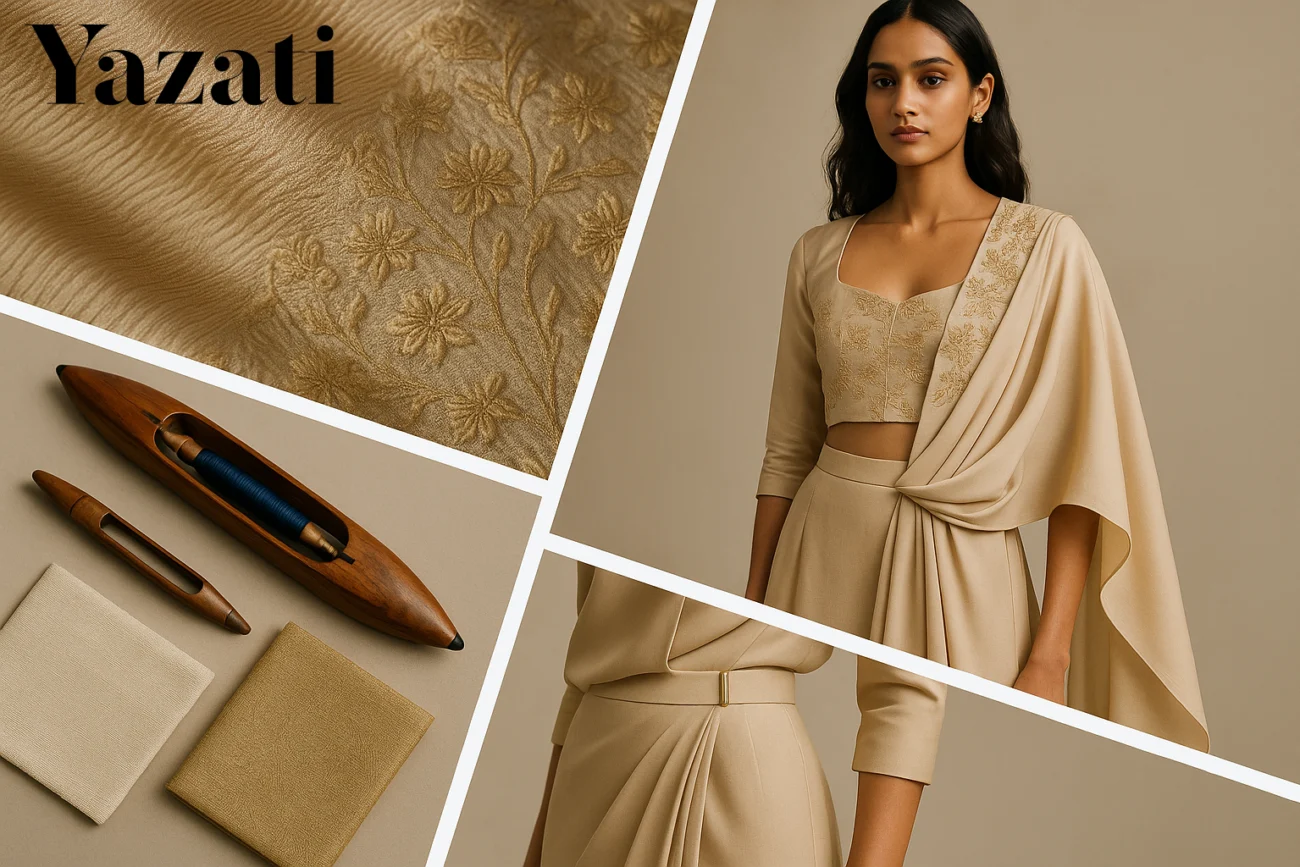
Introduction to Yazati’s Legacy
In the world of couture, few brands manage to strike the perfect balance between cultural authenticity and modern sophistication. Yazati’s Textiles stands at that rare intersection—where threads of history intertwine seamlessly with the pulse of today’s fashion scene. Rooted deeply in heritage craftsmanship, Yazati doesn’t just create garments—it tells stories woven through time.
Founded in the heart of a historic textile region, Yazati has evolved from a small family atelier into a name celebrated in international runways. Its enduring appeal lies in its ability to preserve centuries-old weaving techniques while reimagining them for the global stage.
The Origins of Yazati’s Textiles
Every strand of Yazati’s fabric carries whispers of the past. Established over five decades ago, the brand began as a modest workshop dedicated to preserving regional weaving traditions. Generations of artisans—mothers, fathers, and their children—worked hand-in-hand, passing down skills that cannot be learned in any fashion school.
Their early collections were inspired by ancient dyeing rituals, hand-spun silks, and traditional motifs derived from folklore. The brand’s founders believed that each design should echo the rhythm of their homeland—its colors, stories, and seasonal transitions.
Family Traditions and Cultural Continuity
Unlike many contemporary labels that outsource production, Yazati’s identity is inseparable from its artisan communities. Families that began weaving decades ago still contribute to new collections today. The brand’s philosophy emphasizes that preserving craftsmanship means preserving culture itself.
Through apprenticeship programs, Yazati ensures young artisans continue these legacy skills—reviving techniques like ikat weaving, block printing, and natural dye extraction. This deep respect for heritage forms the foundation for Yazati’s evolution into high fashion.
The Art of Textile Weaving in Yazati’s Workshops
Step into Yazati’s workshops, and you’ll find a symphony of handlooms clacking, spindles spinning, and dyers stirring vats of indigo and turmeric. The process may seem ancient, but it is guided by a visionary sense of design.
Each fabric undergoes rigorous stages: fiber selection, dye preparation, pattern weaving, and finishing. What sets Yazati apart is how it integrates modern machinery only where necessary, ensuring that technology enhances—not replaces—the human touch.
Ancient Techniques Preserved Through Innovation
Yazati’s textiles are born from ancient Indian, Persian, and Central Asian weaving traditions, but they’re reimagined with cutting-edge innovation. For instance, they blend handwoven silk with organic bamboo fibers to enhance durability and sustainability without losing authenticity.
Their eco-dyeing techniques combine natural pigments with modern stabilization processes, allowing colors to last longer without synthetic chemicals. These innovations enable Yazati to maintain heritage aesthetics while meeting modern luxury standards.
The Role of Sustainable Materials
In an era of fast fashion, Yazati’s sustainable approach sets it apart. The brand prioritizes organic cotton, wild silks, banana fibers, and bamboo viscose—materials known for their low environmental impact.
Moreover, Yazati maintains direct relationships with local farmers and cooperatives, ensuring fair-trade practices and zero-waste dyeing systems. This transparency strengthens the brand’s credibility in a luxury market increasingly driven by ethical consumerism.
Blending Heritage with Modern Design
Yazati’s design philosophy revolves around one goal: honoring the past while inspiring the present. Its collections reinterpret traditional motifs—like paisleys, mandalas, and temple borders—into avant-garde silhouettes suitable for global fashion weeks.
Collaborations with Modern Designers
Yazati’s growing appeal has attracted collaborations with leading fashion designers across Europe, Japan, and the Middle East. These partnerships have led to capsule collections featuring fusion couture pieces—pairing traditional weaves with minimalist tailoring and futuristic detailing.
One notable example is Yazati’s collaboration with French designer Amélie Laurent, resulting in a Paris runway collection that featured handloom saris reimagined as haute couture gowns.
Fusion of Local Artistry and Global Trends
By merging ethnic patterns with Western silhouettes, Yazati’s collections resonate with global audiences. Whether it’s a kimono-inspired jacket made from Indian brocade or a contemporary gown woven in heritage silk, every piece represents a dialogue between cultures.
This harmonious balance positions Yazati as a pioneer of global heritage fashion, redefining what luxury means in the 21st century.
Craftsmanship as Cultural Storytelling
Each Yazati creation carries a story—a visual language of color, texture, and symbolism. Traditional motifs represent elements like fertility, strength, or prosperity, transforming garments into wearable art.
From Loom to Runway
What begins on a humble loom in Yazati’s workshops often ends on some of the world’s most prestigious runways. The brand’s couture shows feature textiles handcrafted over weeks or even months—every thread meticulously aligned to perfection.
This transition from artisan workspace to international fashion stage symbolizes Yazati’s journey: a fusion of grassroots artistry and global recognition.
Yazati’s Global Influence in High Fashion
From Paris Fashion Week to Dubai Couture Week, Yazati’s creations have captivated critics and collectors alike. Its fabrics now grace not just garments but luxury home décor and accessories, broadening its creative horizons.
Celebrity Endorsements and Red Carpet Presence
Global celebrities have embraced Yazati’s pieces for their authenticity and aesthetic sophistication. From film festivals in Cannes to Met Gala red carpets, Yazati’s signature weaves have made headlines—proving that heritage fashion can be both glamorous and globally relevant.
Sustainability and Ethical Luxury
At its core, Yazati stands for conscious craftsmanship—an approach that merges ethics with elegance.
Empowering Local Communities
Beyond fashion, Yazati plays a vital social role. The brand supports rural artisans, offering stable incomes, healthcare benefits, and education programs. Many artisans are women who now lead workshops, becoming community leaders through fashion.
Eco-Conscious Production Practices
The brand employs natural dyes derived from plants like indigo, madder root, and pomegranate rind, minimizing chemical use. It has also pioneered closed-loop water systems in dyeing units, preventing water wastage.
The Digital Evolution of Yazati’s Brand
Yazati’s digital strategy has transformed its reach. Through online stores, immersive AR experiences, and social storytelling, Yazati brings its heritage closer to global consumers.
Virtual Fashion Shows and Online Presence
The pandemic accelerated Yazati’s digital couture initiatives—with virtual runway shows, 3D weaving demonstrations, and limited-edition NFT collections. These innovations show that heritage doesn’t resist technology—it evolves with it.
Challenges in Maintaining Authenticity Amid Global Expansion
With global recognition comes the challenge of maintaining integrity. Yazati remains vigilant against mass-market imitations and cultural appropriation.
Protecting Craft Heritage from Imitation
The brand works closely with legal and cultural organizations to register designs and protect artisans’ intellectual property, ensuring their contributions are recognized and rewarded.
The Future of Heritage Textiles in High Fashion
As the world moves toward sustainable and meaningful luxury, Yazati stands at the forefront. Its approach—rooted in authenticity yet forward-looking—sets the stage for the next era of ethical couture.
Frequently Asked Questions (FAQs)
1. What makes Yazati’s textiles unique in the luxury fashion industry?
Yazati’s textiles blend ancient craftsmanship with modern design, ensuring each piece represents authenticity, sustainability, and artistry.
2. How does Yazati promote sustainable fashion?
The brand uses organic fibers, natural dyes, and zero-waste production techniques while supporting artisan communities through fair wages and training.
3. Where are Yazati’s textiles made?
All Yazati fabrics are handcrafted in traditional workshops located in heritage textile regions, employing local artisans.
4. Does Yazati collaborate with international designers?
Yes, Yazati frequently collaborates with renowned designers to merge local craftsmanship with global design aesthetics.
5. How does Yazati protect its traditional techniques?
By partnering with cultural preservation organizations and registering its weaving patterns as protected intellectual property.
6. Can consumers purchase Yazati’s textiles online?
Yes, Yazati’s official website and select luxury retailers offer exclusive online collections and virtual fashion experiences.
Conclusion: Weaving the Threads of Legacy and Modernity
Yazati’s journey beautifully illustrates that heritage is not a relic of the past—it’s the foundation of the future. Through innovation, sustainability, and timeless artistry, the brand proves that cultural heritage and high fashion can coexist harmoniously.
Each Yazati creation stands as a testament to the power of craftsmanship, sustainability, and the human spirit—a reminder that true luxury lies not in excess, but in authenticity and purpose.
✨ Discover Global Sourcing Excellence with Netyex ✨
Netyex is your trusted B2B sourcing partner, connecting international buyers with India’s finest manufacturers and curated product lines—from handicrafts and home décor to kitchenware, textiles, hospitality essentials, and more. With verified suppliers and end-to-end support, we make global procurement seamless, reliable, and efficient.
👉 Elevate your sourcing experience—explore Netyex today.
📦 Bulk orders & customisation | 🌍 Worldwide delivery | 🤝 Trusted by global buyers
Visit Netyex to source premium Indian products with confidence.