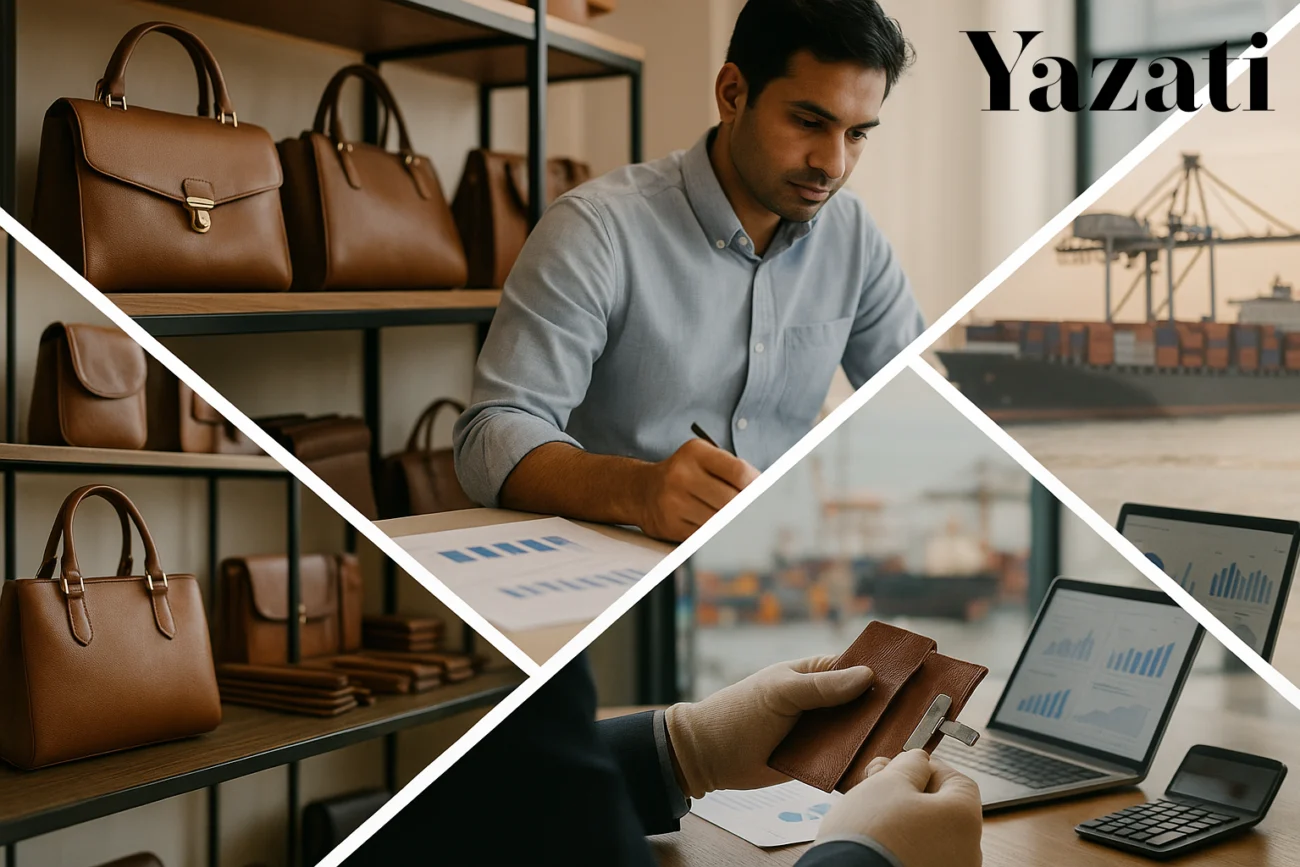
Introduction to India’s Leather Export Industry
India has long been recognized as a global powerhouse in the leather and leather goods sector. As of 2026, the industry continues to be one of the top 10 foreign exchange earners for the nation, contributing significantly to employment and trade. The Indian Leather Export Stats 2026 reveal not only a robust recovery from post-pandemic slowdowns but also a strategic shift toward sustainability, technology, and diversified markets.
The Indian leather sector stands on a rich legacy of craftsmanship, world-class tanning processes, and a growing emphasis on ethical and eco-friendly production methods. With both traditional artisans and modern exporters joining hands, India’s leather industry is positioned to thrive in the competitive global landscape.
Historical Background of Leather Exports in India
Leather production in India dates back several centuries, with traditional tanneries operating in states like Tamil Nadu and West Bengal. The organized export of leather began in the mid-20th century, following India’s independence, when the government actively promoted export-oriented industries.
By the 1980s and 1990s, Indian leather products—from footwear to saddlery—had captured significant market share in Europe and North America. The 2000s ushered in modernization, leading to increased automation, better quality control, and compliance with international standards.
Importance of Leather Exports in the Indian Economy
Leather exports contribute roughly $5–6 billion annually to India’s economy, employing over 4.4 million people, with a significant share being women. In 2026, the leather industry plays a vital role in the country’s Make in India and Atmanirbhar Bharat initiatives, driving self-reliance and global competitiveness.
The export sector also fuels allied industries like chemicals, machinery, and logistics, making it a critical pillar of India’s manufacturing ecosystem.
Overview of Indian Leather Export Stats 2026
The Indian Leather Export Stats 2026 showcase a remarkable upward trend. According to data from the Council for Leather Exports (CLE), total leather and leather product exports from India reached approximately $6.8 billion, marking a 9.2% increase over 2025.
Total Export Value and Volume for 2026
- Total Export Value: USD 6.8 billion
- Export Volume: 900 million units (across footwear, goods, and accessories)
- Annual Growth Rate: 9.2% YoY
Footwear continued to dominate with over 45% of the total export value, followed by leather garments and finished leather products.
Year-on-Year Growth Compared to 2025
2025 saw a modest growth rate of 4.8%, largely influenced by rising input costs and global inflationary pressures. However, by mid-2026, global demand rebounded—particularly from Western Europe—leading to stronger order volumes.
The adoption of automation in tanning and finishing processes reduced turnaround times, enhancing India’s global competitiveness.
Key Leather Product Categories Contributing to Exports
| Product Category | Share of Total Exports | Growth (YoY) |
| Footwear (leather & non-leather) | 45% | +10.1% |
| Leather Garments | 15% | +8.3% |
| Leather Goods (bags, wallets, belts) | 22% | +11.6% |
| Saddlery & Harness | 8% | +6.5% |
| Finished Leather | 10% | +7.2% |
These figures demonstrate a clear trend: value-added products like fashion accessories and premium footwear are driving export growth in 2026.
Top Export Destinations for Indian Leather in 2026
India’s export footprint spans over 100 countries, but a handful of markets account for nearly 70% of total exports.
Major Markets: USA, Germany, Italy, and the UK
- USA: India’s top buyer, accounting for 18% of exports
- Germany: 12% share, driven by demand for eco-certified leather goods
- Italy: 10% share, particularly for luxury footwear components
- UK: 8% share, with steady growth in custom leather accessories
Western markets continue to value India’s balance of quality craftsmanship and competitive pricing.
Emerging Markets in Asia and the Middle East
Markets like UAE, Japan, South Korea, and Saudi Arabia have shown a 15–20% increase in import volumes from India in 2026. The regional proximity and reduced shipping costs make these destinations highly attractive for Indian exporters.
Leading Leather Manufacturing Hubs in India
India’s leather production is regionally diversified, with distinct hubs specializing in different product categories.
Tamil Nadu: India’s Leather Powerhouse
Tamil Nadu accounts for nearly 40% of India’s leather production, particularly in the Chennai–Ambur–Vaniyambadi cluster. The state is home to top exporters like Farida Group and KH Group, which supply to global giants such as Clarks, H&M, and Zara.
Uttar Pradesh and West Bengal: Traditional Strongholds
Kanpur (Uttar Pradesh) is India’s hub for saddlery and harness exports, while Kolkata (West Bengal) excels in leather goods manufacturing. Both regions benefit from skilled labor and established supply chains.
Global Market Trends Affecting Leather Exports in 2026
The global leather trade in 2026 is shaped by three transformative forces: sustainability, innovation, and ethical sourcing.
Sustainable and Eco-Friendly Leather Production
With rising environmental consciousness, Indian exporters have invested in Zero Liquid Discharge (ZLD) compliant tanneries, reducing pollution and waste. Buyers increasingly prefer leather that meets REACH and LWG standards.
The Rise of Vegan Leather and Its Impact
While traditional leather remains dominant, vegan leather alternatives—made from pineapple fibers, cork, or recycled plastics—are gaining ground. Indian manufacturers are diversifying to include these products, attracting buyers from eco-conscious brands.
Supply Chain Modernization and Digital Integration
By 2026, digital supply chain systems, blockchain tracking, and AI-based quality inspections have become commonplace, ensuring transparency and efficiency.
Government Policies and Export Incentives for 2026
The Indian government continues to support the sector through favorable export policies and funding.
Duty Drawback Schemes and Export Promotion Councils
Exporters benefit from duty drawback, interest equalization, and Production Linked Incentive (PLI) schemes, which enhance profitability and competitiveness.
Role of the Council for Leather Exports (CLE)
The CLE provides market intelligence, organizes trade fairs, and facilitates buyer-seller meets—helping connect Indian exporters with global importers.
Challenges Facing the Indian Leather Export Industry
Despite strong performance, challenges persist.
Environmental Regulations and Compliance Costs
Meeting global sustainability standards can be costly, especially for small and medium exporters. Investments in effluent treatment and green technologies remain essential.
Competition from China, Vietnam, and Bangladesh
These countries offer aggressive pricing and advanced infrastructure. However, India maintains an edge through its craftsmanship and versatile product range.
Opportunities for Global Buyers in 2026
Why India Remains a Competitive Sourcing Destination
- Affordable labor and high-quality output
- Vast product diversity—from raw hides to designer goods
- Adherence to international quality certifications
Strategic Benefits for Buyers Partnering with Indian Exporters
- Strong supply chain reliability
- Customization capabilities
- Access to sustainable and ethical products
Future Outlook for 2027 and Beyond
The Indian leather export industry is projected to grow at 8–10% CAGR through 2027–2030.
Automation, AI integration, and eco-certification will shape the future, making India an even more reliable sourcing destination.
Expert Insights: What Buyers Should Consider Before Importing
- Verify LWG or ISO certifications.
- Request samples before large orders.
- Understand shipping timelines during monsoon months.
- Build long-term relationships for better pricing.
Frequently Asked Questions (FAQs)
Q1. What is the total export value of Indian leather in 2026?
A: Approximately USD 6.8 billion.
Q2. Which countries are India’s top leather export destinations?
A: USA, Germany, Italy, and the UK.
Q3. Is India producing vegan leather in 2026?
A: Yes, several Indian manufacturers have started offering sustainable and vegan leather alternatives.
Q4. What makes India a preferred sourcing country?
A: Skilled craftsmanship, competitive pricing, and sustainable manufacturing.
Q5. How is the government supporting leather exporters?
A: Through duty drawback schemes, subsidies, and PLI initiatives.
Q6. What’s the growth forecast for 2027?
A: An estimated 8–10% growth in exports with expanded market reach.
Conclusion
The Indian Leather Export Stats 2026 highlight a thriving, modernized, and sustainability-driven industry. With increased global demand, policy support, and technological innovation, India remains a preferred sourcing hub for buyers worldwide. For importers, the opportunity to collaborate with ethical and efficient Indian exporters in 2026—and beyond—is more promising than ever.
✨ Discover Global Sourcing Excellence with Netyex ✨
Netyex is your trusted B2B sourcing partner, connecting international buyers with India’s finest manufacturers and curated product lines—from handicrafts and home décor to kitchenware, textiles, hospitality essentials, and more. With verified suppliers and end-to-end support, we make global procurement seamless, reliable, and efficient.
👉 Elevate your sourcing experience—explore Netyex today.
📦 Bulk orders & customisation | 🌍 Worldwide delivery | 🤝 Trusted by global buyers
Visit Netyex to source premium Indian products with confidence.