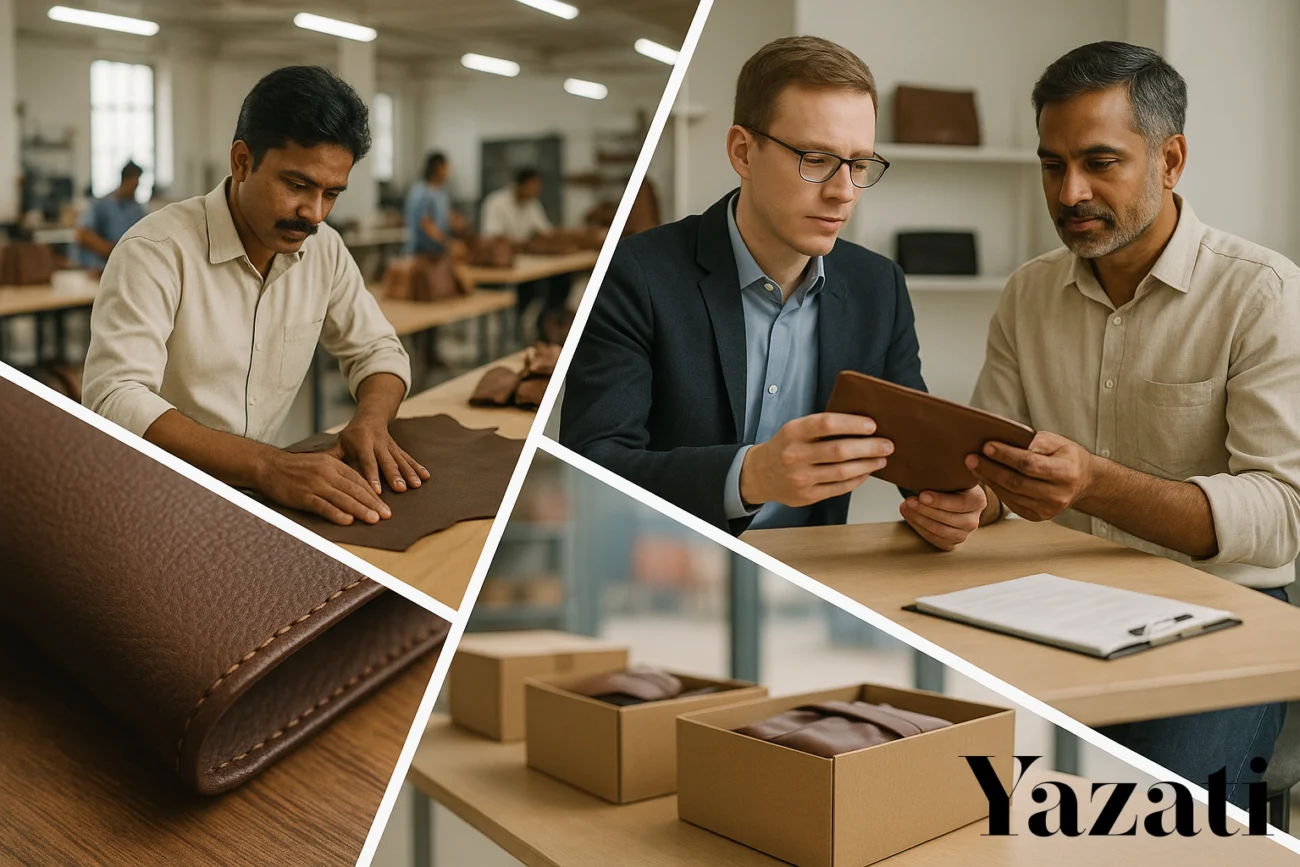
Overview of the Global Leather Sourcing Landscape
Traditional Role of Europe in Leather Sourcing
For decades, Europe has been synonymous with high-quality leather, particularly in countries known for luxury fashion, footwear, and automotive upholstery. European leather has been valued for:
- Consistent finishing quality
- Strong brand heritage
- Advanced tanning technology
However, these strengths come with higher costs and increasing regulatory burdens.
India’s Emergence as a Global Leather Hub
India has steadily evolved from a raw leather supplier to a major producer of finished leather and leather goods. Today, India is recognized for its:
- Large-scale manufacturing capacity
- Skilled artisan base
- Competitive pricing
- Growing compliance with international standards
This evolution has reshaped global sourcing strategies.
Cost Competitiveness as a Key Driver
Labor and Manufacturing Cost Advantages
One of the strongest reasons why buyers prefer India over Europe for leather sourcing is cost efficiency. India benefits from:
- Significantly lower labor costs
- Lower overhead expenses
- Competitive manufacturing wages without compromising skill
In contrast, European manufacturers face high labor costs driven by strict labor laws and higher living standards.
Input and Operational Cost Differences
Beyond labor, India offers cost advantages in:
- Utilities and factory operations
- Local availability of raw hides and skins
- Support industries such as chemicals, components, and packaging
These factors allow Indian suppliers to offer more competitive pricing across product categories.
Skilled Workforce and Craftsmanship
India’s Deep-Rooted Leather Craft Tradition
India has a long history of leather craftsmanship passed down through generations. This tradition supports:
- Hand-finishing skills
- Detailed workmanship
- Ability to work with diverse leather types
Buyers seeking quality at scale find this combination particularly attractive.
Adaptability to Buyer Specifications
Indian manufacturers are known for their flexibility. They readily adapt to:
- Custom designs
- Buyer-specific quality standards
- Changing fashion trends
This responsiveness is often more limited in rigid, standardized European production setups.
Production Capacity and Scalability
Ability to Handle Large and Repeated Orders
European suppliers often focus on smaller, high-margin batches. India, on the other hand, excels at:
- Large-volume production
- Repeat orders
- Long-term supply programs
For global brands and retailers, scalability is a decisive factor.
Flexible Manufacturing Ecosystem
India’s leather industry includes:
- Tanneries
- Component manufacturers
- Footwear and goods factories
This integrated ecosystem supports rapid scaling without heavy reliance on cross-border subcontracting.
Product Range and Diversification
Finished Leather and Value-Added Products
India offers a wide spectrum of products, including:
- Finished leather
- Footwear
- Bags and accessories
- Garments and upholstery
This allows buyers to consolidate sourcing across multiple product lines.
Fashion, Footwear, and Industrial Applications
Indian suppliers serve not only fashion brands but also:
- Industrial safety footwear
- Automotive interiors
- Travel and lifestyle segments
Such diversification reduces buyer dependency on multiple regions.
Supply Chain and Lead Time Considerations
Integrated Leather Clusters in India
India’s leather clusters bring together tanning, manufacturing, and export services in concentrated regions. This results in:
- Better coordination
- Reduced internal lead times
- Efficient logistics planning
Clusters improve reliability for international buyers.
Responsiveness to Global Buyers
Indian exporters are accustomed to working across time zones and markets. This results in:
- Faster communication
- Greater willingness to adjust schedules
- Proactive problem-solving
Buyers value this operational responsiveness.
Sustainability and Compliance Progress
Environmental and Social Compliance Improvements
While Europe has long led in regulation, India has made substantial progress in:
- Effluent treatment systems
- Cleaner production methods
- Workplace safety and social standards
Many Indian suppliers now meet or exceed global compliance requirements.
Alignment with Global Buyer Standards
Indian manufacturers increasingly align with:
- International environmental norms
- Buyer audit protocols
- Ethical sourcing expectations
This has reduced the historical compliance gap with Europe.
Pricing Flexibility and Negotiation Dynamics
Commercial Flexibility Compared to Europe
European suppliers often operate with fixed pricing structures. Indian suppliers typically offer:
- Greater room for negotiation
- Flexible pricing models
- Willingness to adjust terms for long-term partnerships
This commercial adaptability appeals to global buyers.
Customization and Private Labeling
Indian manufacturers are more open to:
- Private label production
- Co-development with buyers
- Exclusive designs
This flexibility supports brand differentiation.
Risk Perception and Business Practicalities
Diversification Away from High-Cost Regions
Rising costs, inflation, and regulatory pressures have pushed buyers to diversify away from high-cost sourcing regions. India offers:
- Cost stability
- Large supplier base
- Reduced dependency risk
Diversification strengthens supply chain resilience.
Managing Inflation and Cost Volatility
European production is more exposed to:
- Energy price fluctuations
- Wage inflation
India’s cost structure provides better insulation against such volatility.
Frequently Asked Questions (FAQs)
1. Does Indian leather match European quality standards?
Yes. Many Indian suppliers meet international quality and compliance benchmarks.
2. Is India suitable for premium leather products?
Yes. India supplies both mass-market and premium segments.
3. Are lead times longer when sourcing from India?
Not necessarily. Integrated clusters often reduce overall lead times.
4. Do buyers face higher compliance risks in India?
This risk has reduced significantly due to improved standards and audits.
5. Is Europe still relevant for leather sourcing?
Yes, especially for niche luxury and heritage products.
6. Why do large brands prefer India?
Because India offers scalability, flexibility, and cost efficiency together.
Conclusion
The shift in global sourcing clearly explains Why Buyers Prefer India Over Europe for Leather Sourcing. India combines cost competitiveness, skilled craftsmanship, large-scale production capacity, and growing compliance maturity—advantages that are increasingly difficult to match in Europe.
While Europe remains important for high-end and heritage leather, India has become the preferred sourcing destination for buyers seeking quality, volume, flexibility, and commercial practicality. As global supply chains continue to evolve, India’s role in the leather industry is set to strengthen further.
✨ Discover Global Sourcing Excellence with Netyex ✨
Netyex is your trusted B2B sourcing partner, connecting international buyers with India’s finest manufacturers and curated product lines—from handicrafts and home décor to kitchenware, textiles, hospitality essentials, and more. With verified suppliers and end-to-end support, we make global procurement seamless, reliable, and efficient.
👉 Elevate your sourcing experience—explore Netyex today.
📦 Bulk orders & customisation | 🌍 Worldwide delivery | 🤝 Trusted by global buyers
Visit Netyex to source premium Indian products with confidence.