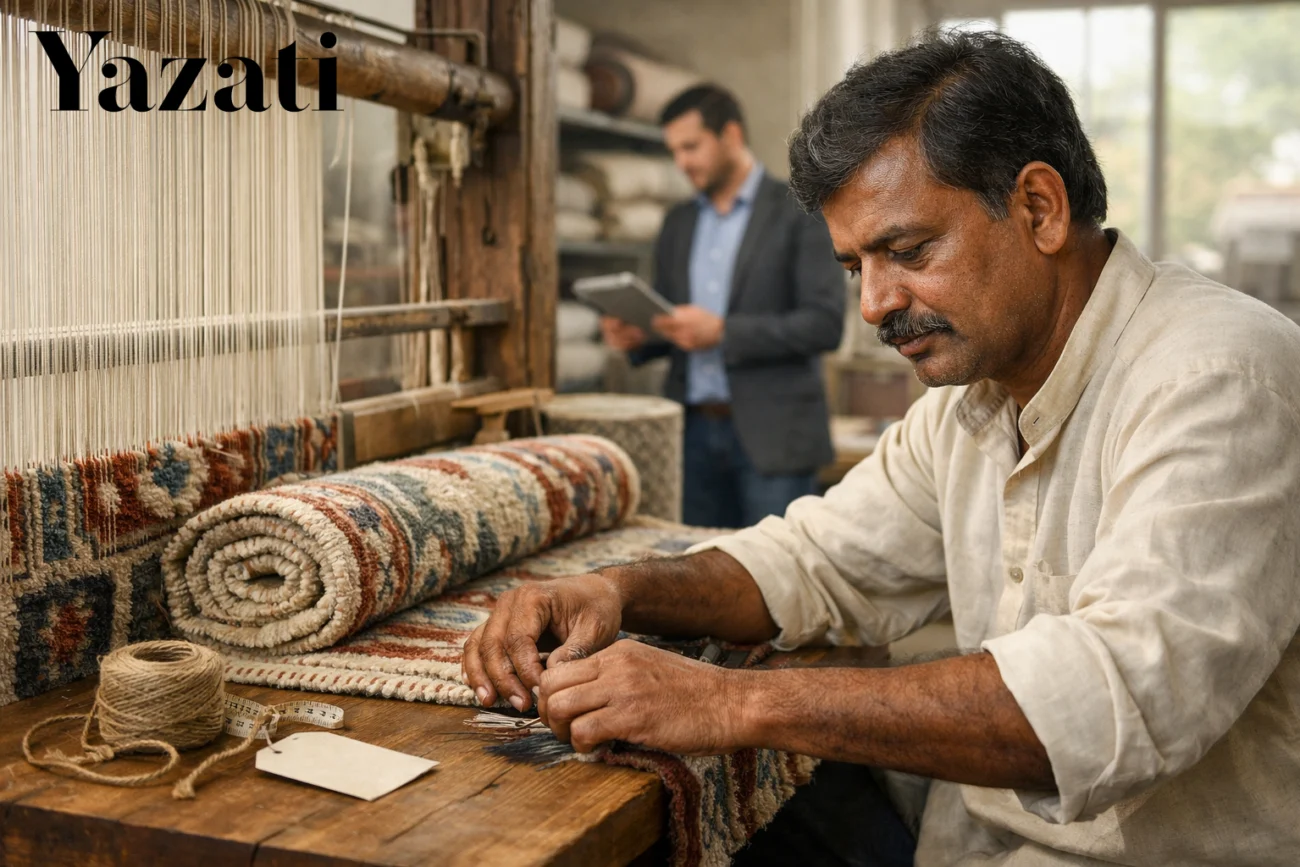
The Journey of an Indian Rug: From Loom to Your Storefront
An Indian rug is far more than a decorative item—it is the result of months of skilled labor, cultural heritage, and coordinated global trade. Understanding The Journey of an Indian Rug: From Loom to Your Storefront helps retailers, buyers, and consumers appreciate why these rugs carry such enduring value.
From artisan workshops in India to retail floors across the world, each rug passes through a carefully structured journey that blends tradition with modern export discipline.
Introduction: More Than a Floor Covering
Why Indian Rugs Hold Global Value
Indian rugs are admired for their craftsmanship, durability, and aesthetic depth. They anchor interiors, influence buying decisions, and often become the centerpiece of a space.
Understanding the Full Journey Matters
Knowing how a rug is made and delivered helps buyers set realistic expectations on lead times, pricing, and quality—reducing misunderstandings and improving long-term sourcing success.
Origins: The Cultural Roots of Indian Rug Making
Generations of Weaving Tradition
Rug weaving in India is a generational craft. Skills are passed from one generation to the next, refining efficiency and consistency without losing authenticity.
Regional Craft Heritage
Different regions specialize in specific weaving techniques, materials, and styles, creating a diverse and highly skilled production ecosystem.
Step 1: Raw Material Selection
Wool, Cotton, and Natural Fibers
The journey begins with raw materials. Wool is most common for its resilience, while cotton and other natural fibers are used for structure, backing, or lighter rugs.
Material Quality and Cost Impact
Material selection affects durability, feel, and cost. High-quality fibers ensure longer rug life and better customer satisfaction.
Step 2: Preparing Yarns and Dyes
Spinning and Yarn Preparation
Fibers are cleaned, spun, and prepared into yarns suitable for weaving. Consistency at this stage directly impacts final quality.
Traditional and Modern Dyeing
Yarns are dyed using controlled processes to achieve color consistency while maintaining depth and richness.
Step 3: Design Development and Pattern Mapping
Translating Design Into Weavable Plans
Designs are converted into detailed weaving maps that guide artisans knot by knot or tuft by tuft.
Custom Designs vs Traditional Motifs
Some rugs follow traditional patterns, while others are customized to meet modern retail trends or brand identities.
Step 4: Setting Up the Loom
Loom Preparation and Warp Alignment
Before weaving begins, the loom is carefully set up. Warp threads are aligned precisely to ensure shape accuracy and structural strength.
Precision Before Weaving Begins
Errors at this stage can affect the entire rug, making careful preparation essential.
Step 5: The Weaving Process
Hand-Knotted, Hand-Tufted, and Flatweave Rugs
- Hand-knotted rugs are created knot by knot and are the most durable.
- Hand-tufted rugs use tools to insert yarns more quickly.
- Flatweaves are lighter and reversible.
Time, Skill, and Human Precision
Depending on size and complexity, weaving can take weeks or months. Every movement reflects human skill rather than machine repetition.
Step 6: Managing Natural Variations
Why No Two Rugs Are Identical
Handmade processes naturally produce slight variations in color, knot density, or texture—these are marks of authenticity.
Acceptable Variation vs Defects
Skilled oversight ensures that variations enhance character without compromising quality or durability.
Step 7: Finishing, Trimming, and Washing
Enhancing Durability and Appearance
Once weaving is complete, rugs are trimmed and finished to achieve even pile height and clean edges.
Final Texture and Color Balance
Washing removes excess dye and softens fibers, revealing the rug’s final look and feel.
Step 8: Quality Control and Inspection
Structural and Visual Checks
Rugs are inspected for:
- Shape accuracy
- Structural integrity
- Color balance
- Finishing quality
Ensuring Retail-Ready Standards
Only rugs that meet defined standards proceed to export preparation.
Step 9: Packaging and Export Preparation
Protecting Rugs for Long Transit
Rugs are rolled, wrapped, and protected from moisture and compression to withstand long-distance shipping.
Labeling and Handling Readiness
Proper labeling ensures safe handling throughout the logistics chain.
Step 10: Logistics and Global Shipping
From Workshop to Port
Rugs travel from production centers to export hubs through coordinated inland transport.
Sea Freight and Container Planning
Sea freight is typically used, with careful container planning to optimize space and protect goods.
Step 11: Customs Clearance and Import Handling
Documentation and Compliance
Accurate documentation ensures smooth customs clearance and avoids delays or penalties.
Smooth Entry Into Destination Markets
Well-prepared shipments move efficiently through ports into buyer warehouses.
Step 12: Arrival at the Retail Warehouse
Inspection, Storage, and Inventory
Upon arrival, rugs are inspected, cataloged, and stored under appropriate conditions.
Preparing Rugs for Display
Rugs are unrolled, aired, and prepared for showroom or storefront presentation.
The Retail Experience: From Product to Story
Merchandising and Storytelling
Retailers often share the story behind each rug—its origin, technique, and craftsmanship—to enhance customer connection.
Why Customers Connect With Indian Rugs
Authenticity, durability, and narrative depth make Indian rugs emotionally resonant purchases.
Common Misunderstandings About Indian Rugs
Time, Cost, and Consistency Myths
Handmade rugs are sometimes perceived as slow or inconsistent. In reality, structured processes make production predictable without removing authenticity.
FAQs About the Journey of an Indian Rug
1. How long does it take to make an Indian rug?
Anywhere from a few weeks to several months, depending on size and technique.
2. Are variations normal in handmade rugs?
Yes. Variation is part of authenticity when within agreed standards.
3. Are Indian rugs durable?
Very. Hand-knotted rugs, in particular, can last decades.
4. Can rugs be customized for retailers?
Yes. Size, color, and design customization are common.
5. Why are handmade rugs valued higher?
Because of craftsmanship, durability, and cultural depth.
6. Do Indian rugs suit modern interiors?
Absolutely. Designs range from traditional to contemporary.
Conclusion: A Journey Woven With Skill and Purpose
The Journey of an Indian Rug: From Loom to Your Storefront is a story of patience, precision, and partnership. Each rug carries the imprint of skilled hands, thoughtful planning, and coordinated global logistics.
For retailers and buyers, understanding this journey builds appreciation for the true value behind the product. For customers, it transforms a rug from a simple purchase into a meaningful, lasting addition to their space—woven with heritage, care, and purpose.
✨ Discover Global Sourcing Excellence with Netyex ✨
Netyex is your trusted B2B sourcing partner, connecting international buyers with India’s finest manufacturers and curated product lines—from handicrafts and home décor to kitchenware, textiles, hospitality essentials, and more. With verified suppliers and end-to-end support, we make global procurement seamless, reliable, and efficient.
👉 Elevate your sourcing experience—explore Netyex today.
📦 Bulk orders & customisation | 🌍 Worldwide delivery | 🤝 Trusted by global buyers
Visit Netyex to source premium Indian products with confidence.