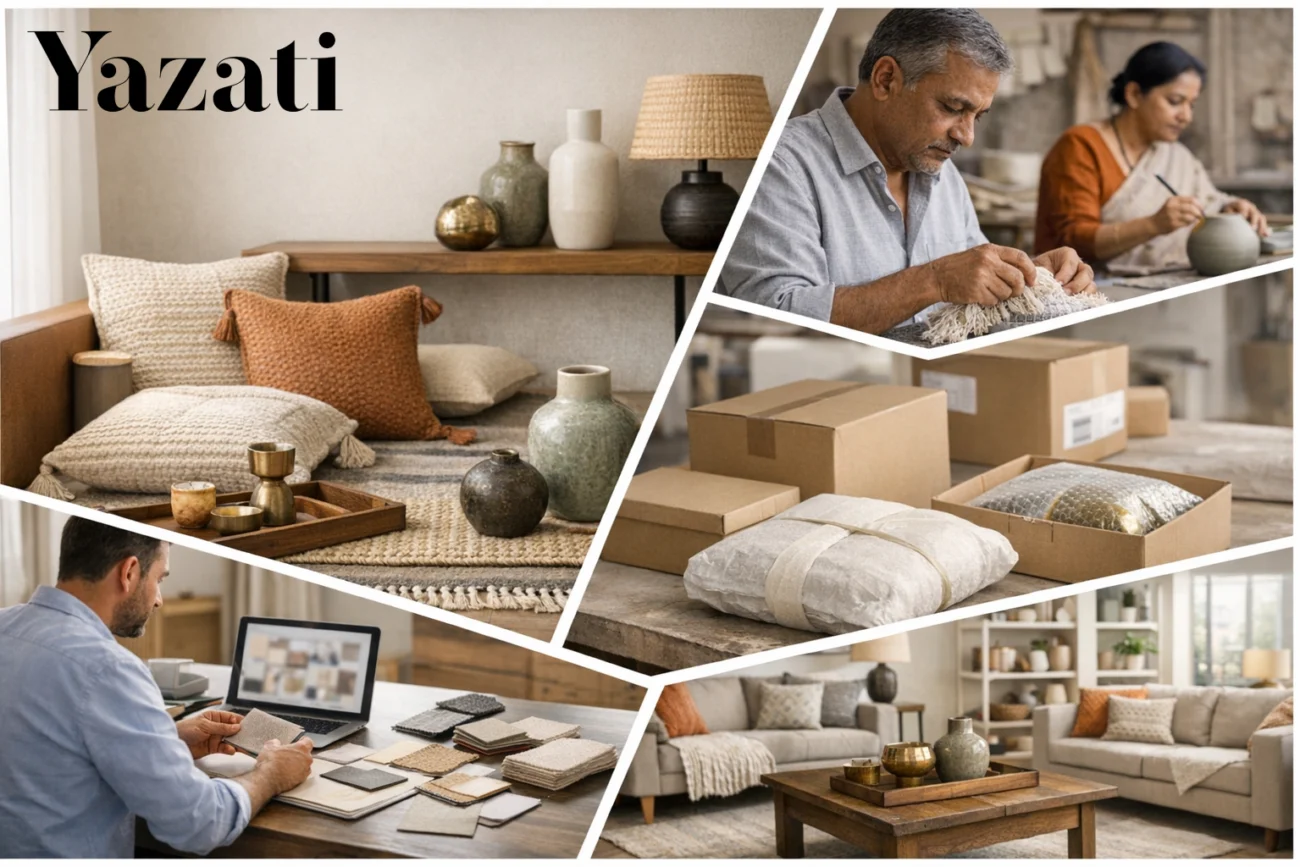
How Importers Can Easily Build a Home Decor Brand Using Indian Products
The global home décor market is evolving rapidly. Consumers are no longer satisfied with generic products—they want style, story, and authenticity. This shift creates a powerful opportunity for importers. Understanding How Importers Can Easily Build a Home Decor Brand Using Indian Products reveals why India has become one of the most strategic sourcing destinations for brand-led décor businesses.
Products from India combine craftsmanship, design flexibility, cost efficiency, and scalability—making them ideal foundations for building distinctive home décor brands.
Introduction: Why India Is a Brand-Building Powerhouse for Home Decor
The Global Shift Toward Story-Driven Home Decor
Home décor has moved beyond functionality. Consumers now buy décor to express identity, values, and lifestyle. Products with cultural depth and handmade character resonate strongly in this environment.
Why Importers Are Becoming Brand Owners
Instead of competing purely as resellers, many importers are creating their own brands—controlling design, pricing, and storytelling while building long-term equity.
Understanding What Makes a Strong Home Decor Brand
Beyond Products: Identity, Consistency, and Trust
A successful home décor brand is built on:
- A clear design language
- Consistent quality
- Reliable availability
- Emotional connection with customers
The Role of Sourcing in Brand Perception
Where and how products are sourced directly influence how consumers perceive authenticity, quality, and value.
Why Indian Products Are Ideal for Home Decor Branding
Craftsmanship, Heritage, and Authenticity
Indian products carry generations of artisanal skill. This heritage gives brands instant credibility and depth that mass-produced goods lack.
Diversity Across Materials and Categories
India offers:
This diversity allows importers to build complete, cohesive collections from a single sourcing country.
Step 1: Define Your Brand Positioning and Target Market
Luxury, Mid-Market, or Lifestyle Branding
Before sourcing, importers must decide:
- Price range
- Target customer
- Retail or online focus
This clarity guides material choices, design complexity, and finishing standards.
Aligning Product Choices With Consumer Expectations
Premium positioning may favor hand-knotted rugs and detailed finishes, while lifestyle brands may focus on accessible designs and faster turnarounds.
Step 2: Select the Right Indian Product Categories
Rugs, Textiles, and Soft Furnishings
These categories offer high visual impact and strong perceived value, making them excellent brand anchors.
Decor Accents, Furniture, and Artisanal Pieces
Smaller décor items complement core products and increase average order value.
Step 3: Use Customization to Build Brand Identity
Colors, Finishes, and Design Language
Customization allows brands to maintain a consistent look across categories—even when products are handmade.
Private Label and Exclusive Collections
Exclusive designs reduce direct price comparison and strengthen brand loyalty.
Step 4: Balance Handmade Character With Brand Consistency
Managing Natural Variations
Handmade products naturally vary. Brands must define acceptable variation ranges rather than pursuing unrealistic uniformity.
Setting Clear Quality Benchmarks
Clear standards ensure products feel cohesive while retaining handcrafted authenticity.
Step 5: Build a Cohesive Product Story
Cultural Narratives and Craft Origins
Indian products come with rich cultural narratives—materials, techniques, and regions all add storytelling value.
Translating Craft Stories for Global Consumers
Stories should be communicated simply and consistently, focusing on craftsmanship and care rather than complexity.
Step 6: Control Pricing and Margins Strategically
Cost Advantage and Perceived Value
Indian sourcing offers a strong gap between production cost and retail value, enabling healthy margins.
Creating Premium Appeal Without Premium Cost
Handmade character and storytelling allow brands to price confidently without heavy branding spend.
Step 7: Scale Your Brand Using India’s Production Flexibility
From Small Launches to Full Collections
Importers can start with limited assortments and scale successful products gradually.
Reordering and Range Expansion
Established designs can be reordered or expanded into new categories, maintaining brand consistency.
Step 8: Ensure Export Readiness and Supply Reliability
Consistent Documentation and Compliance
Reliable export processes protect delivery timelines and customer trust.
Logistics Planning for Brand Growth
Efficient consolidation and shipping planning reduce landed costs as volume increases.
Step 9: Align Sourcing With Sustainability and Ethics
Responsible Production as Brand Equity
Ethical sourcing strengthens brand reputation and appeals to conscious consumers.
Long-Term Supplier Relationships
Stable partnerships improve quality consistency and supply reliability over time.
Common Mistakes Importers Make When Building Decor Brands
Competing Only on Price
Price-led strategies weaken brand identity and margins. Strong brands compete on value and story.
Inconsistent Product Assortments
Random product selection dilutes brand perception. Cohesion is critical.
FAQs on Building a Home Decor Brand Using Indian Products
1. Can small importers build a brand using Indian products?
Yes. India supports small batches and gradual scaling.
2. Are handmade products suitable for brand consistency?
Yes, with clear standards and design control.
3. Do Indian products work for modern interiors?
Absolutely. Designs range from traditional to contemporary.
4. Is customization expensive?
Typically no. Handmade production allows flexible customization.
5. Can brands scale without losing authenticity?
Yes, when growth respects production capacity.
6. Are Indian products competitive globally?
Yes. They offer strong value, variety, and differentiation.
Conclusion: Turning Indian Products Into a Global Decor Brand
How Importers Can Easily Build a Home Decor Brand Using Indian Products shows that success lies in combining thoughtful branding with the right sourcing foundation. India offers what modern home décor brands need most: authenticity, flexibility, diversity, and cost efficiency.
By defining a clear brand vision, using customization wisely, managing quality expectations, and scaling strategically, importers can transform Indian products into cohesive, recognizable, and profitable home décor brands. In a market driven by meaning and design, Indian sourcing is not just an option—it is a powerful brand-building advantage.
✨ Discover Global Sourcing Excellence with Netyex ✨
Netyex is your trusted B2B sourcing partner, connecting international buyers with India’s finest manufacturers and curated product lines—from handicrafts and home décor to kitchenware, textiles, hospitality essentials, and more. With verified suppliers and end-to-end support, we make global procurement seamless, reliable, and efficient.
👉 Elevate your sourcing experience—explore Netyex today.
📦 Bulk orders & customisation | 🌍 Worldwide delivery | 🤝 Trusted by global buyers
Visit Netyex to source premium Indian products with confidence.