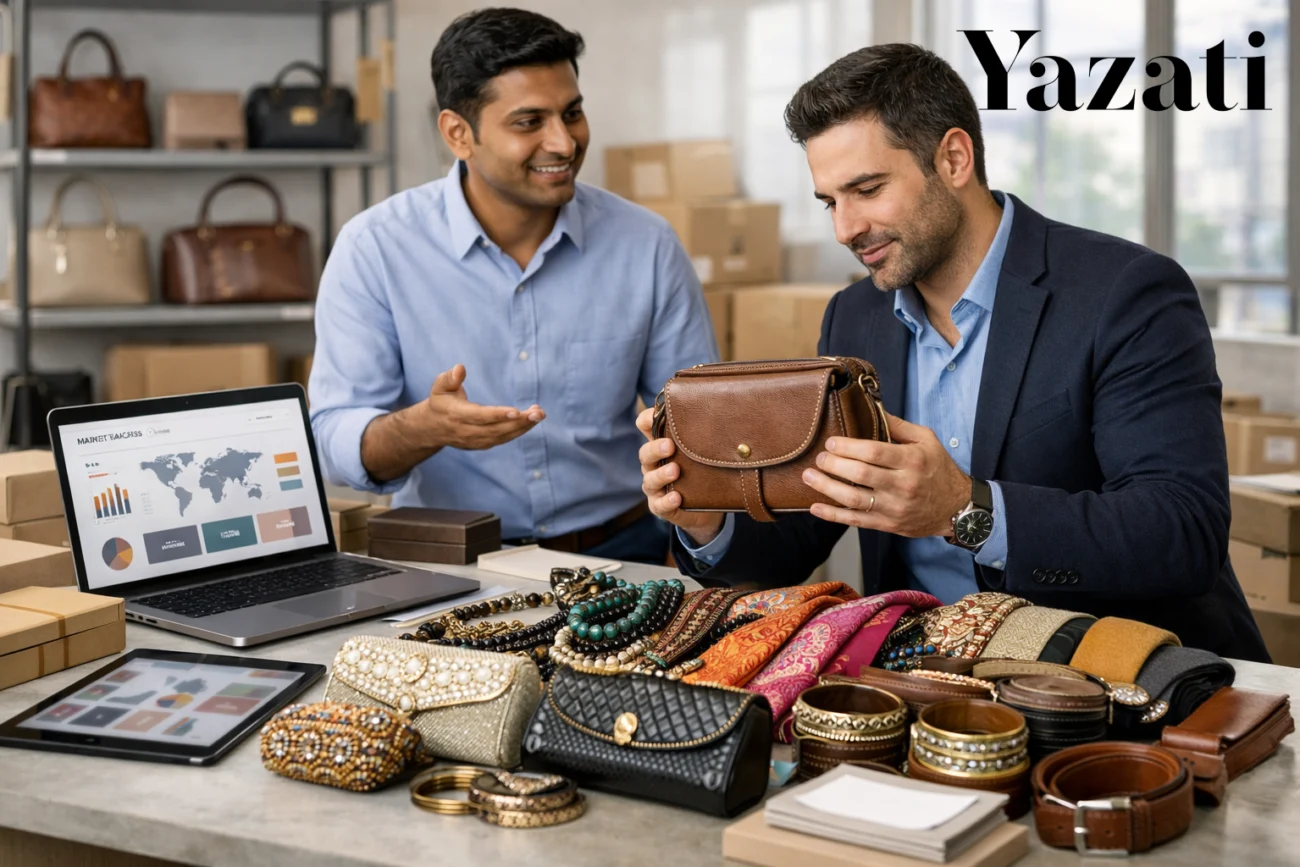
How Importers Can Access India’s Booming Fashion Accessories Market
Fashion accessories are one of the most dynamic segments in global apparel and lifestyle retail. They move faster than garments, refresh more frequently, and often deliver higher margins. Understanding How Importers Can Access India’s Booming Fashion Accessories Market helps buyers capitalize on this momentum while avoiding the volatility that often comes with trend-driven products.
Sourced from India, fashion accessories combine skilled craftsmanship, design flexibility, and export readiness—making India one of the most attractive sourcing destinations for global accessory brands and retailers.
Introduction: Why Fashion Accessories Are a High-Growth Import Category
Accessories as Fast-Moving, High-Margin Products
Accessories require less sizing complexity than apparel, have shorter production cycles, and encourage impulse buying. This makes them ideal for both brick-and-mortar and e-commerce channels.
India’s Rising Global Importance
India’s accessories sector has evolved beyond traditional exports into a trend-aware, design-responsive industry capable of serving global fashion calendars.
Understanding India’s Fashion Accessories Market
What Counts as Fashion Accessories
Fashion accessories include:
- Jewelry (fashion and artisanal)
- Bags and clutches
- Scarves and wraps
- Belts and trims
- Textile-based statement pieces
Traditional Skills, Modern Demand
India’s strength lies in adapting traditional techniques—embroidery, beading, weaving—into modern, globally relevant designs.
Why India Is a Strategic Sourcing Destination
Craftsmanship at Commercial Scale
India supports both handcrafted detail and repeatable production, allowing accessories to feel unique while remaining scalable.
Design Diversity Under One Country
From minimalist to ornate, India offers a wide spectrum of styles—reducing the need to source from multiple countries.
Key Fashion Accessories Exported from India
Jewelry, Bags, and Textile Accessories
These categories perform strongly due to their versatility and visual appeal across markets.
Belts, Scarves, and Statement Pieces
Accessories that layer easily with existing wardrobes sell especially well in Western markets.
How Importers Can Access India’s Booming Fashion Accessories Market
Structured Sourcing Instead of Ad-Hoc Buying
Successful importers treat accessories sourcing as a program—not a series of one-off purchases.
Building Long-Term Supply Reliability
Consistency improves when buyers work with defined processes, reference standards, and repeatable production partners.
Step 1: Define Your Market Position and Customer Profile
Mass Market, Lifestyle, or Premium
Clear positioning guides:
- Material selection
- Design complexity
- Quality expectations
Trend Sensitivity and Price Expectations
Fast fashion accessories demand speed; lifestyle accessories demand longevity.
Step 2: Select the Right Product Categories
Evergreen vs Trend-Led Accessories
Evergreen products provide stability, while trend-led items drive excitement and volume.
Balancing Volume and Differentiation
A balanced mix protects margins and reduces dependency on short-lived trends.
Step 3: Customization as a Competitive Advantage
Materials, Colors, and Finishes
Customization allows importers to align products with seasonal palettes and brand identity.
Private Label and Brand Identity
India’s flexible production supports exclusive designs that strengthen brand recognition.
Step 4: Sampling and Reference Control
Samples as Production Benchmarks
Approved samples define quality, construction, and finish.
Avoiding Sample-to-Bulk Mismatch
Clear reference control prevents deviations during bulk production.
Step 5: Pricing, Costing, and Margin Planning
Understanding True Landed Cost
Importers must account for production, packaging, freight, duties, and local distribution.
Protecting Margins in Fast Fashion Cycles
Accurate costing prevents margin erosion when trends change quickly.
Step 6: Quality Control for Fashion Accessories
Visual, Functional, and Wearability Checks
Accessories must look good, function properly, and withstand regular use.
Managing Handmade Variation
Defined tolerance ranges help balance authenticity with retail expectations.
Step 7: Packaging and Presentation for Retail
Packaging as a Brand Touchpoint
Packaging influences perceived value and shelf appeal.
Protection Without Excess Cost
Smart packaging protects products without inflating shipping expenses.
Step 8: Export Documentation and Compliance
Smooth Customs Clearance
Accurate documentation reduces delays and compliance risks.
Market-Specific Requirements
Different markets have different labeling and material regulations.
Step 9: Logistics and Speed-to-Market Planning
Consolidation Across Multiple SKUs
Accessories often ship in mixed assortments, requiring careful consolidation.
Aligning Shipments With Fashion Seasons
Timing is critical in accessories—late delivery reduces sell-through.
Step 10: Scaling and Repeat Orders
Building Consistency Across Collections
Reference standards ensure repeat orders match previous quality.
Expanding Categories Over Time
Successful importers gradually expand from core accessories into complementary lines.
Common Challenges Importers Face—and How to Avoid Them
Over-Trend Dependency
Chasing every trend increases risk and waste. Balance is essential.
Supplier Fragmentation
Too many suppliers create inconsistency and coordination challenges.
FAQs on Importing Fashion Accessories from India
1. Is India suitable for fast fashion accessories?
Yes, especially when production timelines are planned carefully.
2. Can small importers access Indian accessories suppliers?
Yes. Small batches and gradual scaling are common.
3. Are Indian accessories competitive in global markets?
Yes. They offer strong design value and cost efficiency.
4. Is customization expensive?
Usually not. Customization is a core strength of Indian sourcing.
5. How do importers manage quality consistency?
Through sampling, reference control, and structured quality checks.
6. Can accessories be bundled with other product categories?
Yes. Consolidation improves logistics efficiency.
Conclusion: Turning India’s Accessories Market into a Long-Term Advantage
How Importers Can Access India’s Booming Fashion Accessories Market is ultimately about structure and strategy. India offers immense opportunity—but success depends on disciplined sourcing, clear positioning, and reliable execution.
By defining target markets, using customization wisely, controlling quality through references, and planning logistics around fashion cycles, importers can turn India’s accessories sector into a sustainable growth engine. In a category driven by speed and style, India stands out as a sourcing destination that delivers both creativity and commercial strength.
✨ Discover Global Sourcing Excellence with Netyex ✨
Netyex is your trusted B2B sourcing partner, connecting international buyers with India’s finest manufacturers and curated product lines—from handicrafts and home décor to kitchenware, textiles, hospitality essentials, and more. With verified suppliers and end-to-end support, we make global procurement seamless, reliable, and efficient.
👉 Elevate your sourcing experience—explore Netyex today.
📦 Bulk orders & customisation | 🌍 Worldwide delivery | 🤝 Trusted by global buyers
Visit Netyex to source premium Indian products with confidence.