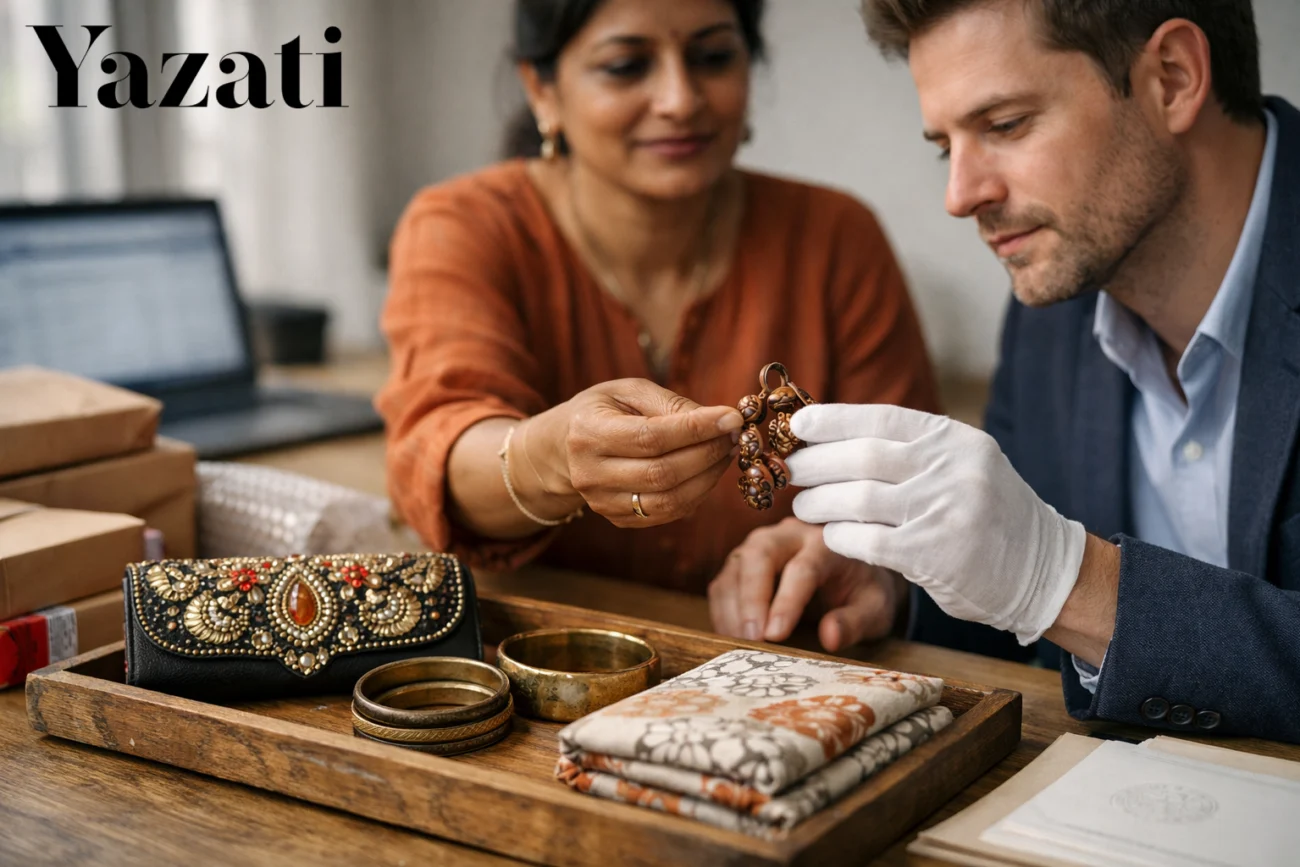
How to Import Handcrafted Fashion Accessories from India Safely
Handcrafted fashion accessories are among the most attractive product categories for global buyers. They offer individuality, strong perceived value, and flexibility across trends and seasons. However, importing handcrafted products also introduces risks related to quality variation, compliance, and consistency. Understanding How to Import Handcrafted Fashion Accessories from India Safely allows buyers to capture opportunity while protecting margins and brand reputation.
Sourcing from India provides access to skilled craftsmanship and design diversity—but safety depends on process, not promises.
Introduction: Opportunity and Risk in Handcrafted Accessories
Why Handcrafted Accessories Are in High Demand
Consumers increasingly value accessories that feel personal, expressive, and authentic. Handcrafted products stand out in a market crowded with mass-produced items.
Why “Safe Importing” Requires Structure
Handcrafted does not mean unpredictable—but it does require clearer standards, better communication, and disciplined quality control.
Understanding Handcrafted Fashion Accessories from India
What Makes Accessories Truly Handcrafted
Handcrafted accessories involve significant manual skill—beading, embroidery, weaving, or metal shaping—rather than automated mass production.
Craft Heritage Meets Export Markets
India’s long craft tradition has evolved to meet global export expectations through improved consistency, documentation, and packaging.
How to Import Handcrafted Fashion Accessories from India Safely
A System-Based Approach Instead of Guesswork
Safe importing relies on systems: clear specs, approved samples, controlled production, and accurate documentation.
Safety as Quality, Compliance, and Predictability
True safety means:
- Products meet quality expectations
- Materials comply with regulations
- Shipments arrive on time and intact
Step 1: Define Your Product Scope and Market Requirements
Product Categories and Target Customer
Clarify whether accessories are:
- Daily-wear or occasion-based
- Fashion-led or evergreen
- Mass-market or premium
Price Point and Usage Expectations
These factors determine material quality, construction standards, and acceptable variation.
Step 2: Select Export-Ready Suppliers
Why Export Experience Matters
Export-ready suppliers understand:
- International quality expectations
- Documentation accuracy
- Packaging for long-distance transit
Verifying Capability Beyond Samples
A good sample is not enough. Buyers should assess capacity, quality systems, and repeat-order reliability.
Step 3: Clarify Materials and Construction Standards
Metals, Textiles, Beads, and Components
Define material composition clearly, including plating, coatings, and textile blends.
Skin Safety and Wearability
Accessories must be smooth, lightweight, and safe for prolonged skin contact.
Step 4: Sampling and Reference Control
Samples as Binding Benchmarks
Approved samples define:
- Finish quality
- Weight and balance
- Construction method
Preventing Sample-to-Bulk Mismatch
Samples must be treated as fixed references, not general guidelines.
Step 5: Pricing, Cost Transparency, and Risk Buffers
Unit Cost vs Landed Cost
Safe importing requires understanding the full landed cost—including packaging, freight, duties, and local delivery.
Avoiding Hidden Cost Traps
Low unit prices can hide risks such as poor quality, rework, or late delivery.
Step 6: Quality Control for Handcrafted Accessories
Visual, Functional, and Durability Checks
Quality checks should confirm:
- Secure attachments
- Consistent finish
- Durability during normal use
Managing Handmade Variation Safely
Define acceptable tolerances so natural variation does not become a dispute.
Step 7: Packaging Designed for Small, Delicate Products
Protection Against Scratching and Deformation
Packaging must prevent tangling, scratching, and bending—especially for jewelry and beaded items.
Retail and E-Commerce Readiness
Well-designed packaging reduces returns and improves customer experience.
Step 8: Compliance and Documentation
Material Declarations and Labeling
Accurate material declarations are essential for customs clearance and consumer safety.
Destination Market Regulations
Compliance requirements vary by market and should be addressed early.
Step 9: Logistics and Shipment Planning
Consolidation Across Multiple SKUs
Accessories are often shipped in mixed assortments, requiring careful packing and labeling.
Reducing Transit Risk
Shorter transit times and proper packaging reduce damage and delays.
Step 10: Start Small, Then Scale Safely
Pilot Orders and Learning Cycles
Initial orders help test suppliers, quality, and logistics before scaling.
Building Long-Term Stability
Repeat programs improve consistency, pricing, and reliability over time.
Common Risks Importers Face—and How to Avoid Them
Over-Reliance on Low Prices
Lowest cost often increases risk and long-term expense.
Poor Specification Discipline
Unclear specifications are the leading cause of disputes and quality issues.
FAQs on Importing Handcrafted Fashion Accessories
1. Is it safe to import handcrafted accessories in bulk?
Yes, with clear specifications and quality control.
2. Can handmade products be consistent?
Yes. Variation can be defined and controlled.
3. Are Indian suppliers suitable for small buyers?
Yes. Small batches are widely supported.
4. Is compliance difficult for accessories?
Not when materials and documentation are managed correctly.
5. Does handcrafted mean longer lead times?
Sometimes—but proper planning minimizes delays.
6. Can buyers scale safely after initial orders?
Yes. Scaling is safer once references and systems are established.
Conclusion: Safety Comes From Preparation, Not Luck
How to Import Handcrafted Fashion Accessories from India Safely is ultimately about replacing assumptions with structure. Handcrafted accessories reward buyers who plan carefully, document clearly, and build repeatable systems.
By selecting export-ready suppliers, locking specifications, using approved samples, managing quality proactively, and planning logistics with care, importers can source handcrafted accessories from India confidently and profitably. Safety in global trade is not accidental—it is designed.
✨ Discover Global Sourcing Excellence with Netyex ✨
Netyex is your trusted B2B sourcing partner, connecting international buyers with India’s finest manufacturers and curated product lines—from handicrafts and home décor to kitchenware, textiles, hospitality essentials, and more. With verified suppliers and end-to-end support, we make global procurement seamless, reliable, and efficient.
👉 Elevate your sourcing experience—explore Netyex today.
📦 Bulk orders & customisation | 🌍 Worldwide delivery | 🤝 Trusted by global buyers
Visit Netyex to source premium Indian products with confidence.