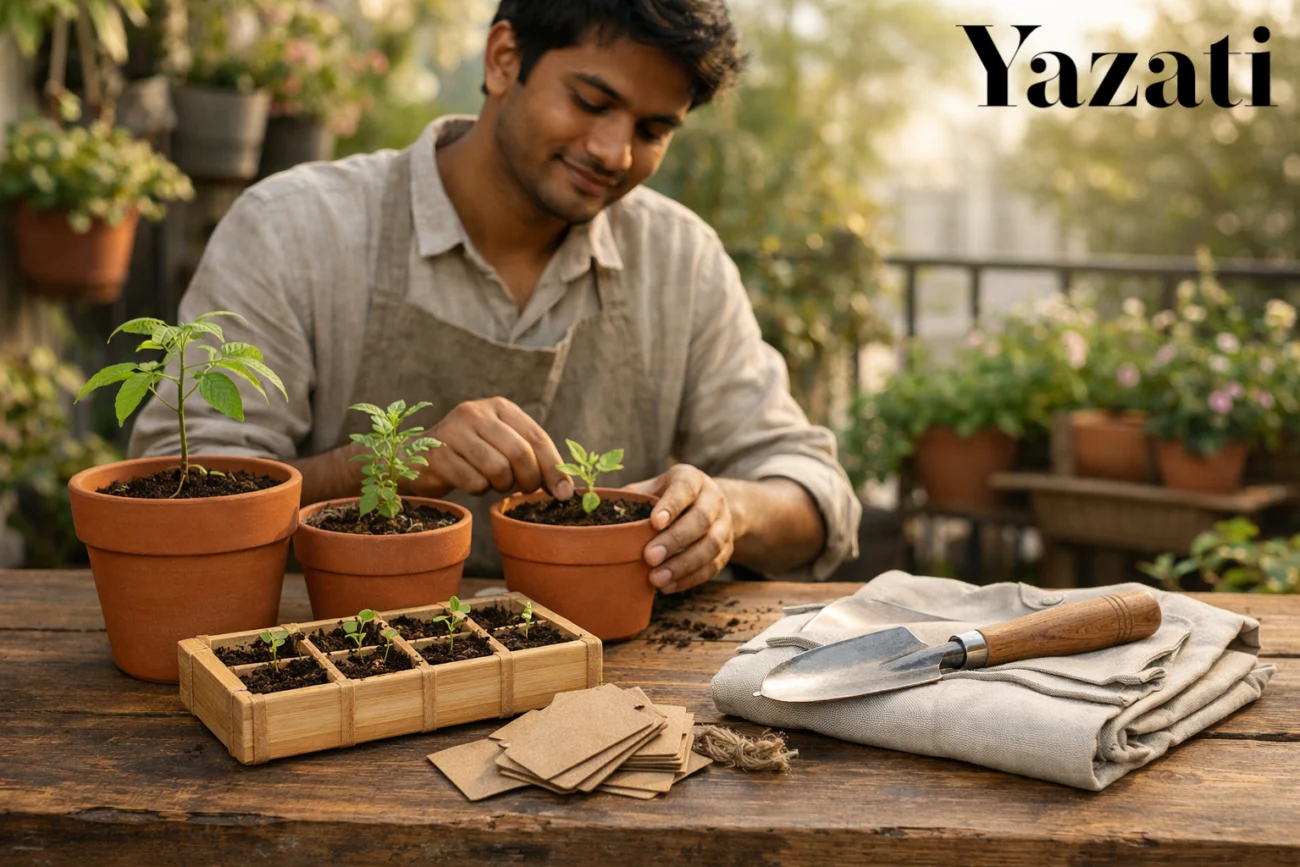
How Indian Garden Products Are Designed for Eco-Friendly Buyers
Eco-friendly buyers are reshaping the global garden and outdoor living market. Sustainability is no longer a secondary consideration—it is a defining factor in purchasing decisions. From materials and production methods to durability and ethical responsibility, buyers expect garden products to align with environmental values. Understanding How Indian Garden Products Are Designed for Eco-Friendly Buyers reveals why products sourced from India naturally meet these expectations.
Rather than retrofitting sustainability after production, many Indian garden products are designed with environmental responsibility built in from the start.
Introduction: Sustainability as a Core Buying Decision
The Rise of Eco-Conscious Outdoor Living
Gardens and outdoor spaces are increasingly seen as extensions of a sustainable lifestyle. Eco-conscious consumers want outdoor décor that reflects respect for nature, not products that harm it.
Why Garden Products Are Under Sustainability Scrutiny
Garden products live outdoors, interact with soil, plants, and water, and are exposed to weather. Buyers expect them to be safe, durable, and environmentally responsible throughout their lifecycle.
What Eco-Friendly Buyers Expect from Garden Products
Environmental Impact Beyond Materials
Eco-friendly buyers look beyond surface claims. They evaluate:
- How products are made
- Energy use during production
- Waste generated
- Product lifespan
Longevity, Repairability, and Responsible Design
A sustainable garden product is one that lasts, ages well, and does not require frequent replacement.
How Indian Garden Products Are Designed for Eco-Friendly Buyers
Sustainability Built into the Design Process
Design decisions in Indian garden products often prioritize material honesty, durability, and minimal processing—key principles of sustainable design.
Craft-Led Thinking Over Resource-Heavy Manufacturing
Instead of relying on high-energy industrial processes, many products are shaped through skilled manual or semi-manual methods.
Natural and Locally Sourced Materials
Stone, Terracotta, Wood, and Metal
Indian garden products commonly use:
- Natural stone and cement blends
- Fired terracotta and clay
- Dense, responsibly sourced wood
- Durable metals suitable for outdoor use
These materials are biodegradable, recyclable, or long-lasting—reducing environmental impact.
Reduced Dependence on Synthetic Inputs
Limited use of plastics and synthetic coatings aligns with eco-friendly buyer expectations.
Low-Impact Production Methods
Handcrafted and Semi-Manual Processes
Handcrafted processes require significantly less energy than fully automated manufacturing, lowering the carbon footprint per product.
Lower Energy Consumption in Manufacturing
Small-scale, distributed production reduces the need for energy-intensive infrastructure.
Durability as a Sustainability Feature
Products Designed to Age Gracefully
Many Indian garden products are intentionally designed to develop patina or character over time rather than degrade.
Weather Resistance Without Excess Treatment
Material knowledge allows products to withstand outdoor conditions without heavy chemical coatings.
Design That Reduces Waste
Timeless Aesthetics Over Short Trends
Timeless design reduces the risk of products becoming obsolete, lowering disposal and replacement rates.
Small-Batch and Made-to-Order Flexibility
Flexible production minimizes overproduction and unsold inventory—major contributors to environmental waste.
Ethical Production and Community Impact
Skilled Artisan Employment
Eco-conscious buyers increasingly value social sustainability. Indian garden products often support artisan livelihoods and traditional skills.
Responsible Supply Relationships
Long-term partnerships encourage ethical practices and stable income rather than exploitative, short-term sourcing.
Packaging Choices That Support Eco Goals
Protection Without Over-Packaging
Packaging is designed to protect heavy or fragile items efficiently without excessive material use.
Practical, Reusable Packaging Concepts
Simple, functional packaging aligns with eco-friendly buyer values.
Why Eco-Friendly Buyers Prefer Indian Garden Products
Authentic Sustainability, Not Greenwashing
Sustainability in Indian garden products is often a byproduct of how they are traditionally made—not a marketing layer added later.
Strong Quality-to-Environmental-Impact Ratio
Buyers receive durable, visually appealing products with relatively low environmental cost per unit.
Common Misconceptions About Sustainable Garden Products
“Eco-Friendly Means Fragile”
In reality, many natural materials outperform synthetic alternatives outdoors when used correctly.
“Sustainable Products Lack Design Appeal”
Indian garden products demonstrate that sustainability and aesthetics can coexist seamlessly.
FAQs on Eco-Friendly Indian Garden Products
1. Are Indian garden products truly sustainable?
Many are, due to natural materials, low-energy production, and durability.
2. Do handcrafted products last outdoors?
Yes. Longevity depends on material choice and finishing, not automation.
3. Are eco-friendly garden products more expensive?
Not necessarily. Efficient production often keeps costs competitive.
4. Can sustainable garden products scale for retail?
Yes. Structured sourcing enables consistent, scalable supply.
5. Do these products meet European eco expectations?
Yes, when designed and finished to market standards.
6. Is ethical production part of sustainability?
Absolutely. Social responsibility is a key pillar of sustainability.
Conclusion: Sustainability Designed, Not Added
How Indian Garden Products Are Designed for Eco-Friendly Buyers highlights a crucial distinction: true sustainability is not applied at the end of production—it is embedded in design, materials, and process choices.
Through natural materials, low-impact manufacturing, durability-focused design, and ethical production, Indian garden products meet the expectations of eco-conscious buyers worldwide. For brands and retailers seeking authentic sustainability rather than surface-level claims, India offers garden products that respect both the environment and the people who make them.
✨ Discover Global Sourcing Excellence with Netyex ✨
Netyex is your trusted B2B sourcing partner, connecting international buyers with India’s finest manufacturers and curated product lines—from handicrafts and home décor to kitchenware, textiles, hospitality essentials, and more. With verified suppliers and end-to-end support, we make global procurement seamless, reliable, and efficient.
👉 Elevate your sourcing experience—explore Netyex today.
📦 Bulk orders & customisation | 🌍 Worldwide delivery | 🤝 Trusted by global buyers
Visit Netyex to source premium Indian products with confidence.