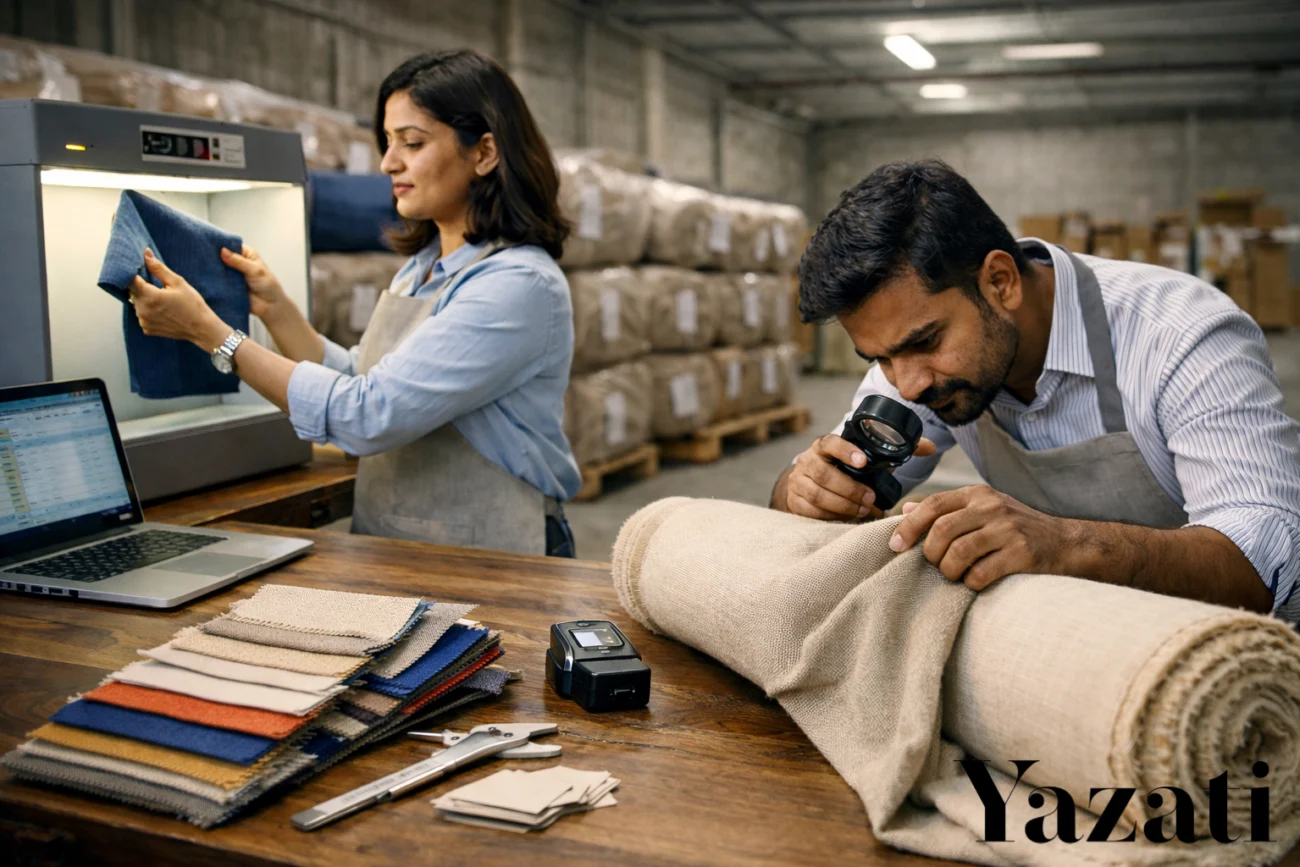
How to Import Bulk Fabric Orders from India Without Quality Issues
Importing fabric in bulk is fundamentally different from buying finished products or small trial quantities. Fabrics are raw inputs that flow into multiple downstream products, meaning any quality issue—shade variation, GSM inconsistency, finishing defects—multiplies across hundreds or thousands of units. Understanding How to Import Bulk Fabric Orders from India Without Quality Issues requires shifting from a price-first mindset to a control-first approach.
When sourced correctly from India, bulk fabric programs can be highly consistent, scalable, and cost-efficient. The key is structure, not luck.
Introduction: Why Fabric Quality Risks Increase at Scale
Bulk Orders Multiply Small Mistakes
A minor color deviation in a sample becomes a major problem when spread across thousands of meters. Fabric issues often surface only after cutting—when correction is no longer possible.
Quality Control Starts Before Production
Most quality problems originate from unclear specifications, untested assumptions, or rushed approvals—not from manufacturing limitations.
Why India Is a Major Fabric Sourcing Hub
Depth of Textile Categories
India offers a wide spectrum of fabrics, including:
- Cotton, linen, wool, silk
- Blended and performance textiles
- Handloom and mill-made fabrics
This diversity allows buyers to consolidate sourcing.
Export Experience and Capacity
Indian mills and exporters regularly supply global apparel, home textile, and furnishing markets, giving them strong familiarity with international standards.
How to Import Bulk Fabric Orders from India Without Quality Issues
A Control-First Importing Mindset
Quality in bulk fabric sourcing is achieved by controlling variables early—fiber, dye, process, and handling.
Prevention Over Correction
It is far cheaper to prevent a defect than to fix it after production begins.
Step 1: Lock Clear Fabric Specifications
Fiber Content, GSM, Weave, and Finish
Every bulk order must clearly define:
- Fiber composition
- GSM (weight tolerance range)
- Weave or knit construction
- Finishing processes
Vague terms invite variation.
Color Standards and Performance Metrics
Define color using physical references or shade bands—not descriptions alone. Performance requirements such as shrinkage and color fastness should be specified.
Step 2: Choose Export-Ready Fabric Suppliers
Evaluating Capability Beyond Swatches
Swatches show appearance—not consistency. Buyers must assess:
- Dye-house control
- Batch traceability
- Past bulk performance
Consistency Across Dye Lots
Reliable suppliers manage dye lots carefully and communicate limitations upfront.
Step 3: Sampling, Lab Testing, and Approval
Why Swatches Are Not Enough
Bulk approvals should be based on:
- Lab dips or strike-offs
- Pilot yardage
- Tested results
Using Test Results as Gatekeepers
Bulk production should only proceed after test results meet agreed benchmarks.
Step 4: Pre-Production Alignment
Shade Bands and Bulk Lot Confirmation
Before bulk dyeing, confirm acceptable shade ranges and approve the dye lot plan.
Documenting Approved References
All approvals—visual and technical—must be documented and shared across production teams.
Step 5: In-Process Quality Control
Loom, Dyeing, and Finishing Checks
Checks during weaving, dyeing, and finishing prevent defects from repeating across entire runs.
Preventing Roll-to-Roll Variation
Regular sampling during production helps maintain consistency across rolls.
Step 6: Final Inspection and Roll-Level Checks
Measuring Width, GSM, and Defects
Each roll should be checked for:
- Width consistency
- Weight variation
- Visual defects
Batch Segregation
Different lots should be clearly identified to avoid mixing issues during cutting.
Step 7: Packaging, Storage, and Transit Control
Moisture and Compression Protection
Fabric must be packed to prevent moisture exposure, edge damage, and compression marks.
Handling During Shipping
Poor handling during transit can undo good production quality.
Step 8: Communication and Issue Escalation
Early Warning Systems
Suppliers should flag potential deviations early—before they become failures.
Clear Escalation Protocols
Define who decides, who approves, and who corrects when issues arise.
Step 9: Managing Repeat Bulk Orders
Reference Retention
Approved standards, test results, and shade references must be stored for repeat programs.
Continuous Improvement
Each order should reduce variation further—not restart from zero.
Common Mistakes Importers Make
Approving on Visuals Alone
Un-tested fabrics are the leading cause of bulk quality failure.
Rushing Bulk Production
Time pressure is a major contributor to dye and finishing errors.
FAQs on Importing Bulk Fabric from India
1. Can India deliver consistent fabric quality at scale?
Yes—when specifications and controls are clearly defined.
2. Are lab tests really necessary?
Yes. They prevent expensive downstream failures.
3. How much variation is acceptable?
Acceptable tolerance ranges should be agreed before production.
4. Can small buyers import bulk fabric safely?
Yes. Structure matters more than order size.
5. Are repeat orders more reliable?
Yes. Consistency improves significantly with repeat programs.
6. Is fabric QC different from finished goods QC?
Yes. Fabric QC must happen earlier and at more stages.
Conclusion: Control Is the Only Real Quality Insurance
How to Import Bulk Fabric Orders from India Without Quality Issues comes down to one principle: quality is engineered, not inspected at the end. By locking specifications, choosing export-ready suppliers, testing before bulk, controlling production, and documenting every approval, importers can source bulk fabric from India with confidence.
India’s textile ecosystem is capable, scalable, and experienced—but success depends on discipline. When control replaces assumption, bulk fabric sourcing becomes predictable, repeatable, and profitable.
✨ Discover Global Sourcing Excellence with Netyex ✨
Netyex is your trusted B2B sourcing partner, connecting international buyers with India’s finest manufacturers and curated product lines—from handicrafts and home décor to kitchenware, textiles, hospitality essentials, and more. With verified suppliers and end-to-end support, we make global procurement seamless, reliable, and efficient.
👉 Elevate your sourcing experience—explore Netyex today.
📦 Bulk orders & customisation | 🌍 Worldwide delivery | 🤝 Trusted by global buyers
Visit Netyex to source premium Indian products with confidence.