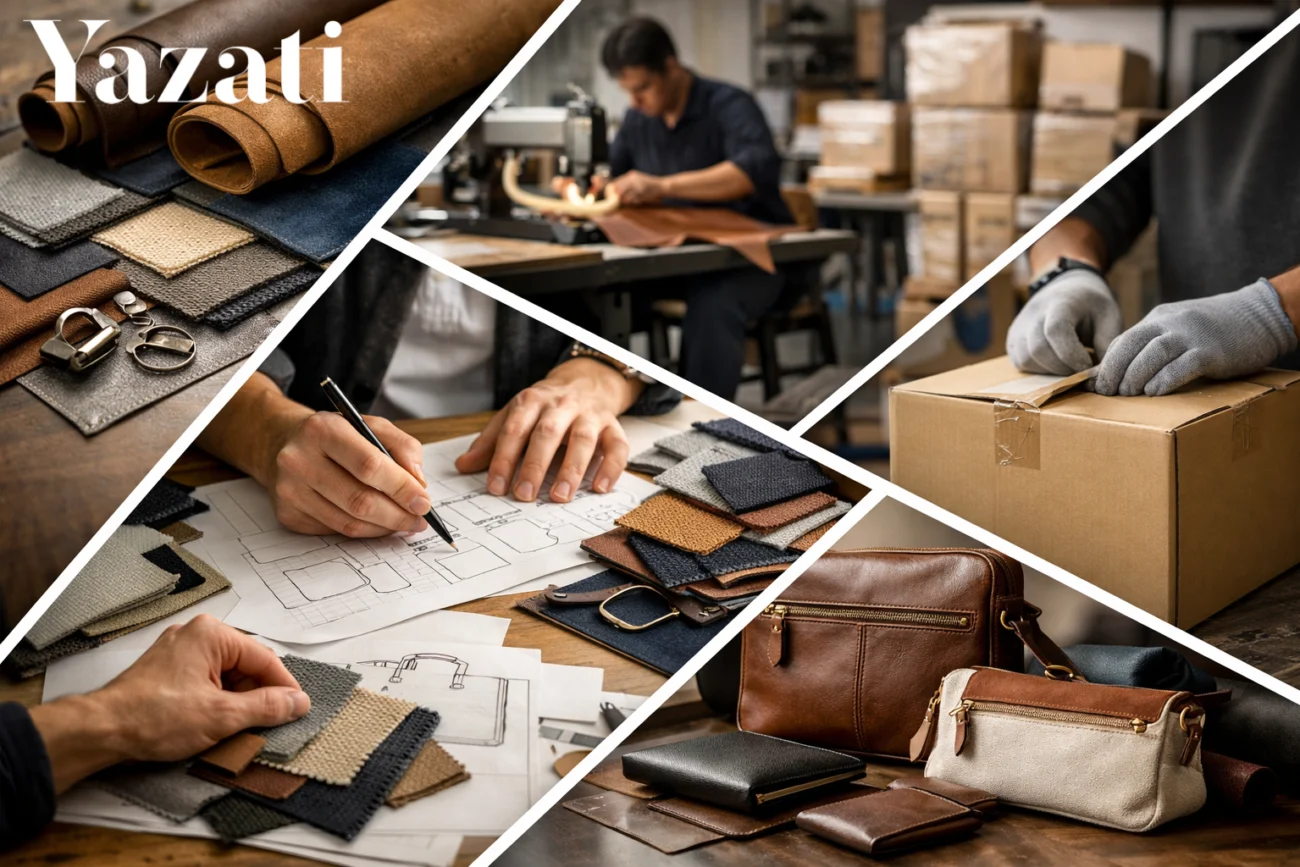
How Yazati Helps Importers Develop Custom Leather & Fabric Lines
In global sourcing, custom leather and fabric lines are no longer reserved for luxury brands alone. Retailers, private labels, and lifestyle brands increasingly rely on proprietary materials to stand out, protect margins, and build long-term brand identity. Understanding How Yazati Helps Importers Develop Custom Leather & Fabric Lines shows how structure, expertise, and coordination turn creative ideas into scalable, reliable material programs.
Operating from India, Yazati supports importers through every stage of custom material development—from concept to bulk export—without sacrificing consistency or control.
Introduction: Why Custom Material Lines Matter in Global Trade
Differentiation in Competitive Markets
Standard materials are easy to copy. Custom-developed leathers and fabrics create visual, tactile, and functional differences that competitors cannot easily replicate.
Custom Lines as Long-Term Brand Assets
Once established, custom materials become reusable assets—supporting multiple product categories and seasons while reinforcing brand identity.
Why India Is Ideal for Custom Leather & Fabric Development
Material Diversity and Skilled Production
India offers access to:
- Multiple leather grades and tanning methods
- Natural, blended, and performance textiles
- Skilled artisans and industrial-scale producers
This diversity allows precise matching of material to product purpose.
Flexibility Without Industrial Rigidity
Unlike highly rigid manufacturing hubs, India supports experimentation, small pilot runs, and gradual scaling—essential for custom development.
How Yazati Helps Importers Develop Custom Leather & Fabric Lines
A Structured, Step-by-Step Development Model
Yazati approaches customization as a managed process, not an open-ended experiment. Each stage has defined inputs, approvals, and checkpoints.
Reducing Risk in Customization
Clear documentation, sample locking, and early testing prevent surprises during bulk production.
Step 1: Translating Brand Vision into Material Strategy
Target Market, Use Case, and Positioning
Development begins by understanding:
- End customer expectations
- Price positioning
- Product use conditions
This ensures materials are designed for real-world performance—not just appearance.
Aligning Design with Performance Needs
A visually appealing material must also meet durability, comfort, and longevity requirements.
Step 2: Material Selection and Development
Leather Types, Textiles, and Sustainable Options
Yazati helps buyers evaluate options across:
- Full-grain, top-grain, and specialty leathers
- Woven, knitted, and blended textiles
- Sustainable and low-impact materials
Matching Materials to End Use
Materials are selected based on stress points, wear patterns, and environmental exposure.
Step 3: Sampling, Prototyping, and Reference Locking
Samples as Binding Standards
Approved samples define color, texture, thickness, hand feel, and finish—becoming non-negotiable references.
Preventing Sample-to-Bulk Gaps
Strict reference control ensures that bulk materials match approved development samples.
Step 4: Quality Control at Material Level
Managing Natural Variation
Natural materials vary. Yazati defines acceptable tolerance ranges to distinguish character from defects.
Performance and Durability Checks
Materials are evaluated for strength, wear resistance, and suitability for intended use.
Step 5: Customization, Branding, and Finish Control
Colors, Textures, and Finishes
Custom dyeing, surface treatments, and texture development are managed with consistency as the priority.
Private Label and Brand Identity
Materials are aligned with brand colors, finishes, and visual language—supporting cohesive collections.
Step 6: Compliance, Ethics, and Sustainability Alignment
Responsible Sourcing Practices
Yazati supports ethical sourcing and environmentally responsible practices across leather and textile development.
Market-Specific Requirements
Material specifications are aligned with destination market expectations and regulations.
Step 7: Scaling from Development to Bulk Production
Pilot Runs and Learning Cycles
Initial pilot quantities validate performance before large commitments are made.
Multi-Season Consistency
Stored references and documentation ensure consistency across repeat and multi-year programs.
Communication and Project Management
Clear Timelines and Documentation
Buyers receive structured timelines, approval stages, and clear documentation at every step.
Proactive Problem Solving
Potential issues are identified early and addressed collaboratively—before they impact delivery.
Common Challenges in Custom Material Development
Inconsistent Quality
Solved through sample locking, material-level inspections, and defined tolerances.
Cost and Timeline Overruns
Prevented through realistic planning and staged approvals.
FAQs on Developing Custom Leather & Fabric Lines
1. Can small importers develop custom materials?
Yes. Development can start with small pilot runs.
2. Are custom materials more expensive?
Not necessarily. Long-term use often reduces overall cost.
3. How long does custom development take?
Timelines vary, but structure keeps development predictable.
4. Can custom materials be scaled for bulk orders?
Yes. Scaling is planned from the beginning.
5. Are sustainable options available?
Yes. Sustainable materials are increasingly integrated.
6. Can the same material be reused across products?
Absolutely. This is a key advantage of custom lines.
Conclusion: Custom Lines Built for Scale and Trust
How Yazati Helps Importers Develop Custom Leather & Fabric Lines demonstrates that successful customization is not about creativity alone—it is about control, process, and partnership.
By combining India’s material diversity with disciplined development, quality control, and export coordination, Yazati enables importers to create distinctive leather and fabric lines that are scalable, reliable, and brand-defining. In a market where differentiation and consistency must coexist, custom materials developed the right way become a powerful long-term advantage.
✨ Discover Global Sourcing Excellence with Netyex ✨
Netyex is your trusted B2B sourcing partner, connecting international buyers with India’s finest manufacturers and curated product lines—from handicrafts and home décor to kitchenware, textiles, hospitality essentials, and more. With verified suppliers and end-to-end support, we make global procurement seamless, reliable, and efficient.
👉 Elevate your sourcing experience—explore Netyex today.
📦 Bulk orders & customisation | 🌍 Worldwide delivery | 🤝 Trusted by global buyers
Visit Netyex to source premium Indian products with confidence.