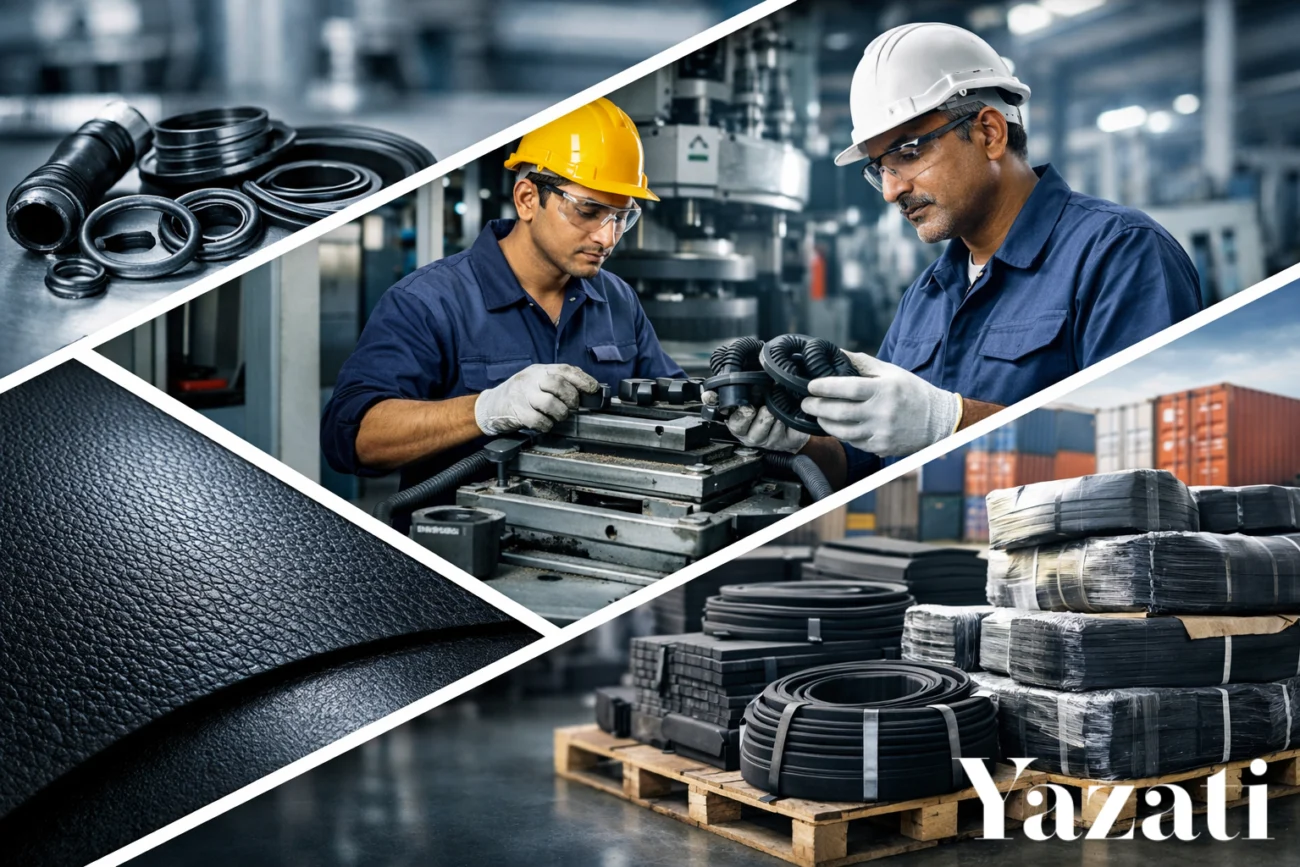
Introduction to the Global Rubber Products Market
Rubber products are essential across industries such as automotive, construction, healthcare, electronics, and consumer goods. From tires and seals to industrial hoses and medical components, global demand for rubber-based solutions continues to rise.
As industries seek reliable and cost-effective suppliers, India has emerged as a strong competitor in the global rubber products market.
This article explores How Indian Rubber Products Are Competing Globally, highlighting the key factors that position India as a reliable and innovative export destination.
India’s Natural Rubber Production Advantage
One of India’s biggest strengths is its access to natural rubber.
India is among the top producers of natural rubber, with plantations concentrated in southern regions. This local availability provides manufacturers with a stable raw material supply chain.
Rubber Growing Regions and Supply Chain Strength
India’s plantation-based rubber industry supports:
- Controlled harvesting
- Quality monitoring
- Reduced import dependency
- Stable pricing structures
A strong upstream supply chain improves production efficiency and reduces material cost volatility.
Diversified Rubber Product Portfolio
A major reason How Indian Rubber Products Are Competing Globally is product diversity.
Indian manufacturers produce:
- Automotive components (gaskets, seals, hoses)
- Industrial rubber sheets
- Conveyor belts
- O-rings and molded parts
- Rubber flooring
- Medical-grade rubber items
- Consumer rubber goods
This broad portfolio allows exporters to serve multiple industries simultaneously.
Technological Advancements in Rubber Manufacturing
India’s rubber industry has modernized significantly.
Manufacturers now use:
- Automated molding systems
- CNC-based cutting equipment
- Precision extrusion machinery
- Advanced compounding techniques
Modern machinery ensures:
- Consistent product dimensions
- Improved tensile strength
- Enhanced durability
- Reduced production waste
Technology investments strengthen global competitiveness.
Competitive Pricing Strategies
Cost efficiency plays a major role in export growth.
India benefits from:
- Competitive labor costs
- Local raw material sourcing
- Industrial production clusters
- Economies of scale
These advantages allow Indian suppliers to offer competitive pricing without compromising quality.
Affordable pricing attracts global buyers seeking cost optimization.
Compliance with International Quality Standards
Global markets demand strict compliance.
Indian rubber manufacturers often adhere to:
- ISO quality management systems
- Automotive industry certifications
- Environmental compliance standards
- Safety and performance testing protocols
Compliance ensures products meet international performance expectations.
Reliable quality strengthens buyer confidence.
Innovation in Synthetic and Specialty Rubber
Beyond natural rubber, India has invested in synthetic and specialty rubber production.
High-performance materials now include:
- Heat-resistant compounds
- Oil-resistant rubber
- Chemical-resistant materials
- High-elasticity formulations
These innovations allow Indian manufacturers to serve specialized industries such as aerospace, defense, and heavy machinery.
Specialty product development enhances export value.
Sustainability and Eco-Friendly Rubber Solutions
Environmental responsibility is gaining importance in industrial manufacturing.
Indian rubber producers increasingly focus on:
- Recycling rubber waste
- Reprocessing scrap material
- Energy-efficient production systems
- Reduced chemical emissions
Sustainable production practices align with global environmental standards.
Green manufacturing enhances brand reputation in developed markets.
Strong Export Infrastructure and Logistics
India’s export ecosystem supports efficient global trade.
Advantages include:
- Major seaports
- Established freight forwarding networks
- Competitive shipping rates
- Export documentation expertise
Reliable logistics ensure timely international delivery.
Bulk shipment capabilities improve supply chain reliability.
Strategic Partnerships with Global Brands
Indian rubber manufacturers often operate as OEM suppliers for international brands.
OEM partnerships provide:
- Stable long-term contracts
- Technology transfer opportunities
- Continuous quality improvement
- Global market exposure
Collaboration with multinational companies enhances credibility.
Risk Diversification in Global Supply Chains
Global buyers are increasingly diversifying sourcing strategies to reduce dependency on single regions.
India offers:
- Political and economic stability
- Growing industrial base
- Expanding manufacturing capacity
Diversification reduces geopolitical risk and supply chain disruptions.
This strategic positioning strengthens India’s global standing.
Cost-to-Quality Ratio Advantage
The balance between affordability and quality is central to understanding How Indian Rubber Products Are Competing Globally.
Indian manufacturers provide:
- Durable performance
- Consistent specifications
- Competitive pricing
- Scalable production
This strong cost-to-quality ratio appeals to international procurement teams.
Market Reach and Global Demand
Indian rubber exports reach:
- North America
- Europe
- Middle East
- Southeast Asia
- Africa
Increasing trade agreements and international demand continue to support growth.
Frequently Asked Questions
1. Are Indian rubber products high quality?
Yes. Many manufacturers comply with international quality and safety standards.
2. What industries use Indian rubber products?
Automotive, industrial, construction, healthcare, and consumer goods industries rely on them.
3. Is India a major natural rubber producer?
Yes. Plantation-based production provides stable raw material supply.
4. Are specialty rubber products available?
Yes. Heat-resistant, oil-resistant, and chemical-resistant compounds are widely produced.
5. Is pricing competitive compared to other countries?
Yes. Competitive labor and production costs support affordable pricing.
6. Are sustainable rubber options available?
Yes. Recycling initiatives and energy-efficient production systems are increasingly adopted.
Conclusion
The global rubber market is highly competitive, but India has carved out a strong position through innovation, cost efficiency, quality compliance, and sustainable practices.
Understanding How Indian Rubber Products Are Competing Globally reveals a clear pattern: strong raw material supply, diversified product offerings, technological modernization, and reliable export systems drive international success.
As global industries continue seeking dependable and cost-effective suppliers, India’s rubber sector is well-positioned to expand its global footprint.
In today’s evolving supply chain landscape, competitiveness is defined by adaptability—and India is adapting effectively.
✨ Discover Global Sourcing Excellence with Netyex ✨
Netyex is your trusted B2B sourcing partner, connecting international buyers with India’s finest manufacturers and curated product lines—from handicrafts and home décor to kitchenware, textiles, hospitality essentials, and more. With verified suppliers and end-to-end support, we make global procurement seamless, reliable, and efficient.
👉 Elevate your sourcing experience—explore Netyex today.
📦 Bulk orders & customisation | 🌍 Worldwide delivery | 🤝 Trusted by global buyers
Visit Netyex to source premium Indian products with confidence.