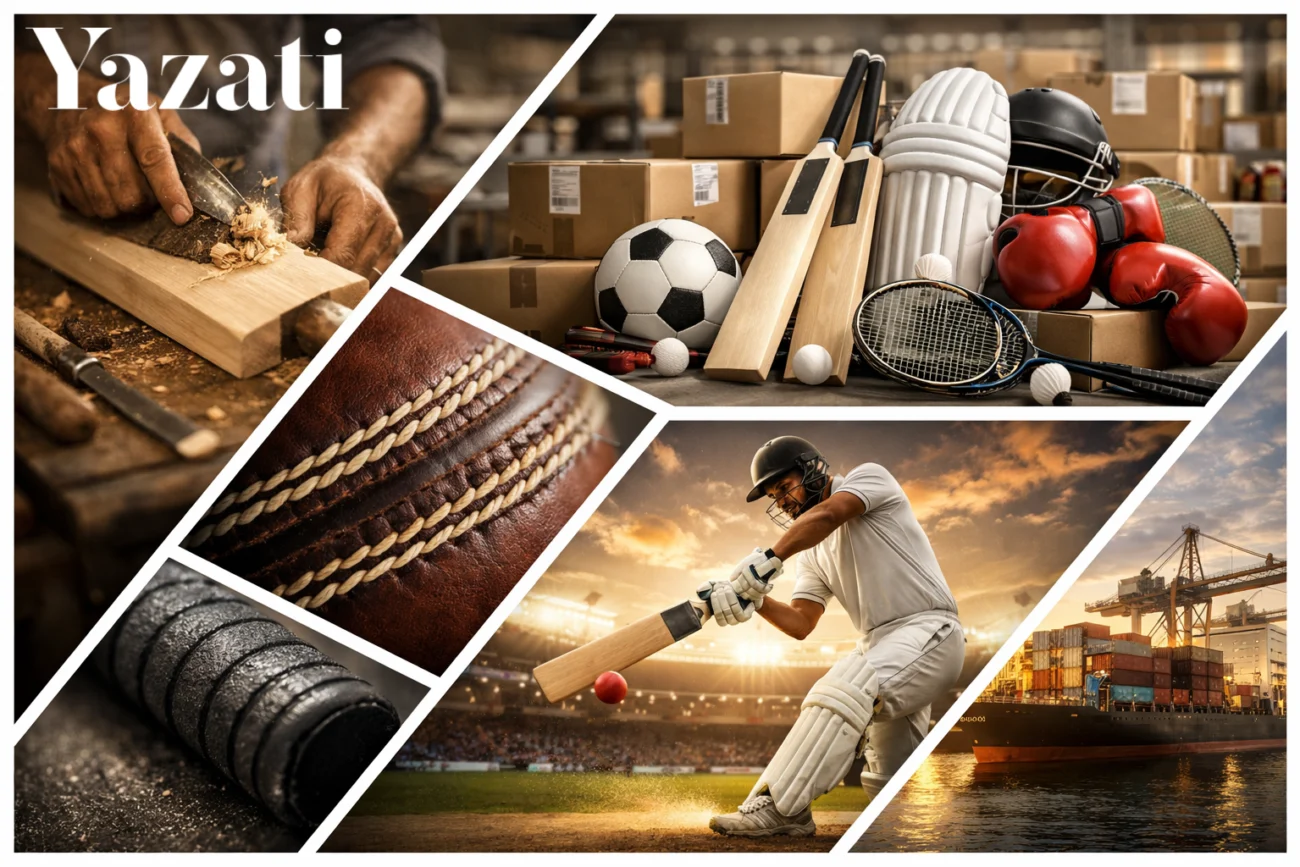
Introduction to India’s Sports Goods Industry
India has steadily strengthened its position as a trusted supplier of sports equipment and fitness accessories. From cricket gear and footballs to gym accessories and training equipment, Indian manufacturers export products to major global markets.
Over the years, buyers have increasingly recognized the value proposition India offers. Understanding Why Buyers Choose Indian Sports Goods for Durability & Pricing reveals how the country balances performance, quality, and cost efficiency in highly competitive international markets.
The combination of skilled craftsmanship, strong supply chains, and competitive production systems has made India a preferred sourcing destination.
Why Buyers Choose Indian Sports Goods for Durability & Pricing in Competitive Markets
Global sports brands and distributors evaluate suppliers based on two major criteria: product durability and pricing competitiveness.
Indian manufacturers meet both expectations by offering:
- Long-lasting construction
- Quality-tested materials
- Competitive bulk pricing
- Consistent export performance
- Reliable delivery timelines
These advantages make Indian sports goods attractive to both premium brands and budget-focused retailers.
Strong Manufacturing Expertise
India’s sports goods industry benefits from decades of manufacturing experience.
Production hubs have developed specialized skills in:
- Ball stitching
- Bat shaping
- Protective gear assembly
- Foam and rubber molding
- Fitness equipment fabrication
Skilled labor ensures precision and product consistency.
Expert craftsmanship directly contributes to durability.
High-Quality Raw Materials
Durability begins with strong materials.
Indian manufacturers utilize:
- High-grade leather
- Reinforced rubber
- Durable synthetic fabrics
- Treated wood
- Quality foam and polymer materials
Leather, Rubber, and Synthetic Components
Leather and rubber remain essential materials for balls, gloves, and protective gear. Advanced synthetic components improve flexibility and resistance to wear.
Careful material selection ensures longer product lifespan.
Advanced Production Techniques
Modern manufacturing technologies enhance product strength and efficiency.
Indian factories integrate:
- Automated stitching systems
- Precision cutting tools
- Molded production lines
- Computer-aided design
- Strength testing equipment
Technology improves accuracy while maintaining high output capacity.
Consistency is essential for international buyers.
Strict Quality Control Processes
Quality control is integrated at multiple production stages.
Manufacturers conduct:
- Material inspections
- In-process quality checks
- Final product testing
- Strength and stress evaluations
- Performance testing
Inspection protocols reduce defects and ensure reliability.
Durability is verified before shipment.
Cost Efficiency Without Compromising Quality
Competitive pricing is one of India’s strongest advantages.
Cost efficiency results from:
- Skilled yet affordable workforce
- Local availability of raw materials
- Streamlined production systems
- Established export infrastructure
Buyers benefit from favorable pricing without sacrificing performance standards.
Value-driven sourcing enhances profitability.
Economies of Scale in Bulk Production
Indian manufacturers can handle large orders efficiently.
Bulk production advantages include:
- Reduced per-unit cost
- Optimized production cycles
- Efficient material procurement
- Faster order turnaround
Large-scale operations strengthen competitiveness in global tenders.
Volume capacity supports international retail chains.
Compliance with International Standards
Sports equipment must meet safety and quality regulations.
Indian exporters comply with:
- International testing requirements
- Safety certifications
- Environmental standards
- Ethical labor regulations
Compliance simplifies market entry in developed regions.
Certification builds trust with international brands.
Private Label and OEM Flexibility
Many global sports brands rely on Indian OEM production.
Manufacturers offer:
- Custom branding
- Private label packaging
- Product customization
- Logo integration
Flexibility supports brand identity and market differentiation.
OEM capabilities strengthen long-term partnerships.
Adaptability to Global Sports Trends
Sports trends evolve quickly, driven by new fitness movements and professional competitions.
Indian manufacturers adapt by:
- Developing innovative designs
- Updating product features
- Expanding into fitness and training categories
- Responding to consumer preferences
Adaptability ensures relevance in dynamic markets.
Innovation supports continued growth.
Reliable Supply Chain Infrastructure
India’s established export network supports reliable delivery.
Strong logistics systems include:
- Container optimization
- Freight partnerships
- Efficient port operations
- Structured documentation processes
Reliable supply chains reduce delays and enhance buyer confidence.
Timely shipments strengthen trade relationships.
Government Support and Export Promotion
Government initiatives promote sports goods exports through:
- Infrastructure development
- Export incentives
- Trade promotion programs
- Participation in international exhibitions
Supportive policies enhance global competitiveness.
Industry growth is backed by institutional frameworks.
Sustainability and Ethical Manufacturing
Global buyers increasingly demand responsible production.
Indian manufacturers are adopting:
- Eco-friendly materials
- Waste reduction systems
- Ethical labor standards
- Energy-efficient production methods
Sustainable manufacturing aligns with global brand values.
Responsible sourcing enhances long-term partnerships.
Key Importing Regions
Indian sports goods are exported to:
- Europe
- North America
- Middle East
- Africa
- Asia-Pacific
Diversified markets reflect widespread trust in Indian manufacturing.
Global demand continues to expand.
Frequently Asked Questions (FAQs)
1. Are Indian sports goods durable compared to other sources?
Yes. High-quality materials and strict quality control ensure durability.
2. Why are Indian sports goods competitively priced?
Cost efficiency results from skilled labor, local materials, and economies of scale.
3. Do Indian manufacturers offer private labeling?
Yes. OEM and customized branding services are widely available.
4. Are products compliant with international standards?
Many manufacturers meet global safety and quality requirements.
5. Can Indian suppliers handle bulk orders?
Yes. Large-scale production capacity supports international buyers.
6. Is sustainability becoming important in Indian sports goods production?
Yes. Many manufacturers are integrating eco-friendly practices.
Conclusion
The global sports goods market demands durability, reliability, and competitive pricing. Understanding Why Buyers Choose Indian Sports Goods for Durability & Pricing highlights the strengths that make India a preferred sourcing destination.
From skilled craftsmanship and advanced manufacturing to cost efficiency and compliance with international standards, Indian sports goods deliver strong value. As demand for quality and affordable equipment grows worldwide, India’s position in global sports manufacturing continues to strengthen.
For international brands and distributors seeking performance and profitability, Indian sports goods offer a dependable and strategic sourcing solution.
✨ Discover Global Sourcing Excellence with Netyex ✨
Netyex is your trusted B2B sourcing partner, connecting international buyers with India’s finest manufacturers and curated product lines—from handicrafts and home décor to kitchenware, textiles, hospitality essentials, and more. With verified suppliers and end-to-end support, we make global procurement seamless, reliable, and efficient.
👉 Elevate your sourcing experience—explore Netyex today.
📦 Bulk orders & customisation | 🌍 Worldwide delivery | 🤝 Trusted by global buyers
Visit Netyex to source premium Indian products with confidence.