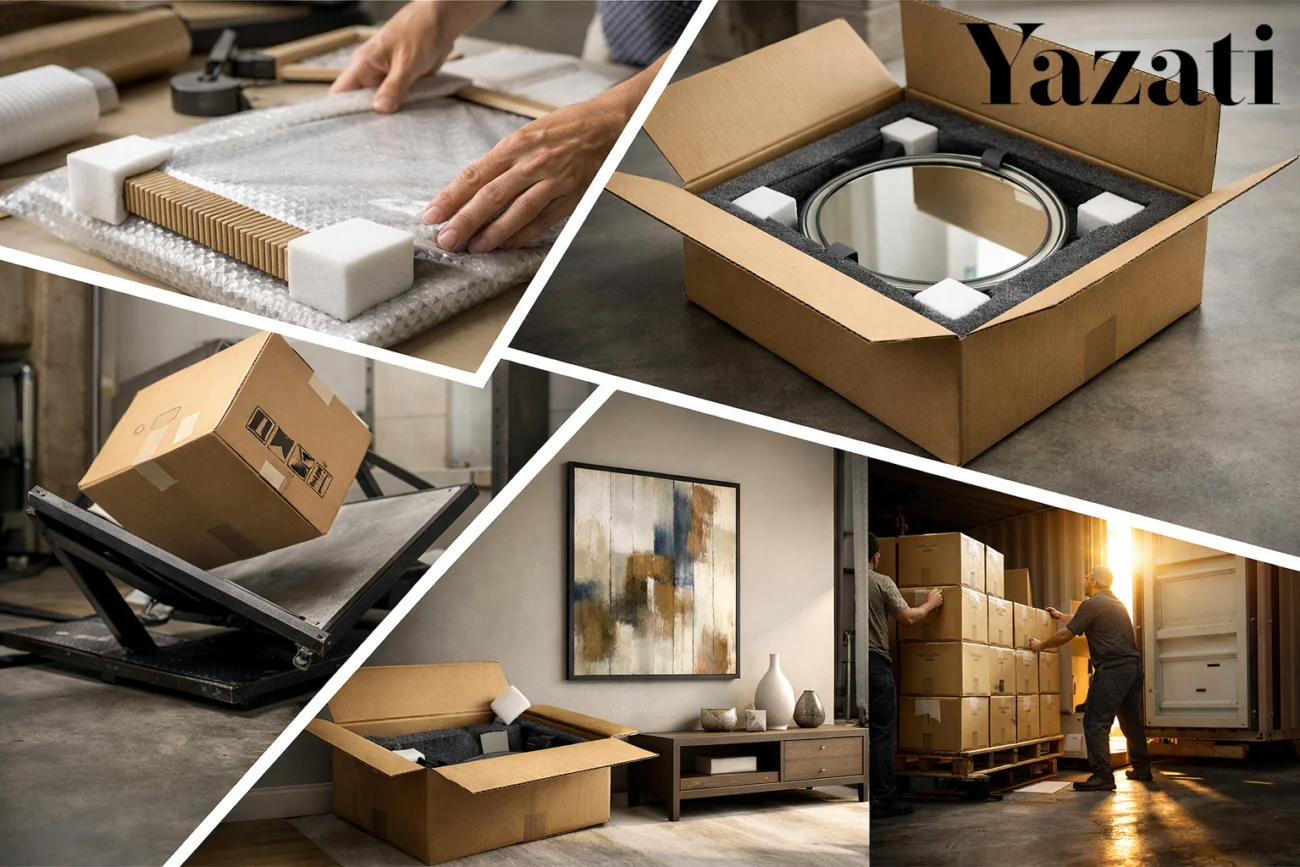
Introduction to Fragile Wall Décor Export Challenges
Fragile wall décor faces several risks during export:
- Shock and vibration during transport
- Rough handling at ports
- Stacking pressure in containers
- Moisture exposure
- Temperature fluctuations
Without structured packaging standards, damage rates can increase significantly.
Understanding Packaging Standards for Fragile Wall Décor Exports Explained
International packaging standards focus on:
- Shock resistance
- Structural integrity
- Moisture protection
- Proper labeling
- Compliance with shipping regulations
These principles reduce risk throughout the supply chain.
Types of Fragile Wall Décor Products
Different materials require tailored protection.
Common fragile décor items include:
- Glass-framed artwork
- Mirrors
- Ceramic wall plates
- Metal-and-glass art combinations
- Hand-painted wooden panels
Each material demands specific packaging techniques.
Primary Packaging Requirements
Primary packaging refers to the immediate protective layer around the product.
Bubble Wrap and Foam Protection
Shock-absorbing materials include:
- High-density bubble wrap
- Foam sheets
- Air cushions
- Polyethylene foam padding
These materials reduce vibration damage.
Corner Guards and Edge Protectors
Fragile items often break at edges.
Use:
- Cardboard corner protectors
- Plastic edge guards
- Foam reinforcement strips
Reinforced corners significantly reduce breakage risk.
Secondary Packaging Standards
Secondary packaging involves outer cartons and structural support.
Use:
- Double-walled corrugated cartons
- Five-ply or seven-ply cartons for heavy items
- Custom-sized boxes to prevent internal movement
Carton strength should match product weight.
Cushioning and Void Fill Techniques
Empty space inside cartons increases risk.
Use void fillers such as:
- Foam inserts
- Molded pulp trays
- Air pillows
- Crumpled kraft paper
Proper cushioning prevents internal shifting.
Palletization and Container Loading
For bulk exports:
- Secure cartons on wooden or plastic pallets
- Use shrink wrap or stretch film
- Avoid overhanging edges
- Distribute weight evenly
Proper palletization reduces damage during forklift handling.
Moisture and Climate Protection
International shipping may involve humidity and temperature changes.
Protect products using:
- Silica gel packs
- Moisture barrier bags
- Laminated plastic liners
- Waterproof outer wraps
Moisture protection is essential for wood and metal products.
Labeling and Handling Instructions
Clear labeling reduces mishandling.
Include:
- “Fragile” labels
- “Handle with Care” markings
- “This Side Up” arrows
- Glass symbols
- Stack limit instructions
Internationally recognized symbols improve compliance.
Compliance with International Shipping Regulations
Export packaging must comply with:
- ISPM-15 standards for wooden pallets
- Import country labeling regulations
- Safety and environmental guidelines
Compliance prevents customs delays.
Drop Testing and Quality Assurance
Testing ensures packaging reliability.
Common tests include:
- Drop testing from specified heights
- Compression testing
- Vibration simulation
- Tilt testing
Pre-shipment quality checks reduce damage claims.
Cost Optimization Without Compromising Safety
While protective packaging increases costs, strategic planning helps balance expenses.
Cost-saving strategies include:
- Optimizing carton size
- Bulk purchasing packaging materials
- Reducing unnecessary layers
- Designing custom inserts
Efficient packaging reduces both damage and excess material usage.
Common Packaging Mistakes to Avoid
- Using single-layer cartons for heavy items
- Leaving empty space inside cartons
- Ignoring corner reinforcement
- Skipping moisture protection
- Overstacking cartons
- Inadequate labeling
Avoiding these mistakes significantly lowers breakage rates.
FAQs: Packaging Standards for Fragile Wall Décor Exports Explained
1. What is the most important packaging layer?
Shock-absorbing primary packaging is critical for fragile products.
2. Should exporters use wooden crates?
For highly fragile or high-value items, wooden crating offers additional protection.
3. How can exporters reduce breakage claims?
Through structured packaging, drop testing, and clear handling instructions.
4. Is moisture protection necessary for all products?
Especially for wood, metal, and mixed-material décor, moisture control is essential.
5. What carton strength is recommended?
Double-walled or multi-ply cartons are recommended for fragile exports.
6. Do labeling standards vary by country?
Yes. Always verify destination country requirements.
Conclusion
Understanding Packaging Standards for Fragile Wall Décor Exports Explained is essential for protecting products during international shipping. Fragile décor items face multiple risks, from vibration and stacking pressure to moisture exposure.
By implementing structured primary and secondary packaging systems, using reinforced cartons, securing pallets properly, and conducting drop testing, exporters can significantly reduce damage rates. Compliance with international regulations and proper labeling further ensures smooth customs clearance.
Effective packaging is not an expense—it is an investment in product safety, customer satisfaction, and brand reputation. With proper planning and quality control, fragile wall décor can reach global markets safely and consistently.
✨ Discover Global Sourcing Excellence with Netyex ✨
Netyex is your trusted B2B sourcing partner, connecting international buyers with India’s finest manufacturers and curated product lines—from handicrafts and home décor to kitchenware, textiles, hospitality essentials, and more. With verified suppliers and end-to-end support, we make global procurement seamless, reliable, and efficient.
👉 Elevate your sourcing experience—explore Netyex today.
📦 Bulk orders & customisation | 🌍 Worldwide delivery | 🤝 Trusted by global buyers
Visit Netyex to source premium Indian products with confidence.