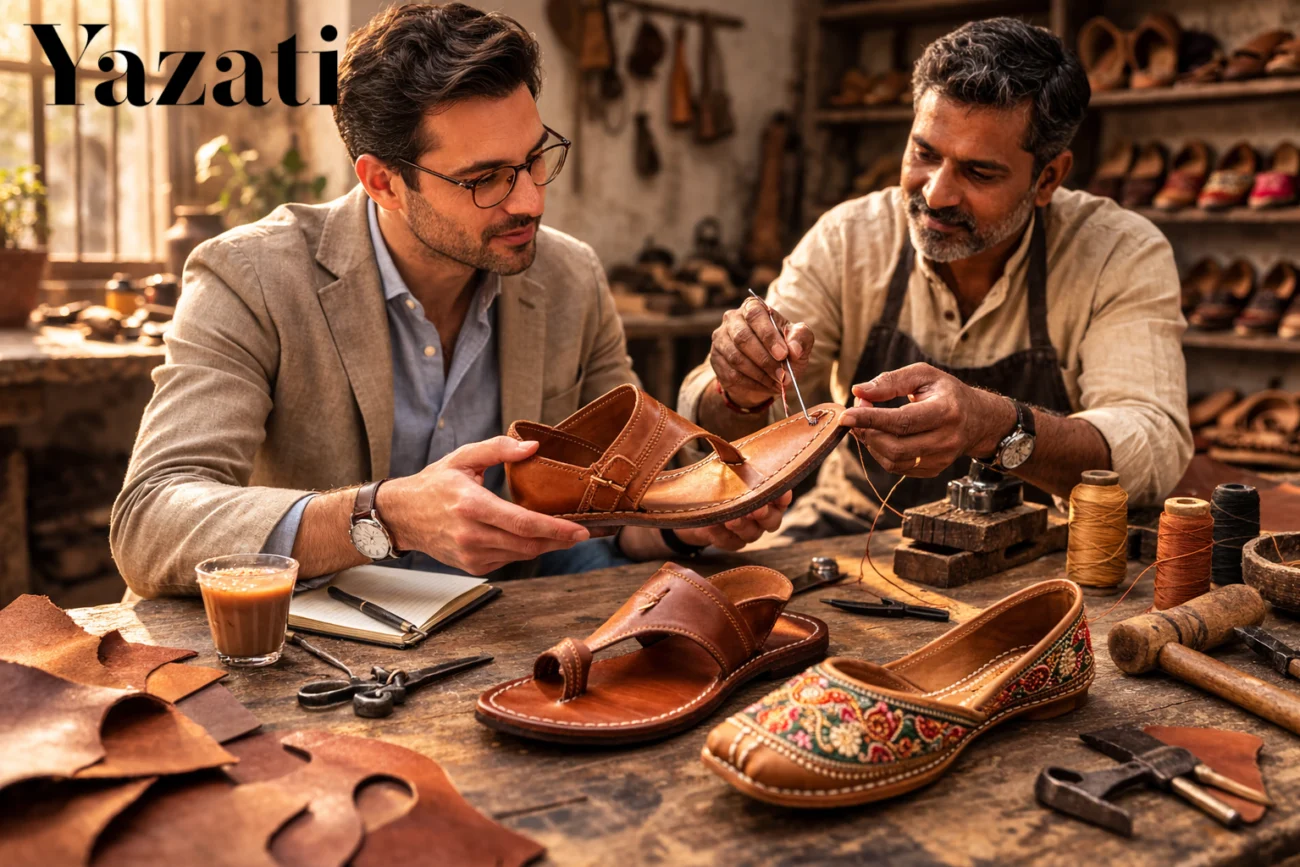
Why India Is a Global Hub for Handmade Footwear
India has a centuries-old tradition of shoemaking. Skilled artisans handcraft footwear using techniques passed down through generations. The country offers:
- Skilled craftsmanship
- Competitive production costs
- Abundant leather and textile materials
- Strong export infrastructure
Handmade footwear from India appeals to buyers seeking authenticity and high-quality craftsmanship.
Types of Handmade Footwear Available
Indian manufacturers produce a wide variety of styles for global markets.
Leather Sandals and Shoes
Handcrafted leather sandals and shoes are popular due to their durability and premium finish. Artisans often use vegetable-tanned leather, hand stitching, and detailed finishing techniques.
These products are widely demanded in Europe, North America, and the Middle East.
Ethnic and Traditional Footwear
Traditional footwear styles are valued for cultural uniqueness. They feature intricate embroidery, beadwork, and hand embellishments.
These designs attract boutique retailers and fashion brands.
Casual and Contemporary Styles
Manufacturers also produce modern styles such as flats, loafers, and slip-ons. These designs blend traditional craftsmanship with contemporary trends.
Customization options make them attractive for private labeling.
Benefits of Direct Sourcing from Manufacturers
Sourcing directly from Indian manufacturers offers multiple advantages:
- Lower costs by eliminating intermediaries
- Better customization options
- Direct communication with producers
- Improved quality control
- Stronger long-term partnerships
Direct sourcing enhances profitability and product uniqueness.
Step-by-Step Guide to Sourcing Handmade Footwear
Step 1: Define Product Requirements
Before contacting suppliers, buyers should define:
- Material preferences
- Design specifications
- Target price range
- Quantity requirements
- Packaging needs
Clear requirements reduce misunderstandings.
Step 2: Identify Reliable Manufacturers
Buyers can identify manufacturers through:
- Online B2B marketplaces
- Trade directories
- Industry exhibitions
- Referrals from sourcing agents
Evaluate suppliers based on:
- Experience
- Export history
- Certifications
- Client reviews
Step 3: Request Samples
Sampling is essential. Buyers should:
- Inspect material quality
- Evaluate stitching and finishing
- Test durability
- Confirm size accuracy
Samples help ensure product consistency before bulk production.
Step 4: Negotiate Pricing and MOQ
Minimum Order Quantity (MOQ) varies by manufacturer. Buyers should negotiate:
- Unit pricing
- Volume discounts
- Payment terms
- Production timelines
Clear agreements prevent disputes later.
Step 5: Confirm Production and Quality Checks
During production, buyers can:
- Request progress updates
- Conduct third-party inspections
- Approve pre-shipment samples
Quality checks ensure compliance with expectations.
Understanding Pricing Structure
Handmade footwear pricing depends on:
- Type of leather or material
- Complexity of design
- Labor intensity
- Packaging requirements
- Order quantity
Bulk orders typically reduce per-unit costs.
Quality Control Measures
Buyers should verify:
- Stitching consistency
- Material durability
- Comfort and fit
- Color accuracy
- Packaging quality
Third-party inspection agencies can assist in ensuring standards.
Export Documentation and Logistics
Exporting handmade footwear from India requires:
- Commercial invoice
- Packing list
- Bill of lading or airway bill
- Certificate of origin
Experienced exporters manage shipping procedures efficiently.
Buyers should confirm:
- Shipping terms (FOB, CIF, etc.)
- Delivery timelines
- Insurance coverage
Payment Terms and Risk Management
Common payment methods include:
- Advance payment
- Letter of credit
- Bank transfer
- Secure online payment systems
To reduce risk:
- Start with small trial orders
- Verify supplier credentials
- Use clear written agreements
Secure payment practices protect buyers.
Building Long-Term Supplier Relationships
Successful sourcing goes beyond one transaction. Buyers should:
- Maintain regular communication
- Provide constructive feedback
- Honor payment commitments
- Collaborate on product development
Long-term partnerships lead to better pricing and consistent quality.
How Buyers Can Source Handmade Footwear Directly from India: Frequently Asked Questions
1. Is handmade footwear from India durable?
Yes. High-quality materials and skilled craftsmanship ensure durability.
2. Can buyers customize designs?
Most manufacturers offer customization for private labels and specific design requirements.
3. What is the typical MOQ for handmade footwear?
MOQ varies by supplier, but small batches may be available for new buyers.
4. How long does production take?
Production timelines depend on order size and design complexity, typically ranging from a few weeks to several months.
5. Are Indian manufacturers experienced in exporting?
Yes. Many suppliers have strong export experience and handle international shipping procedures efficiently.
6. How can buyers ensure quality?
Requesting samples, conducting inspections, and maintaining communication help ensure quality.
7. Is direct sourcing cost-effective?
Yes. Eliminating intermediaries often reduces costs and improves profit margins.
Conclusion
Global demand for authentic and high-quality footwear continues to grow. Understanding How Buyers Can Source Handmade Footwear Directly from India empowers businesses to tap into a rich tradition of craftsmanship while maximizing profitability.
By following structured sourcing steps—defining requirements, selecting reliable manufacturers, verifying quality, negotiating effectively, and managing logistics—buyers can build strong, long-term supply relationships.
India’s skilled artisans, competitive pricing, and export expertise make it an attractive sourcing destination for handmade footwear.
With careful planning and strategic collaboration, direct sourcing can deliver sustainable growth and distinctive product offerings in global markets.
✨ Discover Global Sourcing Excellence with Netyex ✨
Netyex is your trusted B2B sourcing partner, connecting international buyers with India’s finest manufacturers and curated product lines—from handicrafts and home décor to kitchenware, textiles, hospitality essentials, and more. With verified suppliers and end-to-end support, we make global procurement seamless, reliable, and efficient.
👉 Elevate your sourcing experience—explore Netyex today.
📦 Bulk orders & customisation | 🌍 Worldwide delivery | 🤝 Trusted by global buyers
Visit Netyex to source premium Indian products with confidence.