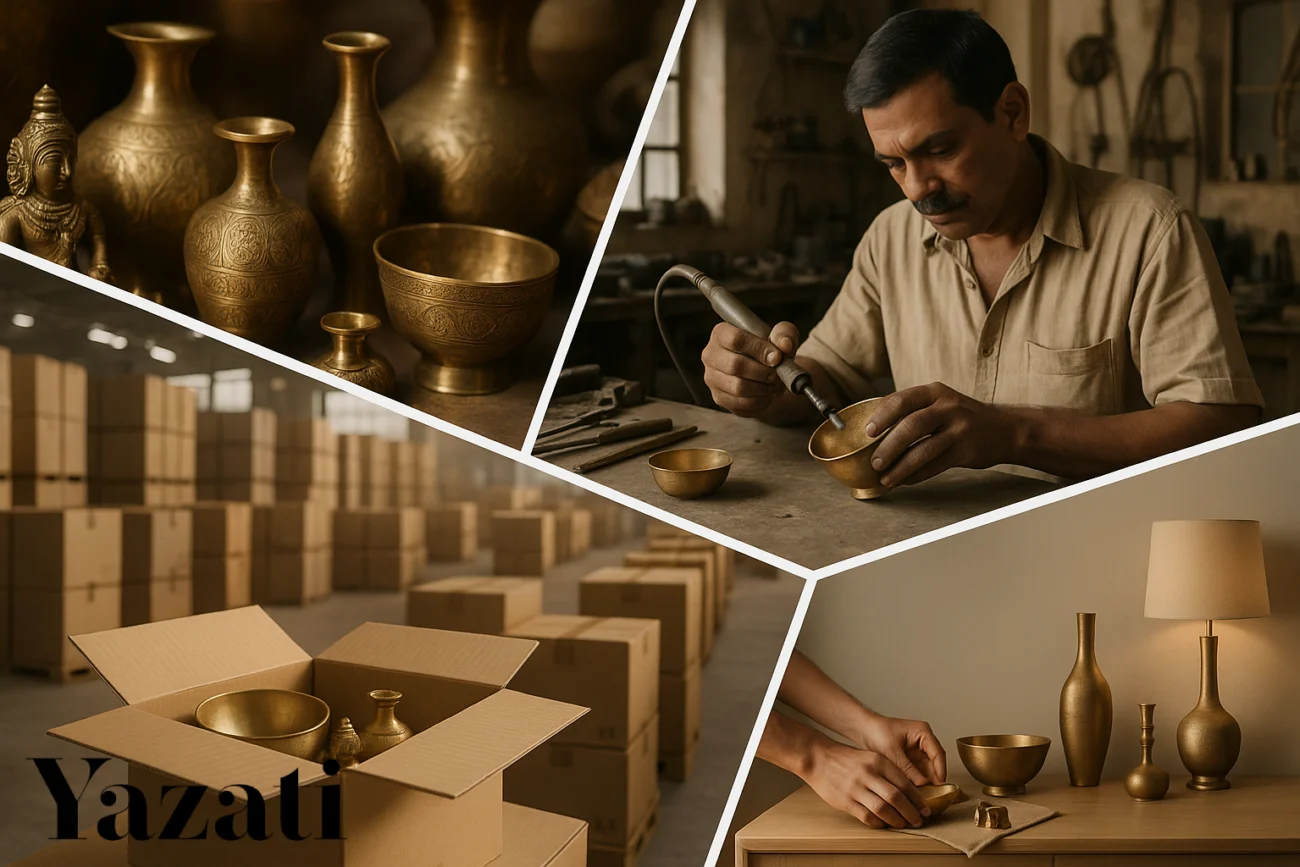
Introduction: The Golden Legacy of Indian Brass Handicrafts
India’s rich tradition of brass handicrafts is a shining example of timeless artistry meeting modern commerce. As we move into 2026, the demand for Brass Handicrafts from India is rising steadily in global markets, driven by growing appreciation for handmade, sustainable, and culturally rooted products.
From temple bells and diyas to ornate figurines and contemporary home décor, brass items crafted by Indian artisans continue to hold immense value. The global shift toward eco-conscious living and traditional artistry has created new export opportunities, positioning India as the world leader in brass handicraft exports.
Historical Overview of Brass Handicrafts in India
Evolution from Ancient Art to Modern Design
The art of brass-making in India dates back to over 5,000 years, tracing its roots to the Indus Valley Civilization. Archaeological evidence suggests that Indian craftsmen were pioneers in creating intricate metalwork for both functional and decorative purposes.
Over centuries, brass art evolved with regional styles—from the tribal motifs of Bastar to the regal engravings of Rajasthan. Today, these designs have seamlessly merged with modern aesthetics, giving rise to products that appeal to both traditional and contemporary markets.
Cultural Significance of Brass Handicrafts
Brass holds deep cultural symbolism in India. It’s often associated with purity, spirituality, and prosperity. Brass idols, lamps, and utensils are integral to Hindu rituals and daily life, reflecting not just artistic excellence but also spiritual values passed through generations.
Major Brass Handicraft Clusters in India
Moradabad: The Brass City of India
Moradabad in Uttar Pradesh, fondly known as the “Brass City of India,” accounts for nearly 70% of the country’s brass handicraft exports. The city houses thousands of small and medium enterprises specializing in casting, engraving, and polishing brass goods.
With improved export infrastructure and modern finishing units, Moradabad continues to dominate global supply chains for brass décor, lighting fixtures, and tableware.
Jaipur, Delhi, and Other Regional Hubs
Apart from Moradabad, Jaipur, Delhi, Aligarh, and Saharanpur have emerged as key centers for producing high-quality brass handicrafts. Jaipur’s artisans are known for enamel work and intricate inlay designs, while Delhi caters to the luxury export market with custom-crafted pieces.
Key Categories of Brass Handicrafts Exported from India
Decorative and Utility Brass Items
This segment includes products such as brass trays, lamps, flower vases, candle holders, and wall art. These items blend aesthetic appeal with utility and dominate exports to Western markets.
Religious and Spiritual Artifacts
Statues of deities, temple bells, and diyas continue to find global demand, especially in countries with large Indian diaspora populations. They symbolize authenticity and cultural connection.
Contemporary Designer Brass Products
Modern designers are experimenting with minimalism and fusion styles, leading to a surge in demand for custom-designed brass furniture, fixtures, and sculptures that cater to the luxury décor segment.
Global Demand for Brass Handicrafts
Top Export Destinations: USA, UK, Germany, and the Middle East
The United States remains India’s largest market for brass handicrafts, followed by the United Kingdom, Germany, and UAE. Demand is particularly strong for eco-friendly décor and sustainable gifts.
Emerging markets in Australia, Canada, and Japan are also becoming significant consumers as global appreciation for Indian craftsmanship grows.
Changing Consumer Preferences in 2026
In 2026, global buyers are prioritizing sustainability, authenticity, and artisanal craftsmanship over mass production. This shift favors Indian exporters who emphasize handcrafted quality and ethical sourcing.
Export Performance: Brass Handicrafts from India (2023–2026)
Statistical Analysis and Growth Forecasts
Between 2023 and 2026, India’s brass handicraft exports are projected to grow at a compound annual growth rate (CAGR) of 8.5%, according to industry reports from the Export Promotion Council for Handicrafts (EPCH).
The total export value is expected to cross USD 2.8 billion by 2026, with increasing participation from MSMEs and artisan clusters supported by digital trade platforms.
Contribution to India’s Handicraft Export Sector
Brass handicrafts contribute nearly 20% to India’s total handicraft exports, creating employment for over 200,000 artisans across the country. The sector not only boosts foreign exchange earnings but also preserves centuries-old heritage.
Government Support and Export Promotion Initiatives
Schemes by the Export Promotion Council for Handicrafts (EPCH)
EPCH actively promotes brass handicrafts through global trade fairs, buyer-seller meets, and quality certification programs. Its digital initiatives have helped exporters connect with international buyers directly.
Role of Make in India and One District One Product (ODOP)
Government schemes such as Make in India, Skill India, and ODOP have revitalized traditional brass clusters, enhancing production capacity and improving artisans’ access to modern tools and training.
Digital Transformation in the Brass Handicraft Industry
E-commerce and Online Marketplaces
The rise of platforms like Amazon Handmade, Etsy, and IndiaMART has given Indian artisans unprecedented global reach. Exporters now utilize social media marketing, digital catalogs, and virtual showrooms to attract international buyers.
The Rise of Virtual Trade Fairs and Global B2B Platforms
The pandemic accelerated the adoption of virtual trade fairs, allowing exporters to showcase products to buyers across continents without physical limitations. This digital pivot is expected to remain a key driver in 2026 and beyond.
Sustainability and Eco-Friendly Production Practices
The Shift Toward Recycled and Sustainable Brass
Sustainability has become a defining factor in global trade, and the brass handicraft industry in India is rapidly adapting. Many artisans and exporters are transitioning to recycled brass materials to minimize environmental impact while maintaining the same superior quality and shine that make Indian brass products world-famous.
Manufacturers are also investing in cleaner production methods, such as non-toxic polishing, energy-efficient furnaces, and water recycling systems. This not only helps meet the strict sustainability norms set by global importers but also aligns Indian brass exports with the UN Sustainable Development Goals (SDGs).
Ethical Craftsmanship and Community Impact
Beyond materials, ethical production is also in the spotlight. Artisans are now receiving fair wages, better working conditions, and access to design education through government and NGO partnerships.
Organizations like Crafts Council of India and Dastkari Haat Samiti have been instrumental in connecting rural artisans with international buyers, ensuring that traditional craftsmanship remains both profitable and socially responsible.
Challenges in the Export of Brass Handicrafts
Raw Material Costs and Supply Chain Disruptions
Fluctuations in the prices of copper and zinc — the two primary components of brass — continue to impact production costs. Global supply chain disruptions, particularly post-pandemic, have increased shipping and logistics costs, affecting small-scale exporters’ profit margins.
To counter these challenges, many exporters are adopting inventory optimization, local raw material sourcing, and partnerships with logistics companies offering trade finance solutions.
Competition from Other Asian Markets
Countries like China, Thailand, and Vietnam are intensifying competition with mass-produced brass décor items at lower prices. However, India holds a competitive advantage in handcrafted authenticity and design diversity, something machine-made replicas cannot replicate.
Indian exporters are thus repositioning themselves in premium markets where craftsmanship, sustainability, and heritage storytelling outweigh low-cost competition.
Emerging Export Trends for 2026
Customization, Personalization, and Modern Design Fusion
One of the most promising export trends for 2026 is the growing preference for custom-made brass products. International buyers are increasingly requesting designs tailored to local aesthetics — for example, Scandinavian-inspired minimalist décor or boho-chic brass wall art for Western homes.
Indian exporters are collaborating with global designers to create fusion designs that blend Indian craftsmanship with modern tastes, offering a perfect balance of tradition and innovation.
Niche Markets: Luxury, Vintage, and Spiritual Segments
Luxury décor brands are embracing handcrafted brass collections that emphasize heritage storytelling. Similarly, the vintage and spiritual segments continue to thrive as consumers seek meaningful, timeless products.
Handcrafted brass idols, meditation bowls, and antique replicas are in high demand, particularly in the USA and Europe, where cultural tourism and mindful living trends are shaping purchase behavior.
Strategies for Indian Exporters to Stay Competitive
Branding, Quality Assurance, and Certification
Exporters who build strong brand identities stand out in crowded global markets. Establishing a unique brand story — one that highlights artisan heritage, eco-friendly materials, and cultural authenticity — creates a deeper emotional connection with customers.
Obtaining international certifications such as ISO 9001, Fair Trade, and Eco-Cert also enhances credibility and opens doors to premium retail partnerships. Additionally, consistent quality assurance and adherence to delivery timelines foster long-term buyer relationships.
Leveraging Digital Marketing and Global Partnerships
Digital marketing has become a game-changer for Indian handicraft exporters. Through social media storytelling, influencer collaborations, and virtual catalogs, artisans are reaching international buyers directly.
Platforms like Alibaba, Global Sources, and TradeIndia enable small businesses to connect with wholesale distributors across continents. In 2026, exporters who master SEO-driven online branding and cross-border e-commerce logistics will lead the market.
Future Outlook: The Road Ahead for Brass Handicrafts from India
As we move into 2026, the global brass handicraft industry is poised for a renaissance. India, with its unmatched artisan base and growing export infrastructure, stands at the forefront of this resurgence.
Trends such as eco-conscious luxury, digital craftsmanship, and cross-cultural design innovation are redefining how the world perceives Indian brass art.
With ongoing support from government schemes, improved logistics, and digital transformation, the export potential of brass handicrafts from India is brighter than ever. The country is not just selling décor—it’s exporting its cultural heritage, craftsmanship, and sustainable artistry to the world.
FAQs About Brass Handicrafts from India
1. Why are Brass Handicrafts from India popular globally?
Indian brass handicrafts are admired for their intricate detailing, timeless beauty, and cultural significance. Each piece tells a story rooted in centuries of tradition, making them highly valued in global décor markets.
2. Which countries import the most brass handicrafts from India?
The USA, UK, Germany, UAE, and Australia are the leading importers, with strong demand for handcrafted décor and religious artifacts.
3. What are the latest export trends for 2026?
Customization, sustainable production, and the rise of digital export platforms are the top trends driving growth in 2026. Buyers now prefer eco-friendly, personalized, and design-fusion brass products.
4. How is the Indian government supporting brass handicraft exports?
Through initiatives like EPCH, ODOP, and Make in India, the government provides financial aid, marketing support, and infrastructure development to artisans and exporters.
5. Are brass handicrafts environmentally friendly?
Yes. Many manufacturers now use recycled brass, eco-safe finishes, and low-energy production techniques to ensure sustainability without compromising quality.
6. How can exporters increase global visibility?
By building an online presence through e-commerce, participating in virtual trade shows, and obtaining certifications that emphasize ethical and sustainable practices.
Conclusion: Why 2026 is the Year of Brass Revival
The story of Brass Handicrafts from India is a story of resilience, innovation, and timeless art. As global consumers seek authenticity and sustainability, Indian artisans stand ready to deliver products that blend history with modernity.
With digital platforms breaking geographic barriers and a strong policy framework backing local producers, 2026 is set to be a landmark year for Indian brass exports. The industry’s golden shine is not just being preserved—it’s being polished for the world stage.
✨ Discover Global Sourcing Excellence with Netyex ✨
Netyex is your trusted B2B sourcing partner, connecting international buyers with India’s finest manufacturers and curated product lines—from handicrafts and home décor to kitchenware, textiles, hospitality essentials, and more. With verified suppliers and end-to-end support, we make global procurement seamless, reliable, and efficient.
👉 Elevate your sourcing experience—explore Netyex today.
📦 Bulk orders & customisation | 🌍 Worldwide delivery | 🤝 Trusted by global buyers
Visit Netyex to source premium Indian products with confidence.