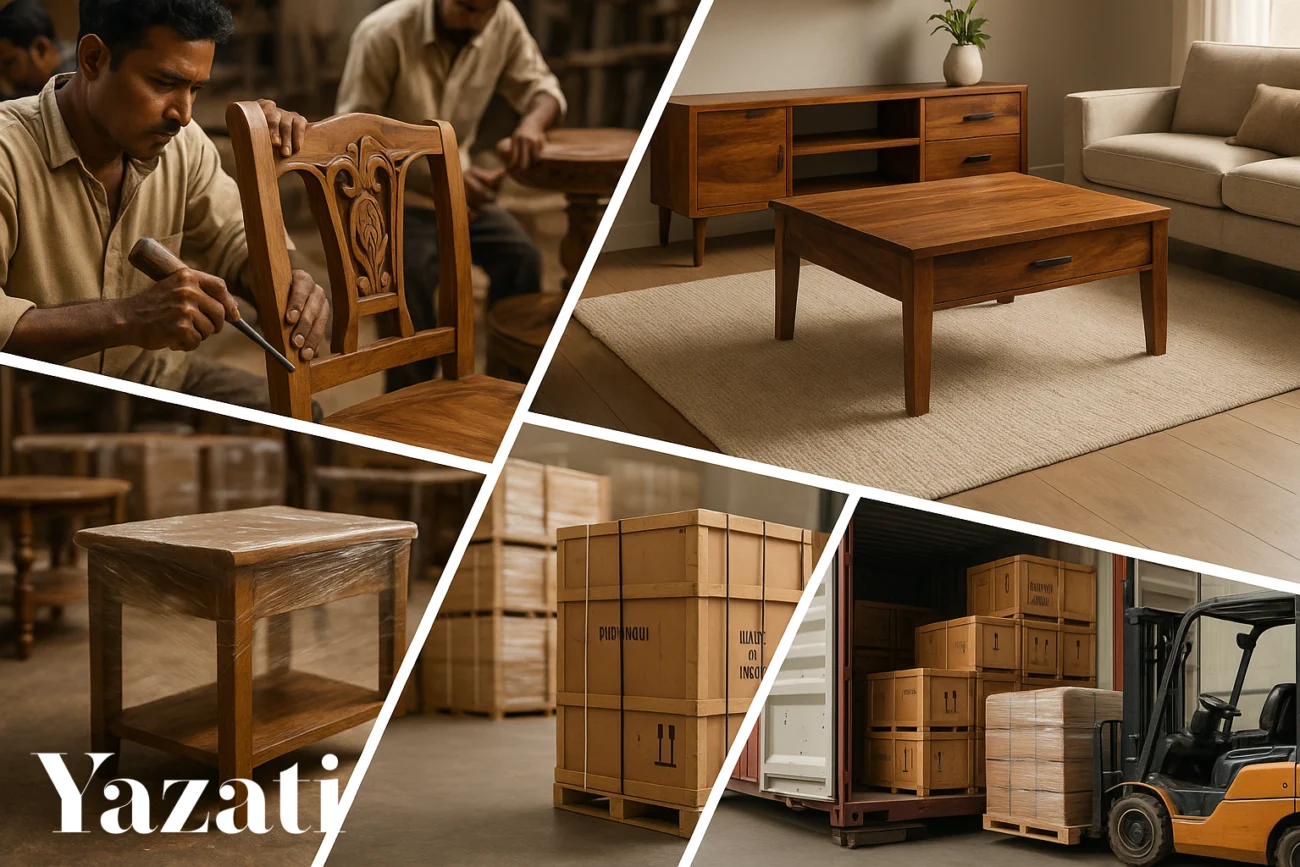
Introduction to India’s Handcrafted Furniture Export Market
India has long been celebrated for its artistry and craftsmanship, and nowhere is this more evident than in its handcrafted furniture industry. From intricately carved wooden masterpieces to sleek industrial metal designs, Indian artisans have captivated global buyers for centuries. The country’s furniture export market continues to flourish, driven by its unique blend of tradition, quality, and sustainability.
According to the Export Promotion Council for Handicrafts (EPCH), India exports handcrafted furniture worth over USD 2 billion annually, with major markets in the USA, UK, Germany, and the Middle East. As global consumers increasingly favor eco-friendly and ethically made products, the demand for Indian handcrafted furniture is on the rise.
The Global Demand for Indian Handcrafted Furniture
The global furniture industry is evolving, with a growing emphasis on sustainability, uniqueness, and cultural authenticity. Buyers from Europe and North America are seeking handmade, one-of-a-kind items that tell a story—values perfectly aligned with Indian craftsmanship.
Indian furniture is known for:
- Intricate carvings and designs
- Use of premium woods like Sheesham, Mango, and Acacia
- Eco-friendly production methods
- Traditional joinery and hand-polishing techniques
These attributes make Indian handcrafted furniture a preferred choice for luxury boutiques, hotels, and online retailers across the world.
Understanding the Handcrafted Furniture Industry in India
Key Furniture Manufacturing Hubs in India
India’s handcrafted furniture manufacturing hubs are spread across several culturally rich states:
- Jodhpur, Rajasthan – Famous for solid wood and antique reproduction furniture
- Saharanpur, Uttar Pradesh – Known for intricate carving and brass inlay work
- Karnataka and Kerala – Specialists in rosewood and teak furniture
- Gujarat – Focused on reclaimed wood and artistic furniture
Popular Types of Handcrafted Furniture for Export
Wooden Furniture
Crafted from durable woods like mango, teak, and sheesham, these pieces reflect both functionality and aesthetic appeal.
Metal and Industrial Furniture
Blending wood with iron and steel, this modern yet rustic style is highly popular in Western markets.
Cane, Bamboo, and Rattan Furniture
Eco-friendly and lightweight, perfect for sustainable living enthusiasts.
Antique and Reclaimed Wood Furniture
Made from recycled materials, these items are cherished for their vintage appeal and environmental benefits.
Steps to Start Exporting Handcrafted Furniture from India
Step 1: Market Research and Product Selection
Identify which furniture styles are trending globally. Analyze buyer preferences using platforms like Alibaba, IndiaMART, and TradeIndia.
Step 2: Registering Your Export Business
Obtain an Import Export Code (IEC) from DGFT (Directorate General of Foreign Trade). Register your business as an exporter under the EPCH.
Step 3: Finding Reliable Artisans or Manufacturers
Partner with artisans or factories in major furniture clusters. Quality and consistency are critical for repeat business.
Step 4: Compliance and Documentation Requirements
Ensure compliance with export regulations, wood certifications (FSC), and quality standards. Maintain all export documents (explained in the next section).
Step 5: Choosing the Right Shipping and Logistics Partner
Work with experienced freight forwarders specializing in furniture shipping to manage customs, warehousing, and delivery.
Export Documents Required for Handcrafted Furniture
Key Export Documents Explained
| Document | Purpose |
| IEC Code | Unique identification number for all exporters |
| Commercial Invoice & Packing List | Details the buyer, seller, and product information |
| Bill of Lading / Airway Bill | Proof of shipment and ownership |
| Certificate of Origin | Certifies the product’s country of origin |
| Quality Certificates | Ensures products meet international standards |
International Trade Regulations and Compliance
Export-Import Policies for Furniture
Exporting handcrafted furniture from India requires adherence to both Indian and international trade regulations. The Directorate General of Foreign Trade (DGFT) governs all export policies, while each importing nation has its own customs and safety requirements. Exporters must ensure compliance with:
- HS Codes (Harmonized System Codes) for furniture classification
- Anti-dumping and tariff regulations
- Import quotas and local environmental standards in target markets
In countries like the USA and the EU, certain woods (like rosewood) are regulated under CITES (Convention on International Trade in Endangered Species). Hence, obtaining the right export clearance and documentation is crucial.
Environmental and Sustainable Wood Certifications
Modern consumers demand eco-conscious products, and certifications help assure buyers of authenticity. Exporters should aim for:
- FSC (Forest Stewardship Council) certification for sustainable wood sourcing
- EUTR (European Union Timber Regulation) compliance
- Vriksh Certification – India’s standard for legality and traceability in timber products
Customs and Tariff Considerations
Custom duties vary depending on the country and the type of furniture being imported. For example, wooden furniture exported to the USA may attract a 0–5% tariff, while certain European nations may have VAT or customs duty on specific product categories. Hiring a customs clearing agent can simplify this process and avoid delays.
Pricing, Costing, and Profit Margins in Furniture Export
How to Calculate Export Pricing
Determining export pricing requires balancing production costs with market competitiveness. The FOB (Free on Board) price is commonly used in export contracts and includes:
- Raw materials and manufacturing costs
- Labor and overheads
- Packaging and inland transport
- Profit margin
A typical exporter markup can range between 25%–40%, depending on the buyer’s market and product type.
Managing Profit Margins and Hidden Costs
Hidden costs such as freight surcharges, insurance, port handling fees, and export documentation charges can reduce profits if not properly estimated. Using a transparent costing sheet ensures you maintain a sustainable margin.
Payment Terms and Risk Management
Furniture exports often involve large shipments, making secure payment methods vital. The safest payment options include:
- Letter of Credit (L/C)
- Advance payment (T/T)
- Document against Payment (D/P)
Additionally, exporters can use export credit insurance from organizations like the Export Credit Guarantee Corporation (ECGC) to minimize default risks.
How to Find International Buyers for Indian Furniture
B2B Platforms and Trade Portals
Leverage online B2B platforms that connect exporters to verified global buyers:
- Alibaba
- IndiaMART
- TradeIndia
- ExportersIndia
These platforms allow businesses to showcase product catalogs, pricing, and certifications while receiving inquiries from international buyers.
Participating in Global Trade Fairs
Trade fairs offer an excellent opportunity to network directly with bulk buyers, retailers, and wholesalers. Prominent exhibitions include:
- IHGF Delhi Fair (India)
- Maison & Objet (France)
- Ambiente (Germany)
- Dubai International Furniture Show
Leveraging Digital Marketing and Social Media
Digital presence plays a pivotal role in establishing brand credibility. Use:
- Instagram and Pinterest for visual storytelling
- LinkedIn for B2B networking
- Your own website with SEO-optimized product pages
Regularly publish blogs, case studies, and client testimonials to attract potential leads organically.
Shipping, Packaging, and Quality Control Tips
Ideal Packaging Methods for Furniture Export
Since handcrafted furniture is often bulky and fragile, using high-quality packaging materials is non-negotiable. Recommended methods include:
- Bubble wrapping for delicate carvings and glass components
- Foam and edge protectors for wooden corners
- Corrugated cardboard or plywood crates for long-distance shipping
- Desiccant packets to prevent moisture damage
Always label boxes clearly with “Fragile,” “Handle with Care,” and “This Side Up” instructions.
Quality Inspection and Insurance Before Shipment
Before dispatch, conduct a third-party quality inspection to verify product dimensions, finish, and packaging compliance. Additionally, purchasing marine insurance covers losses from damage, theft, or natural disasters during transit.
Common Challenges in Exporting Furniture and How to Overcome Them
Managing Supply Chain and Production Delays
Handcrafted furniture production can face delays due to material shortages or artisan constraints. To mitigate risks:
- Maintain backup suppliers
- Use inventory management software
- Keep realistic lead times in contracts
Handling Customs Issues and Delays
Incomplete paperwork or incorrect HS codes can cause customs clearance delays. Always work with experienced customs brokers to streamline processes.
Ensuring Consistent Product Quality
Since handcrafted items can vary slightly, establishing standard quality benchmarks and regular inspections ensures brand consistency.
Best Countries to Export Handcrafted Furniture from India
USA
The United States is India’s largest furniture export market, valuing authentic and sustainable wooden furniture. Demand is especially strong in urban and luxury segments.
UK and Europe
European buyers appreciate India’s artisanal craftsmanship, particularly in reclaimed and eco-friendly furniture. Compliance with EUTR and FSC standards is essential.
UAE and Middle East
The Middle East markets, including Dubai, prefer luxurious and ornate designs—perfect for Indian traditional craftsmanship.
Australia and Canada
Both countries import large volumes of minimalist, eco-conscious furniture, often focusing on durability and affordability.
Future Trends in Handcrafted Furniture Export
Rise of Eco-Friendly and Sustainable Furniture
Buyers are increasingly prioritizing eco-friendly materials, non-toxic finishes, and sustainable wood sourcing.
Growth of Online B2B Marketplaces
Digital transformation is revolutionizing the export business. Many exporters now use e-commerce B2B models to directly reach buyers without middlemen.
Increasing Demand for Custom and Bespoke Pieces
Customization is a growing trend, with international buyers requesting unique, made-to-order furniture pieces to match interior design themes.
FAQs About Exporting Handcrafted Furniture from India
1. What licenses are required to export furniture from India?
You’ll need an IEC (Import Export Code) and registration with the Export Promotion Council for Handicrafts (EPCH).
2. Is there a minimum order quantity (MOQ) for exporting furniture?
It varies by manufacturer, but typically 10–50 units per SKU are required for export orders.
3. Which is the best port for furniture export in India?
Major ports include Mundra (Gujarat), Nhava Sheva (Mumbai), and Chennai Port (Tamil Nadu).
4. How can I find international buyers for handcrafted furniture?
Use B2B platforms, attend international trade fairs, and engage in social media marketing.
5. Are there any government incentives for furniture exporters?
Yes. The Government of India offers incentives under the RoDTEP scheme (Remission of Duties and Taxes on Export Products).
6. How can I ensure the safe delivery of furniture?
Use professional packaging, insurance, and reliable logistics partners with furniture shipping experience.
Conclusion: Building a Profitable Furniture Export Business
Exporting handcrafted furniture from India offers immense potential for global success. With the right mix of market research, product quality, documentation, and marketing, exporters can build sustainable relationships with buyers across continents. As demand for sustainable and artistic furniture grows, India’s timeless craftsmanship positions it as a global leader in the industry.
The world is waiting for your creations—export them with confidence, quality, and passion. 🌍✨
✨ Discover Global Sourcing Excellence with Netyex ✨
Netyex is your trusted B2B sourcing partner, connecting international buyers with India’s finest manufacturers and curated product lines—from handicrafts and home décor to kitchenware, textiles, hospitality essentials, and more. With verified suppliers and end-to-end support, we make global procurement seamless, reliable, and efficient.
👉 Elevate your sourcing experience—explore Netyex today.
📦 Bulk orders & customisation | 🌍 Worldwide delivery | 🤝 Trusted by global buyers
Visit Netyex to source premium Indian products with confidence.