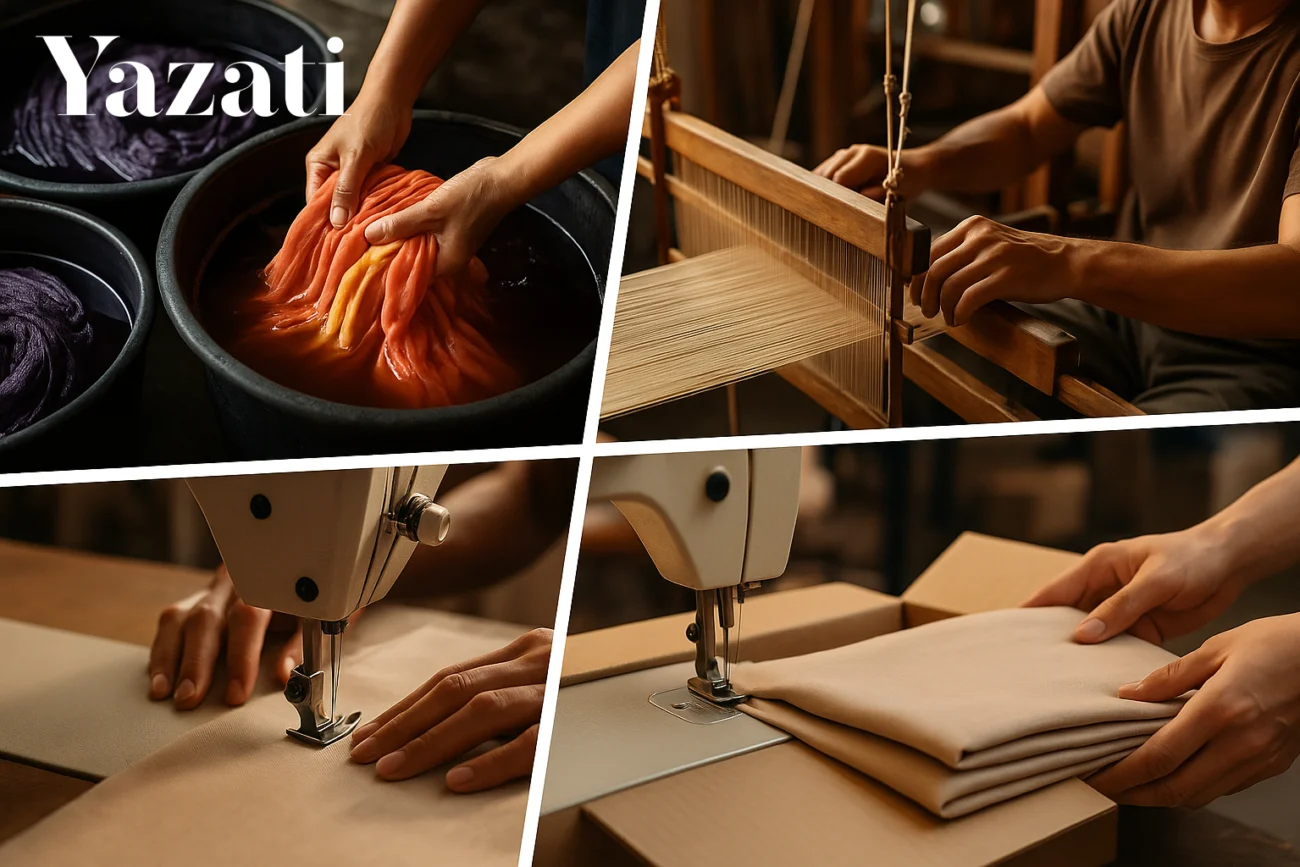
Introduction: The Art and Soul Behind Yazati Textiles
Textiles are more than woven threads — they are stories, traditions, and identities intricately crafted through time. Yazati Textiles, known for their unmatched quality and craftsmanship, represent the perfect blend of heritage and modernity. Understanding “From Dyeing to Dispatch: The Lifecycle of a Yazati Textile” allows us to appreciate the artistry behind every yard of fabric that graces homes and runways worldwide.
The lifecycle of a Yazati textile begins long before it reaches the market. Each phase — from raw fiber selection to global dispatch — reflects decades of expertise, cultural values, and innovation. In this journey, every color, weave, and thread symbolizes a deep respect for craft and nature.
The Legacy of Yazati Textiles: Tradition Meets Innovation
Rooted in Heritage: The Origins of Yazati Weaving
Yazati textiles draw their essence from centuries-old weaving traditions. Originating from regions known for intricate handlooms, these fabrics embody generations of wisdom passed through artisan families. Every motif tells a story — inspired by local flora, fauna, and folklore — making each textile a living piece of art.
Modern-Day Yazati: Adapting to Contemporary Markets
While rooted in heritage, Yazati’s craftsmanship isn’t confined to tradition. The brand embraces modern dyeing technology, digital design tools, and eco-conscious production methods to meet global standards. This harmony between legacy and innovation ensures Yazati textiles retain their authenticity while resonating with today’s fashion-forward audience.
Stage 1: Selecting the Perfect Yarn
The journey begins with fiber selection, where the foundation of quality is laid. Yazati’s experts meticulously choose the finest yarns, balancing strength, texture, and sustainability.
Natural vs. Synthetic Fibers
Yazati primarily works with natural fibers like cotton, silk, and linen for their breathable and luxurious feel. However, certain collections incorporate synthetic blends to enhance durability and versatility. This strategic mix allows Yazati to cater to both traditional and contemporary markets.
Sourcing Ethically and Sustainably
Sustainability begins at the source. Yazati partners with ethical suppliers, ensuring fair trade practices and environmentally responsible farming. The company’s commitment to sustainable sourcing reinforces its vision of creating textiles that are as kind to people as they are to the planet.
Stage 2: The Art of Dyeing – Coloring the Soul of Fabric
Dyeing transforms plain yarns into vibrant masterpieces. For Yazati, color isn’t just aesthetic — it’s emotional and symbolic.
Traditional Hand-Dyeing Techniques
In heritage collections, artisans employ hand-dyeing methods passed down through generations. Using natural dyes from plants, minerals, and flowers, these craftsmen achieve shades that are rich, lasting, and unique. The process involves patience, skill, and an intuitive understanding of how color interacts with fiber.
Modern Dye Technology and Eco-Friendly Practices
Yazati’s contemporary lines use advanced dyeing machinery that minimizes water waste and chemical discharge. The brand adopts low-impact dyes and closed-loop systems to ensure environmental safety. By merging artistry with innovation, Yazati achieves both vibrancy and responsibility in every hue.
Stage 3: Weaving – Where Patterns Come Alive
Weaving is where dyed yarns interlace into mesmerizing fabrics. Yazati combines traditional craftsmanship with modern precision to create distinct textures and patterns.
Handloom vs. Powerloom Weaving
Handloom weaving offers a personal touch — every fabric tells a slightly different story. In contrast, powerlooms provide consistency and efficiency for large-scale production. Yazati employs both methods strategically, ensuring that each product aligns with its intended aesthetic and purpose.
Innovative Pattern Design and Loom Engineering
Yazati’s design team collaborates with engineers to innovate loom settings that produce intricate motifs and textures. This fusion of art and science ensures each weave meets aesthetic, structural, and quality benchmarks.
Stage 4: Finishing and Quality Control
Once the weaving process is complete, the newly woven fabric undergoes a series of finishing treatments that refine its texture, durability, and overall appearance. In Yazati’s production units, finishing is regarded as the step where craftsmanship meets perfection.
Washing, Drying, and Softening
Every textile is washed meticulously to remove excess dye and impurities while preserving colorfastness. The drying process is carefully controlled to prevent fiber damage or shrinkage. Next, the fabric is treated with softening agents — many of which are plant-based — to ensure a smooth, luxurious feel against the skin.
For certain product lines, Yazati applies specialized finishes like anti-wrinkle, water-repellent, or UV-protection coatings, depending on the end use. Each enhancement is tested to ensure it complements the fabric’s natural qualities rather than compromising them.
Rigorous Quality Testing Standards
No textile leaves the Yazati facility without passing through multiple quality control stages. Every batch is checked for color uniformity, tensile strength, texture, and stitch accuracy. Yazati’s laboratories conduct shrinkage, pilling, and tear tests, ensuring each product aligns with international textile standards such as ISO and OEKO-TEX®.
Human expertise complements the technology here — seasoned inspectors rely on both instruments and intuition to identify even the most subtle inconsistencies. This final seal of quality is what gives Yazati its global reputation for excellence.
Stage 5: Dispatch and Global Reach
After weeks of artistry, engineering, and care, Yazati textiles are finally ready to meet the world. But before they leave the facility, another vital phase takes place — packaging and logistics.
Packaging with Purpose
Yazati’s packaging philosophy mirrors its production ethos: eco-conscious and customer-centric. The company uses biodegradable wrapping materials, recyclable cartons, and minimal ink printing to reduce its carbon footprint. Every package bears a small note about the artisan who contributed to its making — a personal touch that customers deeply appreciate.
Global Logistics and Export Network
Yazati textiles travel from local production hubs to showrooms and clients across continents. Through strategic partnerships with sustainable logistics providers, the company ensures timely deliveries while minimizing fuel emissions. Its digitally integrated inventory system tracks every shipment in real time, ensuring full transparency from dispatch to doorstep.
This seamless integration of technology and logistics ensures that Yazati textiles, once handcrafted in small studios, now reach discerning clients in fashion capitals such as Paris, Milan, and New York — all while maintaining their artisanal authenticity.
Sustainability: The Thread That Binds It All
Sustainability is not an afterthought at Yazati — it’s woven into the very DNA of its operations. Every phase of the textile lifecycle is guided by environmental mindfulness and ethical responsibility.
Yazati’s sustainability initiatives include:
- 🌿 Water Recycling Systems: 80% of water used in dyeing and washing is treated and reused.
- ☀️ Renewable Energy Integration: Solar panels power a significant portion of Yazati’s weaving units.
- ♻️ Zero-Waste Policy: Fabric scraps are repurposed into accessories or art installations.
- 👩🌾 Fair Trade Collaborations: Partnerships with rural cooperatives ensure fair wages and gender-inclusive employment.
- 🌏 Carbon Neutral Goals: Yazati is on track to become fully carbon-neutral by 2030.
Through these efforts, Yazati demonstrates that luxury and responsibility can coexist beautifully, setting an inspiring benchmark for the global textile industry.
Challenges and Innovations in the Textile Lifecycle
The textile sector faces continuous challenges — from raw material scarcity to environmental regulations and changing consumer preferences. Yazati meets these head-on through relentless innovation.
- Digital Weaving Technologies: AI-driven pattern generators reduce material waste.
- Smart Textiles: Integration of microfibers that respond to temperature and movement.
- Circular Economy Practices: Take-back programs allow customers to return old textiles for recycling or repurposing.
- Data-Driven Demand Forecasting: Advanced analytics help reduce overproduction, ensuring sustainable inventory levels.
These strategies not only solve operational hurdles but also strengthen Yazati’s role as a pioneer in responsible textile innovation.
The Human Touch: Stories Behind the Fabric
Behind every Yazati textile lies a human story — one of passion, patience, and artistry. The artisans who dye, weave, and finish these fabrics are the true custodians of Yazati’s legacy.
Many of them belong to families that have practiced weaving for generations. Yazati ensures that their traditions are preserved by offering skill development workshops, healthcare programs, and education initiatives for artisans’ children.
Through fair wages and recognition, Yazati empowers these communities to thrive while continuing their ancestral craft. As a result, each textile carries not just beauty but also human dignity and cultural pride.
Conclusion: A Journey of Craftsmanship and Commitment
The lifecycle of a Yazati textile — from dyeing to dispatch — is a symphony of art, science, and ethics. Each stage reflects a deep respect for tradition, innovation, and sustainability.
From the moment raw fibers are chosen to the instant a finished fabric reaches a global showroom, Yazati maintains an unwavering commitment to quality, transparency, and ecological responsibility. In an era dominated by fast fashion, Yazati stands as a shining example of what it means to create with conscience — where every thread tells a story of care, creativity, and connection.
FAQs about the Yazati Textile Lifecycle
1. What makes Yazati textiles unique compared to other fabric brands?
Yazati textiles combine traditional craftsmanship with modern technology and eco-conscious practices, ensuring a product that’s both luxurious and responsible.
2. How does Yazati ensure sustainable dyeing?
Yazati uses low-impact dyes and closed-loop systems that recycle water and minimize chemical waste, maintaining color brilliance without harming the environment.
3. Are Yazati textiles handmade or machine-produced?
Both — Yazati blends handloom craftsmanship for artisanal collections and powerloom precision for large-scale production, ensuring quality across all lines.
4. Where are Yazati’s textiles manufactured?
Production takes place in regional weaving hubs where local artisans work alongside engineers and designers in ethically managed facilities.
5. How does Yazati support local artisans?
Yazati invests in community programs, skill training, and fair wages to empower artisans, ensuring cultural traditions continue to flourish sustainably.
6. Can Yazati textiles be recycled or repurposed?
Yes! Yazati promotes circular economy initiatives that allow customers to return or repurpose older textiles, reinforcing the brand’s zero-waste mission.
✨ Discover Global Sourcing Excellence with Netyex ✨
Netyex is your trusted B2B sourcing partner, connecting international buyers with India’s finest manufacturers and curated product lines—from handicrafts and home décor to kitchenware, textiles, hospitality essentials, and more. With verified suppliers and end-to-end support, we make global procurement seamless, reliable, and efficient.
👉 Elevate your sourcing experience—explore Netyex today.
📦 Bulk orders & customisation | 🌍 Worldwide delivery | 🤝 Trusted by global buyers
Visit Netyex to source premium Indian products with confidence.