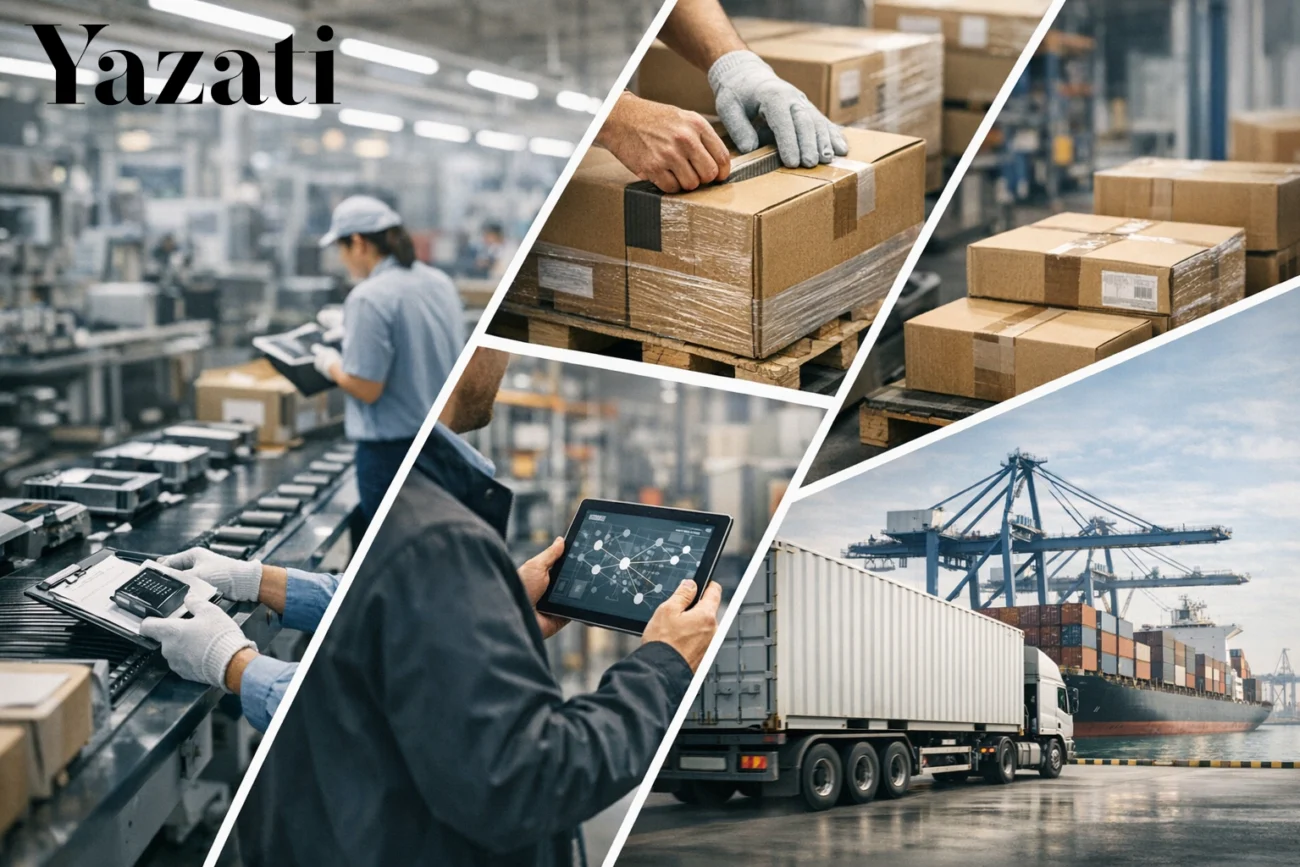
From Factory to Port: The Efficiency Behind Yazati’s Supply Chain
Moving goods from a factory floor to a port terminal may appear straightforward, but in reality, it is one of the most complex stages of international trade. Delays, miscommunication, and inefficiencies at this early stage often ripple through the entire export journey. That is why understanding From Factory to Port: The Efficiency Behind Yazati’s Supply Chain offers valuable insight into how disciplined execution creates smoother global trade.
Yazati has designed its supply chain operations to ensure that goods leave factories on time, arrive at ports without disruption, and are ready for international shipment without unnecessary cost or delay. This efficiency is not accidental—it is the result of structured planning, coordination, and continuous control.
Introduction: Why Factory-to-Port Efficiency Matters
The Hidden Complexity of Export Supply Chains
The journey from factory to port involves multiple moving parts: production schedules, packaging, inland transportation, documentation, warehousing, and port coordination. Each step depends on the previous one being completed accurately and on time. A single breakdown—such as late packaging or missing paperwork—can delay an entire shipment.
Efficiency as a Competitive Advantage
In global trade, speed and reliability matter. Buyers expect predictable delivery timelines, and shipping schedules are unforgiving. Efficient factory-to-port operations reduce lead times, lower costs, and increase confidence among international buyers.
Overview of Yazati’s Integrated Supply Chain Model
End-to-End Visibility and Control
Yazati treats the supply chain as a continuous flow rather than isolated tasks. From the moment production is confirmed, each stage is planned and tracked to ensure alignment with export schedules. This visibility allows potential issues to be identified early, before they become costly problems.
Coordination Between Stakeholders
Factories, transport providers, warehouses, and port operators all play a role. Yazati coordinates these stakeholders through clear timelines and responsibilities, reducing confusion and duplication of effort.
Factory-Level Planning and Readiness
Production Alignment With Export Schedules
Efficiency begins at the factory. Yazati works closely with manufacturers to align production completion dates with shipping cutoffs. This prevents finished goods from sitting idle or rushing at the last minute.
Production planning also considers buffer time for inspections, packaging, and documentation, ensuring that timelines remain realistic.
Quality Checks Before Dispatch
Before goods leave the factory, quality checks confirm that products meet specifications and are ready for transport. Catching issues at this stage avoids costly delays and rework later in the supply chain.
Packaging and Unitization at Origin
Export-Ready Packaging Standards
Packaging is designed with the entire journey in mind. Goods must withstand inland transport, port handling, and international shipping. Yazati ensures that packaging meets export standards, reducing the risk of damage or rejection.
Load Optimization From the Start
Efficient supply chains think ahead. Packaging dimensions and unitization are planned to optimize container space later. This reduces repacking, saves time, and lowers freight costs.
Inland Transportation Management
Route Planning and Mode Selection
Choosing the right transport mode and route is critical. Yazati evaluates distance, infrastructure, traffic patterns, and timing to select the most efficient inland transport options from factory to port.
Managing Transit Time and Costs
By planning routes in advance and avoiding unnecessary detours or delays, Yazati keeps inland transit predictable. This reliability is essential for meeting port cutoffs and vessel schedules.
Warehouse and Consolidation Efficiency
Consolidation Strategies for Bulk and Mixed Loads
When shipments from multiple factories or suppliers are involved, consolidation becomes essential. Yazati uses structured consolidation plans to combine loads efficiently, reducing the number of trips and handling steps.
Reducing Handling and Idle Time
Each time goods are handled, there is a risk of delay or damage. Efficient warehouse processes minimize handling and keep goods moving toward the port without unnecessary stops.
Documentation and Compliance Coordination
Synchronizing Physical and Paper Flows
Goods should never arrive at the port without complete and accurate documentation. Yazati ensures that paperwork progresses in parallel with physical movement, not after it.
Preventing Delays Before Port Entry
Incomplete documents can prevent containers from entering the port. Early coordination reduces the risk of last-minute corrections that disrupt schedules.
Port Coordination and Pre-Gate Planning
Scheduling and Slot Management
Ports operate on tight schedules. Yazati plans deliveries to align with port slots and cutoffs, preventing congestion-related delays.
Minimizing Dwell Time at Ports
Efficient factory-to-port flow ensures that cargo arrives ready for loading, reducing the time containers spend waiting at terminals.
How Yazati Ensures Speed Without Compromising Quality
Process Discipline and Standard Operating Procedures
Efficiency does not mean rushing. Yazati relies on standardized processes that balance speed with control. Clear procedures reduce errors and maintain consistency.
Continuous Monitoring and Adjustment
Supply chains are dynamic. Yazati monitors progress at each stage and adjusts plans when conditions change, maintaining momentum without sacrificing quality.
Cost Control Through Supply Chain Efficiency
Reducing Hidden and Avoidable Costs
Delays, rehandling, and last-minute changes all increase costs. Efficient factory-to-port operations eliminate many of these hidden expenses.
Predictable Cost Structures
When processes are stable and predictable, costs become easier to forecast. This helps exporters price products accurately and protect margins.
Risk Management Across the Factory-to-Port Journey
Handling Disruptions and Delays
Unexpected events such as traffic disruptions or production delays can occur. Yazati’s planning includes contingencies to absorb shocks without derailing shipments.
Building Resilience Into Operations
Resilient supply chains recover quickly. Redundancy in planning and clear escalation paths help maintain flow even under pressure.
Benefits for Exporters Working With Yazati
Faster Turnaround and Reliability
Efficient factory-to-port operations reduce lead times and improve schedule reliability, helping exporters meet buyer expectations.
Stronger Buyer Confidence
When shipments consistently leave on time and arrive at ports as planned, buyers gain confidence in the exporter’s reliability and professionalism.
Common Bottlenecks in Factory-to-Port Logistics
Poor Coordination and Last-Minute Changes
Unplanned changes are a major cause of inefficiency. Yazati reduces these through early planning and clear communication.
Documentation and Scheduling Gaps
Misaligned paperwork and transport schedules often cause delays. Integrated planning prevents these gaps.
FAQs on Factory-to-Port Supply Chain Efficiency
1. Why is factory-to-port efficiency so important?
Because delays at this stage affect the entire export timeline.
2. What causes most factory-to-port delays?
Poor coordination, late documentation, and last-minute production changes.
3. How does Yazati reduce idle time?
By aligning production, transport, and port schedules in advance.
4. Does efficiency reduce costs?
Yes. Fewer delays and handling steps lower overall logistics costs.
5. Can efficiency improve buyer relationships?
Absolutely. Reliable timelines build trust and repeat business.
6. Is factory-to-port efficiency only about speed?
No. It is about controlled, predictable, and high-quality movement of goods.
Conclusion: Why Yazati’s Factory-to-Port Model Works
From Factory to Port: The Efficiency Behind Yazati’s Supply Chain highlights how disciplined planning and coordination transform a complex process into a reliable system. By integrating production, packaging, transport, documentation, and port operations, Yazati eliminates friction and uncertainty at one of the most critical stages of exporting.
In international trade, success depends on what happens long before goods reach a vessel. Yazati’s factory-to-port efficiency ensures that exports start their journey on solid ground—on time, compliant, and ready for the global market.
✨ Discover Global Sourcing Excellence with Netyex ✨
Netyex is your trusted B2B sourcing partner, connecting international buyers with India’s finest manufacturers and curated product lines—from handicrafts and home décor to kitchenware, textiles, hospitality essentials, and more. With verified suppliers and end-to-end support, we make global procurement seamless, reliable, and efficient.
👉 Elevate your sourcing experience—explore Netyex today.
📦 Bulk orders & customisation | 🌍 Worldwide delivery | 🤝 Trusted by global buyers
Visit Netyex to source premium Indian products with confidence.