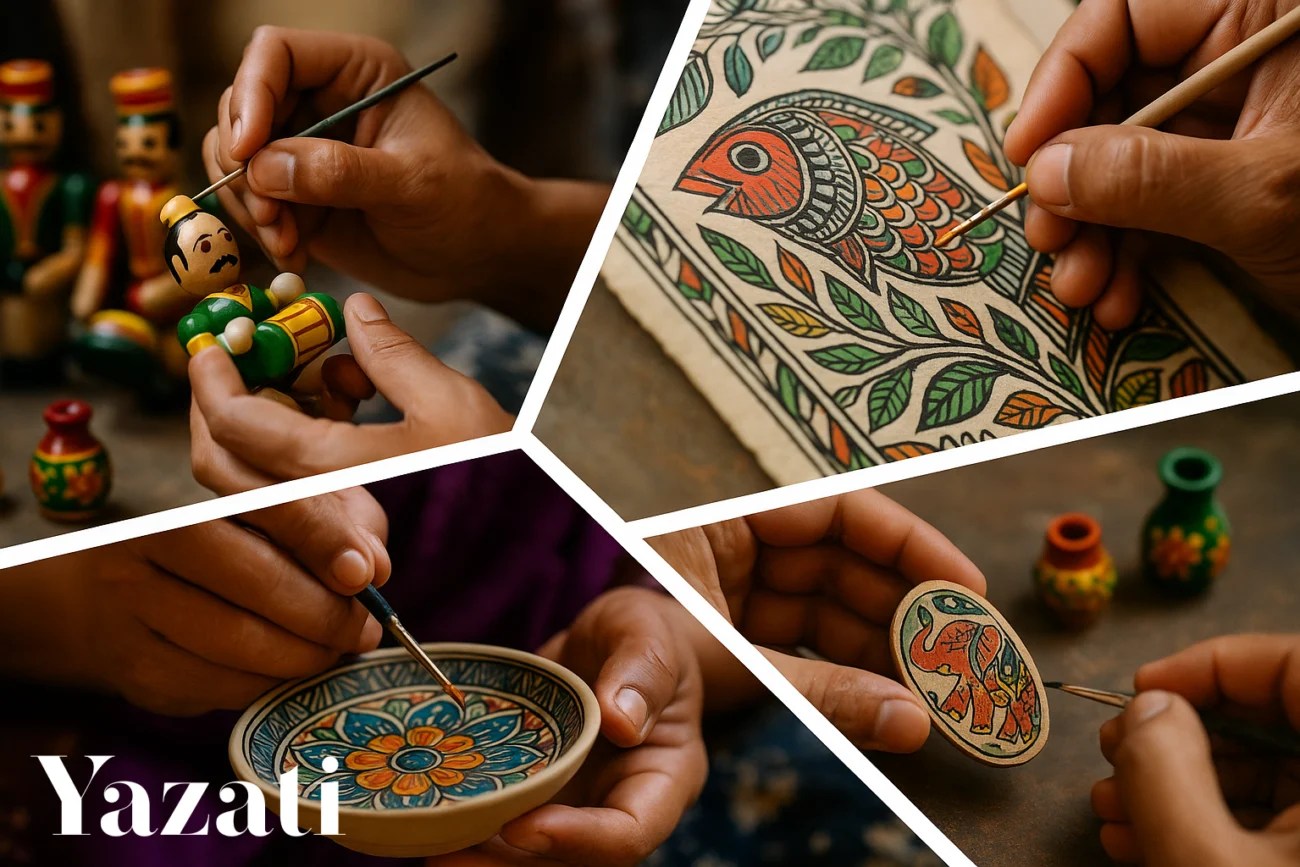
Introduction: The Timeless Allure of Indian Hand-Painted Crafts
There’s something undeniably magical about Indian hand-painted crafts. Each brushstroke carries centuries of heritage, cultural storytelling, and emotional depth that transcends borders. Across the world, art collectors are captivated by the warmth, precision, and authenticity of Indian originals. Unlike mass-produced items, these crafts embody the personal touch of the artist — a human signature in a mechanical age.
From hand-painted pots in Rajasthan to intricate Kalamkari textiles in Andhra Pradesh, these crafts symbolize India’s undying artistic spirit. The global art community now sees them not merely as decorative pieces but as living traditions — carriers of history, faith, and imagination.
History of Hand-Painted Art in India: From Ancient Palaces to Modern Galleries
Origins in Indian Folk and Tribal Traditions
India’s earliest hand-painted expressions can be traced back to cave paintings in Bhimbetka, dating over 30,000 years. Over time, these visuals evolved into regional folk arts — each with its unique style, color palette, and symbolism. Tribes like the Warli of Maharashtra or the Gond of Madhya Pradesh used art to depict daily life, festivals, and nature in rhythmic, simplistic lines.
The Influence of Mughal and Rajput Styles
The Mughal era introduced sophistication to Indian painting. Miniature painting flourished, especially in Rajasthan and Himachal Pradesh, blending Persian detailing with Indian themes. Rajput paintings, on the other hand, romanticized epics like the Ramayana and Mahabharata, often using natural pigments derived from stones, plants, and gold dust.
Evolution in the Contemporary Art Scene
In modern times, artists have reimagined these crafts on new mediums — from home décor to fashion accessories. This creative evolution ensures that while the methods remain rooted in tradition, their application keeps pace with global trends.
The Unique Appeal of Hand-Painted Crafts
Every Piece Tells a Story
Each Indian hand-painted artifact narrates a story — be it a goddess blessing the earth or a village festival captured in color. These aren’t mere designs; they are visual chronicles of everyday life, moral values, and regional folklore.
The Human Touch: Imperfections That Add Soul
Collectors often say, “Perfection is overrated.” The tiny brush errors, uneven shades, or irregular lines are what make these crafts alive. They are signs of authenticity — proof that a human hand, not a machine, created them.
Eco-Friendly and Sustainable Craftsmanship
Indian artisans often rely on natural pigments, handmade brushes, and biodegradable materials. In a world turning toward sustainability, hand-painted crafts align perfectly with eco-conscious values.
Iconic Indian Hand-Painted Crafts Loved Worldwide
Madhubani: The Folk Expression of Bihar
Characterized by vibrant hues and geometric borders, Madhubani art often illustrates mythological tales or wedding scenes. Today, it graces walls, canvases, and even contemporary fashion.
Pattachitra: The Scroll Art of Odisha
Dating back to the 12th century, Pattachitra narrates stories of Lord Jagannath and other deities. The precision and symmetry make each piece an intricate masterpiece.
Miniature Paintings of Rajasthan
From the royal courts of Jaipur and Udaipur emerged Miniature paintings—delicate depictions of courtly life, flora, and fauna. They remain prized possessions among collectors.
Kalamkari: The Fabric of Mythological Narratives
Derived from “kalam” (pen) and “kari” (art), Kalamkari involves freehand drawing on fabric using natural dyes. It’s a fusion of storytelling and fashion, admired globally.
Why Global Collectors Are Fascinated by Indian Originals
Authenticity and Cultural Symbolism
Every Indian craft embodies centuries of wisdom and ritual significance. Collectors cherish the authenticity that connects them to ancient traditions.
Limited Editions and Handmade Exclusivity
Since these crafts are hand-painted, no two pieces are identical. Their exclusivity gives them investment value and emotional worth.
The Emotional Connection Between Collector and Artisan
Behind every brushstroke lies the artisan’s heart. Many collectors form direct relationships with rural artists, ensuring their craft and livelihood continue to thrive.
The Role of Indian Artisans in Global Markets
Preserving Heritage Through Modern Platforms
Organizations like Dastkari Haat Samiti and UNESCO have worked tirelessly to preserve indigenous crafts. Global art fairs and cultural expos now serve as platforms for these creators.
E-Commerce and Online Exhibitions Expanding Reach
The internet has revolutionized craft sales. Platforms like Etsy, India Craft House, and Jaypore allow artisans to connect directly with international buyers.
Collaborations Between Designers and Rural Artists
Contemporary designers are collaborating with rural artisans, bringing traditional patterns into modern fashion and interiors — a perfect balance of legacy and innovation.
How to Identify Genuine Indian Hand-Painted Crafts
Key Markings, Signatures, and Certificates of Authenticity
The rise of global interest in Indian crafts has unfortunately led to an increase in replicas. To ensure authenticity, collectors must look for:
- Artisan Signatures: Genuine hand-painted items often include the artist’s initials or full name discreetly inscribed.
- Regional Indicators: Certain designs and materials are native to specific states — for instance, Pattachitra from Odisha or Kalamkari from Andhra Pradesh.
- Certificates of Authenticity: Reputed sellers provide certification verifying the handmade and original nature of the craft.
- Material Texture: Real hand-painted works show visible brushstrokes, slight unevenness, and natural pigment variation.
Authentic crafts are not flawless; their uniqueness is a mark of human creativity. As collectors often say, “If it looks too perfect, it probably isn’t handmade.”
Avoiding Machine-Printed Imitations
Mass-produced imitations are a growing concern in the art market. Some machine-printed products mimic the look of traditional painting but lack depth, warmth, and tactile quality.
To distinguish originals from copies:
- View the craft under light — hand-painted pieces reflect unevenly, while machine prints have uniform gloss.
- Feel the texture — raised paint layers indicate brushwork, whereas prints feel flat.
- When in doubt, buy directly from verified artisans or certified online craft stores.
Investing in Indian Hand-Painted Crafts
The Rise of Art as an Investment Asset
Art is no longer just about beauty — it’s a powerful investment. With the growing global appreciation of Indian culture, collectors see Indian hand-painted crafts as valuable long-term assets.
Each year, auction houses like Sotheby’s and Christie’s feature Indian artworks, with some pieces selling for thousands of dollars. The emotional and cultural value behind these crafts enhances their financial worth.
Furthermore, younger collectors, especially in Europe and North America, are drawn to India’s eco-friendly art traditions and authenticity — aligning with their ethical lifestyle choices.
Long-Term Value of Handmade Indian Originals
Unlike machine-printed items that fade or lose value over time, authentic hand-painted pieces age gracefully. Natural pigments used in these crafts deepen in tone, adding character over decades.
Collectors who maintain proper care — avoiding moisture and direct sunlight — often witness appreciation in value with time.
Art isn’t just an investment in money; it’s an investment in meaning. Owning a piece of Indian artistry is like preserving a fragment of human history.
Future of Indian Hand-Painted Crafts in Global Art
Revival of Traditional Art Education
Government and private institutions are now integrating folk and tribal art education into modern design schools. This revival ensures that ancient painting styles like Madhubani and Pattachitra continue to inspire future generations.
Fusion Art and Contemporary Adaptations
A growing number of artists are experimenting by blending traditional painting methods with modern aesthetics — like digital art, wearable fashion, and minimalist décor. These fusions make Indian crafts more accessible to younger audiences worldwide.
For instance, artists have begun using hand-painted motifs on sneakers, handbags, and even phone covers — bridging the gap between heritage and pop culture.
Sustainability and Ethical Consumerism
In the era of conscious consumerism, hand-painted crafts represent ethical artistry. Every purchase supports a family, a village, and a heritage. As the world embraces sustainability, these crafts will continue to flourish, becoming symbols of both tradition and responsibility.
FAQs About Hand-Painted Crafts and Indian Originals
1. What makes Indian hand-painted crafts unique?
Their uniqueness lies in the combination of human touch, storytelling, and centuries-old techniques. No two pieces are ever identical, giving each craft a distinct personality.
2. Which Indian art forms are most popular among global collectors?
Madhubani, Pattachitra, Warli, Kalamkari, and Miniature paintings are among the most sought-after due to their detailed artistry and cultural symbolism.
3. How can I ensure that I’m buying authentic hand-painted crafts?
Always purchase from verified artisans, reputed online platforms, or certified craft fairs. Look for visible brushstrokes, uneven paint layers, and authenticity certificates.
4. Are hand-painted crafts a good investment?
Yes! With rising global recognition, handmade Indian originals are becoming collectible art assets that appreciate in both cultural and monetary value.
5. How should I preserve hand-painted crafts?
Keep them away from direct sunlight, dust them gently, and avoid moisture. For framed paintings, use UV-protective glass.
6. Where can I buy Indian hand-painted crafts online?
Websites like India Craft House, Etsy, and Jaypore feature authentic hand-painted works directly from Indian artisans.
Conclusion: Celebrating the Spirit of Indian Creativity
Indian hand-painted crafts are not just art — they’re living legacies. Each piece captures the artist’s soul, their environment, and their cultural identity. In every stroke lies a story that connects the past with the present, the local with the global.
Global collectors love Indian originals not only for their beauty but for their authenticity and humanity. In a world where automation dominates, the warmth of handmade art reminds us of what it means to be human.
So, whether you’re a seasoned collector or a first-time buyer, investing in Indian hand-painted crafts isn’t just a purchase — it’s a celebration of tradition, sustainability, and timeless beauty.
✨ Discover Global Sourcing Excellence with Netyex ✨
Netyex is your trusted B2B sourcing partner, connecting international buyers with India’s finest manufacturers and curated product lines—from handicrafts and home décor to kitchenware, textiles, hospitality essentials, and more. With verified suppliers and end-to-end support, we make global procurement seamless, reliable, and efficient.
👉 Elevate your sourcing experience—explore Netyex today.
📦 Bulk orders & customisation | 🌍 Worldwide delivery | 🤝 Trusted by global buyers
Visit Netyex to source premium Indian products with confidence.