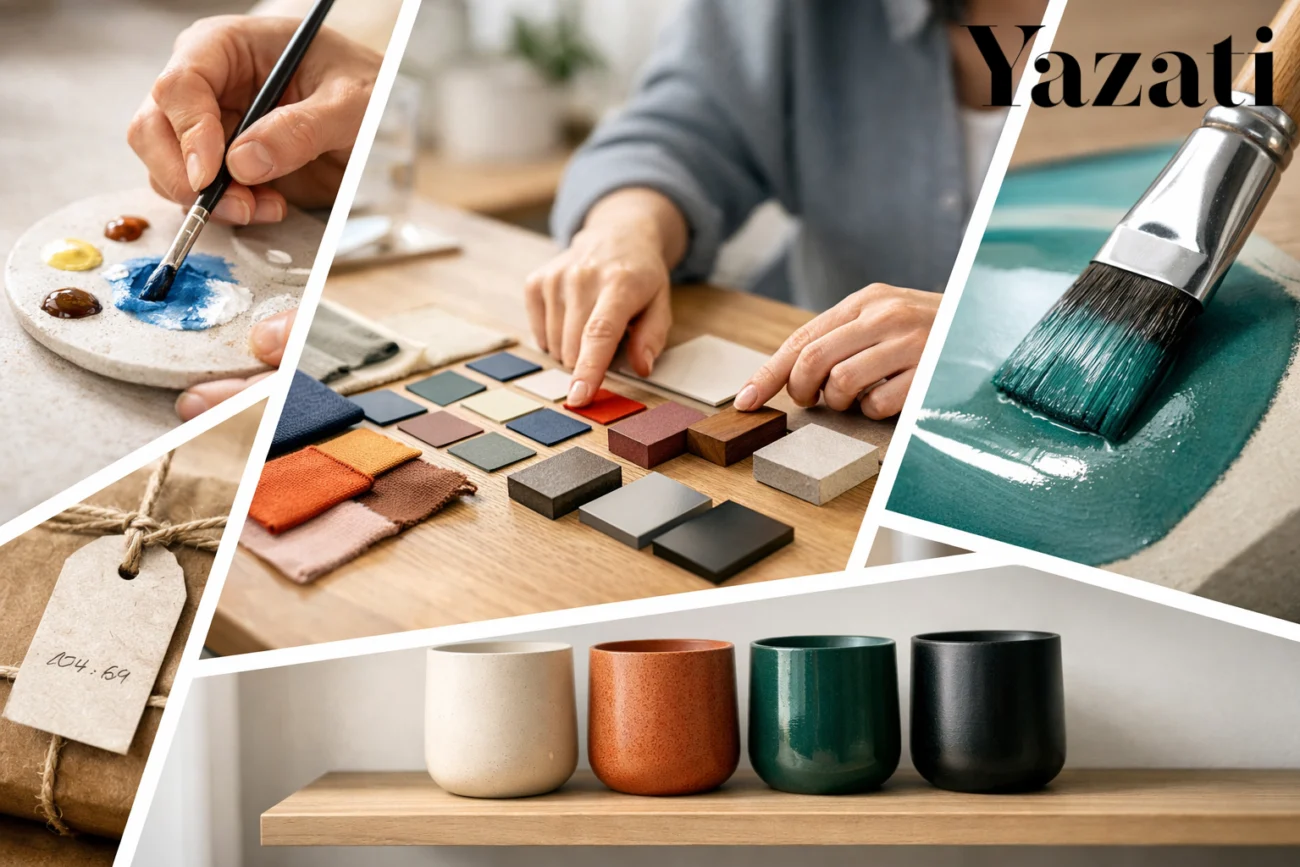
Understanding Customization in Handmade Products
Customization in handmade goods means adjusting the appearance, texture, or detailing of an item based on customer preference. This often includes:
- Color changes
- Finish adjustments (matte, glossy, satin, distressed, polished)
- Material substitutions
- Special coatings or protective layers
Handmade creators usually produce items in small batches. That makes changes easier than in factory production—but it still requires planning and communication.
Why Custom Color and Finish Requests Are So Popular
Customization gives buyers:
- A perfect match for home décor
- Personalized gifts
- Brand-aligned colors for businesses
- Unique one-of-a-kind items
For artisans, offering customization increases perceived value. It also builds stronger relationships with customers.
Step-by-Step: How Custom Color and Finish Requests Work for Handmade Products
Let’s walk through the real process from start to finish.
1. Initial Inquiry from the Customer
Everything starts with a message.
A buyer typically asks:
- “Can I get this in navy blue?”
- “Is a matte finish available?”
- “Can you match this paint swatch?”
Clear communication is essential at this stage. Customers should provide:
- Exact color names or codes
- Reference photos
- Finish preference (glossy, satin, textured, etc.)
The more specific the request, the smoother the process.
2. Feasibility Evaluation by the Maker
Not all colors and finishes are possible on every material.
For example:
- Wood absorbs stain differently depending on grain.
- Metal may require special coatings.
- Clay reacts uniquely to certain glazes.
The artisan evaluates:
- Material compatibility
- Tools and supplies required
- Additional labor time
- Impact on durability
If the request isn’t feasible, a good maker suggests alternatives.
3. Color Matching Process
Color matching can be the trickiest part.
Common Matching Methods
- Paint brand codes
- Digital mockups
- Sample swatches
- Small test pieces
Important note: Screen colors can look different in real life. Lighting plays a huge role. That’s why many artisans recommend approving a physical sample if accuracy is critical.
4. Selecting the Finish Type
Finish refers to the surface look and feel.
Common Finish Options
- Matte (no shine)
- Satin (soft glow)
- Glossy (high shine)
- Distressed (aged look)
- Sealed (protected coating)
- Textured (visible brush strokes or patterns)
Each finish affects:
- Appearance
- Durability
- Maintenance needs
For example, glossy finishes show fingerprints more easily, while matte hides imperfections.
Pricing Structure for Custom Requests
Customization usually costs more. Here’s why:
- Extra materials
- Additional labor time
- Testing and sampling
- Risk of rework
Typical Pricing Models
- Flat customization fee
- Percentage increase (10–30%)
- Material-based upcharge
- Design consultation fee
Buyers should understand that custom work requires extra effort and expertise.
Timeline Adjustments for Custom Orders
Custom color and finish requests extend production time.
Reasons include:
- Ordering specific pigments
- Drying or curing time
- Sample approval
- Revisions
A standard handmade item might take 1 week. A custom version could take 2–4 weeks.
Patience ensures better results.
Communication Is the Key to Success
Clear and documented communication prevents misunderstandings.
Best practices:
- Confirm color codes in writing
- Clarify finish sheen level
- Approve samples before final production
- Discuss refund policies
Many makers send confirmation messages outlining:
- Final color choice
- Finish type
- Estimated completion date
- Pricing breakdown
Sample Approval: Why It Matters
If accuracy is critical, sample approval is recommended.
This may involve:
- A small painted piece
- A photo under natural light
- A mini version of the product
Although it may add cost and time, it reduces disappointment.
Material-Specific Customization Considerations
Different materials behave differently.
Wood Products
- Stain absorbs unevenly
- Grain affects color depth
- Sealer changes tone
Metal Items
- Powder coating vs paint
- Oxidation risk
- Surface preparation required
Ceramic Pieces
- Glaze reactions in kiln
- Color shifts after firing
- High unpredictability
Fabric and Textiles
- Dye lot variations
- Shrinkage
- Wash durability
Understanding material behavior builds realistic expectations.
Common Challenges in Custom Color and Finish Requests
Even with planning, challenges can occur.
- Color appears darker/lighter than expected
- Finish sheen not exactly as imagined
- Supply delays
- Drying inconsistencies
That’s why most handmade sellers mark custom orders as:
Final sale or non-refundable
Not because they’re unfair—but because customized items are hard to resell.
Benefits of Offering Custom Color and Finish Options
For artisans, customization:
- Increases average order value
- Builds brand loyalty
- Encourages word-of-mouth referrals
- Differentiates from mass production
For buyers, it creates emotional attachment and satisfaction.
Best Practices for Buyers
If you’re ordering custom:
- Provide exact references.
- Ask about timeline changes.
- Understand return policies.
- Approve samples when possible.
- Be realistic about slight variations.
Remember: handmade means human-made. Minor variation is part of the charm.
Best Practices for Handmade Sellers
If you offer customization:
- Set clear boundaries.
- Provide written confirmation.
- Charge fairly for time and materials.
- Manage expectations about color differences.
- Document everything.
Clear policies prevent future disputes.
Digital Mockups vs Physical Samples
Digital previews are helpful—but not perfect.
Advantages:
- Quick
- Free or low cost
- Easy to revise
Limitations:
- Screen calibration differences
- Lighting distortions
- Texture not visible
Physical samples provide greater accuracy but require more time and expense.
Refund and Return Policies for Custom Work
Most sellers follow one of these policies:
- No returns on custom items
- Partial refund if error is seller’s fault
- Repair or redo option
Transparency builds trust.
How to Avoid Disappointment
To ensure success:
- Communicate clearly
- Confirm expectations
- Allow extra time
- Embrace handmade uniqueness
Perfection in handmade products means craftsmanship—not machine uniformity.
Frequently Asked Questions (FAQs)
1. Can any handmade product be customized in color?
Not always. It depends on material, tools, and available pigments. Always confirm with the maker first.
2. Why does custom color cost more?
It requires additional materials, testing, and labor time.
3. How long do custom finish requests take?
Typically 1–3 weeks longer than standard production timelines.
4. Can I return a custom handmade product?
Most custom orders are final sale unless there is a defect.
5. Will the color look exactly like my screen?
Not necessarily. Lighting and screen settings affect color perception.
6. What if I’m unsure about the finish type?
Ask the maker for examples or descriptions of matte, satin, and gloss options.
Final Thoughts
Understanding How Custom Color and Finish Requests Work for Handmade Products empowers both buyers and artisans. Customization adds personality, meaning, and uniqueness to handmade goods—but it also requires thoughtful communication, realistic expectations, and professional handling.
When both sides collaborate clearly and respectfully, the result is something truly special: a handcrafted piece designed exactly for you.
✨ Discover Global Sourcing Excellence with Netyex ✨
Netyex is your trusted B2B sourcing partner, connecting international buyers with India’s finest manufacturers and curated product lines—from handicrafts and home décor to kitchenware, textiles, hospitality essentials, and more. With verified suppliers and end-to-end support, we make global procurement seamless, reliable, and efficient.
👉 Elevate your sourcing experience—explore Netyex today.
📦 Bulk orders & customisation | 🌍 Worldwide delivery | 🤝 Trusted by global buyers
Visit Netyex to source premium Indian products with confidence.