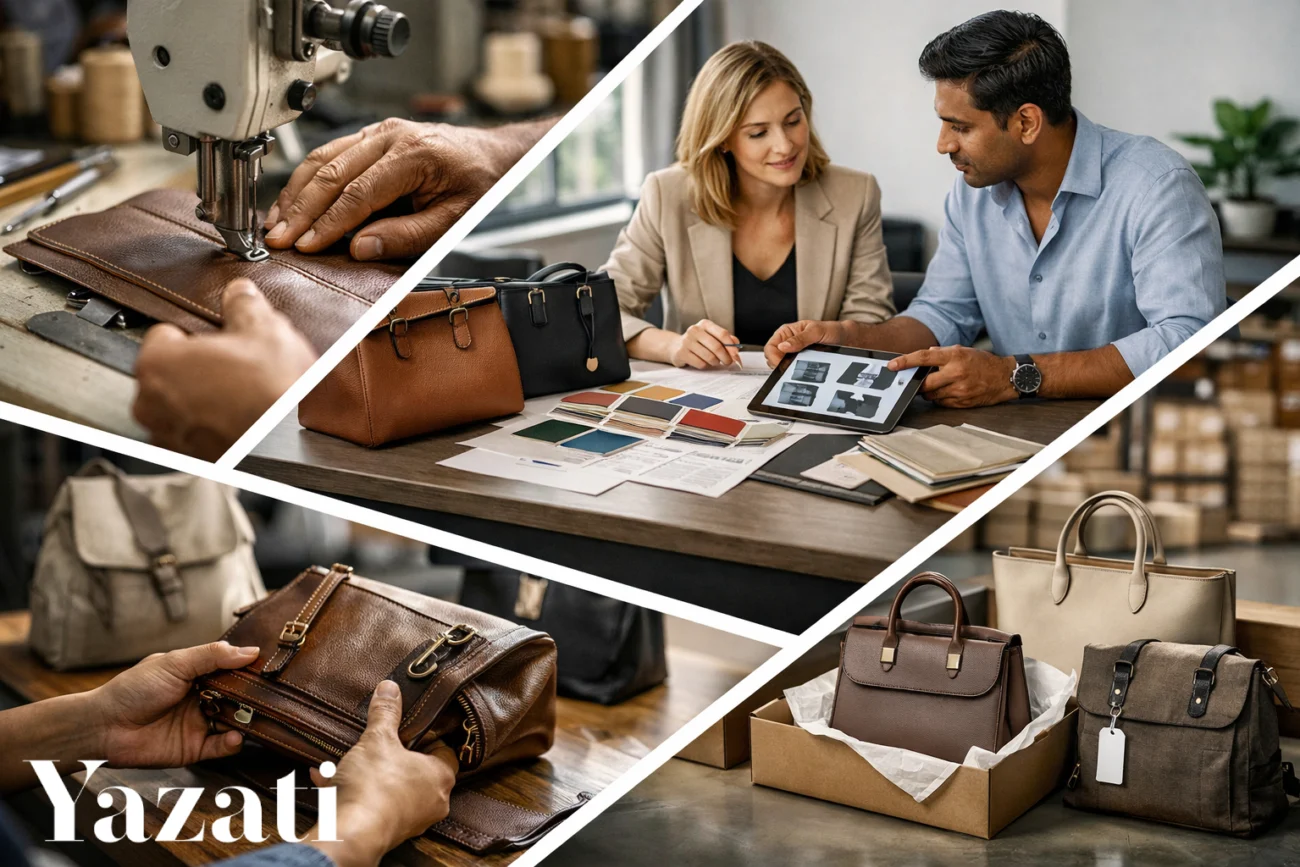
Introduction to Private Label Bag Brands
The global bag industry continues to grow across fashion, travel, lifestyle, and eco-conscious segments. From everyday tote bags to premium leather handbags and sustainable jute carry bags, consumer demand remains strong.
Understanding How Importers Can Launch a Bag Brand with Indian Manufacturers provides entrepreneurs and retailers with a cost-effective pathway to build their own label without investing in production facilities.
India offers:
- Skilled craftsmanship
- Diverse materials
- Competitive pricing
- Customization flexibility
- Strong export experience
With the right strategy, importers can build profitable and scalable bag brands.
Growth of the Global Bag Market
Key drivers of growth include:
- Rise in e-commerce
- Sustainable shopping trends
- Travel recovery
- Corporate gifting demand
- Fashion and lifestyle branding
Consumers look for:
- Functionality
- Durability
- Design appeal
- Ethical sourcing
Private label brands can compete successfully by offering unique value propositions.
Why India Is a Strategic Manufacturing Hub
India is known for:
- Leather craftsmanship
- Cotton and canvas production
- Jute and eco-friendly materials
- Hand embroidery and embellishments
- Skilled stitching and detailing
Manufacturing clusters specialize in different materials and product types.
This diversity gives importers flexibility in brand positioning.
Step 1: Define Your Brand Niche
Before production begins, define:
- Target customer segment
- Price positioning
- Brand identity
- Sustainability focus
- Distribution channels
Examples of niches:
- Eco-friendly reusable bags
- Premium leather handbags
- Travel backpacks
- Minimalist work totes
- Bohemian embroidered purses
Clarity strengthens brand differentiation.
Step 2: Choose the Right Bag Category
Selecting the right product category impacts pricing and scalability.
Popular categories include:
- Tote bags
- Laptop bags
- Leather handbags
- Jute shopping bags
- Duffel bags
- Backpacks
- Clutches
- Cosmetic pouches
Align product selection with target market demand.
Testing one category before expanding reduces risk.
Step 3: Research and Shortlist Indian Manufacturers
Supplier selection is crucial in How Importers Can Launch a Bag Brand with Indian Manufacturers.
Evaluate manufacturers based on:
- Experience in export markets
- Product specialization
- Production capacity
- Quality control processes
- Communication clarity
- Compliance certifications
Request company profiles and product samples.
Strong supplier relationships drive long-term success.
Step 4: Understand MOQ and Cost Structure
Minimum Order Quantities (MOQ) vary depending on:
- Material type
- Customization level
- Production complexity
- Tooling requirements
Discuss:
- Unit pricing tiers
- Sampling cost
- Logo setup fees
- Packaging charges
- Payment terms
Calculate margins carefully before committing.
Step 5: Develop Product Designs and Samples
Sampling ensures alignment with brand expectations.
During development:
- Share detailed design specifications
- Confirm dimensions and materials
- Approve color samples
- Review stitching quality
- Test durability
Approved samples serve as production reference standards.
Never skip this step.
Step 6: Plan Private Label Branding
Private labeling involves:
- Logo printing or embossing
- Woven labels
- Hang tags
- Custom packaging
- Care instruction inserts
Professional branding enhances perceived value.
Bulk branding reduces per-unit cost.
Clear artwork files prevent production errors.
Step 7: Ensure Quality Control Systems
Quality impacts brand reputation.
Implement:
- Pre-production inspection
- Mid-production monitoring
- Final quality checks
- Random batch inspections
Verify:
- Stitching strength
- Zipper functionality
- Strap durability
- Finish consistency
Consistent quality builds customer loyalty.
Step 8: Verify Compliance and Certifications
Depending on target markets, compliance may include:
- Material safety standards
- Chemical regulations
- Labeling requirements
- Sustainability certifications
Ensure documentation aligns with import regulations.
Compliance avoids customs delays.
Step 9: Calculate Total Landed Cost
Total landed cost includes:
- Product cost
- Branding cost
- Packaging cost
- Freight charges
- Customs duties
- Insurance
- Warehouse handling
Understanding full cost structure ensures accurate retail pricing.
Profitability depends on precise calculations.
Step 10: Build a Marketing Strategy
Launching a bag brand requires strong marketing.
Consider:
- E-commerce platforms
- Social media campaigns
- Influencer collaborations
- Retail partnerships
- Storytelling around craftsmanship
- Sustainability messaging
Brand identity drives customer engagement.
Clear positioning increases market appeal.
Step 11: Manage Inventory and Reorders
Monitor:
- Sales velocity
- Seasonal demand
- Customer feedback
- Reorder timing
Establish reorder schedules with manufacturers.
Forecast production timelines to avoid stockouts.
Efficient inventory management supports growth.
Step 12: Protect Intellectual Property
Register:
- Brand name trademark
- Logo design
- Packaging artwork
Intellectual property protection safeguards brand identity.
Legal registration strengthens business credibility.
Common Mistakes to Avoid
Avoid these common pitfalls:
- Skipping sample approval
- Ignoring total landed cost
- Underestimating marketing investment
- Choosing suppliers based only on price
- Over-ordering without market validation
- Neglecting quality inspections
Preparation reduces risk.
Strategic planning increases success rate.
Frequently Asked Questions
1. What is the typical MOQ for launching a bag brand in India?
MOQs vary by manufacturer and design complexity but often range from a few hundred units per style.
2. Is India suitable for eco-friendly bag production?
Yes. India is a major producer of jute, cotton, and sustainable textile bags.
3. How long does production take?
Production timelines vary but generally range from 30 to 60 days after sample approval.
4. Can small importers launch a private label brand?
Yes, especially with moderate MOQs and niche positioning.
5. How can importers ensure consistent quality?
Through detailed specifications, approved samples, and inspection procedures.
6. Is private labeling expensive?
Branding adds cost, but bulk production lowers per-unit expenses.
Conclusion
Mastering How Importers Can Launch a Bag Brand with Indian Manufacturers requires clear planning, supplier partnership, quality control, and strategic marketing.
India offers:
- Skilled craftsmanship
- Diverse material options
- Competitive pricing
- Customization flexibility
- Export experience
With structured execution, importers can build strong private label brands that compete globally.
Success depends on:
- Smart niche selection
- Careful supplier vetting
- Accurate cost calculation
- Strong branding
- Reliable logistics
- Consistent quality
Launching a bag brand is not just about manufacturing — it’s about building identity, trust, and long-term value.
With the right approach, Indian manufacturing partnerships can transform your brand vision into a profitable reality.
✨ Discover Global Sourcing Excellence with Netyex ✨
Netyex is your trusted B2B sourcing partner, connecting international buyers with India’s finest manufacturers and curated product lines—from handicrafts and home décor to kitchenware, textiles, hospitality essentials, and more. With verified suppliers and end-to-end support, we make global procurement seamless, reliable, and efficient.
👉 Elevate your sourcing experience—explore Netyex today.
📦 Bulk orders & customisation | 🌍 Worldwide delivery | 🤝 Trusted by global buyers
Visit Netyex to source premium Indian products with confidence.