Understanding the Real Cost of Breakage in Wall Décor Shipments
Before solving the issue, it’s important to understand the impact.
Breakage doesn’t just mean a cracked frame or shattered glass. It creates:
- Financial losses from damaged inventory
- Replacement and reshipping costs
- Customer dissatisfaction and negative reviews
- Increased insurance claims
- Delayed delivery timelines
- Strained supplier relationships
For importers handling high volumes, even a 5% damage rate can translate into thousands of dollars lost per shipment.
Reducing breakage isn’t optional—it’s a business survival strategy.
Why Wall Décor Is Especially Vulnerable During Transit
Wall décor items are fragile for several reasons:
- Glass components in mirrors and framed art
- Sharp corners and edges prone to impact damage
- Lightweight frames that bend under pressure
- Mixed materials (metal, wood, glass, resin)
- Large surface areas that crack under stress
During international shipping, products face:
- Multiple handling points
- Forklift loading and unloading
- Stacking pressure inside containers
- Road vibrations
- Temperature changes
- Humidity exposure
Without proper protection, damage becomes almost inevitable.
How Importers Can Reduce Breakage in Wall Décor Shipments: The Core Strategy
Reducing breakage requires a layered approach. It’s not just about bubble wrap—it’s about designing protection from factory to final delivery.
Let’s break down the most effective strategies.
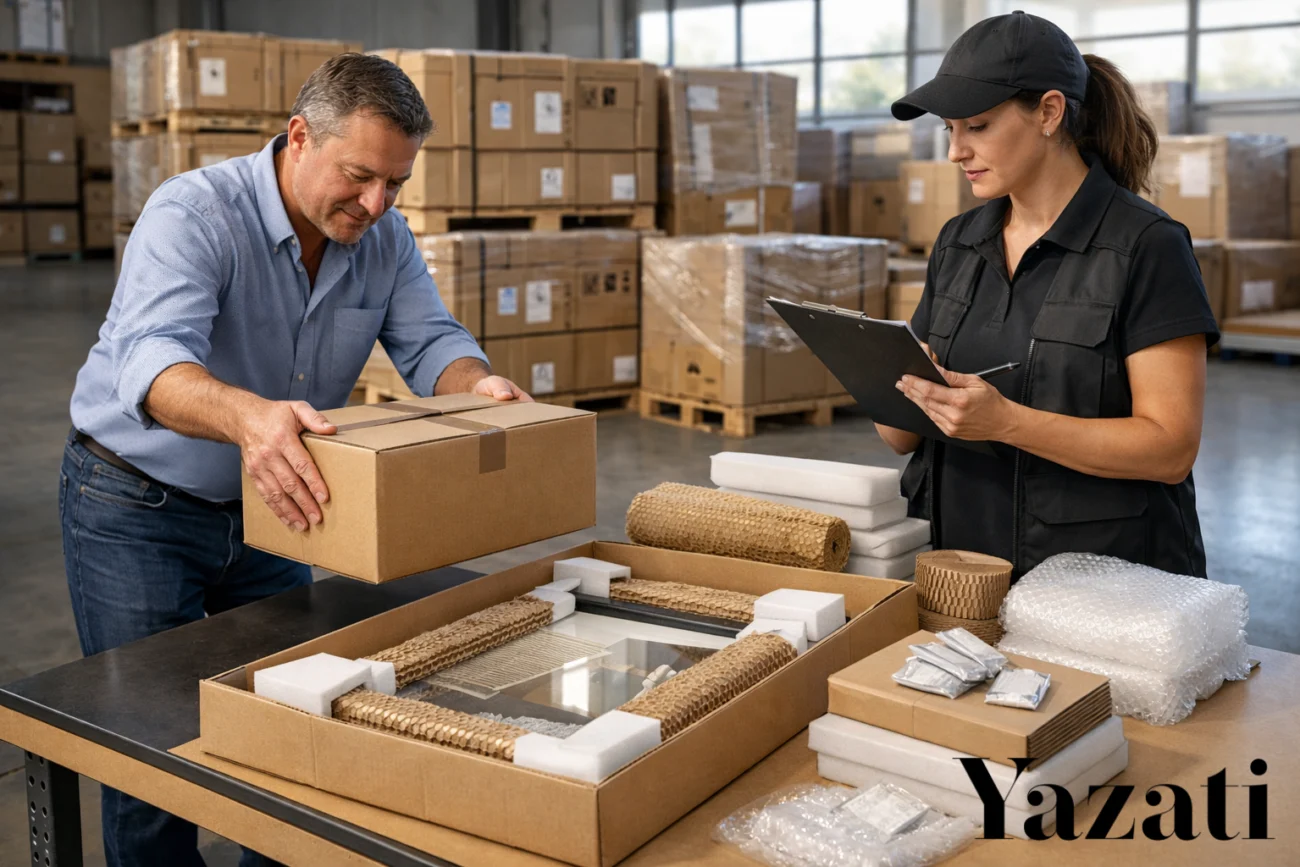
1. Invest in High-Quality Protective Packaging Materials
Cheap packaging is expensive in the long run.
Use Double-Wall or Triple-Wall Corrugated Boxes
Stronger cartons resist compression and stacking pressure inside containers.
Add Corner Protectors
Corners are the most vulnerable areas. Use:
- Foam corner guards
- Molded pulp corner supports
- Plastic edge protectors
Use Foam Inserts Instead of Loose Fill
Custom foam inserts:
- Prevent movement inside cartons
- Absorb shock from drops
- Distribute pressure evenly
Avoid relying solely on bubble wrap. While helpful, it is not enough for large mirrors or glass art.
2. Implement Product-Specific Packaging Design
Not all wall décor should be packed the same way.
Framed Art and Prints
- Add cardboard sheets on both sides
- Use shrink wrap for stability
- Insert foam boards between glass and artwork
Mirrors and Glass Panels
- Apply protective film to glass surfaces
- Use wooden crate packaging for large sizes
- Add anti-shatter backing film
Metal or Resin Wall Sculptures
- Wrap protruding parts separately
- Use molded supports to prevent bending
Custom packaging reduces internal movement, which is one of the biggest causes of breakage.
3. Perform Drop Testing and Compression Testing
One of the smartest ways importers can reduce breakage in wall décor shipments is by testing before scaling.
Drop Testing
Simulates real-world impacts from handling and unloading.
Compression Testing
Ensures cartons withstand stacking pressure inside containers.
Testing reveals weak points before goods are shipped internationally. This step can save massive costs later.
4. Use Inner Carton + Master Carton Strategy
A two-layer carton system adds significant protection.
- Individual item inside inner box
- Multiple inner boxes inside master carton
- Void fill between layers
Benefits include:
- Better shock absorption
- Reduced friction between items
- Easier handling at warehouses
This strategy is especially effective for smaller framed pieces.
5. Optimize Container Loading Techniques
Even perfect packaging can fail if containers are poorly loaded.
Avoid Overstacking
Heavy cartons should not be placed on top of fragile ones.
Use Palletization
- Secure cartons on pallets
- Stretch wrap tightly
- Prevent shifting during transit
Add Container Bracing
Use air bags or load bars to prevent movement inside the container.
Shifting cargo is one of the leading causes of transit damage.
6. Control Environmental Factors
Wall décor is sensitive to environmental changes.
Humidity Control
Moisture weakens cartons and damages wooden frames.
- Use desiccant bags inside containers
- Consider moisture barrier liners
Temperature Fluctuation Protection
Extreme heat or cold can:
- Crack glass
- Warp wooden frames
- Damage adhesives
For high-value items, climate-controlled shipping may be worth the investment.
7. Work Closely with Manufacturers
Importers should never leave packaging decisions entirely to factories.
Request Packaging Specifications
Create a packaging manual that includes:
- Material standards
- Foam density requirements
- Carton strength rating
- Testing protocols
Conduct Factory Inspections
Verify packaging before shipment.
Implement Pre-Shipment Quality Checks
Inspect:
- Seal integrity
- Corner protection
- Carton labeling
Strong supplier collaboration dramatically reduces risk.
Train Logistics Teams on Fragile Handling
Many breakage issues happen during warehouse handling.
Train teams to:
- Avoid dropping cartons
- Use proper lifting techniques
- Identify fragile markings
- Store cartons upright when required
Clear labeling such as “Fragile,” “This Side Up,” and “Do Not Stack” helps—but training ensures compliance.
Leverage Shipping Insurance Strategically
While insurance doesn’t prevent breakage, it protects finances.
Review policies carefully:
- Understand coverage limits
- Check exclusions
- Confirm claim documentation requirements
Insurance should complement strong packaging, not replace it.
Use Data to Track and Reduce Damage Rates
Smart importers measure everything.
Track:
- Damage percentage per shipment
- Supplier-specific breakage rates
- Shipping route performance
- Seasonal damage trends
Data reveals patterns. For example, certain routes may have higher damage rates due to rough handling or longer transit times.
Improvement becomes easier when you measure results.
Technology Solutions for Damage Prevention
Modern tools help reduce risk.
- Shock sensors inside cartons
- Tilt indicators
- GPS tracking
- Smart pallet monitoring
These technologies identify exactly where damage occurs. Once you know the weak link, you can fix it.
Common Mistakes Importers Should Avoid
Even experienced importers make costly errors.
Using Standard Packaging for All Products
Customization is critical.
Skipping Testing to Save Costs
Testing is cheaper than replacing shipments.
Ignoring Feedback from Retailers
Customer complaints provide valuable data.
Choosing the Cheapest Freight Option
Lower shipping costs may mean rougher handling.
Avoiding these mistakes can significantly reduce breakage.
Building Long-Term Damage Prevention Strategy
Reducing breakage isn’t a one-time fix. It requires:
- Continuous packaging improvement
- Regular supplier audits
- Logistics performance reviews
- Updated packaging materials
- Ongoing staff training
When systems improve, damage rates drop steadily over time.
FAQs About How Importers Can Reduce Breakage in Wall Décor Shipments
1. What is the main cause of breakage in wall décor shipments?
The primary cause is internal movement inside cartons during transit combined with stacking pressure and rough handling.
2. Is wooden crate packaging necessary for all mirrors?
Not for all mirrors. Smaller mirrors can use reinforced double-wall cartons, but large or heavy mirrors often require wooden crates.
3. How often should packaging be tested?
Packaging should be tested when introducing new products, new suppliers, or after recurring damage reports.
4. Does palletizing really reduce damage?
Yes. Palletizing reduces shifting, improves handling efficiency, and prevents crushing under stacked loads.
5. Are shock sensors worth the investment?
For high-value shipments, shock sensors help identify where damage occurs and can reduce long-term losses.
6. Can humidity alone cause breakage?
Yes. High humidity weakens cartons and may warp wooden frames, increasing the risk of damage during transit.
Conclusion: Protecting Profits by Preventing Breakage
Understanding How Importers Can Reduce Breakage in Wall Décor Shipments is essential for long-term business success. Fragile décor items face multiple risks—from factory packaging to final delivery.
By investing in strong packaging, performing testing, improving container loading, collaborating with suppliers, and using data-driven insights, importers can dramatically reduce damage rates.
At the end of the day, prevention is far cheaper than replacement. A proactive strategy doesn’t just protect products—it protects brand reputation, customer satisfaction, and profit margins.
When breakage goes down, confidence goes up—and that’s a win for everyone involved.
✨ Discover Global Sourcing Excellence with Netyex ✨
Netyex is your trusted B2B sourcing partner, connecting international buyers with India’s finest manufacturers and curated product lines—from handicrafts and home décor to kitchenware, textiles, hospitality essentials, and more. With verified suppliers and end-to-end support, we make global procurement seamless, reliable, and efficient.
👉 Elevate your sourcing experience—explore Netyex today.
📦 Bulk orders & customisation | 🌍 Worldwide delivery | 🤝 Trusted by global buyers
Visit Netyex to source premium Indian products with confidence.