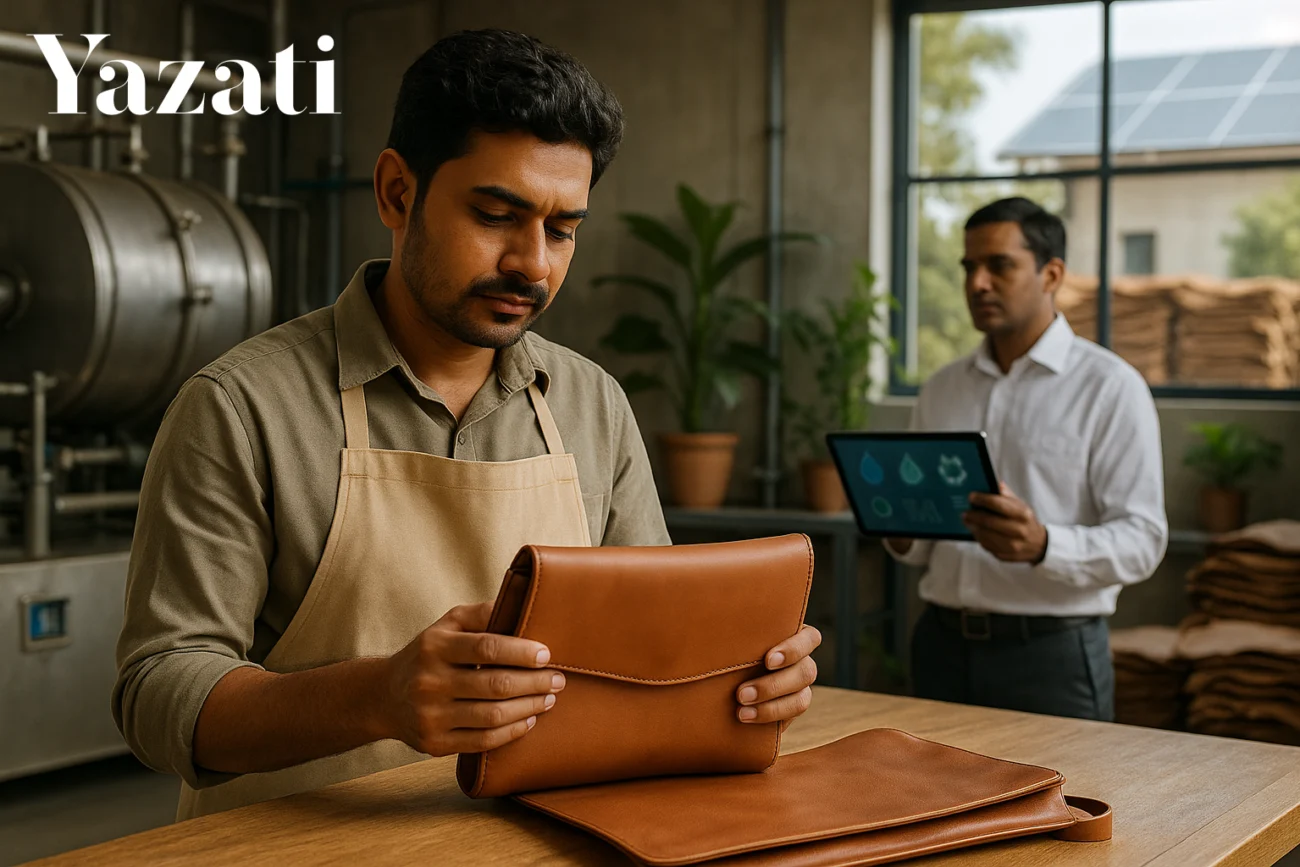
Introduction: The Intersection of Leather and Sustainability in India
The phrase “How India balances sustainability with leather production” captures a powerful transformation unfolding within one of the nation’s most traditional industries. India, known globally for its rich heritage in leather craftsmanship, is now rewriting its industrial story by aligning with sustainability goals. As global markets demand greener, more transparent supply chains, Indian leather manufacturers are rising to the challenge—adopting eco-friendly tanning, minimizing waste, and investing in renewable technologies.
India’s leather industry, while steeped in centuries of artisanal excellence, has long been shadowed by environmental concerns. But today, through innovation, regulation, and awareness, it stands as a growing model for how economic growth and ecological responsibility can coexist.
The Significance of India’s Leather Industry in the Global Market
Historical Roots of Leather Production in India
Leatherworking in India dates back thousands of years. Archaeological findings from the Indus Valley Civilization suggest early tanning methods and hides used for clothing and trade. Over time, regions like Kanpur, Kolkata, and Chennai emerged as major leather hubs, renowned for craftsmanship and quality exports.
Contribution to Economy, Exports, and Employment
India is among the top five leather producers globally, accounting for nearly 13% of global hides and skin production. The industry contributes billions annually to the national economy and employs over 4.4 million people, many from marginalized communities. Exports—particularly footwear, garments, and accessories—make India a pivotal player in the global fashion supply chain.
Environmental Challenges Facing the Leather Industry
Pollution and Waste Management Concerns
Traditional leather processing involves chemicals like chromium, sulfides, and acids that can pollute water bodies if not properly treated. Wastewater from tanneries often contains toxic residues, leading to long-term soil degradation and groundwater contamination in industrial clusters.
The Role of Tanning and Its Ecological Impact
Tanning converts animal hides into durable leather but generates high volumes of sludge and effluents. The chromium tanning process, while efficient, is particularly harmful when untreated waste is discharged into rivers. Balancing production efficiency with environmental care is therefore a pressing need.
Animal Welfare and Ethical Sourcing Issues
Ethical sourcing of raw materials is another challenge. Global consumers increasingly demand traceable, humane supply chains. Indian companies are now implementing animal welfare certifications and working with ethical suppliers to ensure transparency and compliance with international standards.
The Push Toward Sustainable Leather Production in India
Adoption of Eco-Friendly Tanning Techniques
Many Indian tanneries are transitioning toward vegetable tanning, which uses natural tannins from plants like wattle and myrobalan. These methods produce biodegradable leather and reduce toxic runoff. Additionally, synthetic and enzyme-based tanning processes are being tested to eliminate heavy metals entirely.
Government Policies Promoting Sustainable Practices
The Indian government’s Leather Sector Skill Council (LSSC) and the Council for Leather Exports (CLE) have implemented several programs to promote green technologies and cleaner production. Schemes such as the Integrated Development of Leather Sector (IDLS) encourage modernization through financial incentives for eco-upgrades.
Collaboration Between Industry and Environmental Bodies
Partnerships with organizations like the Central Leather Research Institute (CLRI) and international agencies such as the UNIDO (United Nations Industrial Development Organization) are driving research into eco-friendly materials, waste minimization, and water recycling.
Role of Technology in Sustainable Leather Manufacturing
Cleaner Production Technologies and Automation
Automation and digitization are revolutionizing India’s tanneries. Effluent treatment plants (ETPs) are becoming mandatory, and advanced filtration technologies ensure minimal discharge. Automated drum systems and real-time monitoring are helping reduce chemical use by up to 40%.
Recycling and Circular Economy Initiatives
Companies are now exploring leather waste recycling to create products like composite leather and reclaimed materials for upholstery. This circular approach reduces waste and extends the lifecycle of raw materials, aligning with the United Nations Sustainable Development Goals (SDGs).
Case Studies of Sustainable Leather Practices in India
Tamil Nadu’s Zero-Liquid-Discharge Tanneries
The tanneries in Vellore, Tamil Nadu, are among the first in Asia to adopt Zero Liquid Discharge (ZLD) systems. These units recycle 100% of wastewater, minimizing environmental pollution. This initiative has become a global model for sustainable leather processing.
Kanpur’s Transition to Eco-Tanning Methods
Once notorious for pollution, Kanpur’s leather industry is undergoing a green transformation. With government support, several local tanneries now use vegetable tanning and hybrid solar drying, cutting emissions and water use dramatically.
Certifications and Global Standards for Indian Leather
ISO and LWG Certifications
Many Indian manufacturers now hold ISO 14001 (Environmental Management) and Leather Working Group (LWG) certifications, signifying compliance with international sustainability standards. These certifications boost global credibility and market access.
The Rise of Traceability and Transparency Standards
Blockchain and digital traceability tools are emerging as powerful instruments to track leather from source to shelf. This transparency reassures conscious consumers and aligns India’s exports with European and North American sustainability expectations.
Sustainable Alternatives: Vegan and Plant-Based Leathers
Innovation with Pineapple, Cork, and Mushroom Leathers
Startups in India are experimenting with biomaterials like Piñatex (pineapple fiber), cork, and mycelium (mushroom leather). These materials mimic traditional leather’s texture and durability while being cruelty-free and biodegradable.
Balancing Traditional Leather with Modern Ethical Choices
While plant-based leathers attract attention, India continues to balance innovation with respect for traditional artisans. Hybrid models—combining sustainable tanning with ethical sourcing—help preserve craftsmanship while embracing global green trends.
The Role of Consumers in Driving Sustainability
Growing Demand for Eco-Conscious Fashion
Indian consumers are increasingly aware of the environmental cost of fast fashion. Brands promoting eco-certified leather goods are gaining traction both domestically and internationally.
Awareness and Market Trends Among Indian Consumers
Fashion-conscious youth in metros like Mumbai, Delhi, and Bengaluru are driving demand for sustainable accessories and footwear. Social media awareness campaigns have further accelerated this behavioral shift.
Future Prospects: Can India Become a Global Leader in Sustainable Leather?
Policy Support and Global Trade Opportunities
With the government’s Make in India and Sustainable Manufacturing initiatives, India aims to lead in environmentally responsible production. Exporters adopting green practices are already seeing preferential treatment from global brands.
Education, Research, and Skill Development Initiatives
Institutions like CLRI and Footwear Design & Development Institute (FDDI) are integrating eco-design, green chemistry, and waste valorization into their training programs, preparing the next generation of sustainable leather technologists.
FAQs on How India Balances Sustainability with Leather Production
1. What makes the Indian leather industry significant globally?
India ranks among the top five leather producers, contributing majorly to exports and employment, particularly in rural regions.
2. How is India making leather production more sustainable?
By adopting vegetable tanning, recycling wastewater, reducing chemical use, and obtaining certifications like LWG and ISO.
3. What are Zero Liquid Discharge (ZLD) systems?
ZLD systems recycle wastewater completely, ensuring no liquid waste leaves the tannery, protecting soil and water quality.
4. Are plant-based leathers gaining traction in India?
Yes, materials made from pineapple, cork, and mushrooms are emerging as eco-friendly alternatives to animal-based leather.
5. Which Indian cities lead in sustainable leather practices?
Tamil Nadu (Vellore, Chennai) and Kanpur are pioneers in adopting eco-friendly technologies and compliance standards.
6. Can India become a global leader in sustainable leather?
With strong policy support, technology adoption, and consumer awareness, India is well-positioned to lead global sustainable leather markets.
Conclusion: Crafting a Greener Future for Indian Leather
India’s journey to balance sustainability with leather production is an inspiring example of transformation through innovation. From zero-discharge tanneries to plant-based alternatives, the nation is bridging tradition with technology. As consumer awareness grows and international demand for ethical products rises, India’s sustainable leather revolution will not only preserve its artisanal legacy but also pave the way for a more responsible, eco-conscious future.
✨ Discover Global Sourcing Excellence with Netyex ✨
Netyex is your trusted B2B sourcing partner, connecting international buyers with India’s finest manufacturers and curated product lines—from handicrafts and home décor to kitchenware, textiles, hospitality essentials, and more. With verified suppliers and end-to-end support, we make global procurement seamless, reliable, and efficient.
👉 Elevate your sourcing experience—explore Netyex today.
📦 Bulk orders & customisation | 🌍 Worldwide delivery | 🤝 Trusted by global buyers
Visit Netyex to source premium Indian products with confidence.