Introduction to India’s STEM Toy Industry
India has rapidly emerged as a global leader in educational innovation, especially in the toy sector. The journey of How India Became a Trusted Hub for STEM and Educational Toys is both fascinating and inspiring. Over the past decade, the country has transformed from being a toy importer to a major exporter of high-quality, educational, and STEM-based toys.
STEM (Science, Technology, Engineering, and Mathematics) toys are designed to develop problem-solving skills, creativity, and logical thinking among children. With the rise in demand for experiential learning, parents and educators worldwide are shifting toward toys that offer more than just entertainment.
India’s growing reputation in this sector is driven by several factors. These include government support, a thriving startup ecosystem, cost-effective manufacturing, and a deep-rooted culture of learning through play. As global markets seek reliable alternatives to traditional manufacturing hubs, India has stepped in with innovation and quality.
Moreover, the emphasis on “learning by doing” has aligned perfectly with global education trends. Indian companies are now producing toys that not only meet international standards but also incorporate cultural storytelling and real-world problem-solving.
The industry has witnessed exponential growth, with exports increasing and domestic consumption rising steadily. This transformation has positioned India as a trusted and reliable hub for STEM and educational toys across the globe.
Evolution of Educational Toys in India
Early Learning Tools in India
India has a long history of educational play. Traditional toys like wooden puzzles, clay models, and handcrafted games were designed to teach children basic life skills, coordination, and creativity. These toys were often made using eco-friendly materials and reflected local culture and traditions.
For generations, children learned mathematics, storytelling, and logic through simple yet effective tools. For example, games like “Pachisi” helped develop strategic thinking, while building blocks improved motor skills.
These early tools laid the foundation for modern educational toys. They emphasized imagination, hands-on learning, and cognitive development—principles that are still central to STEM education today.
Transition to STEM-Based Learning
With the rise of globalization and digital technology, India began transitioning toward structured STEM learning. Educational toys evolved from simple handcrafted items to advanced kits involving robotics, coding, and electronics.
This shift was fueled by increasing awareness among parents and educators about the importance of STEM skills. Schools started integrating practical learning methods, and toy manufacturers adapted accordingly.
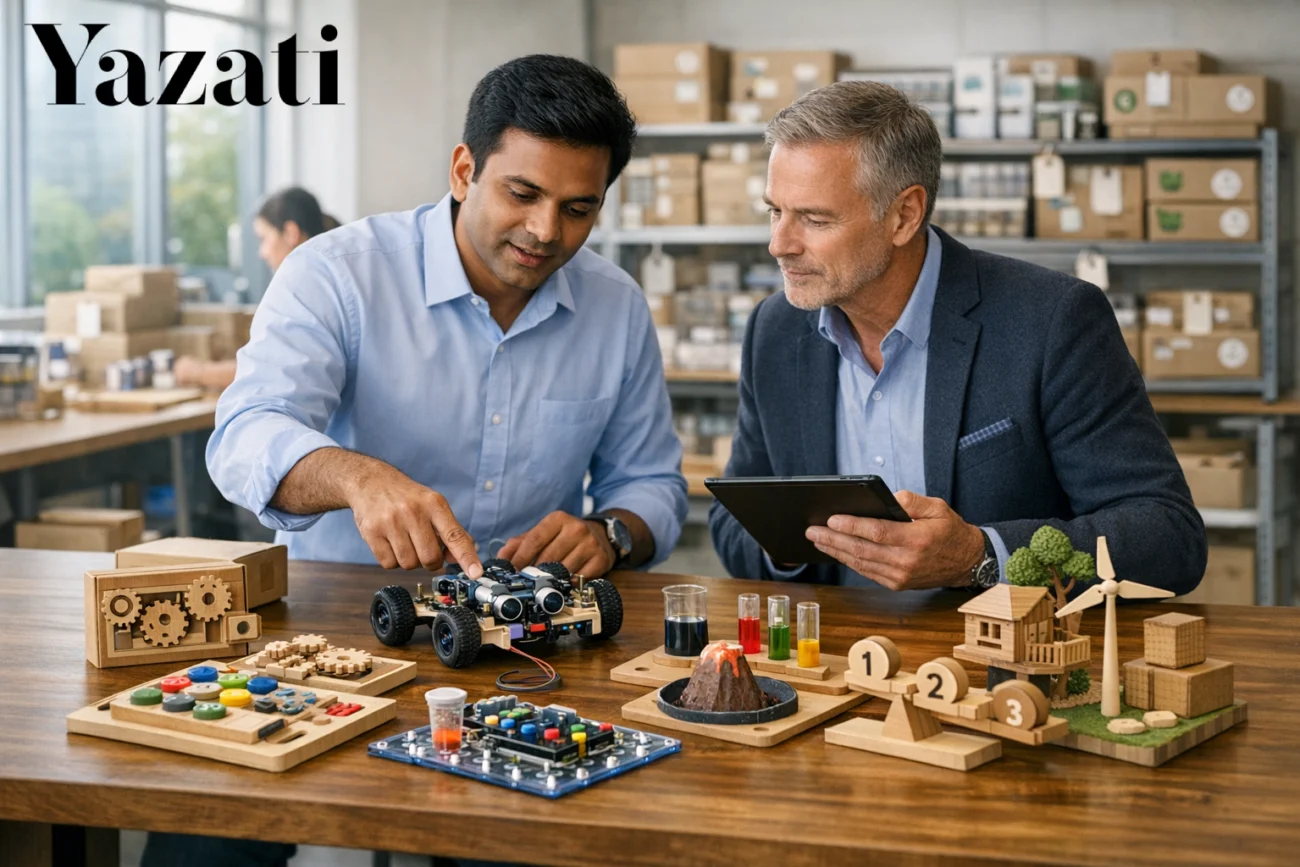
Today, Indian STEM toys include DIY science kits, coding games, and robotics sets that encourage children to experiment and innovate. This transformation has played a key role in shaping How India Became a Trusted Hub for STEM and Educational Toys.
Government Initiatives Supporting STEM Toys
Make in India Campaign
The “Make in India” initiative has been a major driving force behind the growth of the toy industry. By encouraging local manufacturing, the government has reduced dependency on imports and boosted domestic production.
Toy clusters have been established across various states, providing infrastructure, training, and financial support to manufacturers. This has enabled small and medium enterprises to scale their operations and compete globally.
National Education Policy (NEP) 2020
The National Education Policy (NEP) 2020 has further strengthened the demand for STEM toys. It emphasizes experiential learning, critical thinking, and skill development from an early age.
Schools are now encouraged to use activity-based learning tools, which has increased the adoption of educational toys. This policy has created a strong domestic market, supporting the industry’s growth.
Role of Indian Startups in STEM Toy Innovation
EdTech and Toy Integration
Indian startups have played a crucial role in revolutionizing the educational toy market. By combining education and entertainment, they have created innovative products that engage children in meaningful ways.
Many startups focus on interactive learning, using technology to enhance the user experience. These toys often include apps, tutorials, and gamified learning modules.
DIY Kits and Robotics
DIY kits and robotics toys have become increasingly popular. These products allow children to build and experiment, fostering creativity and problem-solving skills.
From assembling circuits to programming robots, these kits provide hands-on experience that traditional education often lacks. This innovation has been a significant factor in How India Became a Trusted Hub for STEM and Educational Toys.
Manufacturing Strength and Cost Advantage
Skilled Workforce
India has a large pool of skilled engineers, designers, and technicians. This talent base enables companies to develop high-quality products that meet global standards.
The availability of expertise in both technology and craftsmanship gives India a unique advantage in the educational toy sector.
Affordable Production
One of India’s biggest strengths is its cost-effective manufacturing. Lower labor and production costs allow companies to offer competitive pricing without compromising on quality.
This affordability has made Indian STEM toys attractive to international buyers, contributing to export growth.
Export Growth and Global Recognition
Key Export Destinations
Indian educational toys are now exported to countries across North America, Europe, and Asia. The demand is driven by the quality, innovation, and affordability of these products.
International buyers are increasingly recognizing India as a reliable source of STEM toys.
Quality Standards Compliance
To compete globally, Indian manufacturers adhere to strict safety and quality standards. Certifications and compliance with international regulations have enhanced trust among consumers.
This commitment to quality has been instrumental in building India’s reputation.
Integration of Indian Culture in STEM Toys
Storytelling and Heritage
One unique aspect of Indian educational toys is the integration of cultural elements. Many products incorporate traditional stories, historical themes, and local art forms.
This blend of education and culture provides a richer learning experience for children and sets Indian toys apart in the global market.
Impact of Digital Transformation
AI, Coding, and Robotics Kits
The rise of digital technology has further accelerated the growth of STEM toys. Products now include AI-based learning tools, coding kits, and smart robotics.
These toys prepare children for future careers by introducing them to advanced concepts at an early age.
Challenges Faced by the Industry
Supply Chain Issues
Despite its growth, the industry faces challenges such as supply chain disruptions and logistics inefficiencies. Addressing these issues is crucial for sustained growth.
Market Awareness
Another challenge is the lack of awareness among consumers about the benefits of STEM toys. Educating parents and schools remains a key priority.
Future of STEM and Educational Toys in India
Global Expansion Opportunities
The future looks promising for India’s educational toy industry. With increasing global demand and continuous innovation, the country is poised to strengthen its position further.
Emerging markets and technological advancements will open new opportunities for growth.
FAQs
1. Why is India becoming a hub for STEM toys?
India offers cost-effective manufacturing, skilled talent, and strong government support, making it a preferred hub.
2. What are STEM toys?
STEM toys focus on science, technology, engineering, and mathematics to enhance learning through play.
3. How do STEM toys benefit children?
They improve problem-solving, creativity, and critical thinking skills.
4. Are Indian STEM toys exported globally?
Yes, India exports educational toys to many countries worldwide.
5. What role do startups play in this industry?
Startups drive innovation by creating interactive and tech-based learning tools.
6. What is the future of STEM toys in India?
The industry is expected to grow rapidly with increasing global demand and technological advancements.
Conclusion
The journey of How India Became a Trusted Hub for STEM and Educational Toys highlights the country’s ability to innovate, adapt, and lead in a competitive global market. With strong government support, a vibrant startup ecosystem, and a focus on quality and affordability, India has successfully positioned itself as a key player in the educational toy industry.
As the world continues to prioritize skill-based learning, India’s role in shaping the future of education through STEM toys will only become more significant.
✨ Discover Global Sourcing Excellence with Netyex ✨
Netyex is your trusted B2B sourcing partner, connecting international buyers with India’s finest manufacturers and curated product lines—from handicrafts and home décor to kitchenware, textiles, hospitality essentials, and more. With verified suppliers and end-to-end support, we make global procurement seamless, reliable, and efficient.
👉 Elevate your sourcing experience—explore Netyex today.
📦 Bulk orders & customisation | 🌍 Worldwide delivery | 🤝 Trusted by global buyers
Visit Netyex to source premium Indian products with confidence.