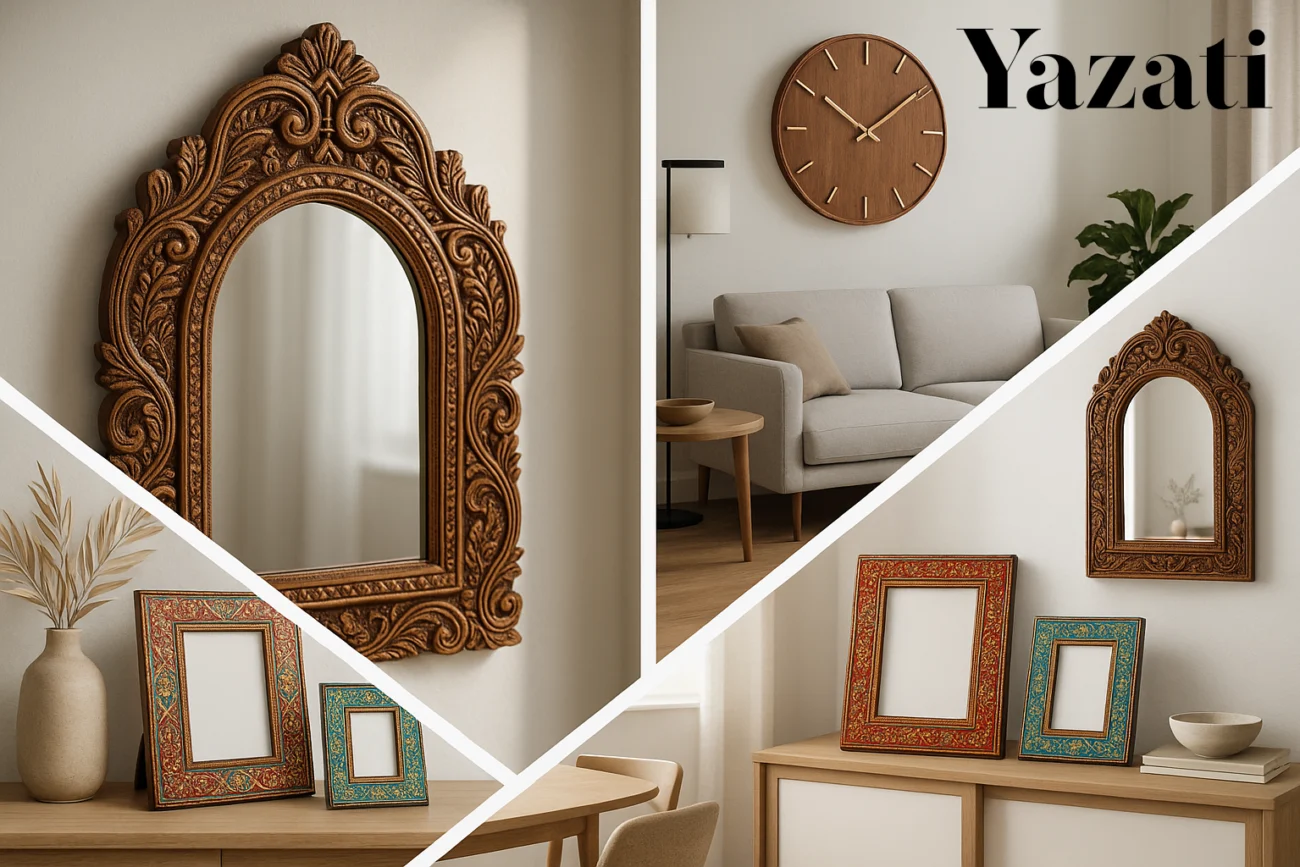
Introduction: The Global Rise of Indian Home Décor
In recent years, Indian mirrors, clocks, and frames have become some of the most sought-after décor pieces in international markets. What once adorned the royal palaces of Rajasthan or the traditional homes of Kerala is now making its way into luxury apartments in New York, boutique hotels in Paris, and contemporary homes in Tokyo.
This global shift highlights the growing appreciation for India’s rich artistic legacy, sustainable production, and unique blend of tradition and modernity. From ornate hand-carved wooden frames to mirror-inlaid timepieces, Indian artisans are setting new standards in global home aesthetics.
Historical Significance of Indian Craftsmanship
Mirrors in Indian Culture: Symbolism and Tradition
Mirrors in India have always held deeper meanings than mere reflection. They symbolize truth, clarity, and divine energy. Ancient Indian palaces, especially in Rajasthan, showcased Sheesh Mahals (Mirror Palaces), where intricate glasswork transformed light into mesmerizing patterns. These designs now inspire modern mirror décor internationally.
Evolution of Indian Clockmaking and Decorative Timepieces
While clockmaking wasn’t native to India, the craft quickly evolved with the fusion of Western mechanics and Indian artistry. Towns like Moradabad and Jaipur became known for handcrafted brass and metal clocks featuring embossed designs and gemstone inlays — each telling a story of both time and tradition.
Artistic Frames: From Royal Palaces to Modern Homes
Indian frames, often made from rosewood, teak, or mango wood, carry intricate carvings inspired by Mughal, Rajput, and tribal art. Today, these frames are exported to Europe and America, where they add character and history to minimalist interiors.
The Unique Appeal of Indian Aesthetic in Global Design
Traditional Techniques Meeting Modern Tastes
Indian décor’s international popularity stems from its ability to merge traditional techniques — such as hand-carving, mirror inlay, and metal embossing — with contemporary design sensibilities. This fusion offers global consumers authenticity with a modern touch.
Fusion of Regional Art Styles and Contemporary Trends
From Kutch mirror work to Jaipuri hand-painting and Kashmiri papier-mâché, Indian décor showcases regional diversity that resonates globally. These techniques are now reimagined in modern settings — like geometric mirrors with Rajasthani motifs or clocks featuring tribal Madhubani designs.
Why Indian Mirrors, Clocks, and Frames Are Gaining Popularity Abroad
Handcrafted Quality and Authenticity
In a mass-produced world, consumers crave authenticity. Indian artisans produce pieces by hand, ensuring each mirror or frame carries a unique touch — something machines can’t replicate.
Sustainable and Eco-Friendly Materials
Indian crafts often use reclaimed wood, recycled metals, and natural dyes, aligning perfectly with global sustainability trends. Western consumers appreciate décor that’s both beautiful and eco-conscious.
Cultural Storytelling Through Design
Every piece tells a story — of the artisan, the village, and centuries of tradition. Owning Indian décor isn’t just about aesthetics; it’s about embracing culture and heritage.
Key International Markets Embracing Indian Décor
The United States: Bohemian Meets Minimalism
American homes are increasingly blending boho-chic styles with clean modern lines. Indian mirrors and frames add that handcrafted, earthy charm, giving interiors warmth and depth.
Europe: A Blend of Heritage and Modernity
European designers value India’s craftsmanship for its historical richness. Frames with Mughal patterns or brass clocks fit effortlessly into both vintage and modern European spaces.
Middle East and Asia-Pacific: A Love for Luxury Craftsmanship
In the Middle East, ornate mirrors and gold-accented frames resonate with local tastes for opulence. Meanwhile, countries like Japan and Australia appreciate India’s minimalist yet meaningful design approach.
E-Commerce and Global Trade Boosting Indian Artisans
Online Marketplaces Driving International Exposure
Platforms like Etsy, Amazon Handmade, and IndiaMart have empowered small artisans to reach international buyers directly. Consumers abroad now buy handcrafted mirrors and frames straight from the source.
The Role of Social Media and Influencers in Promotion
Instagram and Pinterest have become vital in showcasing Indian décor. Influencers and interior designers often spotlight Indian craftsmanship, propelling brands into global recognition.
Case Studies: Indian Brands Making a Mark Globally
Jaipur’s Mirror Artisans: Reflecting Royal Heritage
Jaipur, the “Pink City,” is home to some of the most skilled mirror artisans in the world. Their craft — inspired by the legendary Sheesh Mahal — combines precision and artistry. These artisans handcraft mirrors that play with light and geometry, resulting in designs that have captivated international buyers. Today, Jaipur’s handcrafted mirrors are exported to luxury décor boutiques across France, the UK, and the US, making them a symbol of royal Indian elegance.
Moradabad’s Metal Clocks: Timepieces with a Twist
Often called the Brass City of India, Moradabad is renowned for its intricate metalwork. Over the years, artisans have expanded their expertise into making decorative clocks that blend functionality with art. These clocks — made of brass, copper, and silver alloys — showcase hand-etched motifs and antique finishes. Their timeless appeal has earned them a dedicated market in Dubai and Europe, where homeowners seek cultural sophistication in every detail.
Rajasthan’s Hand-Carved Frames: Timeless Wooden Wonders
Rajasthan’s wooden frames are nothing short of masterpieces. Carved from local woods like mango and acacia, each piece features detailed floral, peacock, or mandala patterns. Global brands now collaborate directly with Rajasthani artisans to produce limited-edition collections that highlight India’s heritage craftsmanship. These frames have found their way into international galleries, hotels, and designer homes — preserving India’s art legacy across continents.
How Interior Designers Are Incorporating Indian Elements Worldwide
Modern Boho and Eclectic Home Trends
Interior designers in the West are embracing the Modern Bohemian trend — a style defined by vibrant colors, cultural diversity, and handcrafted charm. Indian mirrors and clocks serve as perfect statement pieces in such interiors. They bring an earthy warmth, breaking the monotony of minimalist décor and making spaces feel more personalized and inviting.
Minimalist Spaces with Cultural Accents
Even in minimalist settings, a single Indian handcrafted frame or mirror can act as a focal point. Designers in Japan, Scandinavia, and Australia are using Indian décor to introduce subtle cultural layers — combining simplicity with soul. This shift toward meaningful décor emphasizes emotional connection over mere aesthetics.
The Economic Impact on Indian Artisans and Small Businesses
Export Growth and Employment Opportunities
India’s handicraft exports reached over $4 billion in 2024, with mirrors, clocks, and frames forming a significant segment. The rising international demand has created employment for over 6 million artisans, many of whom work in rural areas. These crafts not only preserve cultural traditions but also contribute directly to India’s economy by boosting small-scale industries and export revenue.
Government Support and Handicraft Policies
The Indian government has launched several initiatives — such as the Export Promotion Council for Handicrafts (EPCH) and the One District One Product (ODOP) scheme — to empower local artisans. These programs provide training, quality certification, and exposure to global trade fairs, ensuring that Indian craftsmanship maintains its world-class reputation.
Challenges in Scaling Global Distribution
Maintaining Authenticity Amid Mass Production
One of the biggest challenges in global expansion is balancing mass production with authenticity. As demand increases, there’s a risk that handcrafted charm might be lost to mechanized processes. Ensuring fair wages and preserving traditional methods remain vital for maintaining cultural integrity.
Pricing and Logistics Barriers in Export Markets
Shipping delicate handcrafted mirrors and frames across continents can be expensive and risky. High logistics costs, customs duties, and packaging requirements often limit profit margins. However, advancements in e-commerce logistics and sustainable packaging solutions are gradually easing these challenges.
The Future of Indian Home Décor in the Global Market
AI, 3D Printing, and the Digital Revolution in Design
Technology is redefining how Indian artisans design and market their creations. Artificial intelligence (AI) helps predict global décor trends, while 3D printing allows designers to create precise prototypes before handcrafting the final piece. This combination of digital innovation and traditional art ensures that Indian décor remains both relevant and revolutionary.
The Road Ahead for Indian Artisans
The future is bright for India’s décor industry. With increasing global recognition, collaborations with international brands, and consumer interest in sustainable products, Indian mirrors, clocks, and frames are set to dominate the global home décor segment in the coming decade. What started as traditional artistry is now a global movement celebrating craftsmanship and culture.
FAQs About Indian Mirrors, Clocks, and Frames
1️⃣ What makes Indian mirrors unique compared to other countries?
Indian mirrors often feature intricate handwork, including glass inlay, carving, and metal embossing — techniques that date back centuries. Each mirror tells a story rooted in heritage and culture.
2️⃣ Why are Indian clocks gaining popularity abroad?
Indian clocks blend Western mechanics with Eastern artistry. Their handcrafted finishes, antique looks, and brass detailing make them popular among collectors and homeowners seeking unique décor.
3️⃣ Are Indian frames eco-friendly?
Yes! Many Indian frames are made from reclaimed or sustainably sourced wood and use natural dyes, aligning with global eco-conscious design trends.
4️⃣ How can I purchase authentic Indian décor items internationally?
You can find genuine pieces through platforms like Etsy, Amazon Handmade, Pepperfry Global, or direct artisan websites certified by India’s EPCH (Export Promotion Council for Handicrafts).
5️⃣ What interior styles work best with Indian mirrors and frames?
Indian décor fits seamlessly into boho, rustic, eclectic, and even minimalist interiors. Their handcrafted elegance adds warmth and character to any space.
6️⃣ How do Indian artisans benefit from global trends?
The global demand for Indian décor provides artisans with fair trade opportunities, consistent income, and recognition on international platforms, helping preserve traditional art forms for future generations.
Conclusion: India’s Artistry Reflecting Across the Globe
From the royal halls of Rajasthan to the modern lofts of London, Indian mirrors, clocks, and frames have transcended borders to redefine global home décor. They represent more than just beauty — they embody stories, emotions, and centuries of craftsmanship passed down through generations.
As the world moves toward sustainability and meaningful design, Indian artisans continue to shine — one mirror, one clock, and one frame at a time — reflecting not just art, but the very soul of India.
✨ Discover Global Sourcing Excellence with Netyex ✨
Netyex is your trusted B2B sourcing partner, connecting international buyers with India’s finest manufacturers and curated product lines—from handicrafts and home décor to kitchenware, textiles, hospitality essentials, and more. With verified suppliers and end-to-end support, we make global procurement seamless, reliable, and efficient.
👉 Elevate your sourcing experience—explore Netyex today.
📦 Bulk orders & customisation | 🌍 Worldwide delivery | 🤝 Trusted by global buyers
Visit Netyex to source premium Indian products with confidence.