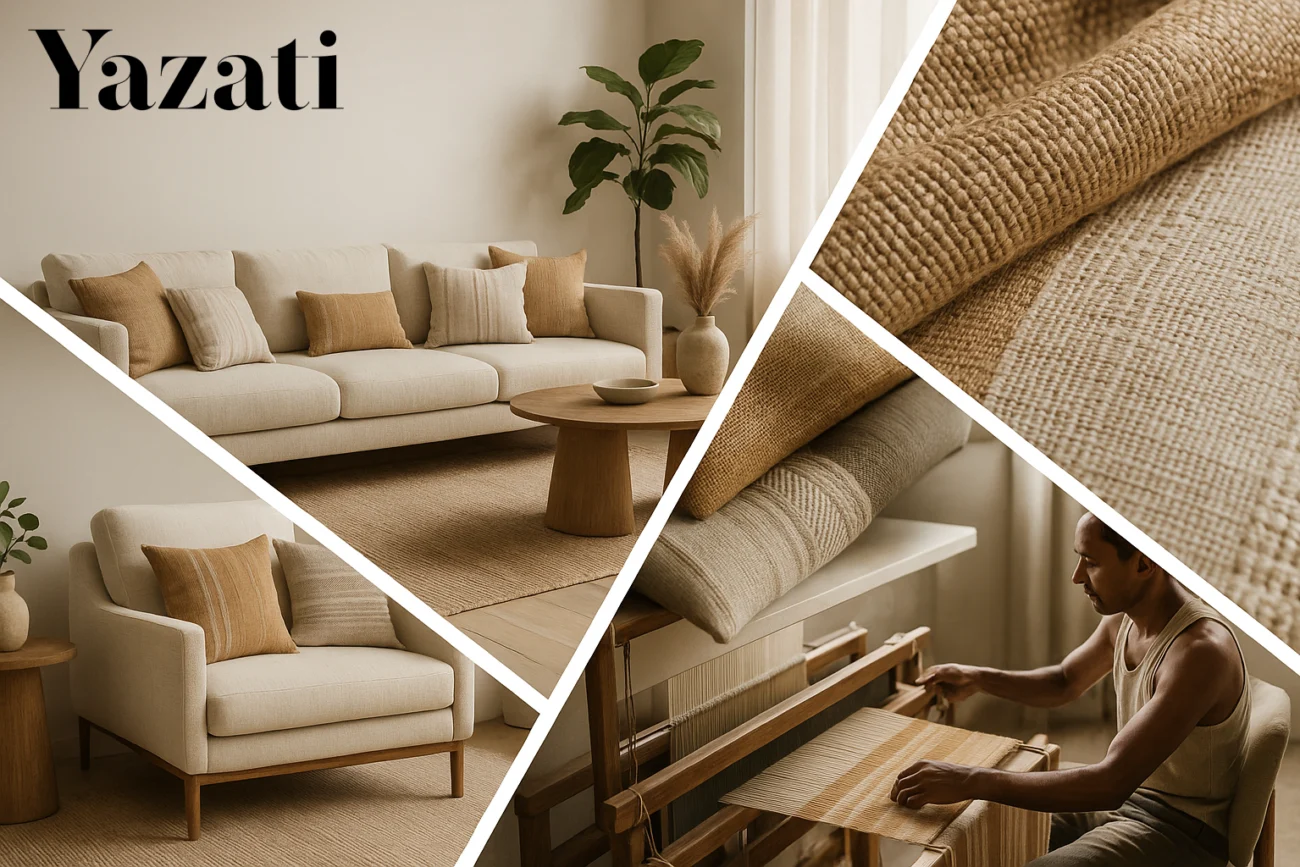
India’s centuries-old textile legacy is weaving a powerful narrative in today’s sustainable interior trends. From the vibrant handlooms of Varanasi to the earthy textures of Khadi, Indian textiles are redefining eco-conscious living spaces across the globe. As the world moves toward ethical consumption, India’s craftsmanship is emerging as a guiding light — blending heritage, sustainability, and luxury in one elegant thread.
Introduction to Indian Textiles and Sustainability
The Rich Legacy of Indian Weaving Traditions
India’s relationship with textiles dates back over 5,000 years. The Indus Valley civilization was already spinning cotton when much of the world was still experimenting with hides and wool. Ancient Indian fabrics such as muslin, brocade, and silk were highly sought after by Roman and Middle Eastern traders.
Today, that legacy thrives through India’s diverse regional crafts — from Gujarat’s Bandhani to Andhra Pradesh’s Kalamkari. These traditional weaves are not just aesthetic marvels; they embody the principles of sustainable production long before the term became a global buzzword.
Why Sustainability Matters in Modern Interior Design
With growing environmental awareness, the interior design industry is undergoing a green transformation. Homeowners are now prioritizing eco-friendly materials, ethical sourcing, and long-lasting aesthetics. Indian textiles fit perfectly into this new consciousness — offering biodegradable fabrics, natural dyes, and artisanal production processes that respect both nature and people.
Evolution of Indian Textiles: From Ancient Art to Modern Interiors
Handloom and Khadi: The Roots of Sustainable Fabric Production
Khadi, championed by Mahatma Gandhi, symbolizes self-reliance and eco-conscious living. Handloom weaving, practiced across rural India, consumes minimal energy and supports local economies. Unlike mass-produced synthetic fabrics, handloom textiles are biodegradable and reduce carbon footprints significantly.
Revival of Traditional Techniques in Contemporary Homes
Modern designers are embracing Indian weaves for contemporary interiors. Techniques like Ikat, Jamdani, and Dabu printing are finding new life in cushion covers, upholstery, and wall hangings. This revival doesn’t just preserve cultural heritage — it also introduces eco-luxury into minimalist and modern homes.
The Role of Indian Textiles in Sustainable Interiors
Eco-Friendly Materials: Cotton, Jute, Hemp, and Silk
India’s natural fibers are the backbone of sustainable interior design. Organic cotton provides breathability and comfort; jute offers durability and texture; hemp ensures longevity; and silk adds natural sheen without synthetic interference. Together, they make interiors both beautiful and biodegradable.
Natural Dyes and Organic Processes
Indian artisans rely on dyes extracted from plants, roots, and minerals — such as indigo, turmeric, and madder. These organic dyes minimize water pollution and chemical waste, ensuring that production remains gentle on the environment.
The Zero-Waste Philosophy in Indian Craftsmanship
Many weaving communities practice zero-waste production, using leftover threads for embroidery, patchwork, or rug-making. This circular approach reflects India’s ancient philosophy of “nothing wasted, everything transformed.”
How Indian Textiles Promote Ethical Consumerism
Empowering Rural Artisans and Local Communities
Over 4.3 million Indian artisans depend on textile crafts for their livelihood. Supporting sustainable Indian textiles directly uplifts these communities. Brands like FabIndia, Raw Mango, and Anokhi are bridging the gap between rural artisans and global consumers through ethical partnerships.
Fair Trade and Transparent Production Chains
Many Indian textile cooperatives now operate under fair trade principles. By ensuring fair wages, safe working conditions, and transparent sourcing, these organizations promote conscious consumption — proving that sustainability extends beyond materials to include human dignity.
Indian Textiles in Global Interior Trends
Fusion Aesthetics: Blending Tradition with Modern Design
From New York penthouses to Scandinavian apartments, Indian fabrics are adding warmth and depth to minimalist designs. The fusion of geometric Ikats with Nordic whites or Rajasthani prints with boho interiors is now a hallmark of global interior styling.
Indian Textile Brands Leading the Global Sustainability Wave
Brands like Good Earth, The Rug Republic, and Jaipur Rugs have positioned Indian textiles on the world map. Their commitment to eco-friendly production, handwoven quality, and ethical sourcing showcases how traditional crafts can thrive in modern design landscapes.
Sustainable Fabric Applications in Interior Spaces
Upholstery and Curtains with Organic Textures
Organic cotton and linen fabrics lend a soothing, breathable touch to modern homes. Handloom drapes, block-printed curtains, and embroidered upholstery pieces not only beautify interiors but also promote sustainability.
Handwoven Rugs and Eco-Friendly Floor Coverings
Indian rugs, especially from Jaipur and Bhadohi, are now symbols of eco-luxury. Made from wool, jute, or recycled cotton, these rugs merge sustainability with elegance — offering durability without synthetic backing.
Soft Furnishings: Cushions, Throws, and Bedding from Natural Fibers
Textiles like Kala cotton and bamboo silk are becoming popular choices for bedding and cushions. These fibers provide natural insulation and comfort while reducing reliance on petrochemical-based fabrics.
Technological Innovations in Indian Textile Sustainability
Smart Weaving and AI-Based Quality Control
Modern looms integrated with AI technology are helping Indian weavers maintain precision while reducing waste. Smart weaving techniques improve thread utilization and fabric durability.
Recycled Fiber Production and Circular Design
India’s textile startups are pioneering fiber recycling, transforming post-industrial waste into new fabrics. Circular design models encourage reusing and upcycling old textiles into fresh interior applications — from wall panels to art installations.
Challenges Facing India’s Sustainable Textile Industry
Cost Barriers and Limited Market Awareness
Sustainable products often come with a higher price tag due to ethical labor practices and eco-friendly materials. Educating consumers about long-term benefits remains a key challenge.
Environmental Regulations and Quality Standardization
Lack of unified sustainability certifications and inconsistent quality control hinder the international competitiveness of Indian textiles. Strengthening these frameworks can boost global trust and trade.
Case Studies: Indian Textiles in Eco-Luxury Interiors
The FabIndia Approach: Tradition Meets Sustainability
FabIndia’s “Sustainable Home Collection” combines traditional fabrics with modern aesthetics. Using organic cotton, vegetable dyes, and recycled materials, they demonstrate how sustainability can align with everyday luxury.
Jaipur Rugs: Weaving Empowerment and Eco-Design
Jaipur Rugs employs over 40,000 rural artisans, mostly women, empowering them economically while promoting handwoven, eco-friendly rugs. Their model proves that sustainability is as much about people as it is about the planet.
Future of Indian Textiles in Sustainable Interiors
Government Initiatives and Industry Collaborations
Programs like “Make in India,” “Skill India,” and “Handloom Mark” are helping artisans integrate sustainability into their craft. Government-backed eco-certifications and collaborations with design schools are also shaping the future of green interiors.
Consumer Trends Driving Green Interior Choices
Modern consumers increasingly value authenticity, durability, and environmental responsibility. This shift ensures that Indian textiles — with their timeless appeal and ethical essence — will remain integral to sustainable interior design for decades to come.
Frequently Asked Questions (FAQs)
Q1. What makes Indian textiles sustainable?
Indian textiles are sustainable because they use natural fibers, plant-based dyes, and low-energy handloom production methods that minimize environmental impact.
Q2. Which Indian fabrics are best for eco-friendly interiors?
Fabrics like Khadi, handloom cotton, jute, and hemp are ideal for sustainable interiors due to their durability and biodegradability.
Q3. How do Indian textiles support local communities?
They provide employment to rural artisans, especially women, while preserving traditional crafts and promoting fair trade.
Q4. Are Indian textiles suitable for modern minimalist designs?
Absolutely. The neutral tones and organic textures of Indian fabrics perfectly complement minimalist and Scandinavian interiors.
Q5. What challenges limit India’s textile sustainability movement?
High costs, lack of awareness, and inconsistent sustainability certifications are major hurdles.
Q6. How can consumers identify authentic sustainable Indian textiles?
Look for certifications such as “Handloom Mark,” “Fair Trade,” or “GOTS” (Global Organic Textile Standard), and buy directly from artisan cooperatives or verified brands.
Conclusion: The Timeless Future of Indian Textiles in Sustainable Interiors
Indian textiles are more than fabrics — they’re living stories woven through sustainability, tradition, and innovation. As global design moves toward conscious living, these textiles remind us that true beauty lies in balance — between people, planet, and purpose. Whether it’s a Khadi throw or a handwoven jute rug, each piece carries a legacy of care, craftsmanship, and conscience.
✨ Discover Global Sourcing Excellence with Netyex ✨
Netyex is your trusted B2B sourcing partner, connecting international buyers with India’s finest manufacturers and curated product lines—from handicrafts and home décor to kitchenware, textiles, hospitality essentials, and more. With verified suppliers and end-to-end support, we make global procurement seamless, reliable, and efficient.
👉 Elevate your sourcing experience—explore Netyex today.
📦 Bulk orders & customisation | 🌍 Worldwide delivery | 🤝 Trusted by global buyers
Visit Netyex to source premium Indian products with confidence.