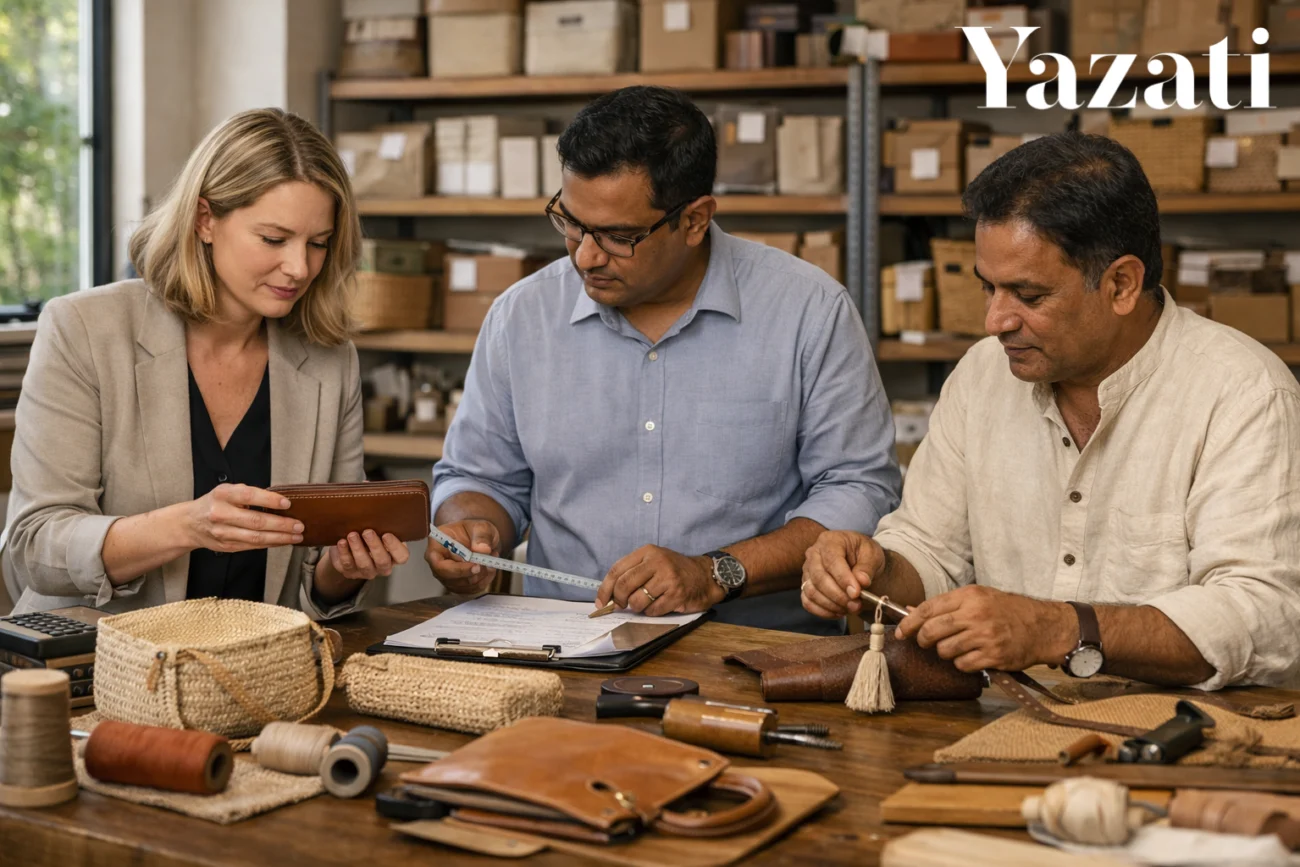
Why Auditing Artisan Workshops Matters
Before placing a bulk order, you need confidence. Auditing ensures:
- Consistent product quality
- Ethical labor practices
- Production capacity alignment
- On-time delivery
- Clear communication channels
- Reduced financial risk
A proper audit protects both your investment and the artisan’s livelihood. It sets expectations early and prevents misunderstandings later.
Understanding the Unique Nature of Artisan Workshops
Artisan workshops are not factories. They often operate differently from industrial manufacturers.
Small-Scale Production Structure
Many workshops:
- Employ 5–50 craftspeople
- Rely on manual techniques
- Work seasonally
- Produce limited daily quantities
This structure allows for high craftsmanship but may limit scalability.
Cultural and Regional Practices
Workshops may operate:
- In rural or semi-urban locations
- Within family-run systems
- With informal documentation
Understanding these differences helps you audit fairly and respectfully.
Step 1: Verify Business Legitimacy
Before discussing production, confirm the workshop’s legal standing.
Check Registration and Licenses
Ask for:
- Business registration documents
- Local trade licenses
- Tax identification numbers
If exporting internationally, verify they are authorized to export goods.
Ownership and Management Structure
Clarify:
- Who owns the workshop?
- Who makes production decisions?
- Who handles finances and contracts?
Clear leadership prevents confusion during bulk execution.
Step 2: Assess Production Capacity Realistically
Never assume capacity based on sample quality alone.
Daily and Monthly Output
Ask:
- How many units can be produced per day?
- How many artisans work full-time?
- Do they outsource part of production?
Request production logs if available.
Seasonal Variations
Some workshops:
- Slow down during harvest seasons
- Close during festivals
- Experience material shortages
Understanding these cycles prevents delays.
Step 3: Evaluate Quality Control Systems
Even small workshops need structured quality checks.
Incoming Material Inspection
Confirm:
- How raw materials are sourced
- Whether materials are checked before use
- If defective materials are rejected
In-Process Quality Checks
Ask:
- Is each product inspected during production?
- Who approves final pieces?
- Is there a rejection policy?
A good workshop should explain its quality process clearly.
Step 4: Conduct a Workplace and Ethical Audit
Ethical sourcing matters more than ever.
Labor Conditions
Check:
- Working hours
- Fair wages
- Safety measures
- Presence of child labor (strictly prohibited)
Observe working conditions in person if possible.
Health and Safety Practices
Look for:
- Proper ventilation
- Clean workspaces
- Fire safety equipment
- Safe tool handling
A safe workplace reflects professionalism.
Step 5: Review Sample Consistency
One perfect sample is not enough.
Request Multiple Samples
Ask for:
- 3–5 pieces from different artisans
- Items produced on different days
This reveals consistency levels.
Evaluate Variations
Handmade goods naturally vary. Determine:
- Acceptable variation range
- Color consistency
- Size tolerance
Document these expectations before bulk production.
Step 6: Analyze Supply Chain Stability
Production depends on raw materials.
Material Sourcing Reliability
Ask:
- Where are materials sourced?
- Are suppliers local or imported?
- What happens if materials run out?
Backup Suppliers
Reliable workshops should have alternative sources.
Without stable materials, bulk orders may stall unexpectedly.
Step 7: Inspect Production Workflow
Understanding workflow prevents bottlenecks.
Process Mapping
Ask the workshop to explain:
- Raw material intake
- Preparation
- Crafting
- Finishing
- Packaging
A clear process indicates organized operations.
Lead Time Transparency
Confirm:
- Production lead time per unit
- Total time for bulk quantity
- Buffer days for delays
Always add contingency time to your schedule.
Step 8: Evaluate Communication and Documentation
Bulk orders require strong communication.
Responsiveness
Test:
- Email response time
- Clarity of answers
- Willingness to provide updates
Delayed communication often leads to delayed production.
Written Agreements
Always document:
- Product specifications
- Quantity
- Price
- Payment terms
- Delivery timeline
Verbal agreements are risky in bulk transactions.
Step 9: Conduct a Trial Order Before Full Commitment
Never jump straight into massive production.
Small Pilot Batch
Order:
- 10%–20% of total projected quantity
This tests:
- Quality consistency
- Timeline adherence
- Packaging standards
Performance Review
After the trial:
- Compare promised vs delivered quality
- Evaluate delays
- Assess communication efficiency
Only proceed to large orders if the trial succeeds.
Common Red Flags to Watch For
Be cautious if you notice:
- Vague production numbers
- No documented quality checks
- Poor working conditions
- Refusal to share business documentation
- Overpromising unrealistic delivery times
- Heavy reliance on subcontractors without transparency
Trust your instincts. If something feels off, investigate further.
Risk Mitigation Strategies for Bulk Orders
To reduce financial exposure:
- Split orders into phases
- Use milestone payments
- Implement pre-shipment inspection
- Diversify suppliers if possible
- Maintain clear product specifications
These strategies protect both parties and build long-term trust.
Building Long-Term Partnerships with Artisan Workshops
Auditing is not about policing — it’s about partnership.
Provide Clear Feedback
Share:
- Quality improvement suggestions
- Packaging enhancement ideas
- Market insights
This helps artisans grow with you.
Offer Forecast Visibility
When workshops know:
- Future demand estimates
- Seasonal spikes
They can plan production more efficiently.
Strong relationships lead to:
- Priority production slots
- Better pricing
- Higher product consistency
Technology Tools That Improve Audit Accuracy
Modern tools can support your audit:
- Video walkthrough inspections
- Production tracking spreadsheets
- Digital quality checklists
- Real-time messaging platforms
Even small workshops can adopt simple digital tools for better coordination.
How to Audit Artisan Workshops Before Placing Bulk Orders in International Markets
When sourcing internationally:
- Verify export compliance
- Understand customs documentation
- Check labeling requirements
- Review packaging standards for shipping
International bulk orders carry additional risks, so documentation becomes even more critical.
Frequently Asked Questions (FAQs)
1. How long should an artisan workshop audit take?
A basic audit may take 2–4 hours, while a detailed evaluation could require a full day or more depending on production size.
2. Is an on-site visit mandatory?
Not always, but highly recommended. If travel isn’t possible, conduct a detailed video audit and request documentation.
3. What is the biggest risk in bulk artisan sourcing?
The biggest risk is inconsistent quality across large quantities due to manual production variations.
4. Should I use third-party auditors?
For large investments or international sourcing, hiring a third-party auditor can provide objective evaluation.
5. How do I calculate safe production capacity?
Use verified daily output × working days × buffer reduction (10–20%) to avoid overestimating capacity.
6. What payment terms are safest for bulk orders?
Common safe structures include:
- 30% deposit
- 40% during production
- 30% after inspection
Avoid paying 100% upfront for new suppliers.
Conclusion: Audit First, Order Confidently
Learning How to Audit Artisan Workshops Before Placing Bulk Orders is essential for sustainable sourcing. A proper audit protects your brand, ensures ethical practices, and strengthens long-term partnerships.
Bulk orders demand preparation, documentation, and careful verification. When done right, auditing creates mutual trust, predictable quality, and scalable growth opportunities.
Remember — successful sourcing isn’t about rushing production. It’s about building reliable systems and responsible partnerships that benefit everyone involved.
✨ Discover Global Sourcing Excellence with Netyex ✨
Netyex is your trusted B2B sourcing partner, connecting international buyers with India’s finest manufacturers and curated product lines—from handicrafts and home décor to kitchenware, textiles, hospitality essentials, and more. With verified suppliers and end-to-end support, we make global procurement seamless, reliable, and efficient.
👉 Elevate your sourcing experience—explore Netyex today.
📦 Bulk orders & customisation | 🌍 Worldwide delivery | 🤝 Trusted by global buyers
Visit Netyex to source premium Indian products with confidence.