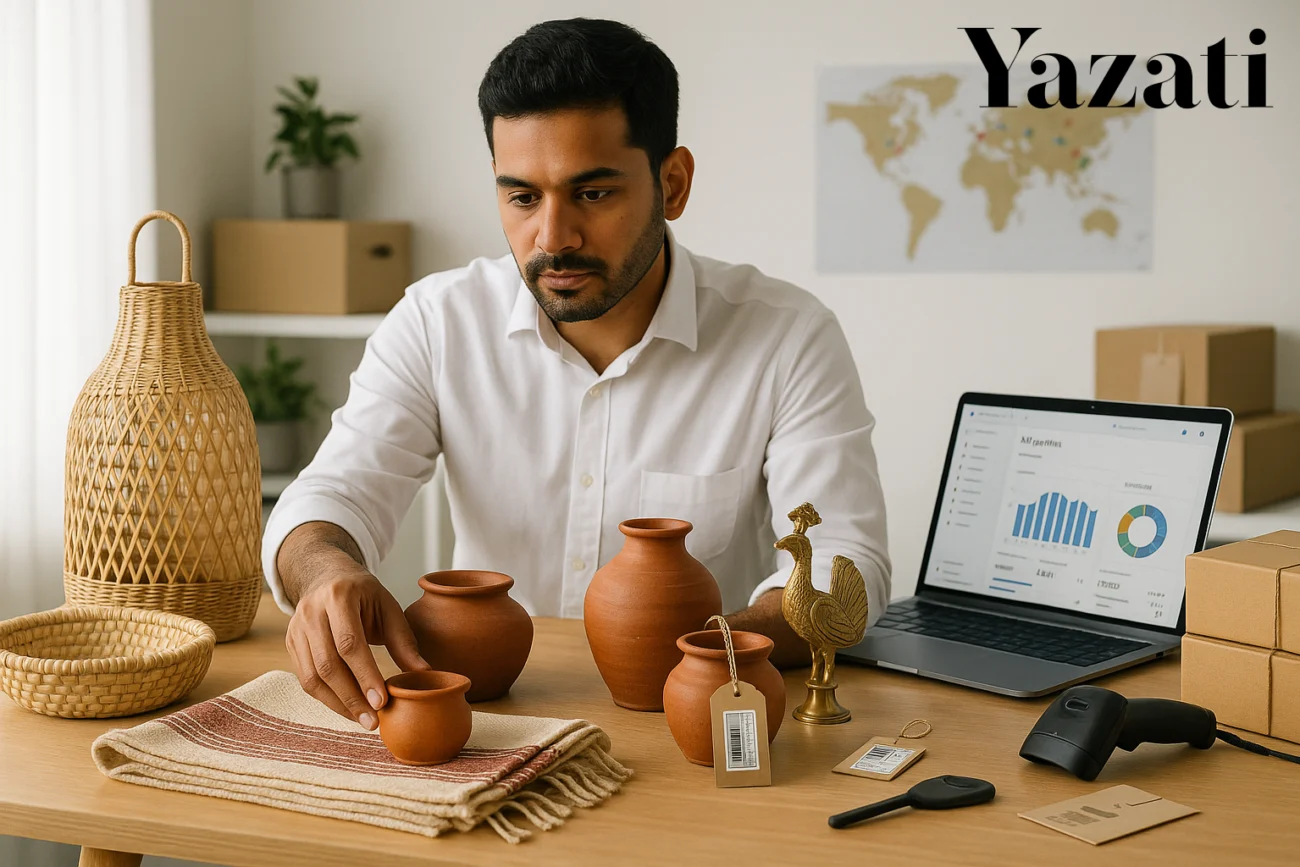
Introduction — The Rise of Indian Handicrafts in Global Markets
The world has fallen in love with Indian handicrafts. From intricately woven Kashmiri carpets to hand-painted Rajasthani pottery, Indian artisans are redefining global art and design. The Indian handicraft industry, valued at over $4 billion, contributes significantly to the country’s export revenue. With rising demand for sustainable and handmade products, entrepreneurs have a golden opportunity to turn this traditional art form into a thriving global eCommerce business.
Building a global handicraft store using Indian exports allows you to bridge the gap between local artisans and international consumers who crave authenticity, craftsmanship, and cultural stories behind every piece.
Understanding the Indian Handicraft Industry
India’s handicraft sector is one of the oldest and most diversified industries in the world. Employing more than seven million artisans, it encompasses over 3,000 craft forms — each reflecting the country’s deep cultural heritage and regional diversity.
Key Handicraft Categories from India
- Textiles & Embroidery: Banarasi silk, Phulkari, Kantha, and Ikat.
- Woodwork & Furniture: Sandalwood, rosewood, and teak masterpieces.
- Metal Crafts: Brass, copper, and silver artifacts.
- Pottery & Ceramics: Terracotta from Bengal and blue pottery from Jaipur.
- Jewelry & Accessories: Meenakari, Kundan, and tribal designs.
Why Indian Handicrafts Are Loved Globally
- Sustainability: Made from eco-friendly, natural materials.
- Uniqueness: Each piece is handmade and one-of-a-kind.
- Cultural Appeal: Carries a story of tradition and heritage.
- Artisanal Quality: Meticulous craftsmanship passed through generations.
Why Start a Global Handicraft Store Using Indian Exports?
The world is moving toward ethical shopping and handmade authenticity — exactly what Indian handicrafts offer. With global platforms like Etsy, Amazon Handmade, and Shopify, it’s easier than ever to connect artisans to international buyers.
High Demand in International Markets
Countries like the United States, United Kingdom, Germany, and Japan are top importers of Indian handicrafts. There’s growing interest in home décor, sustainable fashion, and ethnic jewelry, especially among millennials.
Profit Margins and Export Advantages
Exporting handicrafts gives business owners a significant profit margin of 40–70% after accounting for logistics. Moreover, India’s export-friendly policies make international selling smoother, with minimal regulatory hurdles for small enterprises.
Step-by-Step Guide to Building a Global Handicraft Store
Step 1 — Market Research and Niche Selection
Before diving in, identify what’s trending globally. Use platforms like Google Trends, EtsyRank, or SEMrush to analyze demand. Pick a niche — for example, handwoven home décor or ethnic jewelry — to stand out and dominate a category.
Step 2 — Partnering with Indian Artisans and Exporters
You can collaborate with artisan clusters through:
- Export Promotion Council for Handicrafts (EPCH)
- Crafts Council of India
- Local cooperatives or NGOs like Dastkar and Dastkari Haat Samiti
Establish trust and ensure fair wages for artisans — this builds ethical value into your brand.
Step 3 — Legal and Export Documentation
To export from India, you’ll need:
- Import Export Code (IEC) from DGFT
- GST Registration
- Udyam (MSME) Registration
- Export documentation (invoice, packing list, airway bill, etc.)
Step 4 — Setting Up Your Online Handicraft Store
Choose a platform:
- Shopify for full customization and global payments.
- WooCommerce if you already use WordPress.
- Etsy or Amazon Handmade for quick international reach.
Step 5 — Branding and Storytelling
Your brand should narrate the story of artisans and their craftsmanship. Use professional photography, origin-based packaging, and a compelling “About Us” section to build emotional connection.
Step 6 — Payment Gateways and Currency Setup
Use Stripe, Payoneer, or PayPal for cross-border transactions. Always display prices in multiple currencies to enhance user experience.
Step 7 — Shipping, Logistics, and Packaging
Partner with DHL Express, FedEx, or India Post Export for international delivery. Eco-friendly packaging can be an added USP for conscious consumers.
Step 8 — Marketing Your Store Globally
Use content marketing, influencer collaborations, and SEO to attract global audiences. Run targeted Facebook and Instagram ads to reach specific geographies.
Using Government Schemes and Export Promotion Councils
The Indian government supports handicraft exporters through:
- EPCH (Export Promotion Council for Handicrafts)
- MSME Schemes
- Districts as Export Hubs Initiative
- MEIS (Merchandise Exports from India Scheme)
These programs offer subsidies, financial aid, and training to small exporters.
Challenges in Building a Global Handicraft Brand
Quality Control and Product Consistency
Since items are handmade, maintaining uniform quality is a challenge. Implement standardized packaging and periodic inspections.
Dealing with International Competition
Differentiate through storytelling, sustainability, and certified authenticity — something mass-produced brands can’t offer.
Case Studies — Successful Global Handicraft Brands from India
- FabIndia – Showcased village artisans in global stores.
- Okhai – Blends traditional embroidery with modern designs.
- Craftsvilla – Built a thriving online marketplace for crafts.
Each of these brands started small but scaled globally through consistent branding and ethical sourcing.
Future of Indian Handicrafts in the Digital Age
The future looks bright with AI-driven personalization, blockchain-backed authenticity certificates, and AR/VR-enabled shopping experiences that allow global customers to virtually “visit” artisan workshops.
FAQs About Building a Global Handicraft Store Using Indian Exports
1. Do I need a business license to sell Indian handicrafts abroad?
Yes, you need an IEC (Import Export Code) from DGFT and local business registration.
2. How can I find trustworthy Indian suppliers?
Work with government-recognized bodies like EPCH or attend craft fairs such as the India Handicraft & Gift Fair.
3. Which countries import the most Indian handicrafts?
The USA, UK, Germany, France, and Japan are top buyers.
4. Can I start with a small investment?
Absolutely! Many artisans and small resellers begin with just ₹50,000–₹1 lakh and scale as orders grow.
5. What are the best platforms to sell globally?
Shopify, Etsy, and Amazon Handmade are ideal for small exporters.
6. Are Indian handicrafts profitable in 2026 and beyond?
Yes — with rising demand for sustainable products, Indian handicrafts continue to see 10–15% annual growth internationally.
Conclusion — Turning Indian Heritage into Global Opportunity
Building a global handicraft store using Indian exports is more than a business; it’s a cultural bridge connecting Indian artisans to the world. With the right strategy — from ethical sourcing to digital marketing — you can transform India’s timeless artistry into a profitable, purpose-driven enterprise that thrives globally.
For detailed guidelines on Indian exports, visit the official Export Promotion Council for Handicrafts (EPCH): https://www.epch.in
✨ Discover Global Sourcing Excellence with Netyex ✨
Netyex is your trusted B2B sourcing partner, connecting international buyers with India’s finest manufacturers and curated product lines—from handicrafts and home décor to kitchenware, textiles, hospitality essentials, and more. With verified suppliers and end-to-end support, we make global procurement seamless, reliable, and efficient.
👉 Elevate your sourcing experience—explore Netyex today.
📦 Bulk orders & customisation | 🌍 Worldwide delivery | 🤝 Trusted by global buyers
Visit Netyex to source premium Indian products with confidence.