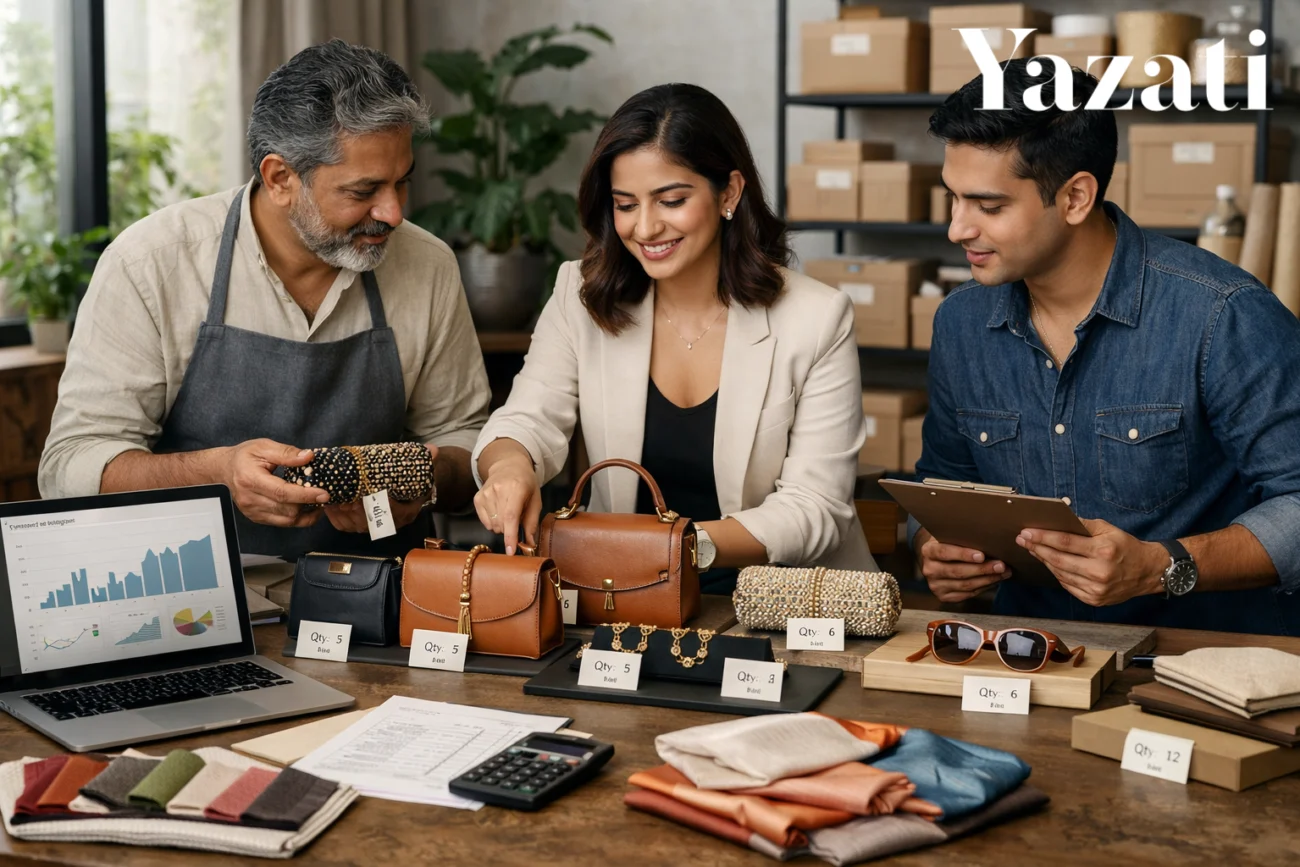
Why Choose India for Low MOQ Accessory Manufacturing?
India has long been recognized as a global leader in textiles, jewelry, leather goods, and handcrafted accessories. The country combines traditional craftsmanship with modern manufacturing techniques.
Advantages of Sourcing from India
- Competitive production costs
- Skilled artisans and craftsmanship heritage
- Wide variety of materials (leather, cotton, silk, brass, beads)
- Flexible Minimum Order Quantities (MOQs)
- Growing export infrastructure
For new entrepreneurs, low MOQ production means less risk and lower upfront capital.
Understanding Low MOQ: What It Really Means
Low MOQ (Minimum Order Quantity) refers to the smallest number of units a manufacturer is willing to produce in one batch.
Typical MOQ Ranges in India
| Product Type | Typical Low MOQ Range |
|---|---|
| Fashion Jewelry | 50–200 pieces |
| Scarves & Stoles | 100–300 pieces |
| Handbags | 50–150 pieces |
| Hair Accessories | 100–500 pieces |
Low MOQ allows you to test product-market fit before scaling production.
Step 1: Identify Your Niche and Target Market
Before contacting manufacturers, define your niche clearly.
Questions to Ask Yourself
- Who is my ideal customer?
- What problem does my accessory solve?
- Is it luxury, mid-range, or affordable?
- Is it seasonal or evergreen?
For example:
- Minimalist gold jewelry for working professionals
- Eco-friendly jute bags for conscious consumers
- Boho scarves for festival fashion
The more specific your niche, the easier it becomes to market and price your products.
Step 2: Research Indian Manufacturers with Low MOQ
Finding the right manufacturer is critical in How to Build a Profitable Accessory Line with Low MOQ from India.
Where to Find Suppliers
- B2B marketplaces
- Trade fairs
- Local sourcing agents
- Manufacturer directories
- Social media platforms
What to Look for in a Manufacturer
- Transparent pricing
- Willingness to offer samples
- Clear communication
- Export experience
- Certifications (if needed)
Always request product samples before committing to bulk orders.
Step 3: Calculate Your Costs Carefully
Profitability depends on accurate cost calculation.
Main Cost Components
- Manufacturing cost
- Sampling charges
- Shipping and customs
- Packaging
- Marketing
- Platform fees (if selling online)
Simple Pricing Formula
Retail Price = (Total Product Cost × 2.5 to 3)
This markup typically covers overhead while maintaining healthy margins.
Step 4: Develop a Strong Brand Identity
Accessories are emotional purchases. Customers don’t just buy products—they buy stories.
Build Your Brand Foundation
- Choose a memorable brand name
- Create a unique logo
- Define brand colors and fonts
- Develop a brand story
Ask yourself:
What makes your accessory line different?
Perhaps it supports rural artisans. Maybe it uses sustainable materials. Or it blends modern style with traditional craftsmanship.
Consistency in branding builds trust.
Step 5: Start Small and Test the Market
One of the biggest advantages of low MOQ production is the ability to test.
Smart Testing Strategies
- Launch limited collections
- Use pre-orders
- Sell through social media first
- Gather customer feedback
Don’t aim for perfection on day one. Aim for validation.
Step 6: Optimize Packaging for Profit and Appeal
Packaging can influence buying decisions significantly.
Affordable Yet Premium Packaging Ideas
- Recyclable kraft boxes
- Fabric pouches
- Minimalist branding stickers
- Thank-you cards
Keep packaging lightweight to reduce shipping costs.
Step 7: Create a Multi-Channel Sales Strategy
Once production is ready, focus on distribution.
Best Sales Channels
- E-commerce website
- Online marketplaces
- Instagram and Facebook shops
- Pop-up markets
- Boutique wholesale partnerships
Diversifying sales channels reduces risk.
Marketing Strategies That Actually Work
Marketing doesn’t require a massive budget.
High-Impact, Low-Cost Marketing Methods
- Influencer gifting campaigns
- User-generated content
- Email marketing
- Behind-the-scenes factory videos
- Launch countdown campaigns
Authenticity outperforms aggressive advertising.
How to Negotiate Better with Indian Manufacturers
Negotiation is normal in manufacturing.
Tips for Successful Negotiation
- Start with sample orders
- Ask about bulk discounts
- Negotiate payment terms
- Request split shipments
Building long-term relationships often results in better pricing.
Quality Control: Don’t Skip This Step
Even with low MOQ, quality control is essential.
Quality Checklist
- Check stitching or finishing
- Verify material quality
- Confirm measurements
- Inspect packaging
If possible, hire a third-party inspection service before shipment.
Managing Logistics and Shipping
Shipping can impact profit margins significantly.
Common Shipping Options
- Air freight (faster but expensive)
- Sea freight (cost-effective for bulk)
- Courier services for small batches
Compare quotes and plan lead times carefully.
Scaling Your Accessory Line
Once your products start selling consistently, scale strategically.
Signs You’re Ready to Scale
- Consistent monthly sales
- Repeat customers
- Strong profit margins
- Positive reviews
Scaling Options
- Increase order quantities
- Introduce new collections
- Expand internationally
- Collaborate with influencers
Growth should be steady—not rushed.
Common Mistakes to Avoid
Learning How to Build a Profitable Accessory Line with Low MOQ from India also means knowing what not to do.
Top Mistakes
- Ordering too many styles initially
- Ignoring quality control
- Underpricing products
- Poor branding
- Weak supplier communication
Avoid these pitfalls, and your chances of success increase dramatically.
Financial Planning for Long-Term Success
Even a small accessory line needs financial structure.
Maintain These Records
- Cost breakdown per SKU
- Inventory levels
- Profit margins
- Marketing ROI
Use accounting software to stay organized.
Building Relationships with Artisans
India is home to talented artisans.
Why Relationships Matter
- Better customization
- Flexible MOQs
- Faster turnaround
- Exclusive designs
Treat suppliers as partners, not just vendors.
Frequently Asked Questions (FAQs)
1. What is considered a low MOQ in India?
Low MOQ typically ranges between 50 to 300 units, depending on the product category.
2. Is it safe to source accessories from India?
Yes, provided you verify manufacturers, request samples, and conduct proper quality checks.
3. How much investment is needed to start?
You can begin with as little as $1,500 to $5,000, depending on product type and scale.
4. Can I customize products with low MOQ?
Many Indian manufacturers offer customization options even at lower quantities.
5. How long does production usually take?
Production timelines range from 2 to 6 weeks, depending on complexity.
6. What profit margin should I aim for?
A 50%–70% gross margin is generally considered healthy in the accessories industry.
Conclusion
Now you understand How to Build a Profitable Accessory Line with Low MOQ from India step by step. The opportunity is real, and the barriers to entry are lower than ever. By choosing the right niche, sourcing smartly, testing strategically, and marketing authentically, you can build a sustainable and scalable accessory business.
Remember—start small, learn fast, and scale smart.
Success isn’t about massive inventory. It’s about smart decisions, strong branding, and consistent execution.
✨ Discover Global Sourcing Excellence with Netyex ✨
Netyex is your trusted B2B sourcing partner, connecting international buyers with India’s finest manufacturers and curated product lines—from handicrafts and home décor to kitchenware, textiles, hospitality essentials, and more. With verified suppliers and end-to-end support, we make global procurement seamless, reliable, and efficient.
👉 Elevate your sourcing experience—explore Netyex today.
📦 Bulk orders & customisation | 🌍 Worldwide delivery | 🤝 Trusted by global buyers
Visit Netyex to source premium Indian products with confidence.