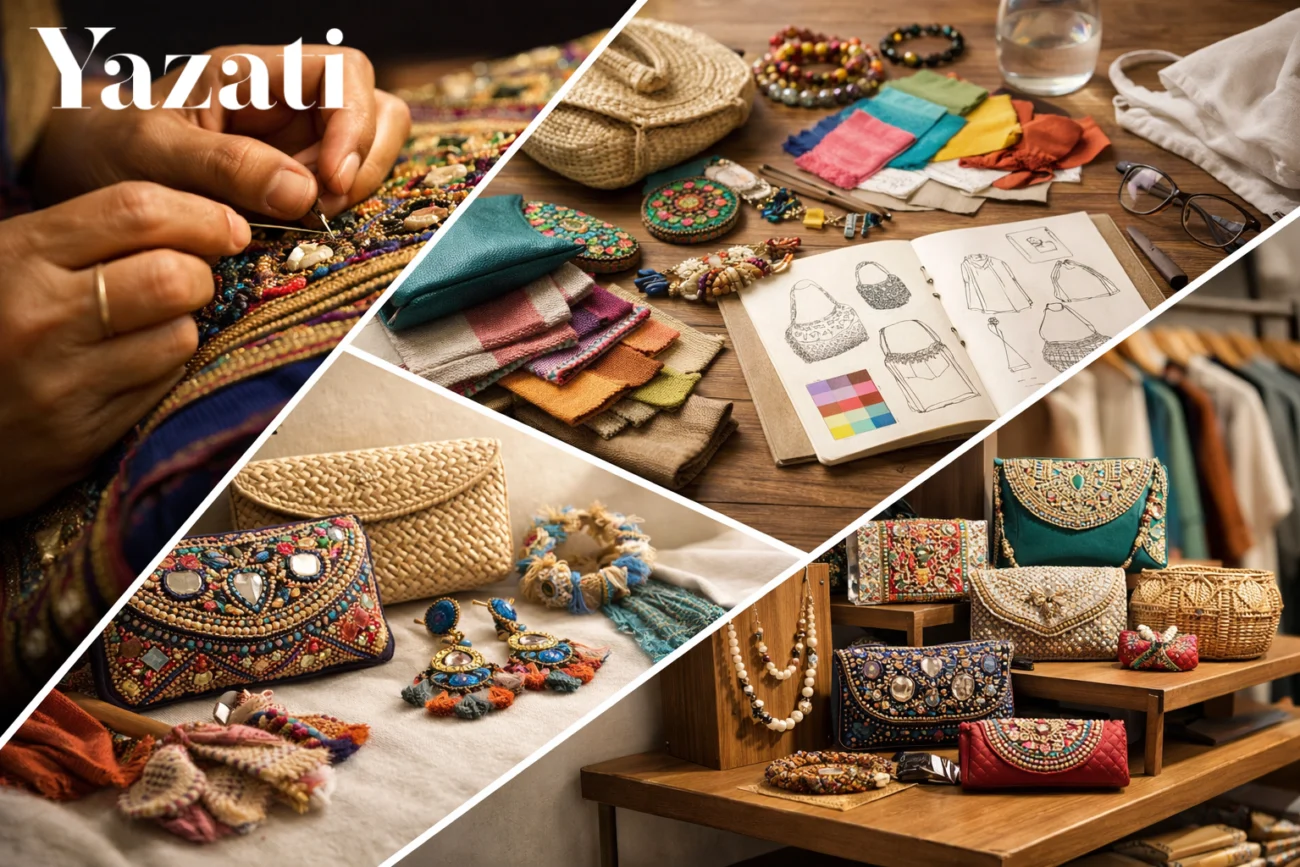
Understanding the Value of Indian Craftsmanship
Indian craftsmanship is deeply rooted in history, community traditions, and regional identity. Every craft technique tells a story about the people, geography, and culture from which it originates.
Many crafts have been practiced for centuries and are passed down through generations of artisans. Techniques such as hand embroidery, weaving, and block printing require patience and precision, making each piece unique.
Designers who use these crafts gain several advantages:
- Authentic storytelling behind products
- Distinctive aesthetics that stand out in the market
- Sustainable and handmade production methods
- Support for artisan communities
Instead of mass-produced accessories, handcrafted designs bring individuality and emotional value to fashion collections.
Identifying Seasonal Fashion Trends
Before designing accessories, it is essential to understand how seasonal fashion cycles work.
Each season brings different consumer preferences influenced by weather, lifestyle, and color trends.
Spring Collections
Spring accessories often feature:
- Pastel colors
- Floral motifs
- Lightweight materials
- Fresh and playful designs
Indian crafts like delicate embroidery or floral block prints can complement these themes beautifully.
Summer Collections
Summer accessories typically emphasize comfort and brightness:
- Vibrant colors
- Breathable fabrics
- Minimalistic jewelry
- Lightweight scarves and bags
Craft techniques using cotton fabrics, beadwork, or mirror work can add sparkle and personality to summer designs.
Autumn Collections
Autumn accessories often reflect warm tones and textured materials.
Popular elements include:
- Earthy colors such as rust, mustard, and olive
- Layered designs
- Structured bags and jewelry
Indian weaving traditions and metallic embellishments can align perfectly with autumn aesthetics.
Winter Collections
Winter accessories tend to be cozy and luxurious.
Common features include:
- Rich fabrics
- Darker color palettes
- Statement pieces
- Intricate craftsmanship
Handwoven shawls, embroidered scarves, and ornate jewelry can elevate winter collections.
Researching Regional Craft Techniques
To successfully learn How to Create Seasonal Accessory Lines Using Indian Craftsmanship, designers should study the variety of crafts found across different regions.
Each region offers unique materials, styles, and techniques.
Examples of notable craft traditions include:
- Hand embroidery traditions featuring intricate threadwork
- Block printing techniques using carved wooden stamps
- Beadwork and mirror embellishments for decorative accessories
- Metal jewelry craftsmanship with traditional motifs
- Hand weaving producing textured fabrics
Understanding these traditions helps designers choose the right craft for the right season.
For example:
- Light printed cotton for summer
- Rich woven textiles for winter
Choosing the Right Materials for Each Season
Material selection is critical when designing seasonal accessories.
Lightweight Materials for Warm Seasons
Spring and summer accessories should use breathable fabrics such as:
- Cotton
- Linen
- Lightweight silk
- Bamboo fibers
These materials keep accessories comfortable while allowing detailed craftsmanship.
Warm Materials for Cooler Seasons
Autumn and winter collections benefit from heavier textures:
- Wool
- Handwoven blends
- Velvet
- Thick cotton fabrics
When combined with traditional craft techniques, these materials create luxurious seasonal products.
Designing Accessories That Reflect Seasonal Themes
A strong seasonal accessory line should visually reflect the mood of the season.
Here are some creative approaches:
Color Palette Planning
Each season has distinctive colors.
Examples:
- Spring: lavender, peach, mint
- Summer: coral, turquoise, yellow
- Autumn: rust, burnt orange, olive
- Winter: burgundy, navy, emerald
Using these palettes while incorporating Indian motifs creates a balanced design approach.
Motif Inspiration
Many Indian crafts feature symbolic patterns such as:
- Floral vines
- Paisley shapes
- Geometric borders
- Nature-inspired elements
Adapting these motifs for seasonal themes can make designs feel both traditional and modern.
Collaborating with Skilled Artisans
Authenticity is best achieved through collaboration with artisans who specialize in traditional crafts.
Working with artisans offers several benefits:
- Access to genuine craft techniques
- Cultural knowledge about patterns and meanings
- High-quality handmade production
- Ethical support for craft communities
Designers should focus on building long-term partnerships with artisan groups rather than short-term production relationships.
Balancing Tradition and Modern Design
One challenge designers face is maintaining authenticity while appealing to contemporary consumers.
Successful accessory lines often combine:
- Traditional techniques
- Modern silhouettes
- Minimalistic styling
- Functional design elements
For example:
A traditional embroidery pattern can be applied to a modern crossbody bag or scarf design.
This approach preserves cultural identity while making products relevant for modern fashion markets.
Creating Signature Pieces for Each Season
Every seasonal collection benefits from a few standout accessories.
Examples include:
Spring Signature Pieces
- Floral embroidered scarves
- Lightweight printed tote bags
Summer Signature Pieces
- Colorful beaded bracelets
- Handcrafted cotton headbands
Autumn Signature Pieces
- Structured embroidered handbags
- Textured woven belts
Winter Signature Pieces
- Handwoven shawls
- Statement embroidered clutches
Signature items help define the identity of each seasonal collection.
Ensuring Sustainable Production Practices
Sustainability is increasingly important in the fashion industry.
Traditional Indian crafts already align with many sustainable principles because they rely on:
- Hand production
- Natural materials
- Low energy consumption
- Small-batch manufacturing
Designers can strengthen sustainability by:
- Using natural dyes
- Minimizing waste
- Supporting fair wages for artisans
- Choosing eco-friendly packaging
These practices also appeal to modern consumers who value ethical fashion.
Developing a Cohesive Collection
A seasonal accessory line should feel unified rather than random.
To achieve cohesion, designers should focus on:
- Consistent color palettes
- Repeating motifs
- Similar material choices
- Complementary design elements
For instance, a winter collection may feature the same embroidery pattern across scarves, handbags, and jewelry.
This creates visual harmony across the product line.
Testing Market Appeal
Before launching a full collection, it’s helpful to test designs.
Designers can do this by:
- Creating small prototypes
- Conducting customer surveys
- Gathering feedback from fashion retailers
- Testing products at local markets or online platforms
This feedback helps refine designs and ensures that seasonal accessories meet customer expectations.
Pricing Handcrafted Accessories
Handcrafted accessories require careful pricing strategies.
Factors to consider include:
- Artisan labor costs
- Material expenses
- Production time
- Brand positioning
Because handcrafted products take longer to create, they should be priced to reflect their quality and uniqueness.
Consumers who value craftsmanship are often willing to pay premium prices for authentic designs.
Marketing the Cultural Story Behind the Collection
A strong narrative can greatly enhance the appeal of handcrafted accessories.
When explaining How to Create Seasonal Accessory Lines Using Indian Craftsmanship, storytelling plays a key role.
Designers should highlight:
- The craft tradition used in the product
- The artisans involved in production
- Cultural inspirations behind the designs
- The seasonal concept of the collection
This storytelling creates emotional connections between customers and products.
Using Digital Platforms to Showcase Craftsmanship
Online platforms provide powerful opportunities for promoting seasonal accessory collections.
Designers can use digital content to show:
- Behind-the-scenes production processes
- Artisan craftsmanship demonstrations
- Seasonal styling ideas
- Customer testimonials
Authentic storytelling helps audiences appreciate the skill and effort behind handcrafted accessories.
Scaling Production Without Losing Authenticity
As a brand grows, maintaining handcrafted quality becomes challenging.
To scale responsibly, designers can:
- Train additional artisan groups
- Standardize certain production processes
- Maintain quality control standards
- Produce limited seasonal batches
Scaling gradually ensures craftsmanship remains central to the brand identity.
Frequently Asked Questions
1. Why is Indian craftsmanship ideal for seasonal accessory lines?
Indian craftsmanship offers a wide range of techniques, materials, and motifs that can adapt easily to seasonal fashion trends while maintaining cultural authenticity.
2. What types of accessories work best with traditional crafts?
Common accessories include scarves, handbags, jewelry, belts, hair accessories, and shawls because they allow artisans to showcase intricate craftsmanship.
3. How can designers maintain authenticity when modernizing traditional crafts?
Designers should collaborate closely with artisans, respect traditional techniques, and carefully adapt designs rather than altering them drastically.
4. Are handcrafted seasonal accessories sustainable?
Yes. Many traditional crafts rely on handmade processes and natural materials, which often result in lower environmental impact compared to industrial manufacturing.
5. How can new designers start working with artisan communities?
Designers can connect with craft cooperatives, artisan collectives, and regional craft organizations to build partnerships and learn about traditional techniques.
6. What challenges exist when creating handcrafted accessory collections?
Common challenges include longer production times, maintaining consistent quality, and ensuring fair compensation for artisan labor.
Conclusion
Learning How to Create Seasonal Accessory Lines Using Indian Craftsmanship allows designers to merge cultural heritage with contemporary fashion trends. By understanding seasonal design principles, collaborating with skilled artisans, and maintaining sustainable practices, designers can produce accessory collections that are both meaningful and marketable.
Indian craftsmanship offers a rich palette of techniques, textures, and stories that can transform simple accessories into wearable works of art. When thoughtfully applied to seasonal collections, these traditions not only elevate design but also preserve cultural heritage and support artisan communities.
In a fashion world increasingly focused on authenticity and sustainability, seasonal accessory lines rooted in craftsmanship have the power to stand out, inspire consumers, and create lasting impact.
✨ Discover Global Sourcing Excellence with Netyex ✨
Netyex is your trusted B2B sourcing partner, connecting international buyers with India’s finest manufacturers and curated product lines—from handicrafts and home décor to kitchenware, textiles, hospitality essentials, and more. With verified suppliers and end-to-end support, we make global procurement seamless, reliable, and efficient.
👉 Elevate your sourcing experience—explore Netyex today.
📦 Bulk orders & customisation | 🌍 Worldwide delivery | 🤝 Trusted by global buyers
Visit Netyex to source premium Indian products with confidence.